Why PLC Control Is Non-Negotiable in Chemical Wastewater Plants
A single failed pH interlock on a chemical wastewater feed can deliver a low-pH slug into a biological reactor, collapse mixed-liquor viability within minutes, and trigger a state Notice of Violation (NOV) with enforcement exposure commonly reported between $50,000 and $500,000 per event (HydropureWater field data, 2026; see also U.S. EPA effluent guidelines under 40 CFR 414 for the organic chemicals point source category). The asymmetry of failure cost — minutes of lost control versus weeks of biomass recovery, permit remediation, and corporate-level reporting — is the reason a dedicated redundant PLC architecture, not a SCADA terminal or a vendor black-box, is the baseline for any chemical WWTP spec written in 2026.
PLCs operate continuously in conditions that would destroy an office PC: cabinet temperatures of 0–55 °C, relative humidity up to 95% non-condensing, electrical noise from VFDs, and vibration from blowers and screens. As Sepratech put it in 2025-12-16, PLCs "are designed to operate continuously in harsh conditions, including high humidity, vibration, electrical noise, and temperature extremes" — conditions that are routine in a chemical WWTP, not exceptional.
The architectural role of the PLC in a chemical WWTP is to act as the central control point for pumps, valves, chemical feed systems, blowers, and filtration units (Sepratech, 2025-12-16). In a chemical plant that role includes closing pH/ORP and dosing loops, sequencing DAF or clarifier skids, and executing permissives that a human operator cannot physically respond to in time. When a dosing pump faults and a stream is heading to pH 1.8, the PLC has roughly 4–8 seconds to throttle, divert, or alarm before the biological zone is damaged; that is a control-engineering problem, not an IT one.
PLC Architecture Options for Chemical Wastewater: PLC, DCS, PC-Based, and Remote I/O
The four architecture families a chemical-plant specifier must choose between are dedicated PLC (Siemens S7-1500, Allen-Bradley ControlLogix, Schneider M580, ABB AC500), DCS (Honeywell Experion, Emerson DeltaV, Yokogawa CENTUM), PC-based soft-PLC (Beckhoff TwinCAT, Codesys-based controllers), and a Remote I/O + PLC head-end topology. The decision is driven by I/O count, the number of process units, the redundancy target, and whether batch recipes must be portable across skids.
A working decision rule for 2026: plants with fewer than 500 I/O and fewer than 5 process units should run a dedicated PLC with Profinet or EtherNet/IP remote I/O; installations with more than 1,500 I/O, redundant controllers, and ISA-88 batch requirements should specify a DCS; skid-mounted packaged plants with vendor-owned logic and short runs of fewer than 100 m should use a PC-based soft-PLC or a remote I/O head-end. For chemical WWTPs handling H₂S above 10 ppm or trace Cl₂, every I/O module must be specified with conformal coating to IEC 60068-2-60 (mixed-flowing gas, Method 4) and the field cabinets rated to NEMA 4X with 316L stainless steel hardware, because the corrosion mechanism at play is sulfide stress cracking on copper and silver-plated contacts, not simple rust.
Hot-standby redundancy with controller sync time below 50 ms is the 2026 expectation for any chemical WWTP that discharges to a publicly owned treatment works under a continuous-discharge permit; cold-standby with a manual cutover is only acceptable in batch-fed chemical treatment where the receiving system has 30 minutes of equalization to absorb a control outage.
| Architecture | Typical I/O range | Redundancy model | 2026 best-fit application |
|---|---|---|---|
| Dedicated PLC + Profinet/EtherNet/IP remote I/O | 200–800 | Hot-standby, <50 ms sync | 10–100 m³/h chemical WWTP, 1–4 skids |
| DCS (Experion / DeltaV / CENTUM) | 1,500–10,000+ | TMR or paired controllers, <20 ms | Integrated refinery or petrochem WWTP, 99.99% availability mandate |
| PC-based soft-PLC (TwinCAT, Codesys) | 100–400 per node | Application-dependent, often none | Vendor-furnished skid with proprietary logic |
| Remote I/O + PLC head-end | 300–1,200 | Head-end redundant, RIO ring | Long cable runs, distributed chemical plant |
I/O Sizing and Scan-Time Engineering for a 50 m³/h Chemical WWTP
A 50 m³/h chemical WWTP — typical of a downstream batch from a pharmaceutical or specialty-chemical facility — should be specified in the range of 350–550 physical I/O points, with the breakdown by subsystem as follows: influent screening roughly 30 I/O, equalization 20, pH neutralization 45 (including redundant pH/ORP pairs and acid/alkali metering), DAF or primary clarifier 40, biological reactor (dissolved oxygen, MLSS, temperature, airflow control) 60, chemical dosing skids 80 distributed across 3–4 reagent systems, disinfection 25, sludge handling 30, and SCADA/HMI interface plus utility metering 40. PLC-controlled chemical dosing skids typically consume 18–24 I/O each, so a four-reagent plant should be budgeted near the upper end of the 80-point allowance.
Analog inputs (pH, ORP, DO, conductivity, flow) must be on isolated 4–20 mA + HART modules so that the SCADA layer can pull device-level diagnostics — calibration date, glass-impedance trend, sensor health — rather than just a process variable. Bare analog cards without HART are a recurring source of preventable trips because the PLC cannot distinguish a real excursion from a failing probe.
Scan-time targets in 2026 chemical-WWTP design are stratified by function: safety interlocks below 50 ms, dosing PID loops below 200 ms (pH neutralization in particular must scan fast because the titration curve is steep; a 300 ms scan on a pH loop tuned for 4–8 seconds of dead time is the difference between stable control and 2-unit overshoot), and SCADA refresh plus trending at 1 s. High-speed counters for flow totalization belong on dedicated fast-I/O modules rather than polled digital inputs because a general-purpose DI update of 5–10 ms will miss the 1 ms pulse width from a chemical-metering pulse head, causing totalization drift of 3–8% per shift.
| Subsystem | Typical I/O | Critical analog signals | Notes |
|---|---|---|---|
| Influent screening | ~30 | Flow, level | Mostly digital, plus 1–2 flowmeters |
| Equalization | ~20 | pH, level | Redundant pH recommended |
| pH neutralization | ~45 | pH, ORP, conductivity | Redundant pH/ORP pair, acid + alkali metering |
| DAF / primary clarifier | ~40 | Flow, TSS, torque | VFD-driven scraper, polymer feed |
| Biological reactor | ~60 | DO, MLSS, temp, airflow | DO loop is fastest control loop in the plant |
| Chemical dosing skids (3–4) | ~80 | Flow, level, density | HART on every reagent pump |
| Disinfection | ~25 | ORP, Cl₂ residual | Toxic-gas interlock on NaOCl room |
| Sludge handling | ~30 | Level, torque, weight | Centrifuge or belt-press VFDs |
| SCADA/utility interface | ~40 | Power, air, steam | Energy metering per ISO 50001 |
| Total | 350–550 I/O | ||
Field Instrumentation and Loop Design for Corrosive Chemical Service
The most common control-system failure in a chemical WWTP is not the PLC but the sensor stack. pH probes in chemical service must be specified as glass-body with a PTFE junction and a double-junction reference, because single-junction references poison within weeks in streams containing H₂S, sulfides, cyanide, or amines; the poisoning mechanism is silver-sulfide precipitation at the reference junction, which raises the liquid-junction potential by 100–300 mV and produces a stable but wrong reading. ORP probes — Pt-ring electrodes with automatic chemical cleaning — are non-negotiable for cyanide destruction (target ORP above +600 mV), hexavalent chromium reduction (below +250 mV), and sulfide oxidation loops, and they should never be substituted with pH probes in PID control.
Flow measurement selection is application-specific: differential-pressure meters for aeration air where accuracy of ±2% is acceptable; magnetic flowmeters for chemical feedwater and clarified effluent where the liquid is conductive and free of hydrocarbons; Coriolis meters for reagent metering where density varies (polymer, ferric chloride, emulsified caustic) and volumetric correction of ±0.5% matters for budget and compliance.
Loop power in a chemical-plant environment is 4-wire (separate line and load power) for any instrument within 10 m of a VFD, a motor starter, or a 480 V bus; 2-wire loop-powered instruments should be confined to clean utility areas such as plant-air receivers and clean-water skids. The engineering reason is common-mode rejection: a 4-wire instrument with isolated power rejects 30 V of VFD common-mode noise that would otherwise inject 1–2 pH units of apparent error into a 2-wire loop.
SCADA, HMI, and Network Architecture: 2026 Best Practice
Supervisory architecture for a 2026 chemical WWTP follows ISA-95 zoning: Level 0–1 field devices, Level 2 control (PLC plus local HMI panel), Level 3 operations (SCADA server and engineering workstation), and Level 4 enterprise. A stateful firewall with explicit allow-lists must sit between Level 3 and Level 4; no direct routing, no implicit trust. Inside Level 2, the network is managed Profinet or EtherNet/IP switches configured in PRP or HSR ring redundancy with a recovery time target below 200 ms, with IGMP snooping enabled and port-level MAC filtering to defeat unauthorized device insertion.
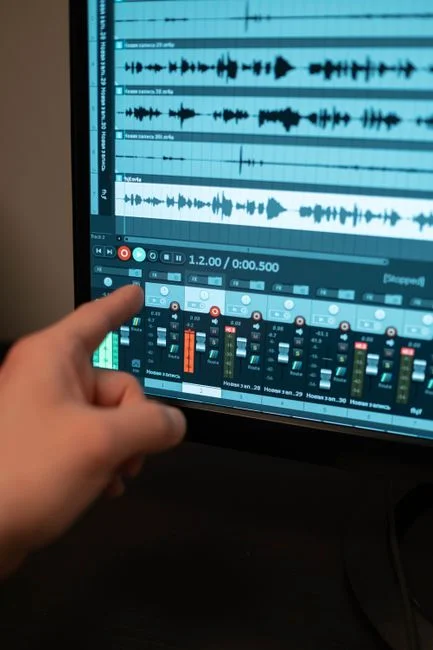
HMI design follows ISA-101 high-performance style: a constrained color palette, trend pen density of 4–6 pens per trend object rather than 30, and summary-level alarming — typically fewer than 500 active alarm points per operator screen rather than the 8,000 raw alarms that municipal WWTPs often tolerate. Every dosing setpoint change requires an operator-action confirmation, and a pH-loop faceplate must display the last 30 minutes of process variable, setpoint, and controller output side by side so the operator can diagnose oscillation without leaving the screen.
The 2026 addition is an edge gateway — Siemens IOT2050, Allen-Bradley OptixEdge, or equivalent — buffering data to MQTT or HTTPS cloud for IIoT analytics. A 30-day local historian is the default, with selective cloud upload of the 50–100 tags that have business value (energy, reagent consumption, permit-relevant effluent) rather than dumping the full 1,000-tag database. A well-scoped gateway is roughly $4,000–$8,000 fully configured and is the cheapest place to add a predictive-maintenance overlay to the SCADA layer.
Redundancy, Safety, and Cybersecurity: IEC 62443 in 2026
Safety instrumented functions in a chemical WWTP must be physically separated from the process PLC. The SIF scope includes high-pH and low-pH shutdown (typically pH less than 2 or greater than 12.5 as the trip setpoint), toxic-gas isolation at 10 ppm H₂S or 1 ppm Cl₂, and chemical-tank bund leak detection. These functions belong on a separate Safety PLC rated to SIL 2/3 per IEC 61508 (e.g., Siemens S7-1500F, AB GuardLogix, Schneider M580 Safety) or on hardwired relay logic; mixing SIF and basic process control on the same processor is a common audit finding under OSHA 29 CFR 1910.119 process safety management.
IEC 62443-3-3 Security Level 2 (SL-2) is the practical 2026 cybersecurity target for chemical WWTPs. It requires zone-and-conduit architecture, account management with role-based access, a documented patch policy with a 90-day SLA for critical CVEs, and intrusion detection on the control network. Network segmentation between corporate IT and OT is enforced by a unidirectional gateway or a properly configured DMZ; the historian is read-only from the cloud, and the PLC has no direct internet exposure. A 2025 Ponemon ICS survey reported that 56% of industrial organizations experienced an OT cyber event in the prior 24 months, so the SL-2 budget line should be defended on probability, not just compliance.
Power architecture: redundant 24 VDC supplies on diode-OR, a UPS sized for 30-minute ride-through on the PLC and SCADA, and generator backup on the MCC. The design rule is that the control system must ride through a 30-second grid event without a controller restart, because dosing pumps that trip and restart on a brownout are the most common cause of pH excursions in operating plants.
Cost Benchmarks and Vendor Selection Matrix (2026)
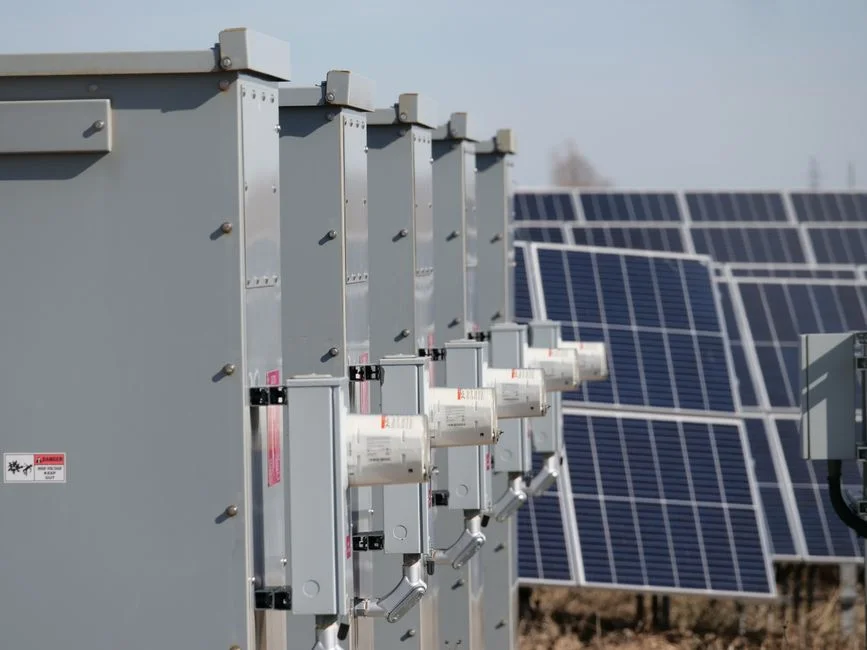
2026 installed cost for a chemical-WWTP control package — engineering, panel, programming, FAT, commissioning — runs $40,000–$90,000 for a 200-I/O skid-mounted package, $90,000–$180,000 for a 500-I/O dedicated chemical WWTP, and $250,000 or more for a fully redundant 1,000+ I/O DCS-class installation. Programming rates for senior PLC engineers in 2026 are $120–$200 per hour, with a 500-I/O chemical WWTP typically consuming 600–1,200 engineering hours split roughly 50% programming, 30% commissioning, and 20% documentation. Annual OPEX lands at 4–7% of CAPEX, covering spare parts, cybersecurity patching, and SCADA license renewal.
| Vendor / platform | 2026 sweet spot | Strength | Watch-out |
|---|---|---|---|
| Siemens S7-1500 + TIA Portal | 200–800 I/O, global EPC projects | Global service network, Profinet depth | Higher TIA Portal license cost |
| Allen-Bradley ControlLogix + Studio 5000 | 200–1,000 I/O, North-American chemical majors | Dominant in NA chemicals, integrator base | Premium on EtherNet/IP managed switches |
| Schneider M580 + EcoStruxure | 200–800 I/O, European / IEC ecosystems | Strong IEC 61850 and electrical integration | Smaller NA field-service network |
| ABB AC500 | 200–600 I/O, cost-sensitive Asia / ME projects | Competitive panel cost, open Profinet | Smaller third-party integrator pool |
| Honeywell Experion / Emerson DeltaV | 1,500+ I/O, 99.99% availability mandate | Full DCS redundancy, regulatory templates | CAPEX 3–5× a dedicated PLC at lower I/O |
For procurement, the specifier should issue a single RFQ with the I/O list, scan-time targets, and redundancy tier defined, then score bidders on three weighted criteria: lifecycle support (40%), cybersecurity posture per IEC 62443 (35%), and panel cost (25%). Lifecycle support outweighs first cost on a 15-year asset because a control system with weak regional support will cost more in lost production than the panel savings.
Frequently Asked Questions
Which PLC is best for chemical wastewater plants in 2026?
Siemens S7-1500, Allen-Bradley ControlLogix, and Schneider M580 are the three dominant platforms in 2026 chemical-WWTP designs, each delivering sub-50 ms safety scan times, Profinet/EtherNet/IP, and conformal-coated modules rated to IEC 60068-2-60. Selection is driven by regional service network, existing plant standard, and integrator pool rather than by raw hardware capability.
When does a chemical WWTP need a DCS instead of a PLC?
A DCS becomes the right answer above approximately 1,500 physical I/O, with redundant controllers, ISA-88 batch recipes, and a 99.99% availability mandate. Below 1,000 I/O, a redundant PLC with hot-standby synchronization below 50 ms is more cost-effective and easier to maintain.
How many I/O points does a 50 m³/h chemical wastewater plant need?
A 50 m³/h chemical WWTP typically requires 350–550 physical I/O points across influent screening, equalization, pH neutralization, primary clarification, biological treatment, dosing, disinfection, and sludge handling. The 80-point allowance for chemical dosing skids scales linearly with the number of reagent systems.
What is the 2026 installed cost of a PLC control system for an industrial wastewater plant?
2026 turnkey cost is $40,000–$90,000 for a 200-I/O skid, $90,000–$180,000 for a 500-I/O dedicated chemical WWTP, and above $250,000 for a fully redundant 1,000+ I/O DCS-class installation, excluding civil works. Engineering hours run 600–1,200 for a 500-I/O plant at $120–$200 per hour.
Does IEC 62443 apply to PLC control systems in chemical wastewater treatment?
Yes. IEC 62443-3-3 Security Level 2 is the practical 2026 target for chemical WWTPs, requiring zone-and-conduit architecture, account management, patch policy, and intrusion detection on the control network. For readers planning an AI overlay, the AI process control overlay for the SCADA layer must inherit this zoning; for those still weighing architecture class, the DCS-vs-PLC decision guidance lays out the I/O and availability thresholds that govern the choice.
Related Equipment
- PLC-integrated DAF units — specifications, capacity range, and technical data