Why Rock Hill Chemical Factories Are Re-asking the DAF vs Clarifier Question in 2026
For Rock Hill, SC chemical factories in 2026, choose a Dissolved Air Flotation (DAF) unit when the wastewater contains oils, greases, low-density flocs, or batch-driven surfactant surges; choose a gravity clarifier (ideally lamella) when solids are dense, flow is steady, and the plant is footprint-limited. EPA CWT costing data shows DAF has a higher capital cost per flow but a smaller footprint and faster rise-rate, while clarifiers trade lower capex for larger basins and slower separation.
The York County industrial corridor around Rock Hill is dominated by batch specialty chemical manufacturing — organic intermediates, adhesives and coatings, water-treatment chemical blenders, and surfactant-based formulations. That production mix produces a wastewater signature operations leads know too well: pH swings of 2–11 between batch dumps, intermittent surfactant bursts that drive foaming in the equalization basin, FOG-coated suspended solids from cleaning cycles, and sharp TSS peaks when a reactor is dropped to floor. None of these streams behave like the steady municipal curve that most generic DAF-vs-clarifier articles assume.
Compliance frames the decision as much as hydraulics. SCDEC industrial pretreatment permits in the Catawba River basin are tightening monitoring on FOG, TSS, and oil & grease for 2026 renewals, and hauling costs for liquid waste have risen enough that recovery or low-volume dewatering now pencils out. Operators also face internal pressure to reclaim process water for reuse rather than pay for fresh intake and discharge. This combination — variable batch chemistry, tighter local limits, higher disposal cost — is why the DAF-vs-clarifier question is being re-opened at multiple Rock Hill plants in 2026 rather than treated as a settled spec from the original build.
What follows is a parameter-driven comparison, anchored to the EPA Centralized Waste Treatment (CWT) costing document (EPA 821-R-98-016) as the public cost benchmark still cited in 2026 planning models, and grounded in the realities of a Catawba-basin chemical plant rather than a generic refinery or food plant. The goal is a defensible recommendation you can carry into a project memo, not a vendor pitch.
How a DAF Actually Works on Chemical Wastewater
A dissolved air flotation unit separates suspended solids by attaching microscopic air bubbles to floc particles so their bulk density drops below that of water and they float to the surface, where a skimmer removes them as a concentrated float layer. The air comes from pressurizing a side stream (typically 30–60% of the recycle) at 4–6 bar in a saturator, then releasing it through needle valves or nozzles that produce a cloud of 10–100 μm micro-bubbles. The bubble cloud contacts flocculated feed in the contact zone, and the bubble-floc aggregates rise against gravity in the separation zone.
DAF is favored when contaminants have low density or are buoyant: free and emulsified oils, greases, latex particles, surfactants, low-density biological flocs, and oil-coated suspended solids. Those particles do not settle fast enough for a clarifier — they either escape over the launder or take hours to reach the sludge bed. In a Rock Hill adhesives or coatings plant, this is the everyday reality of the wastewater.
For sizing, the HydropureWater dissolved air flotation system covers 4–300 m³/h across 13 standard models, giving batch and continuous plants a usable flow ladder. Two operating variables drive most of the performance: hydraulic retention time in the flotation cell (typically 15–30 minutes total) and the air-to-solids ratio, with polymer dose and saturator pressure as the tuning knobs. Get the air-to-solids ratio wrong and float solids drop from 4% to under 2%, which cascades into a heavier dewatering load downstream.
How a Gravity Clarifier (Including Lamella) Handles the Same Stream
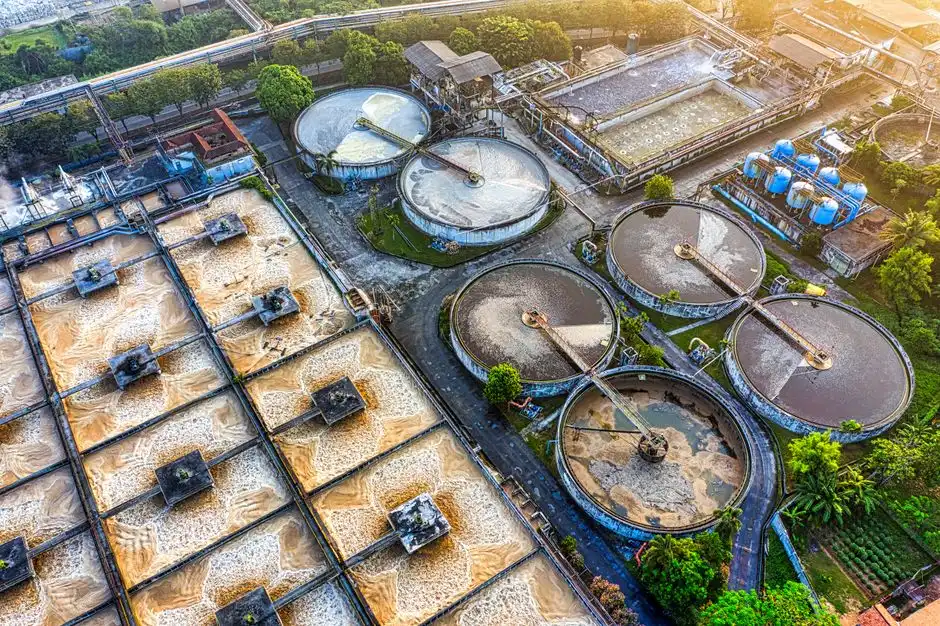
A conventional gravity clarifier is a large, slow basin where particles settle by Stokes' law and sludge is scraped from the bottom by a slowly rotating mechanism. Hydraulic retention runs 2–4 hours, surface loading rates are 1–2 m/h, and the basin footprint is typically the dominant land cost on a chemical plant site. Conventional clarifiers are not obsolete — they handle dense inorganic precipitates, metals hydroxides, and high-TSS streams at steady flow very predictably.
The 2026 default for new chemical plant builds, however, is the lamella (inclined-plate) clarifier. Lamella packs many parallel plates at 55–60° into a small tank, multiplying the effective settling area. The result: surface loading of 20–40 m/h versus 1–2 m/h for a conventional basin, retention of 30–60 minutes, and a footprint that is a fraction of a comparable conventional clarifier. The HydropureWater lamella clarifier is specified at 20–40 m/h surface loading and is reported to cut coagulant and polymer consumption by up to 30% relative to conventional basins (HydropureWater engineering data, 2026) — meaningful for plants dosing ferric chloride or cationic polymer on every shift.
The longer retention of a clarifier (especially conventional) is a feature, not a bug, when batch reactor dumps are predictable: the basin buffers a 30-minute slug of high-TSS feed without letting solids carry over. Lamella trades some of that buffer for footprint and polymer savings, which is the right trade for many continuous specialty chemical lines.
DAF vs Clarifier: Parameter-by-Parameter Comparison for Chemical Wastewater
The table below is built for a Rock Hill chemical plant engineer comparing the two technologies on the parameters that actually drive the decision. Numbers are typical operating ranges for chemical-industry wastewater, not laboratory maxima; for the FOG/surfactant stream, treat DAF as the upper end and clarifier as the lower end. Comparable cost framing for a DAF/clarifier decision in another industrial context is laid out in our DAF vs clarifier for fabricated metals plants in Lyman, SC guide.
| Parameter | DAF | Conventional gravity clarifier | Lamella clarifier |
|---|---|---|---|
| Typical TSS removal (FOG/surfactant stream) | 80–95% | 50–80% | 60–85% (up to 85–95% on dense inorganic streams) |
| Hydraulic retention time | 15–30 min | 2–4 h | 30–60 min |
| Surface loading rate | 5–25 m/h (rise rate) | 1–2 m/h | 20–40 m/h |
| Footprint at 50 m³/h | ~10–15 m² (compact skid) | ~80–150 m² | ~15–25 m² |
| Polymer/coagulant demand | Moderate (required for fine-bubble attachment) | Baseline | Up to 30% lower than conventional |
| Float / sludge dry solids | 3–6% (float) | 1–3% (underflow) | 1–3% (underflow) |
| Operating sensitivity | Air saturator performance, surfactant over-defoaming | Density inversions, short-circuiting, sludge pump reliability | Plate fouling, uneven flow distribution |
| Batch / shock-load response | Fast (low HRT) | Strong (large buffer volume) | Moderate |
Two parameters deserve a callout. First, dry-solids concentration in the removed stream is what drives downstream dewatering cost: DAF float at 3–6% goes to a filter press in a reasonable cycle, while clarifier underflow at 1–3% is essentially dilute slurry and inflates press cycle time, polymer, and hauling cost. Second, sensitivity to surfactants is the deciding factor on many Rock Hill streams: too much residual surfactant in the saturator can collapse the bubble cloud, a failure mode that simply does not exist in a clarifier. A related consideration — ammonia-laden chemical streams routed to DAF — is covered in our DAF configuration for ammonia drain streams guide.
Matching the Technology to Rock Hill Chemical Plant Profiles
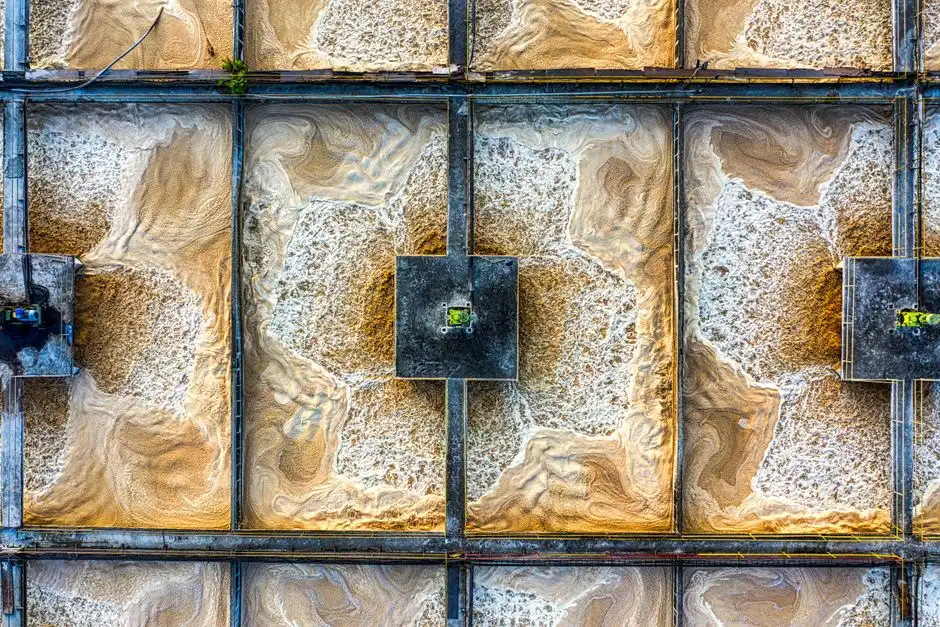
Translating parameters into plant scenarios makes the choice concrete. Three profiles cover most of the Rock Hill specialty/batch chemical market.
Scenario A — Adhesives and coatings plant with latex and solvent residues. The stream is dominated by buoyant particles: latex fines, resin residues, surfactant-stabilized emulsions, and trace solvents. Those particles do not settle — they accumulate at the surface of a clarifier and escape over the weir. DAF is the right primary; a lamella polish downstream is optional. Expect 85–95% TSS removal and a float stream dry enough to dewater economically.
Scenario B — Water-treatment chemical blender (polymers, coagulants) with steady inorganic load. Production is largely continuous, the wastewater is dense (metal hydroxides, polymer fines, residual coagulant), and there is no FOG. A lamella clarifier is the cost-effective choice: 85–95% TSS removal, lower polymer consumption, lower capex per m³/h, and a footprint that fits a small blender's back lot.
Scenario C — Batch specialty chemical producer with wild pH and surfactant swings. pH can move from 2 to 11 between batches, surfactant concentration is unpredictable, and shock loads are normal. A DAF unit with equalization upstream is the safe default, because the low HRT recovers quickly from upset and the bubble-flotation mechanism tolerates density variation. Where footprint and capex allow, a DAF–lamella hybrid (DAF primary for FOG/surfactant removal, lamella polish for residual TSS) gives the most stable effluent. For plants not ready to commit capital, a rented mobile DAF (industry-standard trailer sizes run 47'-6" to 51'-7" long by 8'-6" wide, per WesTech mobile DAF spec data) is a defensible way to pilot the DAF option for one or two batch cycles before buying a permanent unit.
Capex, Opex, and Footprint: Using EPA CWT Cost Curves in 2026 Planning
The public cost benchmark still cited in 2026 industrial pretreatment planning is EPA's Detailed Costing Document for the Centralized Waste Treatment Industry (EPA 821-R-98-016, December 1998), which tabulates capital, O&M, and land requirement curves for DAF, modified DAF, clarification, plate-and-frame filtration, and related unit operations on a like-for-like basis. The document still underpins most 2026 cost models because the underlying cost algorithms — standard capital cost algorithm and O&M cost factor breakdown in Section 1 — are updated through a treatment-cost index rather than rebuilt from scratch.
Directionally, the EPA CWT curves show three things relevant to a Rock Hill plant in 2026. First, total capital cost for DAF rises faster with flow than clarification at small flows, but the gap narrows at higher flows; both have similar power-law scaling. Second, land requirement for DAF is materially lower than for conventional clarification at any given flow — the Section 2 figures for DAF land are a fraction of the corresponding clarifier figures. Third, O&M drivers differ: DAF O&M is dominated by polymer, saturator energy, and float handling; clarifier O&M is dominated by sludge pumping, basin maintenance, and rake mechanism service. Treat 1998 dollar figures as a directional anchor only — rebase with current 2026 vendor quotes, regional land cost data (the CWT document itself breaks land cost by region including "South"), and ENR construction cost index for inflation.
Polymer and coagulant dosing is the variable O&M line item common to both technologies and is also where the most controllable 2026 cost sits. A correctly sized automatic polymer and coagulant dosing skid typically pays back through reduced chemical over-dose in the first 6–12 months, independent of whether the upstream unit is a DAF or a clarifier.
The Downstream Train: Sludge Dewatering After DAF or Clarifier
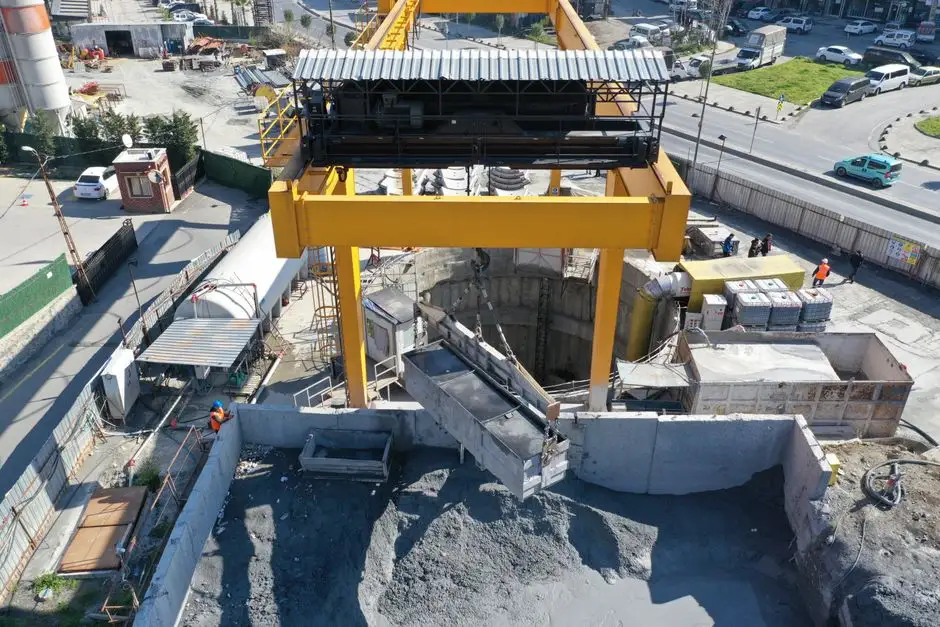
The separation choice does not stop at the effluent launder — it changes the sludge stream the dewatering device sees, and that cascade often dominates the total cost of ownership. DAF float at 3–6% dry solids is a thick, low-volume stream that cycles quickly in a plate and frame filter press for sludge dewatering, producing a handleable cake at 25–35% dry solids with reasonable polymer demand. Clarifier underflow at 1–3% dry solids is a thin slurry: 2–3× the volumetric load for the same mass of solids, longer press fill times, higher conditioning polymer, and a higher hauling cost if the cake is sent off-site.
Quantitatively, doubling the feed solids from 1.5% to 3% roughly halves press cycle time and chemical demand per ton of dry solids. That is not a small number when annual sludge disposal runs six figures. Frame the upstream DAF-vs-clarifier decision as a TCO question: a higher-capital DAF upstream often pays back through lower downstream dewatering and disposal cost, even when the EPA CWT capex curve alone suggests the clarifier is cheaper.
Decision Framework: When to Pick DAF, Clarifier, or Both in 2026
Three rules cover the majority of Rock Hill specialty chemical plant decisions and can be pasted directly into a project memo.
Default to DAF if the wastewater stream contains FOG, oil, latex, surfactant, or has batch surges that produce shock loads. Validate with a jar test on actual plant wastewater before sizing.
Default to lamella clarifier if solids are dense, flow is steady, footprint is available, and capex is constrained. The lamella form is the right choice over conventional basins for any 2026 new build.
Default to a hybrid (DAF primary + lamella polish) for mixed batch/continuous chemical plants above ~50 m³/h where both FOG and dense inorganic solids are present. Always validate with on-site jar testing and a two-week pilot before committing capital.
Frequently Asked Questions
How do DAF and gravity clarifiers compare on hydraulic residence time for chemical plant wastewater?
DAF systems typically run at 15–30 minutes of hydraulic retention, while conventional gravity clarifiers operate at 2–4 hours and lamella clarifiers at 30–60 minutes (HydropureWater engineering data, 2026). The shorter DAF residence means faster recovery from batch surges but less buffer against concentration swings than a conventional basin.
What does the EPA CWT costing document say about DAF vs clarification capex in 2026?
EPA 821-R-98-016 (December 1998) tabulates separate capital, O&M, and land-requirement curves for DAF, modified DAF, and clarification on a like-for-like basis, and remains the public cost benchmark used in 2026 industrial pretreatment models (per EPA CWT document, Section 2). Directionally, DAF carries higher capital per flow at small scales and lower land requirement than conventional clarification at all scales; rebase 1998 dollars with current vendor quotes and regional indices for 2026 budgeting.
Which is better for FOG and surfactant removal at a Rock Hill chemical plant?
DAF is the right primary for FOG, oil, latex, and surfactant-bearing streams because buoyant particles do not settle reliably in a clarifier; typical DAF TSS removal on these streams is 80–95% versus 50–80% for a clarifier (HydropureWater engineering data, 2026). For Rock Hill plants discharging to the Catawba basin under SCDEC industrial pretreatment permits, that gap usually determines whether the plant passes its FOG and TSS limits consistently.