Why Mojave Chemical Factories Face a Different DAF-vs-Clarifier Trade-Off
For Mojave, California chemicals factories in 2026, a Dissolved Air Flotation (DAF) system is the stronger primary separator when the wastewater contains emulsified oils, organic solvents, or fine suspended solids, removing 85–95% of TSS and up to 95% of FOG with optimized coagulation. A conventional (especially lamella) clarifier wins on CapEx, OPEX, and 20-year cost when the dominant load is heavy inorganic solids or sulfate precipitates and footprint is unrestricted.
Generic DAF-vs-clarifier comparisons assume a temperate site and a fairly narrow influent envelope. The Mojave breaks both assumptions. Specialty-chemicals and solvents plants around Barstow, Trona, and the I-15 corridor routinely run pH between 1 and 12 in the same shift, push TDS past 5,000 mg/L from acid mine drainage and salt-bed brines, and discharge sulfate above 1,000 mg/L in the form of gypsum or sodium-sulfate precipitates (Ecologix 2026 update). Add intermittent solvent slugs, emulsified cutting oils, and windblown sand carryover, and the influent looks nothing like the food-processing or mining streams the textbook cases are built on.
Climate compounds the chemistry problem. Mojave summer ambient air sits between 38 and 46 °C, relative humidity drops below 15% on bad days, and pan evaporation commonly exceeds 1,500 mm/yr — roughly three times the open-water loss at a Midwestern plant (EPA-625/1-83-015). Lower dissolved-air solubility at high temperature erodes DAF A/S ratio margin; higher evaporation punishes any open clarifier weir. Makeup water is expensive and, in practice, the Lahontan Regional Water Quality Control Board (RWQCB) Basin Plan limits how much can be consumed per unit of production, so anything that loses water to atmosphere or sends high-TDS blowdown to the desert floor triggers compliance review.
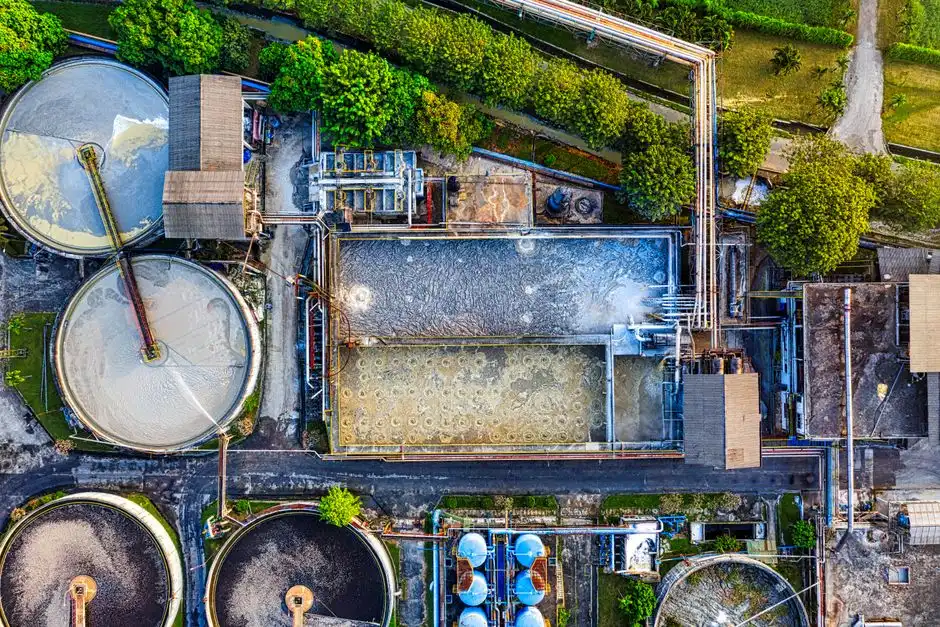
How a DAF System Separates Contaminants in Chemical Wastewater
DAF works by supersaturating a side stream of water with air at 4–6 bar in a pressure vessel, then releasing that stream into a flotation tank at atmospheric pressure. The pressure drop nucleates 30–70 µm microbubbles that attach to suspended particles, oils, and flocs, reducing their bulk density below that of water and floating them to the surface as a skimmable blanket (waterandwastewater.com DAF technical reference).
The key design handle is the air-to-solids (A/S) ratio, normally held between 0.005 and 0.060 mL air per mg of suspended solids. Below that window, bubbles fail to attach and TSS removal collapses; above it, you waste compressor energy and destabilize the float layer. Without coagulant chemistry, raw DAF removal is 50–60% TSS. With optimized coagulation-flocculation — typically ferric chloride or alum followed by a cationic polymer at 5–20 lb/ton dry solids — removal climbs to 85–95% TSS and FOG removals reach 90–95% (waterandwastewater.com DAF technical reference; Ecologix 2026 update).
Saturator design matters in the Mojave. Packed-column saturators consistently hit 85–95% air-dissolution efficiency versus 50–70% for unpacked vessels, and that margin is what keeps a DAF unit on-spec when summer temperatures reduce Henry's-law solubility and force operators to derate. For a chemicals plant feeding RO or a brine concentrator downstream, design the subnatant turbidity target to 2–5 NTU; for general pretreatment to the RWQCB, 5–15 NTU is the realistic band (waterandwastewater.com DAF technical reference).
A practical procurement note: specifying a packed-column DAF unit with documented 85–95% saturation efficiency is the single biggest defense against Mojave summer derating.
How Clarifiers (and Lamella Plates) Handle Chemical Plant Wastewater
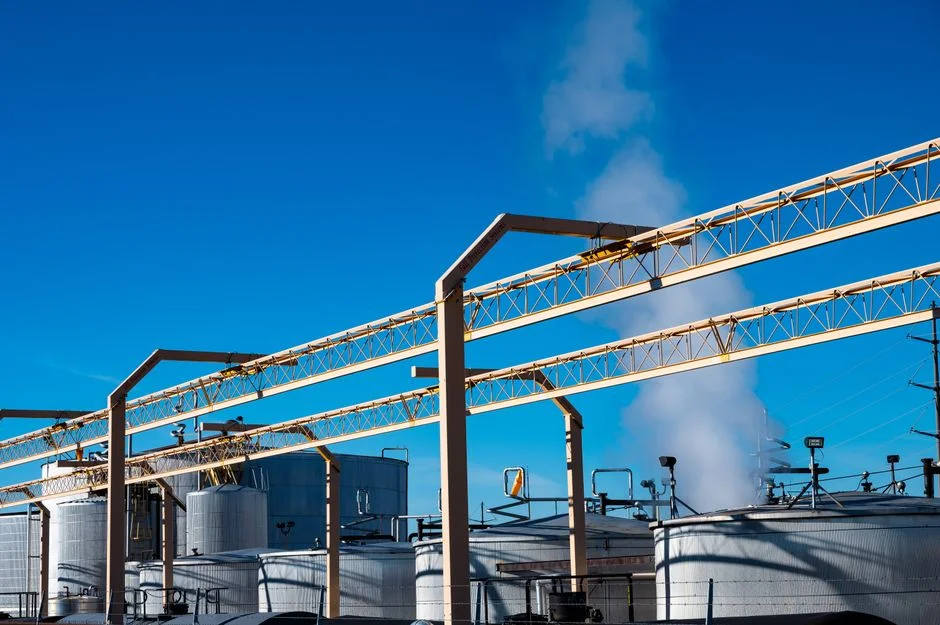
Clarifiers are gravity devices. Heavier inorganic solids — calcium sulfate, metal hydroxides, silica, sand carryover — settle to the bottom under quiescent conditions and are raked to a central sludge hopper, while clarified water overflows peripheral weirs (Ecologix 2026 update). No compressed air, no saturator, no microbubble contact zone.
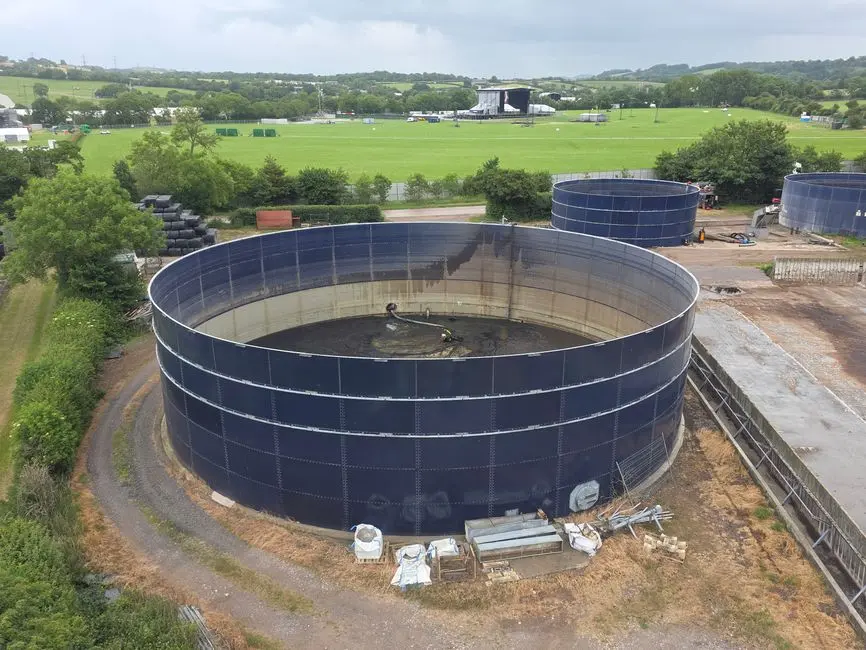
The classic circular clarifier is a poor match for a desert chemicals site. Surface overflow rates sit around 1–3 m/h, which forces very large footprints. In a desert where land is cheap but lined earthen basins evaporate 1,500+ mm/yr (EPA-625/1-83-015), every square meter of open water is a permit-liability conversation with the Lahontan RWQCB.
Lamella (inclined-plate) clarifiers change the calculus. By tilting the settling surface, they raise effective hydraulic loading to 20–40 m/h, shrink the basin footprint by roughly 80% versus an equivalent circular clarifier, and cut coagulant demand by 20–30% because the inclined plates improve floc-contact efficiency (HydropureWater product specification, 2026). For a pure heavy-inorganic stream — sulfate precipitation, neutralized metal-laden blowdown, scrubber effluent — a lamella clarifier can hit 90% TSS removal at significantly lower CapEx and OPEX than a DAF (Ecologix 2026 update mining case).
For chemicals plants that need a credible gravity option, a high-efficiency lamella clarifier is the right clarifier variant to evaluate — but only after the influent audit confirms there is no emulsified oil load to speak of.
DAF vs Clarifier: Parameter Comparison for Chemicals Wastewater
The table below maps the two technologies to the influent regimes a 2026 Mojave chemicals plant actually sees. Surface-loading figures are anchored to the 20–40 m/h lamella clarifier spec and the 0.5–2.0 gpm/ft² range typical of DAF flotation-thickening units (waterandwastewater.com DAF technical reference).
| Parameter | DAF (recycle-flow, packed saturator) | Lamella Clarifier |
|---|---|---|
| TSS removal (with optimized coagulation) | 85–95% | 70–90% |
| FOG / emulsified oil removal | 90–95% | ~70% (poor on emulsified oil) |
| Footprint at 10 m³/h | 2–4 m² (skidded) | 1–3 m² basin, plus sludge hopper |
| CapEx indicator (per m³/h, 2026) | Higher (saturator + compressor + controls) | Lower (basin + lamella pack + scraper) |
| Primary OPEX driver | Compressor + recycle pump energy; polymer 5–20 lb/ton | Sludge pump + surface aerator energy; polymer 20–30% lower |
| Climate sensitivity (Mojave summer) | Moderate — packed saturator preserves A/S margin; covered tank cuts evaporative loss | High — open weirs lose >1,500 mm/yr; large footprint amplifies dust/sand carryover |
| Influent compatibility | Emulsified oils, fine suspended solids, variable pH 5–9, light biological flocs | Heavy inorganic precipitates, sulfate sludge, metal hydroxides, sand |
| Polymer demand | 5–20 lb/ton dry solids | 20–30% lower dose at equivalent influent |
| Subnatant / overflow turbidity | 2–15 NTU (recyclable to process) | 10–30 NTU typical; harder to recycle |
| Best fit | Oils, solvents, fine TSS, FOG-bearing streams | Gypsum, brine precipitates, sand-laden scrubber water |
The right answer is rarely "DAF or clarifier" globally — it is "DAF for the oil-bearing stream, lamella for the brine-precipitate stream." Many Mojave chemicals plants end up running both, sized to each unit operation rather than blended into one oversized primary. For the FOG-bearing line, evaluate a dissolved air flotation system sized to the oil-laden flow rather than to total plant flow.
Mojave-Specific Selection Framework: Climate, Water, and Compliance
Once the chemistry is sorted, the Mojave imposes four constraints that a generic selection guide will not surface.
1. Summer heat derates DAF air solubility. Henry's-law solubility of air in water drops roughly 20% between 20 °C and 40 °C. Without a packed-column saturator, A/S ratio margin shrinks and removal drops. Specify a packed saturator with a documented summer-derate curve, and budget for higher recycle rates in July–September (waterandwastewater.com DAF technical reference).
2. Evaporation turns open clarifier weirs into a permit issue. Open weirs in desert air lose 1,500+ mm/yr (EPA-625/1-83-015, EPA-625/1-83-015). At a 200 m² clarifier, that is roughly 300 m³/yr of distillate — water the plant must replace, and consumptive use the Lahontan RWQCB Basin Plan tracks. DAF units are typically covered and far smaller, so the loss is one to two orders of magnitude lower.
3. Water scarcity forces high subnatant recycle. DAF subnatant at 2–15 NTU is routinely polished and sent back to the process as wash or cooling make-up; clarifier overflow at 10–30 NTU usually needs another step before reuse. In a basin where every cubic meter of fresh water is metered, recycle quality matters as much as discharge quality.
4. Compliance baseline is 40 CFR Part 437 plus the Lahontan Basin Plan. 40 CFR Part 437 (Centralized Waste Treatment category) sets pretreatment standards for metals, organics, and conventional pollutants; the Lahontan Basin Plan layers site-specific limits on TDS, sulfate, chloride, and consumptive water use. Pick the technology whose discharge profile can meet both with reasonable downstream polishing rather than extensive tertiary work.
For cross-state benchmarking on what compliance looks like in 2026, the chemical-plant 2026 pretreatment compliance guide walks through a parallel regulatory environment in Ohio.
20-Year Total Cost of Ownership: DAF vs Clarifier for a Mojave Chemicals Plant
The 20-year view is where the procurement case either holds or collapses, and the Mojave distorts it in three ways.
DAF carries higher CapEx — saturator, compressor, recycle pump, and PLC controls can add 30–60% to the skid price versus a comparably rated lamella clarifier (Ecologix 2026 update). Ongoing OPEX is dominated by compressor and recycle-pump energy plus polymer at 5–20 lb/ton dry solids (waterandwastewater.com DAF technical reference). The offset is that higher TSS and FOG removal at the head of the plant shrinks downstream polishing CapEx — RO membrane area, brine-concentrator capacity, sludge-dewatering throughput.
Lamella clarifiers are cheaper to buy and 20–30% cheaper to dose with polymer (HydropureWater product spec, 2026). But a clarifier at a Mojave site needs a much larger basin and slab, an HDPE-lined earthen sub-basin, and dust-suppression fencing. Earthwork and HDPE liner cost in the high desert — typically $15–40/m² installed — can quietly erase the clarifier's upfront advantage once the basin is sized for the actual hydraulic load (EPA-625/1-83-015 pond-lining reference data). Energy OPEX shifts to surface aerators and sludge pumps, which on SCE industrial tariffs at ~$0.14/kWh (2026) are not negligible at 24/7 operation.
The defensible framing for the CFO: pay more upfront for DAF and save on downstream compliance risk and evaporative water loss, or pay less upfront for a lamella clarifier and accept a larger footprint, higher evaporative loss, and weaker FOG removal. For an influent dominated by emulsified oils or solvents, the DAF case usually wins on 20-year TCO because avoided downstream CapEx outweighs the saturator premium. For a pure heavy-inorganic stream, the lamella case wins. For a hybrid plant, a hybrid system wins — DAF on the organic line, lamella on the brine-precipitate line.
For a side-by-side TCO view of clarifiers against a different (mining) influent profile, the DAF-vs-clarifier guide for mining wastewater covers the same 20-year framework from the heavy-solids angle.
Procurement Checklist Before You Order in 2026
Convert the analysis into a defensible RFQ package with the following line items:
- Saturator specification. Require packed-column design with documented 85–95% saturation efficiency and a guaranteed A/S ratio of 0.005–0.060 mL air/mg solids at design summer temperature (waterandwastewater.com DAF technical reference).
- Effluent guarantee with teeth. Require guaranteed effluent TSS and FOG at design hydraulic loading, backed by a performance bond or liquidated-damages clause during the acceptance test.
- 20-year TCO line items. Capital cost, energy for pressurization, polymer and coagulant dose (lb/ton), maintenance parts and labor, and — for clarifier bids — earthwork, HDPE liner cost, and estimated annual evaporative loss.
- Subnatant instrumentation. Online turbidity sensor on the DAF effluent channel with PLC integration to the chemical dosing skid, so dose adjustments happen before permit thresholds are crossed. Pair the DAF or clarifier with a chemical dosing system capable of trim control on turbidity feedback.
- Climate and compliance deltas. Confirm summer-derate curves, dust/sand loading tolerance, and a 40 CFR Part 437 plus Lahontan Basin Plan compliance summary in the vendor's proposal.
Frequently Asked Questions
When should a Mojave chemicals plant choose DAF over a clarifier in 2026?
Choose DAF when the influent carries emulsified oils, organic solvents, or fine suspended solids. Packed-column DAF units hit 85–95% TSS and up to 95% FOG removal with optimized coagulation (waterandwastewater.com DAF technical reference).
How does Mojave summer heat affect DAF performance?
Air solubility drops ~20% between 20 °C and 40 °C, shrinking A/S ratio margin. Specify a packed-column saturator with documented 85–95% saturation efficiency and budget for higher recycle rates from July through September (waterandwastewater.com DAF technical reference).
What regulations govern a 2026 Mojave chemicals-plant discharge?
40 CFR Part 437 (Centralized Waste Treatment) sets federal pretreatment standards for metals, organics, and conventional pollutants, while the Lahontan RWQCB Basin Plan layers site-specific limits on TDS, sulfate, chloride, and consumptive water use.
Is a lamella clarifier cheaper than DAF over 20 years?
Upfront yes — typically 30–60% lower skid cost. Over 20 years, the comparison depends on influent: lamella wins on heavy inorganic precipitates with 20–30% lower polymer use, but DAF wins on FOG-bearing streams once avoided downstream polishing CapEx is credited (Ecologix 2026 update).