Why Retrofit a Lamella Clarifier Instead of Replacing the Tank?
A lamella clarifier retrofit and upgrade installs inclined plate packs — typically at 45°–60° from horizontal — inside an existing concrete or steel sedimentation tank, raising effective surface loading from 1–3 m/h on the original basin to 20–40 m/h on the retrofitted unit and cutting chemical use by up to 30%, all without replacing the tank shell. Typical retrofits complete in 3–14 days and cost 30–60% less than new-tank construction, with documented BOD/COD/TSS reductions of 34–56% in combined biological-plus-lamella trains (Universitas Gadjah Mada hospital-wastewater study, 2024).
For most operators, the decision point is not engineering novelty but asset economics. Tank shells — whether 30 m diameter municipal units or 250 ft. primary clarifiers at a steel mill — routinely remain structurally sound long after the skimmer arm, center well, drive assembly, and sludge rakes have corroded, warped, or exceeded their service life (per Monroe Environmental rebuild portfolio, 2025). Rebuilding or replacing the internals of a serviceable concrete or steel tank is a quick, cost-effective alternative to constructing a new system: Monroe documented a $145,000 saving on a blast-furnace clarifier rebuild versus full replacement while meeting stringent effluent specs.
Three retrofit paths exist, and they are not mutually exclusive. (a) Internal-component rebuild — dismantle corroded internals, install new plate pack, weirs, launders, drive. (b) Lamella plate-pack retrofit into an existing non-lamella tank — install inclined plates to multiply effective area 8–15×. (c) Mobile clarifier bypass — a trailer-mounted clarifier treats flow while the permanent basin is being retrofitted, eliminating plant shutdown. The diagnostic checklist in the next section helps determine which path applies to a specific basin.
Diagnostic Checklist: Is Your Clarifier a Retrofit Candidate?
Lamella retrofits deliver the highest ROI when tank shells are sound, hydraulic capacity is the binding constraint, and influent solids fall in the 200–3,000 mg/L range. The four gate questions below are the fastest way to screen a candidate basin before commissioning a vendor audit.
- Visible failure triggers. Rising effluent TSS above permit, plate warping or buckling under thermal stress, sludge carryover over the weirs, visible weir corrosion, and recurring drive-unit failures all indicate that internals — not the shell — are at end of life (Monroe before-photo catalog, 2025).
- Tank-shell screening criteria. Inspect concrete for cracking, spalling, and rebar exposure; check wall verticality and foundation settlement; verify that the hydraulic profile can accommodate inclined plates at 45°–60° without raising the launder above the existing overflow elevation.
- Influent characterization. Required inputs: design flow (m³/h), peak factor (typically 1.5–2.5× average), influent TSS, FOG fraction, and temperature. Lamella retrofits are most effective when influent TSS sits between 200–3,000 mg/L with consistent flocculant dosing; outside that envelope, primary treatment or DAF pre-stage may be required.
- Compliance trigger. Discharge to a municipal POTW falls under 40 CFR 133; surface-water discharge in the EU falls under the Urban Waste Water Treatment Directive 91/271/EEC; hospital effluent in Indonesia is regulated under Regulation No. 68 of 2016 (UGM study, 2024). Retrofit timing should be aligned to the next permit-renewal cycle.
4-Question Retrofit Gate: (1) Is the tank shell structurally sound? (2) Is hydraulic capacity deficit greater than 20%? (3) Are internals more than 10 years old? (4) Is there active compliance risk? Three or more "yes" answers point to retrofit; one or two "no" answers, especially on shell condition, may force full replacement.
Lamella Plate Retrofit Engineering: Parameters That Change
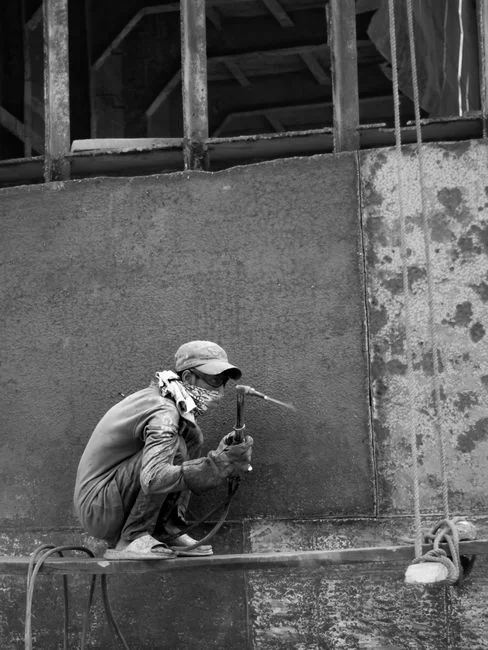
Every retrofit reconfigures the same six design parameters, and each one has a defensible numerical range. Treat these as the engineering baseline a vendor must justify deviation from.
| Parameter | Retrofit Range | Engineering Default | Source / Note |
|---|---|---|---|
| Plate angle (from horizontal) | 45°–60° | 55° | Balances self-cleaning and effective settling area (S3 customization list) |
| Plate spacing (mm) | 50–80 | 60 | Tighter spacing raises area but increases fouling frequency |
| Surface loading rate (m/h) | 20–40 | 25–30 | vs. 1–3 m/h for a conventional clarifier in the same basin (S6) |
| Plate material — chemical/steel service | SS 304 / 316 | SS 316 | For chloride and acid exposure (S3) |
| Plate material — acid/caustic | FRP / PP | FRP | For pH <2 or >12 service (S3) |
| Plate material — municipal / cost-sensitive | HDPE | HDPE | For neutral-pH, low-temperature duty (S3) |
| Inlet distribution | Refurbish or replace influent well, column supports, weirs, baffles, launders | Full replacement | Avoids short-circuiting (Monroe 4 × 250 ft. primary clarifier upgrade pattern) |
| Sludge collection | Chain-and-flight scraper, traveling bridge, or suction system | Suction system for lamella retrofits | Pair with sludge density monitor (S3 instrumentation list) |
For biological-plant operators adding lamella plates as a secondary-clarifier step, the UGM hospital-wastewater study recorded BOD reduction of 56%, COD reduction of 34%, and TSS reduction of 53% on a 24-hour HRT MBBR + Lamella train, with effluent pH held between 7.3 and 7.6 (Universitas Gadjah Mada, 2024). That performance envelope is the realistic benchmark for retrofit duty in a biological train.
Material selection is driven by influent chemistry, not by price. SS 316 is the default for steel-mill and chemical-plant service where chloride and acid excursions are routine. FRP and PP handle pH below 2 or above 12. HDPE is acceptable for municipal, food-and-beverage, and FOG duty at near-neutral pH. For sizing and specification math, see the lamella clarifier specifications and selection guide.
Retrofit Execution Methods: From 3-Day Component Swap to Mobile Clarifier Bypass
Execution method is driven by two variables the engineer cannot change: how long the plant can tolerate downtime, and how much field rework the existing tank geometry demands. Four methods cover the realistic range.
Method 1 — In-situ internal rebuild. Dismantle corroded internals, install new plate pack, weirs, launders, and drive. Monroe documented a 3-day installation on a 25 MGD secondary clarifier where every bolt, weld, and panel had been fit-tested in the shop prior to shipment (Monroe Environmental, 2025). The trade-off is premium fabrication cost offset by near-zero field rework.
Method 2 — Pre-assembled retrofit. The vendor fully assembles plate packs, supports, and drive units off-site, then ships and installs. Pre-assembly is the single biggest lever for cutting field rework and commissioning time; it converts a 2–3 week field campaign into a 5–10 day outage (Monroe Environmental build philosophy, 2025).
Method 3 — Mobile clarifier bypass. A rental trailer-mounted clarifier (e.g., the Monroe X-Flo Mobile Clarifier concept) treats full plant flow while the permanent tank is being retrofitted, allowing zero-day downtime on the main process train. This method is essential for facilities with no equalization basin or with continuous-discharge permit limits that cannot tolerate a planned shutdown (Monroe Environmental, 2025).
Method 4 — Add-on lamella pack into a non-lamella basin. Install inclined plates into an existing conventional clarifier or dewatering bin to recover fines. The IEOM CFD + 1:7 scale-rig study on a diamond-mining dewatering bin validated this approach: lamella plates captured +0.5 to −1.4 mm particles that previously escaped the static drain panels (IEOM Society International, 2024). For footprint and throughput math, the lamella vs conventional clarifier cost and footprint benchmarks piece is the most direct comparison.
Downtime-vs-cost trade-off. 3 days for a pre-assembled component swap (premium price), 7–14 days for a full plate-pack retrofit, 0 days for the mobile-bypass method (highest rental line item). The cheapest execution method is rarely the lowest total installed cost once lost production and permit-risk exposure are priced in.
Retrofit vs. Full Replacement: Cost, Downtime, and ROI Decision Matrix
The decision matrix below is the document a plant engineer should hand to procurement. It ties engineering feasibility to capital range and downtime tolerance in a single extractable table.
| Option | CAPEX vs. New Tank | Downtime | Plant Online During Work | Expected Life Extension | Performance Uplift |
|---|---|---|---|---|---|
| Internal-component rebuild | 30–50% | 3–7 days | Yes (with bypass or redundancy) | 10–15 years | Restore original spec; minor throughput gain |
| Lamella plate retrofit into existing tank | 40–60% | 7–14 days | Yes (with bypass) | 15–20 years | Surface loading 20–40 m/h; up to 30% lower polymer use (S6) |
| Mobile clarifier bypass + retrofit | 50–70% | 0 days on main train | Yes (full) | 15–20 years | Same as plate retrofit; zero lost production |
| Full new-tank construction | 100% (baseline) | 6–12 weeks | No | 25–30 years | Largest capacity gain; largest capex and disruption |
Decision rule of thumb. If the tank shell is sound and the hydraulic capacity deficit exceeds 20%, retrofit wins on both capex and schedule. If the shell is compromised, the footprint must grow more than 2×, or a step-change in influent load is forecast, full replacement wins. The HydropureWater high-efficiency sedimentation tank (lamella clarifier) is one of the equipment options a plant engineer can specify once the retrofit path is locked.
ROI worked example. A chemical plant eliminates the $145,000 replacement cost of a new clarifier tank by retrofitting the existing basin with new internals and inclined plates (Monroe Environmental blast-furnace case, 2025). Add OPEX savings from 20–30% lower polymer dosing and 15–25% higher underflow solids (denser sludge, downstream dewatering gain per S3 counter-current flow note), and a 12–36 month payback is realistic. The lamella clarifier capacity and sizing guide gives the throughput math behind that payback range.
Risk register. Retrofit risks include unknown tank condition (allocate 5–10% contingency for repair-on-discovery), plate fouling in underperforming upstream processes (validate with a 7-day pilot), and longer commissioning if biological integration is added (budget 2–4 weeks of biological acclimation).
Performance Validation: What a Lamella Retrofit Actually Delivers
The numbers below are citable benchmarks a procurement lead can put into a specification sheet without hedging.
For a biological-plus-lamella train, the UGM hospital-wastewater study recorded BOD reduction of 56%, COD reduction of 34%, and TSS reduction of 53% on a 24-hour HRT MBBR + Lamella system, with effluent pH held between 7.3 and 7.6 (Universitas Gadjah Mada, 2024). These are laboratory-scale results, so a full-scale retrofit should target the lower half of that range in commissioning and the upper half after optimization.
For mining and dewatering-bin duty, the IEOM CFD + 1:7 scale rig validated that lamella plates added to an existing dewatering bin captured +0.5 to −1.4 mm particles that previously bypassed the static drain panels (IEOM Society International, 2024). This is the strongest published case for adding a lamella pack to a non-lamella basin where fines recovery is the binding constraint.
For throughput, a surface loading rate of 20–40 m/h means a 30–50 m diameter conventional clarifier is functionally replaced by a 4 × 6 m lamella plate pack — a footprint reduction of roughly 80% at equal hydraulic capacity (HydropureWater product specification, 2026). Counter-current flow inside each lamellar channel also produces a denser underflow than a conventional clarifier, reducing downstream sludge handling volume; that gain flows directly into the HydropureWater plate and frame filter press at the dewatering stage.
Selecting a Retrofit Partner: 7 Engineering Questions to Ask
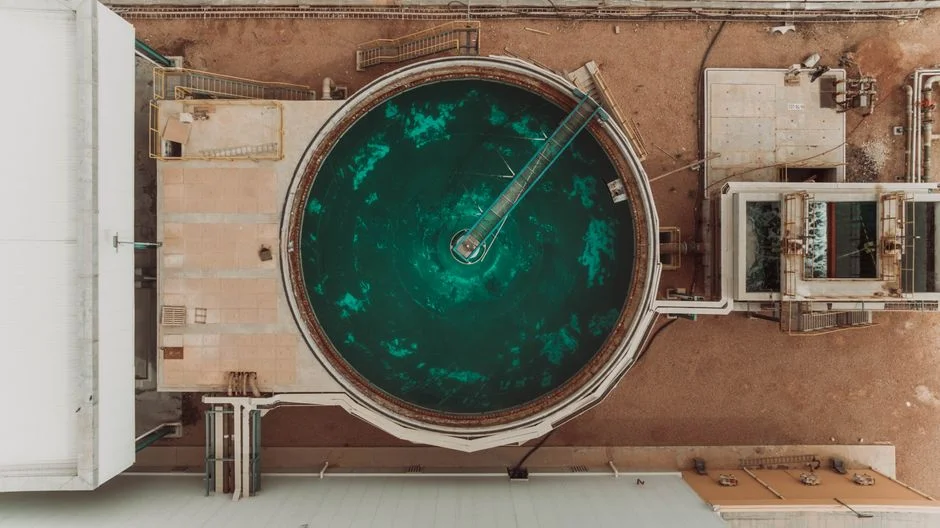
Most clarifier rebuilds are quoted by general fabricators who have never run a CFD model or a pilot rig. The seven questions below filter those vendors out within the first 30 minutes of a meeting.
- Can you show CFD or pilot-rig evidence on lamella retrofit duty — not just new-unit performance?
- Do you pre-assemble and fit-test plate packs, supports, and weirs in your shop before shipment?
- What material certifications can you provide for plate, support, and weir steel (SS 304/316, FRP, HDPE)?
- Can you provide a bypass or mobile clarifier so the plant stays online during the retrofit window?
- Do you offer a written performance guarantee covering TSS, surface loading rate, and polymer consumption?
- What instrumentation package ships with the retrofit (level sensors, turbidity meters, sludge density monitors)?
- Will your PLC integrate with our existing SCADA, and do you provide a control narrative for the handover?
For day-to-day reliability after handover, the secondary clarifier maintenance protocol is the seven-step inspection sequence the partner's commissioning team should train the operations crew on before sign-off.
Frequently Asked Questions
How long does a typical lamella clarifier retrofit take from shutdown to restart?
A pre-assembled internal-component rebuild completes in 3–7 days; a full plate-pack retrofit into an existing non-lamella tank takes 7–14 days; a mobile-clarifier bypass retrofit keeps the main process train online for the entire retrofit window (per Monroe Environmental build records, 2025).
What surface loading rate can a retrofitted lamella clarifier actually achieve?
20–40 m/h in steady-state retrofit duty, against 1–3 m/h for a conventional clarifier in the same basin — an 8–15× hydraulic-capacity uplift (HydropureWater product specification, 2026).
How much does a lamella retrofit cost compared with a new clarifier tank?
Retrofit capex is typically 30–60% of new-tank construction, with payback in 12–36 months from throughput gains and polymer reductions of up to 30% (HydropureWater product specification, 2026).
Can a lamella plate pack be added to an existing conventional clarifier or dewatering bin?
Yes — the IEOM Society International CFD + 1:7 scale-rig study on a diamond-mining dewatering bin validated inclined plates capturing +0.5 to −1.4 mm particles that had previously bypassed static drain panels, without replacing the bin shell (IEOM, 2024).
What influent conditions make a lamella retrofit uneconomic?
Influent TSS below 50 mg/L rarely justifies the capex, and TSS above 5,000 mg/L usually requires primary clarification or DAF pre-treatment upstream of the lamella pack to prevent plate fouling; the sweet spot is 200–3,000 mg/L with consistent flocculant dosing.