Industrial Lamella Clarifier Cost Comparison 2026: CapEx and ROI
Industrial lamella clarifier cost comparison 2026 benchmarks put lamella equipment CapEx at $120,000–$180,000 versus $80,000–$150,000 for conventional clarifiers at 100 m³/h.
Working from a 100 m³/h (about 634,000 US gpd) industrial train, the same lamella clarifier cost data shows the 20–50% equipment premium is often offset by civil works of about $10,000–$25,000 versus $40,000–$90,000. On space-constrained sites, payback commonly falls in 3–5 years.
Lamella units also cut land need by up to 90% for the same hydraulic capacity and often raise TSS removal by about 15–25 percentage points relative to simple gravity tanks. According to US EPA secondary treatment rules in 40 CFR 133.102, the 30-day average suspended solids limit remains 30 mg/L. Plants chasing that limit, or tighter local permits, therefore weigh footprint and effluent stability as hard as sticker price.
What Does the Industrial Lamella Clarifier Cost Comparison 2026 Show?
The direct answer is that lamella equipment costs more at the package level, but the installed project can cost less when land, concrete, piping, sludge hauling, and retrofit time are included. A 100 m³/h comparison should therefore use a site-specific total-cost model rather than compare two equipment quotations in isolation.
Why Clarifier Choice Still Moves the 2026 Project Budget
Clarifier selection changes more than the equipment line on a bid sheet. Consider a food processing plant in Shandong, China, that must upgrade inside a high-density park where land is capped and acquisition costs keep rising. Earlier trade copy sometimes labeled the Chinese municipal rule set “GB 18918-2026.” The standard remains GB 18918—2002. China’s Ministry of Ecology and Environment issued a modification effective 1 March 2026, under Announcement No. 24 of 2025 dated 4 November 2025, jointly released with the State Administration for Market Regulation; the announcement states the modification carries mandatory force. The same notice package also released sector standards such as GB 46817—2025 for food processing manufacturing wastewater.
For that plant, the practical targets still center on TSS below 30 mg/L and COD near or below 100 mg/L under the permit that applies to the discharge path. Engineers must choose between a large conventional sedimentation tank and a compact lamella train. Land valuation, civil labor, sludge handling, and chemical dosing all enter the same spreadsheet.
EU Urban Waste Water Directive 91/271/EEC and US EPA effluent programs continue to push high-efficiency solids separation where reuse or tight direct discharge applies. Conventional clarifiers remain reliable buffers, yet they often need heavier chemical overdosing or a polishing stage when short-circuiting appears. Reviewing 2026 wastewater treatment plant cost benchmarks shows the same pattern: high-rate clarification wins when throughput per square meter of land is the scarce resource.
How Lamella Clarifiers Work: Inclined Plates and Smaller Footprints
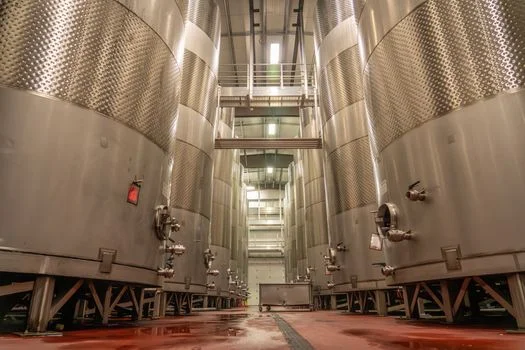
Lamella clarifiers, also called inclined plate settlers, raise effective settling area without enlarging the tank shell. Packs use about 3 mm anti-clogging plates in stainless steel or high-density polymer, set at 55–60°. That angle balances particle settling against self-cleaning so sludge slides into a hopper by gravity. Classical settling theory supports the logic: sedimentation efficiency does not depend on tank depth, while settling area remains the main design parameter (Wikipedia, Sedimentation (water treatment)), and inclined plates are precisely an area multiplier.
Before specifying a pack, read the dedicated lamella clarifier working principle guide for the full plate-hydraulics and selection walkthrough. The lamella clarifier term covers a family of inclined-plate settlers, so plate material, spacing, loading, and sludge withdrawal still need a duty-specific check. Hazen velocity (fluid rise rate between plates) is commonly held at 0.5–1.5 m/h, below the terminal settling velocity of the target floc. Stacked plates multiply effective settling area by roughly 8–10 times versus a conventional tank of the same plan area.
Flow enters at the bottom of the pack, rises between plates, and leaves over adjustable weirs. The High-Efficiency Sedimentation Tank (Lamella Clarifier) combines flocculation and inclined-plate separation in one compact skid when the process allows it. Engineers should confirm inlet distribution and weir loading during pilot or jar-test work because a nominal plate area does not correct poor hydraulics.
Sludge collects in a conical hopper instead of under a long scraper bridge. Surface loading rates of 20–40 m/h (HydropureWater field data for industrial-scale systems, depending on influent solids) support rapid capture of fine floc. That profile fits chemical precipitation for high-turbidity wastewater where residence time on the pad is limited. If the stream contains free oil, the oil lamella clarifier application needs upstream separation and a sludge or float management plan rather than a plate pack alone.
| Parameter | Lamella Clarifier Specification | Technical Rationale |
|---|---|---|
| Plate Angle | 55° – 60° | Ensures gravity-driven sludge sliding and prevents clogging. |
| Plate Thickness | 3 mm (Anti-clogging) | Maintains structural integrity under high flow rates. |
| Hazen Velocity | 0.5 – 1.5 m/h | Lower velocity translates to higher effluent clarity. |
| Effective Settling Area | 8x – 10x Footprint | Allows for high-rate clarification in confined spaces. |
| Surface Loading Rate | 20 – 40 m/h | HydropureWater field data for industrial-scale systems. |
Conventional Clarifiers: Gravity Settling and When They Still Fit
Conventional clarifiers are large circular or rectangular concrete or steel tanks that rely on gravity and hydraulic residence time. In a circular unit, feed enters a center well; as water moves toward the perimeter, velocity drops and solids settle. A scraper or traveling bridge then moves sludge to a central sump.
Their strength is simplicity and surge buffering on large municipal flows. They work best when influent turbidity is modest and particles have high specific gravity. Without inclined plates, effective surface loading often stays near 1–2 m/h, which forces a large plan area.
Short-circuiting from inlet to outlet remains a common risk, and mechanical scrapers need continuous power plus scheduled maintenance. On industrial pads where land is scarce, conventional tanks are usually kept for greenfield sites with cheap land and looser solids limits. For a deeper side-by-side of hydraulics and failure modes, see the Lamella Clarifier vs Conventional Clarifier: Engineering Comparison with Data, Costs & Decision Framework.
Lamella Clarifier CapEx 100 m3 per Hour
For a 100 m³/h industrial system, the package CapEx comparison is $120,000–$180,000 for lamella equipment against $80,000–$150,000 for conventional equipment. The decision changes when civil construction, land, installation access, chemical conditioning, sludge handling, and the value of released floor area are priced in the same worksheet.
2026 CapEx, OPEX, and ROI Side by Side
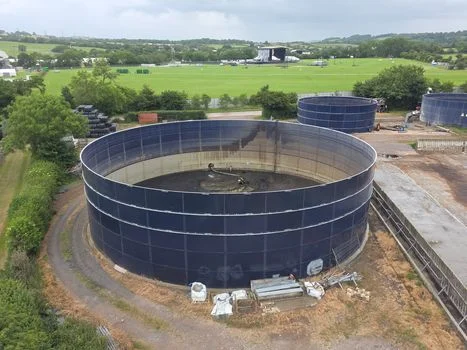
Procurement teams should price the full installed system, not only the plate pack quote. For a 100 m³/h industrial system, lamella equipment CapEx is $120,000–$180,000, while a conventional clarifier of the same capacity often sits at $80,000–$150,000. The 20–50% equipment premium buys compact stainless housings and precision packs; civil works for excavation, concrete, and large piping often close or erase that gap.
OPEX favors denser sludge. Lamella hoppers commonly deliver 3–5% solids versus 1–2% from conventional tanks, which cuts haul volume. Pairing clarification with automated chemical dosing for clarifier optimization can trim polymer use by about 15% when floc control is stable. A textile plant in Zhejiang reported shrinking footprint from 200 m² to 20 m², saving about $30,000 per year in land lease and cutting sludge disposal cost by 25%.
Buyers who need a manufacturer-oriented price walk-through can also review the Lamella Clarifier Cost Price: 2026 B2B Buyer's Guide & ROI Analysis alongside the table below. Most plants we size for do not operate at an ideal laboratory point; they run at the lower end of the loading range during peak solids events, so the quote should show turndown and cleaning assumptions.
| Cost Category (100 m³/h System) | Lamella Clarifier (2026) | Conventional Clarifier (2026) |
|---|---|---|
| Equipment CapEx | $120,000 – $180,000 | $80,000 – $150,000 |
| Civil Engineering Costs | Low ($10k – $25k) | High ($40k – $90k) |
| OPEX (per m³ treated) | $5 – $15 | $8 – $20 |
| Sludge Concentration | 3% – 5% Solids | 1% – 2% Solids |
| Estimated ROI (Space-Constrained) | 3 – 5 Years | 7+ Years |
Lamella Clarifier Footprint Savings Industrial Plant
Lamella clarifier footprint savings for industrial plant planning is most valuable where the existing fence line, building slab, or lease boundary is fixed. At 100 m³/h, a conventional clarifier needs about 100–150 m² to hold residence time, while a lamella unit can treat the same flow in 10–15 m². That near-90% land cut matters when expansion must stay inside existing walls.
Smaller pads mean less underground piping and shorter install windows. In many 2026 urban industrial projects, land cost exceeds equipment cost. A chemical plant in Jiangsu replaced a circular clarifier with a lamella unit, freed about 90 m², and put that area into a solvent recovery line that added about $200,000 in annual revenue. The planning check should include access for plate-pack removal, hopper discharge, wash water, and safe chemical storage, not just the equipment outline.
| Flow Rate (m³/h) | Lamella Footprint (m²) | Conventional Footprint (m²) | Space Savings (%) |
|---|---|---|---|
| 50 | 6 – 8 | 60 – 80 | 90% |
| 100 | 10 – 15 | 100 – 150 | 90% |
| 250 | 25 – 35 | 250 – 350 | 90% |
| 500 | 55 – 75 | 500 – 700 | 89% |
Efficiency Benchmarks: TSS Removal, Hazen Velocity, and Sludge Quality
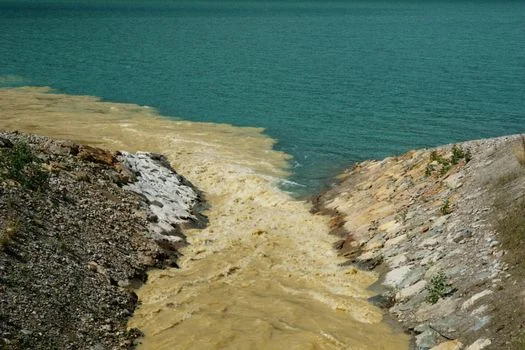
HydropureWater field data and typical industrial settling trials show lamella TSS removal near 92–97%, versus about 85–90% for many conventional sedimentation tanks under comparable floc conditions. That gap helps plants hold effluent near the EPA 30 mg/L SS 30-day average without jumping straight to membrane polishing. Wikipedia's secondary treatment overview notes effluent is expected to stay below 30 mg/L BOD and 30 mg/L suspended solids on monthly averages, with weekly averages allowed up to 50 percent higher—so a clarifier must hold margin, not just touch the limit. Lamella Hazen velocities of 0.5–1.5 m/h keep fine, low-density floc in the pack longer than a short-circuited rectangular tank.
Sludge quality drives dewatering OPEX. Conventional tanks often produce thin 1–2% solids slurry. Lamella hoppers with integrated flocculation more often reach 3–5% solids, which shortens sludge dewatering equipment for clarifier effluent cycle time and raises cake dryness. That sludge-loop synergy can cut related operating cost by about 20–40%. More stable underflow also helps when the clarifier serves secondary activated sludge separation.
The percentage ranges are design benchmarks, not a contracted permit outcome. Influent particle size, coagulant selection, hydraulic distribution, temperature, sludge withdrawal frequency, and laboratory or pilot results should be recorded in the design basis before a compliance claim is made.
| Metric | Lamella Clarifier | Conventional Clarifier | Impact on Compliance |
|---|---|---|---|
| TSS Removal Efficiency | 92% – 97% | 85% – 90% | Meets 2026 limits easily. |
| Hazen Velocity | 0.5 – 1.5 m/h | 0.1 – 0.3 m/h | Higher clarity in effluent. |
| Sludge Solids % | 3.0% – 5.0% | 1.0% – 2.0% | Reduces dewatering OPEX. |
| Chemical Dosing Need | Moderate | High (to offset surges) | Lower chemical budget. |
How to Select a Clarifier for Industrial Wastewater
Clarifier selection for industrial wastewater should start from land, influent TSS, retrofit constraints, and sludge disposal cost, not from catalog photos. Use the checklist below before locking a P&ID, and keep industrial wastewater treatment compliance strategies aligned with the permit path.
- Is the site space-constrained? If yes, lamella is usually the only practical path to raise capacity inside the existing fence line.
- Is influent TSS above 500 mg/L? High-turbidity streams from mining or metal finishing benefit from high-rate inclined-plate area.
- Are you upgrading an existing tank? Lamella packs can often be retrofitted into circular or rectangular shells to roughly triple capacity without new civil works.
- Is flow above 1,000 m³/h with low land cost? Large municipal greenfield plants may still favor conventional circular tanks on CapEx alone.
- Is sludge disposal the largest OPEX line? Prefer lamella when denser underflow will shrink dewatering and haul bills.
- Do you need polymer trim and stable floc? Plan automated chemical dosing for clarifier optimization with the settler, not as an afterthought.
| Feature | Choose Lamella Clarifier If... | Choose Conventional If... |
|---|---|---|
| Site Location | Urban/Industrial Park | Rural/Ample Land |
| Influent Type | Industrial/High Turbidity | Municipal/Low Turbidity |
| Project Type | Retrofit or New Compact Build | Large Greenfield Utility |
| Budget Focus | Total Lifecycle Cost (ROI) | Initial CapEx Only |
What design criteria matter for primary and secondary clarification?
Design criteria for primary and secondary clarification hinge on surface loading, Hazen velocity, plate angle, and duty type. Primary industrial duty often pairs coagulation with lamella loading of 20–40 m/h when floc is strong. Secondary municipal duty may keep conventional surface rates near 1–2 m/h unless a retrofit pack is installed. Compare lamella and DAF only after oil and grease, floatables, and sludge destination are defined. Manufacturer notes in the Lamella Clarifier Manufacturer: High-Efficiency Design & Cost 2026 help size plate area and hopper volume.
Who This Is For and Next Step
This comparison is for plant engineers, EPC process leads, and procurement managers sizing primary or secondary solids separation on industrial pads. Look elsewhere if you only need a very large rural municipal clarifier with abundant cheap land and no footprint limit. If you have flow, TSS, and layout constraints ready, Request a free quote with those numbers so a duty-specific plate area and CapEx band can be checked.
Frequently Asked Questions
How much more does a lamella clarifier cost than a conventional one?
Equipment CapEx for a lamella clarifier is typically 20–50% higher than a conventional clarifier of the same 100 m³/h capacity in 2026 quotes. Once civil works, land lease, and installation are included, total project cost for many industrial lamella systems runs about 10–20% lower. The crossover depends on local concrete pricing and whether the conventional option needs a much larger pad.
Can a lamella clarifier handle high-solids influent?
Yes. Lamella clarifiers are built for high-solids and high-turbidity industrial wastewater when flocculation is adequate. Inclined plates create a large settling area and support TSS removal up to about 97% in field data, provided plate angle stays near 55–60° so sludge slides instead of packing. Extremely sticky or fibrous solids still need screening and careful hopper design upstream of the pack.
What maintenance does a lamella clarifier need?
Lamella clarifiers usually need less mechanical work than bridge-scraper conventional tanks because they lack large traveling drives. Typical practice is a quarterly inspection of plate packs for biofouling plus an annual high-pressure wash to restore open channels and Hazen velocity. Hopper desludging valves and level instruments should stay on the same preventive schedule as the rest of the solids train.
How do lamella clarifiers support 2026 discharge compliance?
US EPA secondary treatment still sets a 30 mg/L SS 30-day average under 40 CFR 133.102. China continues to apply GB 18918—2002 with a modification effective 1 March 2026, not a renamed “GB 18918-2026”; the Ministry of Ecology and Environment Announcement No. 24 of 2025 identifies the modification as mandatory. Lamella TSS removal in the 92–97% band gives a wider margin than many 85–90% conventional tanks before membranes. Lower chemical overdosing also reduces sludge mass disposed in the same permit period.