Wastewater treatment plant cost in Mashhad (2026) spans IRR 2.25-900 billion installed. Technology and flow drive the total: budget IRR 45-75 million per m³/day for activated sludge and IRR 120-180 million per m³/day for MBR, before Class A compliance add-ons.
Wastewater Treatment Plant Cost in Mashhad 2026: The Short Answer
Budget IRR 2.25-4.5 billion for a 50 m³/day activated-sludge or DAF package and IRR 600-900 billion for a 5,000 m³/day MBR plant in 2026. Mashhad adds 20-30% on labor and materials versus Tehran. Class A compliance adds IRR 5-60 million of CAPEX depending on technology. Most mid-size food and textile plants land between IRR 30 billion and IRR 180 billion installed.
Why Mashhad's Compliance Pressure Keeps Rising
Mashhad's industrial zones, led by the Khayyam Industrial Estate, discharge roughly 200,000 m³/day of untreated wastewater. Recent effluent sampling shows BOD, COD and TSS running 3-5 times above Iranian DOE Class A limits, per a 2023 Iranian hospital study. The commercial cost of that gap keeps climbing every quarter.
Iran's 2024 Environmental Protection Law raised fines to IRR 100-500 million per offense, and the 2024 DOE enforcement guidelines authorize sealing non-compliant facilities indefinitely. Enforcement authority sits with the Environmental Protection Organization, the national body responsible for water-pollution control. Iran operates no separate water and sanitation regulator, according to the country's water and sanitation profile, so permit negotiations run through one channel.
The environmental ledger is worsening in parallel. Pollution of the Kashafrud River, the watercourse draining the plain southeast of Mashhad, has cut local groundwater quality by an estimated 40% since 2018, per the 2023 Mashhad Water Authority report. Water scarcity, in other words, is now a line item in every treatment business case.
Each industrial cluster brings its own wastewater profile. Textile plants fight high salinity and heavy metals, food processors push heavy organic and FOG loads, and pharmaceutical sites face strict microbiological limits. Tailored process selection, rather than a standard package, is what keeps a discharge permit safe here. Buyers who skip cluster-specific design usually pay for it in retrofit CAPEX later.
2026 CAPEX Breakdown by Technology and Flow Rate
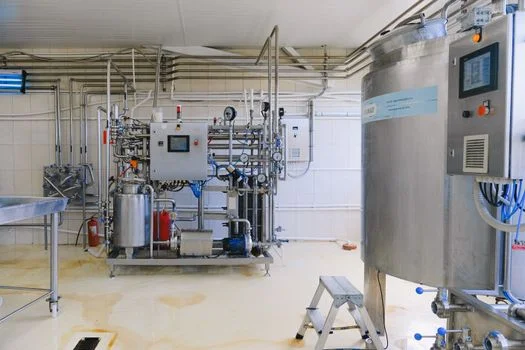
Capital cost in Mashhad tracks technology first and design flow second. MBR systems carry the highest CAPEX, followed by DAF and then conventional activated sludge. Site economics then load on top: labor and materials run an estimated 20-30% above Tehran levels, steel sits about 15% higher, and import tariffs on membranes and specialty chemicals compound the gap.
A 1,000 m³/day MBR plant in Mashhad budgets at IRR 120-180 billion, covering membrane modules, aeration and automation. A DAF plant of the same class costs less, with a 500 m³/day unit estimated at IRR 30-45 billion. Activated sludge holds the lowest unit CAPEX at IRR 45-75 million per m³/day, but tertiary treatment for Class A pushes a 2,000 m³/day plant to IRR 90-150 billion.
Quote vintage matters when you benchmark. Headline figures of IRR 5 billion for a 50 m³/day DAF system and IRR 200 billion for a 5,000 m³/day MBR plant still circulate in early budget rounds. The per-unit table below supports IRR 2.5-4.5 billion and IRR 600-900 billion for those same duties, so treat the rounded headlines as background and cost from current quotations.
Scope definitions move quotes as much as prices do. Check whether civil works, balance and sludge tanks, odor control, and commissioning labor sit inside each CAPEX figure, because the 20-30% regional premium applies to most of those items in Mashhad. Comparing offers only works when the scope lines match line for line.
| Technology | Flow Rate (m³/day) | Estimated CAPEX Range (IRR Billion) | Estimated CAPEX per m³/day (IRR Million) |
|---|---|---|---|
| MBR Systems | 50 | 6 - 9 | 120 - 180 |
| 200 | 24 - 36 | 120 - 180 | |
| 1,000 | 120 - 180 | 120 - 180 | |
| 5,000 | 600 - 900 | 120 - 180 | |
| DAF Systems | 50 | 2.5 - 4.5 | 50 - 90 |
| 200 | 10 - 18 | 50 - 90 | |
| 1,000 | 50 - 90 | 50 - 90 | |
| 5,000 | 250 - 450 | 50 - 90 | |
| Activated Sludge (Base System) | 50 | 2.25 - 3.75 | 45 - 75 |
| 200 | 9 - 15 | 45 - 75 | |
| 1,000 | 45 - 75 | 45 - 75 | |
| 5,000 | 225 - 375 | 45 - 75 |
For Mashhad's specific industrial wastewater treatment needs, consider MBR systems for Mashhad's high-efficiency wastewater treatment needs or DAF systems for Mashhad's high-FOG industrial wastewater.
DAF System CAPEX Mashhad Industrial Buyers Should Expect
DAF system CAPEX for Mashhad industrial duties runs IRR 50-90 million per m³/day of design flow. A 500 m³/day unit lands at IRR 30-45 billion installed, and chemical dosing skids add an estimated IRR 5-15 million per year to OPEX. That mid-band pricing explains why DAF is the default first treatment stage for food and textile plants carrying heavy FOG and TSS loads.
Two Mashhad-specific line items deserve attention in every DAF quotation. Polymer and coagulant supply carries import tariffs, and the skilled-operator shortage pushes commissioning labor above Tehran rates. Both feed the same 20-30% regional premium visible across the CAPEX table. In our quoting experience, offers that exclude sludge dewatering understate the 10-year total most.
Bidding practice also shifts the number you sign. Vendors quoting a packaged DAF skid without equalization and pH control usually look cheaper on paper, then lose the advantage once the missing tanks are priced locally. Ask each bidder to state recycle ratio, saturator pressure and chemical dose assumptions behind the offer, then normalize the quotes before comparing.
Iranian DOE Class A Compliance Cost by Technology
Meeting Iranian DOE Class A discharge limits in Mashhad means holding BOD at or below 30 mg/L, COD at or below 60 mg/L and TSS at or below 30 mg/L, and each technology reaches those numbers at a different price. MBR effluent typically arrives at BOD ≤10 mg/L, COD ≤30 mg/L and TSS ≤5 mg/L, so compliance adds only IRR 5-10 million of redundancy and monitoring CAPEX plus IRR 1-3 million per year in consumables.
DAF systems usually need tertiary sand filtration and UV disinfection to clear Class A, adding IRR 20-40 million of CAPEX and IRR 3-8 million per year of OPEX. Activated sludge demands the fullest train of filtration, advanced chemical dosing and robust disinfection, worth IRR 30-60 million of CAPEX and IRR 5-12 million per year. DOE's 2024 enforcement priorities raise the stakes further, with unannounced inspections, mandatory real-time monitoring, and penalties for exceeding discharge limits by even 10%.
| Technology | Additional CAPEX for Class A Compliance (IRR Million) | Additional Annual OPEX for Class A Compliance (IRR Million) | Typical Effluent Quality (mg/L) |
|---|---|---|---|
| MBR Systems | 5 - 10 (Redundancy/Monitoring) | 1 - 3 (Minor Consumables) | BOD ≤10, COD ≤30, TSS ≤5 |
| DAF Systems | 20 - 40 (Sand Filtration + UV) | 3 - 8 (Energy, Lamp Replacement, Chemicals) | BOD ≤25, COD ≤55, TSS ≤25 |
| Activated Sludge Systems | 30 - 60 (Full Tertiary Treatment + Disinfection) | 5 - 12 (Energy, Chemicals, Sludge Handling) | BOD ≤28, COD ≤58, TSS ≤28 |
Disinfection chemistry is a common gap in low-end offers. For compliance challenges that need advanced disinfection, chlorine dioxide generators offer a compact dosing route.
For specialized treatment needs, such as those found in medical facilities, the compact medical wastewater treatment for Mashhad clinics offers a compliant solution.
Activated Sludge vs MBR Cost Mashhad: Head-to-Head Comparison
The activated sludge versus MBR cost comparison for Mashhad sites turns on four variables: CAPEX, OPEX, footprint and effluent quality. MBR carries the highest CAPEX yet delivers effluent well inside Class A with the smallest footprint, which suits space-constrained pharmaceutical and food sites. DAF sits mid-pack on CAPEX and removes FOG and TSS effectively for textile and leather workloads. Activated sludge costs least up front but needs the most land and the heaviest tertiary package.
The same trade-offs shape industrial wastewater treatment everywhere, and guides to industrial wastewater treatment in other markets apply the same CAPEX and OPEX split used here. Compare offers on 10-year totals rather than installed price alone, because OPEX differences compound annually.
| Parameter | MBR | DAF | Activated Sludge |
|---|---|---|---|
| CAPEX | High | Medium | Low |
| OPEX | Low | High (Chemicals) | High (Energy, Labor) |
| Footprint | Small | Medium | Large |
| Effluent Quality | Excellent (Meets Class A easily) | Good (Requires Tertiary for Class A) | Fair (Requires Extensive Tertiary for Class A) |
| Energy Use | Medium | Medium | High |
| Chemical Use | Low | High | Medium |
| Maintenance Complexity | Medium | Medium | High |
| Scalability | Modular, High | Moderate | Moderate |
| Compliance Risk | Low | Medium | High |
| Payback Period | Longer (due to CAPEX) | Moderate | Shorter (initially, higher long-term OPEX) |
Decision Flowchart: Which technology is right for your Mashhad facility?
START
Q1: Is space a critical constraint?
- YES: → Consider MBR
- NO: → Proceed to Q2
Q2: Is high FOG/TSS content a primary challenge (e.g., textile, food processing)?
- YES: → Consider DAF (potentially with tertiary treatment)
- NO: → Proceed to Q3
Q3: Is minimizing initial CAPEX the absolute priority, with ample space available?
- YES: → Consider Activated Sludge (ensure budget for tertiary treatment)
- NO: → Re-evaluate MBR for its long-term OPEX and compliance benefits.
Lifecycle Cost Analysis: Where 10-Year Totals Diverge
Ten- to twenty-year ownership, not installed price, decides the better buy in Mashhad. Energy at an estimated IRR 1,200/kWh and skilled operators at IRR 30-50 million per year dominate OPEX. Those two lines accumulate fast enough to reverse the CAPEX ranking within a decade.
At 500 m³/day the numbers are concrete. MBR costs about IRR 60 billion installed but only IRR 15 billion per year to run, reaching IRR 210 billion over ten years. DAF starts at IRR 30 billion with IRR 25 billion per year of chemical-heavy OPEX, totaling IRR 280 billion. Activated sludge starts cheapest at IRR 20 billion yet spends IRR 30 billion per year, closing the decade at IRR 320 billion.
| Cost Component | MBR (500 m³/day) | DAF (500 m³/day) | Activated Sludge (500 m³/day) |
|---|---|---|---|
| CAPEX (IRR Billion) | 60 | 30 | 20 |
| Annual Energy (IRR Billion) | 6 | 5 | 8 |
| Annual Chemicals (IRR Billion) | 2 | 12 | 5 |
| Annual Labor/Maintenance (IRR Billion) | 7 | 8 | 17 |
| Total Annual OPEX (IRR Billion) | 15 | 25 | 30 |
| 10-Year Total Cost (IRR Billion) | 210 | 280 | 320 |
Effluent value tips the balance further toward MBR. According to the US EPA water reuse program (WRAP 2.0, April 2026), reclaimed water serves both potable and non-potable demands and strengthens supply resilience, a framing that applies directly to Mashhad's water balance.
Sensitivity matters as much as the base case. Chemical prices move DAF and activated-sludge OPEX hardest, while energy tariffs move all three, so ask suppliers for the energy and chemical consumption assumptions behind each bid. Reuse plans change the economics again, because every cubic meter reclaimed offsets freshwater purchase at Mashhad's scarcity-driven rates.
To estimate your specific payback period, work through the ROI worksheet below, plugging in your facility's flow rate and chosen technology.
A Simple ROI Worksheet (Illustrative)
To estimate your potential return on investment:
- Enter Daily Flow Rate (m³/day): [Input Field]
- Select Technology:
- MBR
- DAF
- Activated Sludge
- Estimated Annual Avoided Fines/Costs (IRR): [Input Field] (e.g., potential fines, water reuse savings)
- Estimated Annual OPEX (IRR): [Input Field] (Use table data as a guide)
Estimated CAPEX: [Calculated based on flow rate and technology choice]
Estimated Annual Net Savings: (Estimated Annual Avoided Fines/Costs) - (Estimated Annual OPEX)
Estimated Payback Period (Years): Estimated CAPEX / Estimated Annual Net Savings
A Low-Risk Selection Framework and Supplier Checklist
A low-risk selection framework in Mashhad runs in five steps. Define influent parameters first: BOD, COD, TSS, pH and salinity through full laboratory testing, noting that Mashhad textile wastewater typically averages BOD 800 mg/L and COD 1,500 mg/L per a 2023 local study. Match those characteristics to a technology using the decision flowchart above. Collect detailed CAPEX and OPEX quotes from at least three suppliers, scrutinizing any proposal that does not contract explicit DOE compliance.
Then test before you buy. Renting a 10 m³/day unit for three months, as demonstrated by a 2024 case study where an MBR pilot successfully reduced COD from 1,200 mg/L to 25 mg/L, delivers real-world performance data on your own wastewater. Finally, negotiate contractual clauses that include penalties for non-compliance, so the supplier shares the risk of exceeding DOE limits. Consider the following checklist when vetting potential suppliers:
- What is your track record with Mashhad DOE compliance?
- Can you provide pilot testing units for our specific wastewater?
- What are the warranted effluent parameters, and what are the penalties for non-compliance?
- What is the expected lifespan and replacement cost of critical components (e.g., membranes)?
- Can you provide comprehensive training for our operational staff?
- What is the lead time for equipment delivery and installation in Mashhad?
- Do you offer ongoing maintenance and support services locally?
- Can you provide references from similar industrial facilities in Iran?
- What is the energy consumption profile of your proposed system?
- What are the projected chemical consumption rates and associated costs?
Score the answers, not the brochures. Suppliers who answer the pilot-testing and warranty questions with specifics usually hold up through commissioning, while vague answers on lead time and local support predict trouble in month three of operation.
Next Step for Mashhad Plants
Every wastewater treatment plant cost in Mashhad estimate should end in a site-specific quotation, because influent chemistry and land constraints move the total more than any benchmark table can. Send your flow rate and laboratory results through the request-a-quote page for a sized proposal. Teams budgeting across regions can pair this guide with the Ajman Industrial Effluent Guide: 2026 Specs and Compliance, which applies the same CAPEX and OPEX method to UAE facilities.
Frequently Asked Questions
What is the MBR system cost per cubic meter Iran buyers should budget for in 2026?
Plan on IRR 120-180 million per m³/day of design flow for MBR systems. A 1,000 m³/day plant therefore budgets at IRR 120-180 billion installed, covering membranes, automation and installation. Annual OPEX averages IRR 12-18 billion across energy, labor and maintenance. Membrane replacement is the swing item, so ask suppliers to state expected membrane lifespan and replacement cost in writing before award.
What drives wastewater treatment plant cost Mashhad plants face in 2026?
Mashhad's 20-30% premium on labor and materials over Tehran drives most of the local variance. Steel runs about 15% higher, import tariffs raise membrane and specialty-chemical costs, and skilled-operator shortages stretch commissioning timelines. Technology sets the base rate, but these regional factors decide where inside each CAPEX band your project lands. Site conditions and land prices add the final margin.
What are the Iranian DOE's discharge limits and fines for industrial plants in Mashhad?
DOE 2024 guidelines mandate Class A limits for industrial discharges into public sewers or water bodies: BOD ≤30 mg/L, COD ≤60 mg/L and TSS ≤30 mg/L. Non-compliance can draw fines up to IRR 500 million and facility shutdowns under the 2024 Environmental Protection Law. Real-time monitoring is now part of the enforcement toolkit, so a data gap counts against a plant almost as much as an exceedance.
Can a DAF system meet DOE Class A limits in Mashhad?
Yes, but a DAF system typically requires tertiary treatment, such as sand filtration and UV disinfection, to achieve DOE Class A limits. The additions cost an estimated IRR 20-40 million in CAPEX and IRR 3-8 million per year in OPEX. MBR remains the lower-risk option where consistent compliance matters more than the lowest installed price, since its effluent starts well inside the limits.
How do you estimate industrial wastewater treatment capex Iran 2026 projects will need?
Start from per-unit benchmarks: IRR 45-75 million per m³/day for activated sludge, IRR 50-90 million for DAF and IRR 120-180 million for MBR, then add tertiary and disinfection scope for Class A. Payback typically runs 3-7 years depending on technology, plant cost and fines avoided; a textile factory saving IRR 50 million annually in fines recoups an investment of IRR 200 million in roughly 4 years. DOE CAPEX subsidies of 20-40% are available for plants meeting Class A limits, via the Mashhad Environmental Protection Office.
What’s the payback period for a wastewater treatment plant in Mashhad?
Payback for a Mashhad treatment plant typically ranges from 3 to 7 years, set by the chosen technology, plant cost, and fines avoided. A textile factory saving IRR 50 million annually in fines can recoup an IRR 200 million investment in roughly 4 years. Class A compliance also protects the discharge permit, which usually carries a larger financial exposure than energy or chemicals.
Are there government subsidies for wastewater treatment plants in Mashhad?
Yes, the Iranian DOE offers CAPEX subsidies ranging from 20% to 40% for plants that meet Class A discharge limits. Applications go through the Mashhad Environmental Protection Office (MEPO). Treat the subsidy as upside rather than baseline in the budget, because disbursement depends on national budget cycles and verification visits.