High-salinity reverse osmosis (RO) is the most mature membrane route for industrial effluents up to 120 g/kg total dissolved solids (TDS). Energy use spans 3 to 22 kWh/m³, set by feed salinity and system design. High-Pressure Reverse Osmosis (HPRO) and Osmotically Assisted Reverse Osmosis (OARO) extend that envelope to hypersaline brines, but only when pretreatment stops scaling, organic fouling, and early membrane loss.
Why High-Salinity Reverse Osmosis Fails Without Proper Engineering
Hypersaline RO fails mainly through CaSO₄ and BaSO₄ scaling, organic fouling from oils and hydrocarbons, and high differential pressure from weak pretreatment. Salinity above 50 g/kg TDS accelerates fouling by 3–5 times versus brackish service (ASTM D4516-22). Without DAF, multimedia filtration, and antiscalant dosing, membrane life collapses from multi-year service to early replacement.
A major chemical plant in Houston, Texas, received a $2.1 million fine in 2025 for repeatedly exceeding its TDS discharge limits and had to retrofit its RO train under EPA enforcement (EPA, 2025). Dissolved air flotation (DAF) typically removes 92–97% of fats, oils, and greases (FOG); multimedia filtration then drives total suspended solids (TSS) below 5 mg/L; and 2–5 ppm polyacrylic acid antiscalant holds scale-forming ions in solution. Most plants we size for petrochemical and food processing effluents run DAF + multimedia + antiscalant as the baseline train. The gap between 18-month and 36-month membrane life almost always traces to one of those three steps being under-specified.
Standard RO vs. HPRO vs. OARO: Engineering Specs Compared
Match the RO variant to feed salinity, pressure tolerance, and energy budget before you compare vendors. Standard brackish RO covers up to 50 g/kg TDS at 15–30 bar. HPRO pushes to 120 g/kg TDS at 80–120 bar. OARO reaches the same salinity envelope at 30–60 bar by using an osmotic gradient. The table below summarizes operating envelope, energy draw, recovery, and capital cost for each.
| Parameter | Standard RO | High-Pressure RO (HPRO) | Osmotically Assisted RO (OARO) |
|---|---|---|---|
| Salinity Limit (g/kg TDS) | 30–50 | 50–120 | 70–120 |
| Operating Pressure (bar) | 15–30 | 80–120 | 30–60 |
| Energy Consumption (kWh/m³) | 3–10 | 8–22 | 3–8 |
| Water Recovery (%) | 75–90 | 60–80 | 70–85 |
| Membrane Type | Polyamide TFC | Reinforced TFC | Dual-membrane (e.g., Aquaporin Inside®) |
| Typical Flux Rate (LMH) | 10–20 | 5–12 | 5–12 |
| Estimated CAPEX ($/m³/day) | $500–$1,500 | $1,200–$2,500 | $1,200–$2,500 |
Standard RO uses polyamide thin-film composite (TFC) membranes such as Dow Filmtec SW30HR and recovers 75–90% of feed water. HPRO uses reinforced TFC elements like Toray TM820R-400 to survive 80–120 bar and recovers 60–80%. OARO pairs a draw solution with a second membrane to offset osmotic pressure, recovering 70–85% at 3–8 kWh/m³. Holding flux at 10–20 LMH for RO and 5–12 LMH for HPRO/OARO extends membrane life and matches the window most manufacturers publish. For turnkey skids sized to your feed, see HydropureWater's industrial RO systems for high-salinity wastewater.
Pretreatment Essentials: Protecting RO Membranes from Hypersaline Fouling
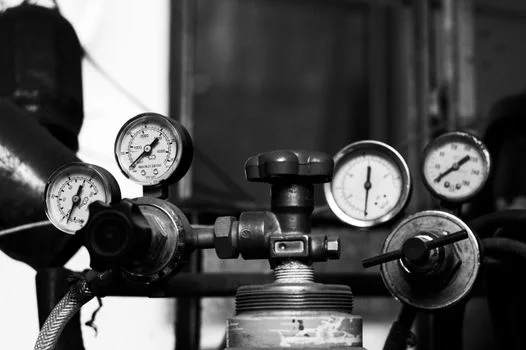
Pretreatment is the single strongest driver of RO membrane life in hypersaline service. HydropureWater's DAF systems for FOG removal in high-salinity pretreatment consistently achieve 92–97% FOG removal across 4–300 m³/h, cutting organic load before the membranes see it. Multimedia filtration downstream drives TSS below 5 mg/L and the Silt Density Index (SDI) below 3, the thresholds ASTM D4189-16 sets for RO feed; HydropureWater's multimedia filters for TSS removal in RO pretreatment are sized to those targets. Antiscalant dosing of 2–5 ppm polyacrylic acid or phosphonate keeps CaSO₄ and BaSO₄ in solution, per Nalco Water's 2024 antiscalant guidance.
For silica-rich feeds such as semiconductor wastewater, acidifying to pH 6–7 prevents silica polymerization. One Saudi Arabian refinery moved membrane replacement from every 12 months to every 36 months after adding DAF, antiscalant, and pH control. For effluents carrying complex organics alongside high salt, advanced pretreatment strategies for organic-rich high-salinity effluents may also be considered.
Energy Costs and ROI: Is High-Salinity RO Worth the Investment?
Capital cost is only half the story; energy, membranes, and chemicals drive operating cost, and regulatory exposure drives avoided cost. CAPEX runs $500–$1,500/m³/day for standard RO and $1,200–$2,500/m³/day for HPRO or OARO at 2026 market prices. OPEX averages $0.50–$2.00/m³ for standard RO and $1.50–$4.50/m³ for HPRO/OARO. Regulatory drivers such as EPA 40 CFR Part 435 for oil and gas and the EU Industrial Emissions Directive 2010/75/EU push plants toward zero-liquid discharge (ZLD), and RO combined with crystallization removes the off-site disposal line item. A German chemical plant reported €1.2 million in annual disposal savings after switching from evaporation to HPRO on its hypersaline brine. The 5-year comparison below models a 100 m³/h system treating 80 g/kg TDS and shows OARO's lower energy draw compressing payback to roughly half that of HPRO.
| System Type | CAPEX (Initial Investment) | OPEX/Year (Energy, Memb., Chem.) | Annual Avoided Disposal/Fine Costs | Net Annual Savings | Payback Period (Years) | Net Savings (5-Year Horizon) |
|---|---|---|---|---|---|---|
| HPRO (100 m³/h, 80 g/kg TDS) | $4,320,000 | $3,066,000 | $8,760,000 | $5,694,000 | 0.76 | $24,150,000 |
| OARO (100 m³/h, 80 g/kg TDS) | $3,840,000 | $1,752,000 | $8,760,000 | $7,008,000 | 0.55 | $31,200,000 |
How to Select the Right RO System for Your High-Salinity Wastewater
Selection works best as a five-step decision rather than a vendor catalog scan. Step 1: characterize the effluent with TDS (ASTM D4195-16), TSS, FOG (EPA Method 1664), silica, and a full organic profile; those numbers drive every choice that follows. Step 2: match salinity to system type, using standard RO below 50 g/kg TDS, HPRO between 50 and 120 g/kg TDS, and OARO above 70 g/kg TDS when energy is the binding constraint. Step 3: size membrane area from flux (10–20 LMH for RO, 5–12 LMH for HPRO/OARO) and target recovery of 75–95%. Step 4: pick membrane chemistry — polyamide TFC for high rejection, cellulose acetate for better chlorine tolerance, aquaporin-based elements for low-energy OARO. Step 5: design the pretreatment train around DAF, multimedia filtration, and antiscalant dosing matched to your scale-forming ions.
When you talk to vendors, ask for membrane warranty terms at your specific TDS, guaranteed kWh/m³ at that TDS, a written pretreatment recommendation, and references on similar installations. For sizing support, consult HydropureWater's industrial RO systems for high-salinity wastewater or review the DAF systems for the upstream FOG step.
Who This Specification Is For
This guide fits plant engineers and EPC teams sizing RO for petrochemical, oil and gas, food processing, semiconductor, and similar hypersaline streams between 30 and 120 g/kg TDS. If your feed sits below 5 g/kg TDS, a standard brackish RO datasheet is the better starting point. If you need true zero-liquid discharge on brines above 120 g/kg TDS, plan on thermal crystallization downstream of RO rather than RO alone. Send your feed analysis to HydropureWater's engineering team for a sized recommendation and a budgetary quote.
Frequently Asked Questions
What is the maximum salinity reverse osmosis can handle?
Standard RO systems treat industrial effluents up to 50 g/kg TDS. High-Pressure Reverse Osmosis (HPRO) and Osmotically Assisted Reverse Osmosis (OARO) extend that capability to 120 g/kg TDS, based on data from leading scientific publications. Beyond 120 g/kg TDS, thermal methods such as evaporation-crystallization are typically required.
How much energy does high-salinity reverse osmosis consume?
Energy use for high-salinity RO systems ranges from 3 to 22 kWh/m³. HPRO sits at the high end (8–22 kWh/m³) because of its operating pressure. OARO reaches 3–8 kWh/m³ on hypersaline brines by using osmotic assistance, per published RO energy analyses.
What is the lifespan of RO membranes in high-salinity applications?
With consistent pretreatment — Dissolved Air Flotation (DAF), multimedia filtration, and precise antiscalant dosing — RO membranes in high-salinity service can last 3 to 5 years. Without adequate pretreatment, life often falls to 1 to 2 years, as reflected in manufacturer warranties and field data.
Can reverse osmosis treat oil and gas produced water?
Yes, RO can treat oil and gas produced water when pretreatment is sized for the chemistry. DAF removes 92–97% of fats, oils, and greases (FOG), and antiscalants are essential against BaSO₄ and CaSO₄ scaling common in produced water, helping facilities comply with EPA 40 CFR Part 435.
What is the difference between HPRO and OARO?
High-Pressure Reverse Osmosis (HPRO) uses hydraulic pressures of 80–120 bar across a single reinforced membrane to overcome high osmotic pressure. Osmotically Assisted Reverse Osmosis (OARO) uses a dual-membrane layout with a draw solution that assists the primary RO step, cutting required hydraulic pressure to 30–60 bar and energy to 3–8 kWh/m³ versus 8–22 kWh/m³ for HPRO.
Further Reading
Explore these in-depth articles on related wastewater treatment topics: