Industrial wastewater treatment in the UK: compliance, costs and equipment
Industrial wastewater treatment in the UK is sized to site-specific trade effluent consents and Environment Agency permit limits, not one national COD or FOG number. Tight food-sector sewer targets often sit near <50–250 mg/L COD, <30 mg/L TSS and <10 mg/L FOG. CAPEX commonly spans £50K for small DAF packages to about £5M for large MBR trains with sludge handling.
UK manufacturers size systems against Mogden-based sewer charges, regional ammonia and phosphorus caps, and footprint limits in existing yards. Consent limits remain site-specific; technology choice then follows the compliance gap, reuse goal and available space.
Why UK manufacturers are upgrading treatment systems
Environment Agency enforcement actions regarding industrial discharge rose by 18% in 2023, with approximately 62% of all recorded violations tied directly to high concentrations of Fats, Oils, and Grease (FOG) and heavy metals. For UK plant managers, the regulatory environment has moved from advisory to punitive. Under Section 118 of the Water Industry Act 1991, discharging trade effluent without consent—or outside consent conditions—is a criminal offence. Earlier summaries often cited Magistrate fines up to £20,000 and director imprisonment. Section 118 instead sets a fine not exceeding the statutory maximum on summary conviction, and a fine on indictment (Water Industry Act 1991).
Financial pressure extends beyond legal penalties. UK manufacturers operating without onsite treatment face escalating trade effluent charges based on the Mogden formula, which calculates costs from chemical oxygen demand (COD) and total suspended solids (TSS). A mid-sized food processing plant in the Midlands recently faced an annual trade effluent bill of £80,000 for untreated discharge—a cost reduced by 65% after pre-treatment. High-profile cases, such as the £1.2 million infrastructure upgrade mandated for 2 Sisters Food Group following an EA enforcement notice, show the cost of inaction can exceed modern treatment CAPEX.
The 2024 UK Water Industry Report highlights that water scarcity in the South and East of England is driving a 15% annual increase in the cost of mains water. Internal reuse then becomes an operational hedge, not only a compliance add-on. Most plants we size for food and beverage sites start with FOG and TSS cutters before they commit to full biological trains.
EA discharge consents and compliance thresholds
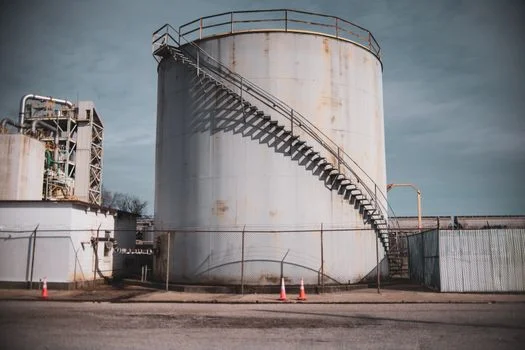
The Environment Agency (EA) and regional water companies (Thames Water, Severn Trent, United Utilities and others) set discharge consents from sewer capacity and receiving-water sensitivity. Consent limits are site-specific and fixed during permit application using peak flow, pollutant concentrations and the proposed treatment method. In 2026, many catchments continue to tighten nitrogen and phosphorus conditions to limit eutrophication in UK waterways.
Regional variation changes equipment selection. Thames Water permits in urban London often enforce ammonia limits as low as <5 mg/L to protect aging infrastructure, whereas Severn Trent might allow <10 mg/L in more industrialised catchments. Metal finishing plants focus on precipitation and pH control, with chrome, nickel and zinc often held below <0.5 mg/L total. Miss those regional parameters and the sewerage undertaker can revoke trade effluent consent, stopping production.
| Parameter | Food Processing (mg/L) | Metal Finishing (mg/L) | Textiles (mg/L) | Pharmaceuticals (mg/L) |
|---|---|---|---|---|
| COD (Chemical Oxygen Demand) | <50 - 250 | <150 | <200 | <100 |
| TSS (Total Suspended Solids) | <30 | <50 | <40 | <20 |
| FOG (Fats, Oils, Grease) | <10 | N/A | <20 | N/A |
| Heavy Metals | N/A | <0.5 (Total) | <1.0 | <0.1 |
| pH Range | 6.0 – 9.0 | 6.5 – 10.0 | 6.0 – 9.0 | 6.5 – 8.5 |
| Ammonia (NH3-N) | <10 | N/A | <15 | <5 |
Treat the table as illustrative sector bands used in UK design briefs; your consent letter remains the legal limit. Direct-to-water discharges for listed biodegradable industries at or above 4,000 population equivalent carry separate EA permit conditions for parameters such as BOD and ammoniacal nitrogen (Environment Agency UWWTR guidance).
What EU wastewater discharge standards mean for UK plants in 2026?
EU urban wastewater rules still shape UK practice through the retained Urban Waste Water Treatment Regulations and EA compliance guidance for qualifying works.Those figures apply to regulated WWTW discharges, not automatically to every trade effluent sewer consent. UK industrial sites discharging to sewer follow water-company consents; sites discharging biodegradable effluent directly to receiving waters under the listed food and drink sectors must meet permit limits that protect water quality standards. If your EPC package must also satisfy continental buyers, map UWWTR-style COD/BOD and nutrient bands early, then confirm the stricter of EU buyer specs versus the UK consent.
Treatment technologies: performance, costs and use cases
Selecting technology means matching effluent chemistry to removal mechanism, then checking UK yard constraints. For high organic and FOG loads, high-efficiency DAF systems for UK food processing plants remain the usual primary step. Dissolved Air Flotation (DAF) targets non-soluble pollutants, achieving up to 95% TSS removal and 80% FOG removal under normal food-plant loadings. With CAPEX from £150 to £300 per m³/h of capacity, DAF often pays back through Mogden charge cuts at abattoirs, dairies and ready-meal sites.
Where reuse or very tight river limits apply, Membrane Bioreactor (MBR) trains are the usual next step. MBR systems for tight-footprint UK industrial sites combine biological treatment with microfiltration or ultrafiltration, delivering 99% TSS removal and up to 90% COD removal on many industrial feeds. CAPEX is higher (£250–£400/m³/h), yet recycled process water offsets rising mains tariffs. Compact municipal-style or factory drains that need a buried package can also use an Underground Package Sewage Treatment Plant (WSZ Series) where flows are steadier and FOG is controlled upstream. In many cases, an PLC-controlled chemical dosing for UK trade effluent compliance is integrated for flocculation and pH control before the main stage.
| Technology | TSS Removal | COD Removal | CAPEX (£/m³/h) | OPEX (£/m³) | Best Use Case |
|---|---|---|---|---|---|
| DAF (Dissolved Air Flotation) | 90-95% | 50-70% | £150 – £300 | £0.40 – £0.80 | Food, Dairy, Abattoirs |
| MBR (Membrane Bioreactor) | >99% | 80-95% | £250 – £400 | £0.80 – £1.20 | Brewing, Pharmaceuticals |
| Chemical Dosing | 70-85% | 30-50% | £20 – £60 | £0.50 – £1.20 | Metal Finishing, pH Balancing |
| Secondary Clarifier | 80-90% | 40-60% | £80 – £150 | £0.20 – £0.40 | Large Municipal/Industrial Mix |
To refine solids separation after biological stages, consult a secondary clarifier selection guide for UK industrial wastewater before choosing gravity settling versus enhanced flotation for your sludge.
DAF vs MBR for high-FOG waste at UK plants
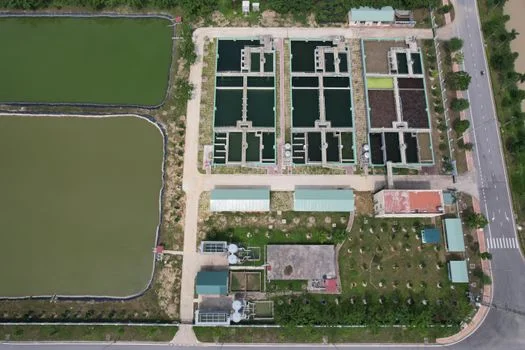
UK food processors and dairies often compare DAF and MBR when FOG dominates the load. The decision turns on final water destination and available plot space. DAF is a physical-chemical process that skims free and emulsified oils. In a standard 50 m³/h system, a DAF unit typically costs approximately £180,000. It needs less footprint than conventional biological plant but produces float sludge that still needs dewatering and disposal.
MBR is a biological process that can degrade dissolved organics DAF cannot remove. For dairy plants with FOG above 1,000 mg/L, MBR can reach 99% removal, yet oil shock loads can blind membranes. High-FOG sites therefore place DAF ahead of MBR. CAPEX for a 50 m³/h MBR is closer to £250,000; its lower OPEX (£0.80/m³ vs DAF’s £1.10/m³ including chemicals in that comparison) can win on a 10-year lifecycle at high daily volume.
| Selection Factor | DAF (Dissolved Air Flotation) | MBR (Membrane Bioreactor) | Winner Based on Need |
|---|---|---|---|
| FOG Removal | 95% (Excellent for free oils) | 99% (Best for dissolved organics) | MBR for ultra-clean needs |
| Footprint | Compact (30% less than MBR) | Moderate (Requires tankage) | DAF for urban UK sites |
| Effluent Quality | Suitable for sewer discharge | Suitable for reuse/river discharge | MBR for water recycling |
| Chemical Demand | High (Coagulants/Flocculants) | Low (Mostly membrane cleaning) | MBR for lower chemical OPEX |
| Shock Load Resistance | High (Resilient to spikes) | Low (Sensitive to toxins/oil) | DAF for variable processes |
What does disinfection of piping, tanks and equipment typically cost?
Disinfection of piping, tanks, structures and equipment is normally an operating cost inside CIP and hygiene programmes, not a separate line in treatment-plant CAPEX. Chlorination, peracetic acid, hot-water or steam sanitising, and occasional UV on residual streams are the methods UK food and pharma sites use most. Spend scales with vessel volume, contact time, access labour and chemical unit price, so catalogue “typical £” figures mislead without a site survey. Pair disinfection planning with the same PLC-controlled chemical dosing for UK trade effluent compliance used for pH and residual oxidant control, and request hygiene OPEX as a distinct quote beside the DAF or MBR tender.
Budgeting CAPEX, OPEX and ROI for UK systems
UK wastewater project budgets need a total cost of ownership view. CAPEX benchmarks for UK industrial projects typically range from £50,000 for a small containerised DAF to over £5,000,000 for a full-scale MBR plant with sludge handling and automation. Beyond purchase cost, OPEX usually splits across energy (40%), chemical reagents (30%), routine maintenance (20%) and labour (10%) on many food-industry installs we review.
Return on investment is driven by trade effluent charge reduction, water-reuse savings and avoided enforcement cost. In the UK, trade effluent charges can range from £50 to £150 per m³ depending on waste strength. Onsite treatment often cuts those charges by 60–80%. Payback can be estimated as:
ROI (Years) = CAPEX / (Annual Savings in Trade Effluent Charges - Annual OPEX)
If a plant invests £500,000 in an MBR that saves £250,000 a year in sewer charges and costs £50,000 a year to run, ROI is 2.5 years. Plant managers can further trim running cost with 12 proven strategies to cut OPEX by 30–50%, including peak-shaving and sensor-led dose control.
3-step framework for selecting the right UK system

System selection should never rest on CAPEX alone; it must account for long-term consent risk and operating constraints. Use this three-step sequence:
- Profile your effluent: Run 24-hour composite sampling during peak production. Measure COD, TSS, FOG, pH and metals, then compare results with your EA or water-company consent to quantify the compliance gap.
- Match technology to the gap: High FOG with limited yard space usually points to DAF first. Reuse or ultra-low COD targets point to MBR, often after DAF. Buried factory or amenity flows with steadier loads may suit an Underground Package Sewage Treatment Plant (WSZ Series) once FOG is controlled.
- Validate with a pilot: Before multi-million pound CAPEX, budget £10,000–£30,000 for a 4-week mobile pilot. Confirm removal rates on your real wastewater and lock chemical and energy OPEX before full design.
UK-specific selection checklist:
- Confirm regional water authority ammonia and phosphorus limits (for example Anglian Water or Thames Water wording on your consent).
- Verify available footprint against equipment dimensions, including maintenance access.
- Assess local coagulant and polymer supply lead times.
- Decide whether treated water can serve non-potable uses such as cooling towers or floor washing.
- Separate CIP disinfection OPEX from treatment CAPEX in the tender.
- Model Mogden charge savings at current Ot/St strengths, not brochure averages.
- Require factory acceptance and site performance tests tied to consent parameters.
Who this is for / who should look elsewhere / next step
This guide is for UK plant engineers, EPC contractors and procurement managers comparing DAF, MBR, dosing and package plant options against trade effluent consents. Pure municipal utility planners sizing large WWTW under UWWTR PE bands should use EA works guidance as the primary design code. If you already have composite data and a target consent, send the flow sheet for a sized option list via request a UK wastewater treatment quote with your COD, FOG and footprint limits attached.
Frequently Asked Questions
What are the penalties for wastewater non-compliance in the UK?
Unconsented or off-consent trade effluent discharge is a criminal offence under Water Industry Act 1991 section 118, with a fine not exceeding the statutory maximum on summary conviction and a fine on indictment. Earlier summaries often quoted Magistrate fines up to £20,000 and director imprisonment; those figures are not the wording of s.118 itself. Separate environmental statutes can still add imprisonment for serious pollution offences, so directors should treat consent breaches as board-level risk.
How much does a DAF system cost for a UK food plant?
CAPEX for DAF systems typically ranges from £150 to £300 per m³/h of treatment capacity. For a mid-sized food processing plant, a fully installed package usually falls between £150,000 and £350,000 depending on automation, sludge handling and civils. A reference 50 m³/h unit is often quoted near £180,000 before installation. Final price tracks peak FOG load, polymer dose and whether the unit feeds an MBR.
Can industrial wastewater be reused in UK manufacturing?
Yes. Advanced trains such as MBR can produce water suitable for non-potable reuse in cooling, irrigation or wash-down when polishing and disinfection are included. That route can offset mains water costs that the 2024 UK Water Industry Report links to about 15% annual rises in water-stressed South East England. Reuse schemes still need consent alignment and hygiene validation before process contact.
How do Mogden formula charges affect my ROI?
Mogden charges rise with COD and TSS strength, so cutting those parameters onsite with DAF or MBR often reduces annual trade effluent bills by over 60%. Many UK plants then see system payback within 2 to 4 years when sewer tariffs sit in the £50–£150 per m³ band for strong wastes. Always recalculate with your water company’s current Ot and St factors.
Is an MBR better than a DAF for dairy waste?
It depends on the discharge goal. DAF is stronger for bulk fats and solids at lower CAPEX and higher shock tolerance. MBR is required when dissolved COD must fall further or when you intend to recycle water, because membranes polish organics DAF leaves behind. Most dairy sites we review run DAF first, then add MBR only if consent or reuse demands it.