Plants can reduce industrial wastewater treatment operating costs by 30-50% through twelve levers: aeration upgrades, fine-pore diffusers, VFD retrofits, DO control, filter-press dewatering, polymer tuning, SRT optimization, biogas recovery, jar testing, lime substitution, automatic dosing, and SCADA control.
Why Operating Costs Are Rising — and Where the Money Goes
Energy, chemicals, and sludge disposal drive most wastewater operating budgets. EPA guidance puts energy at 25-30% of utility O&M costs, aeration typically claims 40-60% of plant electricity, and landfill fees run $50-$150 per ton against $20-$50 per ton for beneficial reuse. Twelve data-backed levers attack all three lines.
Industrial wastewater treatment facilities are grappling with escalating operational expenditures, driven primarily by volatile energy prices and supply-chain chemical cost hikes. Earlier planning data cited energy at 25-40% of total operating expenses (EPA, 2023); current EPA guidance for water and wastewater utilities puts energy at 25-30% of operation and maintenance costs and calls it the largest controllable cost of service (US EPA). Chemical costs for coagulants and flocculants have risen a further 15-20% since 2020 amid global supply disruptions. Sludge disposal varies dramatically by region — landfilling typically runs $50-$150 per ton, while beneficial reuse in agriculture or cement kilns can cut that to $20-$50 per ton. A strategic approach across energy, chemical, and sludge management is therefore essential to fight these costs without compromising treatment efficiency or regulatory compliance.
The twelve strategies in this guide, in rough order of payback speed:
- Retrofit blowers with variable frequency drives (10-20% energy savings).
- Hold dissolved oxygen at 1.5-2.0 mg/L for BOD removal and 0.5-1.0 mg/L for denitrification.
- Upgrade to high-efficiency turbo blowers (30-50% energy savings versus multi-stage units).
- Swap coarse-bubble diffusers for fine-pore EPDM or ceramic units (20-30% oxygen transfer gain).
- Automate DO control to stop over-aeration (10-20% aeration energy savings).
- Upgrade sludge dewatering from belt press to plate-and-frame filter press (40-60% disposal savings).
- Tune polymer conditioning for 15-25% dewatering improvement at $5-$15 per ton.
- Hold sludge retention time at 15-25 days for municipal sludge dewatering performance.
- Recover biogas from anaerobic digestion to offset 20-30% of plant electricity.
- Run monthly jar testing to cut chemical consumption 10-30%.
- Substitute lime for sodium hydroxide where 30-50% lower pH-adjustment cost justifies 10-20% more sludge.
- Deploy PLC dosing and SCADA monitoring to trim chemical waste 15-25% and labor 10-15%.
Optimizing Aeration: The Number One Energy Load in the Plant
Aeration systems are the largest energy consumers in industrial wastewater treatment plants, often accounting for 40-60% of total energy usage. Field programs report similar shares — 50-60% of electricity at activated-sludge plants — so the aeration baseline deserves the first audit hour. High-efficiency turbo blowers equipped with Variable Frequency Drives (VFDs) can cut energy consumption 30-50% compared with older multi-stage centrifugal units (Department of Energy benchmarks, 2023). A documented blower replacement at the Victor Valley Wastewater Reclamation Authority saved more than 928,000 kWh per year (Air Best Practices).
Diffuser and setpoint upgrades multiply the gain. Transitioning from coarse-bubble to fine-pore diffusers, typically EPDM or ceramic, improves oxygen transfer efficiency by 20-30%. Dissolved Oxygen (DO) setpoints matter just as much: 1.5-2.0 mg/L is generally recommended for BOD removal, while 0.5-1.0 mg/L suits denitrification (EPA 2024 guidelines). VFDs on existing blowers add 10-20% savings by matching output to actual demand. Blower CapEx of $50,000-$200,000 against OpEx savings of $20,000-$50,000 per year gives attractive ROI periods.
| Strategy | Technology | Typical Energy Savings (vs. older tech) | Oxygen Transfer Improvement (vs. older tech) | Estimated CapEx Range | Estimated Annual OpEx Savings | Typical ROI Period |
|---|---|---|---|---|---|---|
| Blower Upgrade | High-Efficiency Turbo Blower (with VFD) | 30-50% | N/A | $50,000 - $200,000 | $20,000 - $50,000 | 2-5 years |
| Diffuser Upgrade | Fine-Pore Diffusers (EPDM/Ceramic) | N/A | 20-30% | $20,000 - $100,000 | $10,000 - $30,000 | 3-7 years |
| VFD Retrofit | Variable Frequency Drive | 10-20% | N/A | $5,000 - $20,000 (per blower) | $5,000 - $15,000 (per blower) | 1-3 years |
For further details on protecting downstream equipment, explore our rotary mechanical bar screen offerings, which keep rags and grit out of aeration basins and pumps.
Industrial Sludge Dewatering Cost Reduction Strategies: From Belt Press to Filter Press
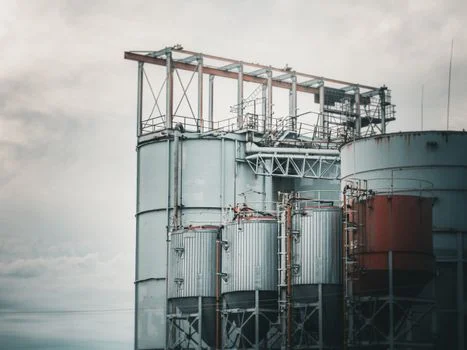
Sludge disposal is a significant operating cost, with landfill fees of $50-$150 per ton versus $20-$50 per ton for beneficial reuse. Dewatering efficiency is the direct lever on that line. High-efficiency plate and frame filter presses achieve 25-35% dry solids, cutting sludge volume enough to reduce disposal costs 40-60% versus belt presses, which typically yield only 15-20% dry solids. Centrifuges reach 20-25% dry solids but consume 0.8-1.2 kWh/m³ of sludge, while filter presses run at a leaner 0.3-0.5 kWh/m³.
Conditioning and biology both move the dewatering curve. Polymer addition improves dewatering performance 15-25% at an operating cost of $5-$15 per ton of sludge. Sludge retention time (SRT) matters too — for municipal sludge, 15-25 days is generally considered optimal for dewatering performance. Most plants we audit find the press upgrade pays for itself on haul-off weight alone before the energy credit is counted.
| Technology | Typical Dry Solids Content | Energy Consumption (kWh/m³ sludge) | Estimated Disposal Cost Savings (vs. belt press) | Estimated CapEx Range | Estimated Annual OpEx Savings (Disposal) |
|---|---|---|---|---|---|
| Belt Press | 15-20% | 0.2-0.4 | Baseline | $50,000 - $150,000 | N/A |
| Centrifuge | 20-25% | 0.8-1.2 | 20-30% | $150,000 - $400,000 | $30,000 - $90,000 |
| Plate and Frame Filter Press | 25-35% | 0.3-0.5 | 40-60% | $75,000 - $250,000 | $60,000 - $180,000 |
Investigate our solutions for efficient sludge management with the high-efficiency plate and frame filter press for sludge dewatering.
Anaerobic Digestion Biogas Recovery Industrial Wastewater: Offsetting Plant Power
Anaerobic digestion can turn high-COD industrial streams into renewable energy through biogas recovery. Digesters typically produce 0.8-1.2 cubic meters of biogas per kilogram of COD removed (EPA 2023 data). Biogas engines convert that fuel to electricity at 35-40% efficiency (DOE 2023 benchmarks).
The economics scale with flow. For a medium-sized industrial plant treating approximately 1 million gallons per day (MGD), effective biogas recovery can offset 20-30% of total electricity needs. Initial capital investment runs $500,000 to $2 million, with typical payback between 5 and 10 years. Purified biogas can also become renewable natural gas for pipeline injection or vehicle fuel, which broadens the revenue side of the project case.
Chemical Optimization: Cutting Reagent Spend Without Losing Performance
Chemicals are a substantial, controllable operating expense. Coagulants like Polyaluminum Chloride (PAC) or ferric chloride run $0.50-$2.00/kg, and flocculants like polyacrylamide run $3-$6/kg. Optimizing dose through regular jar testing can reduce chemical consumption 10-30% (EPA 2024 guidelines). For pH adjustment, lime (Ca(OH)₂) is typically 30-50% more cost-effective than sodium hydroxide (NaOH), though it may increase sludge volume 10-20%.
Mixing and automation finish the job. A G-value (velocity gradient) of 500-1000 s⁻¹ is often considered ideal for rapid-mix applications. PLC-controlled automatic dosing systems cut chemical waste 15-25% compared with manual dosing. Enhance your chemical treatment with our PLC-controlled automatic chemical dosing system.
Process Control: The Hidden Lever for Cost Reduction
Advanced process control cuts operating cost by improving efficiency and minimizing resource consumption. Automated Dissolved Oxygen (DO) control in aeration basins delivers 10-20% energy savings by preventing over-aeration. Online sensors for pH, Oxidation-Reduction Potential (ORP), and turbidity allow real-time adjustment instead of lab-lag guesswork. Supervisory Control and Data Acquisition (SCADA) systems can trim labor costs 10-15% through reduced manual monitoring. EPA adds that simple efficiency practices — starting with an energy audit — can cut facility energy use 15-30% with paybacks ranging from a few months to a few years (US EPA).
Comparing Wastewater Treatment Technologies: A Cost-Benefit Analysis
Technology selection sets the cost floor for decades, so it belongs in any reduction plan. Membrane Bioreactor (MBR) systems offer a significantly reduced footprint but carry higher energy consumption. Dissolved Air Flotation (DAF) systems remove Total Suspended Solids (TSS) and Fats, Oils, and Grease (FOG) effectively but generally need higher chemical doses. Reverse Osmosis (RO) achieves exceptional TDS removal at high energy demand and substantial membrane replacement cost. Influent characteristics and required effluent quality drive the choice.
| Technology | Typical Energy Consumption (kWh/m³) | Typical Chemical Cost ($/m³) | Approximate CapEx (per MGD capacity) | Key Benefit | Key Drawback |
|---|---|---|---|---|---|
| MBR | 0.8 - 1.2 | $0.05 - $0.15 | $10M - $20M | Small footprint, high effluent quality | Higher energy use, membrane maintenance |
| DAF | 0.1 - 0.3 | $0.10 - $0.30 | $5M - $15M | Effective TSS/FOG removal | Higher chemical demand, sludge production |
| RO | 2.0 - 4.0 | $0.02 - $0.05 (pretreatment) | $15M - $30M | High TDS removal, water reuse | Very high energy use, membrane costs, pre-treatment critical |
Explore advanced treatment options with our compact MBR membrane bioreactor system for high-quality effluent and our dissolved air flotation (DAF) machine.
Plants targeting reuse can add our reverse osmosis (RO) water purification systems after pretreatment. For a regional example of a full compliance-led overhaul, see our companion guide to industrial wastewater treatment in Auckland.
How to Reduce Treatment Operating Costs in Industrial Wastewater Plants: Prioritizing the Twelve
Prioritization is a numbers exercise, not a preference. Audit current operations first — EPA's energy audit tools and ENERGY STAR benchmarking are free starting points — then rank the twelve levers by calculated ROI. A blower upgrade with $100,000 CapEx and $30,000 projected annual savings carries a payback of roughly 3.3 years; a per-blower VFD retrofit at $5,000-$20,000 often clears payback inside a year. Fund the fastest paybacks first, then roll the savings into the bigger ticket items such as digesters and press upgrades. Send your flow sheet, kWh/m³, chemical spend, and sludge haul fees through the plant cost-review inquiry form for a sized savings shortlist.
Frequently Asked Questions
What is the most cost-effective way to reduce aeration energy use?
Retrofitting existing blowers with Variable Frequency Drives is usually the most cost-effective first step, saving 10-20% of blower energy at $5,000-$20,000 per blower with 1-3 year payback. Upgrading to high-efficiency turbo blowers follows, cutting energy 30-50% versus older multi-stage centrifugal units. Pairing either move with automated DO control at 1.5-2.0 mg/L prevents the over-aeration that wastes most of the margin.
How much can I save by switching from a belt press to a filter press?
Switching from a belt press to a plate-and-frame filter press cuts disposal costs 40-60%, worth $60,000-$180,000 per year on typical industrial sludge volumes. Cake dryness rises from 15-20% to 25-35% solids while energy stays lean at 0.3-0.5 kWh/m³ of sludge. At landfill rates of $50-$150 per ton, most plants recover the $75,000-$250,000 CapEx within 3-5 years.
What chemical dosing optimization industrial wastewater treatment steps save the most?
Monthly jar testing saves the most, trimming coagulant and flocculant consumption 10-30% by matching dose to actual water chemistry. PLC-controlled automatic dosing then cuts chemical waste a further 15-25% versus manual feeding. Substituting lime for sodium hydroxide trims pH-adjustment cost 30-50%, though the 10-20% extra sludge volume belongs in the total math.
How much methane does wastewater biogas contain?
Biogas from anaerobic digestion is typically 50-75% methane, with the remainder CO₂, water vapor, hydrogen sulfide, and trace gases (US EPA AgSTAR). Digesters yield roughly 0.8-1.2 m³ of biogas per kg of COD removed. Converted in a 35-40% efficient engine, that biogas can offset 20-30% of a 1 MGD plant's electricity purchases.
Which wastewater upgrades pay back fastest?
VFD retrofits pay back fastest at 1-3 years, followed by diffuser upgrades at 3-7 years and turbo blower replacements at 2-5 years. EPA notes efficiency practices generally cut facility energy use 15-30% with paybacks from a few months to a few years. Automatic dosing systems often clear 12-24 months once chemical waste of 15-25% is eliminated.