A food plant treating 500 m³/h logged three pump failures per month from rags, and repairs passed $12,000 in a year. Coarse screen inlet works alternatives are the headworks choices that change that pattern: a manual bar, a mechanical rake, a fine screen, or DAF. Industry observations put about 60% of industrial treatment failures at the headworks when the opening misses the solids. Matching opening, flow, and variability commonly cuts maintenance cost by 40–60%.
Coarse Screen Inlet Works Alternatives
Coarse screen inlet works alternatives are chosen by solids size, not by a single default screen. Openings of 6–150 mm stop rags and large debris at flows from below 100 m³/h to 10,000 m³/h. Finer bars, fine screens, or DAF are the next step when solids are smaller than 6 mm or when oils must float.
Those four options are not interchangeable on a real channel. A manual rack is a labor choice for small, steady flow. A mechanical rake is an automation choice once clogs become weekly. DAF is a flotation choice for oil, not a bar with smaller gaps.
Most plants we size for food waste keep the manual rack on the bypass only. The duty channel gets a rake once failures reach three a month. That split avoids paying DAF chemical cost to catch a rag.
Coarse Screen Limits at the Inlet
Coarse screen inlet works stop gross solids with openings of 6 to 150 mm before pumps, valves, and MBR membranes see rags, wood, or plastics. Manual bars suit small stations below 100 m³/h. Mechanical rakes cover continuous duty from 100 m³/h up to 10,000 m³/h. Semi-automatic bars sit between those duties, at 50 m³/h to 5,000 m³/h, and still need an operator to pull screenings.
Manual screens in this comparison remove 50–70% TSS when they are raked before the mat thickens. Automatic rakes reach 60–80% TSS when the rake actually runs on a timer or level switch. Anything smaller than 6 mm passes either unit. Fibrous textile and paper stock blinds the bars, so cleaning frequency, not the nameplate opening, sets the real capture.
According to the US EPA fact sheet Screening and Grit Removal (EPA 832-F-03-011, June 2003), coarse screens typically have openings of 6 mm (0.25 in) or larger. The same sheet lists trash racks at 38–150 mm, manually cleaned bars at 30–50 mm, and mechanically cleaned bars at 6–38 mm. A second table in that sheet widens mechanical coarse spacing to 15–75 mm and manual spacing to 25–50 mm.
Keep the 6–150 mm cells in the table below as the family envelope used for this comparison, not as a permit opening. Missouri DNR PUB2754 (February 2019) is tighter on review: manual clear openings should be 2 inches (50.8 mm) or less, and mechanical clear openings should be at most 1.75 inches (44.45 mm). Use the narrower band when a state reviewer follows that guide.
Bar angle is not one number across the references. EPA (2003), citing WEF MOP 8 (1998), sets manual bars at 30–45 degrees from vertical and mechanical bars at 0–30 degrees from vertical. Missouri (2019) sets manual screens at 30–45 degrees from the horizontal. Most submittals we prepare ask which reviewer applies, because those two angles are not the same bar.
Velocity guidance splits the same way. Missouri (2019) wants approach velocity at design average flow no lower than 1.25 ft/s and no higher than 3.0 ft/s. EPA Table 3 for mechanically cleaned bars lists approach velocity at 0.6–1.0 m/s (2.0–3.25 ft/s), with allowable headloss of 150 mm (6 in). On channels we commission, velocity under 1.25 ft/s is where grit settles in front of the rack.
Screenings volume climbs as the opening shrinks. According to US EPA (2003), a 13 mm screen removes about 60 m³ of screenings per 10⁶ m³ of wastewater, and a 38 mm screen removes about 11.2 m³ per 10⁶ m³. The same sheet says peak daily removals may vary by a 20:1 ratio from hour to hour versus average flow. The drawing title 2026-07-21- b02-inlet and coarse screen building should carry the opening, the velocity, and that screenings volume before concrete is poured.
Opening, redundancy, and channel layout are tabulated in Coarse Screen Inlet Works Specifications: 2026 Engineering D. For continuous raking inside the mechanical band, specify a Rotary Mechanical Bar Screen (GX Series).
Do not treat this page as the coarse screen size guide. Size the opening on that page, then return here to decide whether the unit should be manual, raked, fine, or DAF.
| Parameter | Coarse Screen (Manual) | Coarse Screen (Mechanical Raked) | Coarse Screen (Semi-Automatic) |
|---|---|---|---|
| Opening Size | 6 – 150 mm | 6 – 150 mm | 6 – 150 mm |
| Typical Flow Rate Capacity | < 100 m³/h | 100 – 10,000 m³/h | 50 – 5,000 m³/h |
| TSS Removal (%) | 50 – 70% | 60 – 80% | 55 – 75% |
| Energy Use (kW/h per m³) | 0 | 0.1 – 0.5 | 0.05 – 0.2 |
| Manual Labor Requirement | High (Daily) | Low (Periodic Inspection) | Medium (Weekly/Bi-weekly) |
| Capital Cost ($) | 5,000 – 20,000 | 15,000 – 50,000 | 10,000 – 30,000 |
Labor, not steel, dominates the manual column of that table. Daily raking is the high-labor cell, while a mechanical rake drops the task to periodic inspection at 0.1–0.5 kW/h per m³. Semi-automatic units land between them at 0.05–0.2 kW/h per m³ and still need a weekly or bi-weekly pull. US EPA (2003) notes that pulling a thick mat off a manual screen can send a surge that cuts capture in the next tank.
Mechanical Bar Screens Against Coarse Bars
Mechanical bar screens use 1–10 mm spacing and, on the basis in the table below, remove 90–98% TSS against 50–80% for a coarse screen. Flow capacity runs from 100 m³/h to 20,000 m³/h, which covers large industrial headworks. Coarse manual and semi-automatic units in the prior table stop nearer 5,000 m³/h. Cleaner capture is why membrane plants look at the finer bar before they blame the MBR.
Energy is the trade that buyers skip on the first quote. Mechanical rakes draw 0.5–2 kW/h per m³ to run the cleaning mechanism. Automatic coarse screens draw about 0.1–0.5 kW/h, and a manual screen draws none. That power is often smaller than the pump repairs it prevents.
Space is close enough that footprint rarely decides this pair alone. Mechanical units need about 2–5 m², while coarse manual and semi-automatic units need 1–3 m². Quarterly rake inspection replaces daily raking, which is the labor shift buyers feel after the first month. Capital in the comparison table moves from $5,000–$30,000 for the coarse column to $30,000–$200,000 for the mechanical bar.
Rake style changes the failure you will actually see. The US EPA operator webinar of 25 July 2023 separates front-cleaned, front-return rakes, which capture well but jam more easily, from back-cleaned rakes, where the bars shield the rake and more solids carry over. Reciprocating rakes keep service parts above the waterline and use a single rake. On channels we commission, a jam at the bottom sprocket is how a low-labor rake becomes a confined-space job.
How a missed rag moves into the membrane tank is set out in Flat Sheet MBR Membrane vs Alternatives. What the coarse screen itself does along the process train sits on that process page, not in this cost comparison.
| Parameter | Coarse Screen (Manual/Semi-Auto) | Mechanical Bar Screen |
|---|---|---|
| Opening Size | 6 – 150 mm | 1 – 10 mm |
| Typical Flow Rate Capacity | < 5,000 m³/h | 100 – 20,000 m³/h |
| TSS Removal (%) | 50 – 80% | 90 – 98% |
| Energy Use (kW/h per m³) | 0 – 0.2 | 0.5 – 2 |
| Maintenance Frequency | Daily/Weekly | Quarterly Inspection |
| Capital Cost ($) | 5,000 – 30,000 | 30,000 – 200,000 |
| Space Requirements (m²) | 1 – 3 | 2 – 5 |
Read the TSS column against the permit limit, not as a removal credit you can file. According to US EPA (2003), fine screens remove 20–35% of suspended solids and BOD5, well below the 90–98% TSS cell for mechanical bars in this table. Missouri DNR (2019) will not accept a fine-screen BOD5 credit above 35% without a pilot at design maximum day flow and load. Use the table to rank equipment, and do not paste 90–98% into a permit application.
Fine Screens and DAF After the Rack
Fine screens, with openings of 1.5–6 mm in wire mesh or perforated plate, catch grit and small organics that both coarse bars and many mechanical bars still pass. Breweries, pharmaceutical plants, and chemical sewers are the usual fit for that band. DAF does a different job: micro-bubbles lift suspended solids, oils, and grease, often to 90–98% TSS when coagulant and flocculant are dosed. Meat, petrochemical, and pulp streams with emulsified oil are the usual DAF fit.
Capital steps up once the opening drops below the coarse band. Fine screens run about $20,000–$150,000 installed for the duty in this comparison. DAF systems, including chemical feed equipment, run about $50,000–$300,000. Those bands exclude civil work, which can exceed the machine on a deep channel.
Operating cost splits even more clearly than capital. DAF chemicals add $0.10–$0.50 per m³, and the air system draws 1–5 kW/h. Fine screens draw 0.3–1.5 kW/h and skip the chemical line. Footprint follows the same split: DAF often needs 5–20 m² plus chemical storage, while a fine screen needs about 1–4 m².
Very fine screens, at 0.2–1.5 mm after a coarse or fine screen, can push suspended solids near primary-clarifier levels, according to US EPA (2003). Missouri (2019) treats fine screens as a 1/16–1/4 inch clear opening and does not call them equal to primary settling. The same guide wants at least two fine screens, each able to run alone, with peak instantaneous flow covered when the largest unit is offline. A microscreen under 1 mm belongs downstream of grit and behind a coarse screen.
Fine mesh still blinds on fiber, only later than a wide bar. DAF needs an operator who can hold the chemical dose through a shift change. Where the real question is oil-removal hardware, read how DAF systems compare to oil-water separators. The DAF System is the flotation unit in that comparison, not a substitute bar screen.
daf system vs coarse screen cost
A DAF system costs more per cubic metre than a coarse screen once chemicals are counted. DAF operation in this comparison sits near $0.10–$0.30 per m³. A manual coarse screen sits near $0.01–$0.05 per m³, and an automatic coarse screen near $0.02–$0.08 per m³.
Mechanical bars land near $0.03–$0.10 per m³, and fine screens near $0.04–$0.12 per m³. Capital still spans $5,000–$50,000 for coarse screens and $30,000–$200,000 for mechanical bars. Fine screens sit at $20,000–$150,000 in the same comparison. DAF sits at $50,000–$300,000 before the tank and chemical room are poured.
Annual maintenance climbs the same ladder as capital. Manual coarse screens run $1,000–$5,000 a year when the only wear item is a rake. Automatic coarse screens run $2,000–$10,000 because the drive is now in the bill. Mechanical bars run $3,000–$15,000, fine screens $2,000–$12,000, and DAF $5,000–$20,000, reflecting drives plus chemical kit.
Is DAF more expensive per cubic metre?
Yes, DAF costs more per cubic metre than a coarse screen at the same flow once chemicals are included. The annualized table below, over a 10-year life, puts DAF at $0.30–$0.80 per m³ at 500 m³/h and a manual coarse screen at $0.05–$0.15 per m³. At 1,000 m³/h the DAF band is $0.25–$0.70 per m³, and at 5,000 m³/h it is $0.20–$0.55 per m³. Most plants we price still pick DAF only when FOG, not rags, is the pollutant that sets the limit.
| Screening Method | Estimated Annual Cost per m³ (based on 10-year lifespan) | ||
|---|---|---|---|
| 500 m³/h (4,380,000 m³/yr) | 1,000 m³/h (8,760,000 m³/yr) | 5,000 m³/h (43,800,000 m³/yr) | |
| Coarse Screen (Manual) | $0.05 - $0.15 | $0.04 - $0.12 | $0.03 - $0.10 |
| Coarse Screen (Automatic) | $0.07 - $0.20 | $0.06 - $0.18 | $0.05 - $0.15 |
| Mechanical Bar Screen | $0.10 - $0.25 | $0.09 - $0.22 | $0.08 - $0.18 |
| Fine Screen | $0.12 - $0.30 | $0.10 - $0.28 | $0.09 - $0.22 |
| DAF System (incl. chemicals) | $0.30 - $0.80 | $0.25 - $0.70 | $0.20 - $0.55 |
These figures are illustrative benchmarks, not a bid. Actual cost depends on the machine selected, site civil work, labor rates, and the energy price. The coarse-screen row is cheapest at purchase. Payback math in the decision section is what shows when a costlier rake or DAF unit wins on a ten-year view.
coarse screen for industrial wastewater headworks
A coarse screen for an industrial headworks is the first manual or mechanical barrier on the channel, and it has to pass a velocity and redundancy check before the quote matters. US EPA (2003) says most large plants use mechanically cleaned screens because labor drops and capture improves, and a standby screen is standard practice when the primary unit is out of service. Missouri DNR (2019) requires every treatment facility to have a screening device, a comminutor, or a septic tank, and it wants dual channels where screens are cleaned mechanically.
One mechanical screen, where only one is installed, must handle design peak instantaneous flow under Missouri rule 10 CSR 20-8.150(4)(B). Two or more mechanical screens must still pass average design flow with the largest unit offline. A single mechanical screen also needs an auxiliary manual screen for the outage. Where the working floor sits more than 4 ft deep, Missouri wants a hoist so staff are not climbing into the pit to lift screenings.
Grit removal sits after the coarse screen, not in front of it. Missouri (2019) requires grit removal when the plant uses a membrane bioreactor, anaerobic digestion, combined sewers, or a collection system that carries a heavy grit load. EPA (2003) defines design grit as particles larger than 0.21 mm (65 mesh) with specific gravity above 2.65, and older equipment targeted 95% removal of that fraction. Put the coarse screen ahead of that chamber so rags do not wrap the grit mechanism.
Flow swing is a separate decision from the bar opening. Missouri (2019) says to consider diurnal equalization where maximum-day flow exceeds three times the design average, and also at plants that receive a significant industrial load. Locate that basin downstream of screening, comminution, and grit removal. A shock of oily waste still needs DAF or chemical pretreatment; equalization only flattens the hour, it does not remove FOG.
The process sequence after the rack, including solids the screen does not catch, is the subject of coarse screen wastewater treatment. This page stays on the choice among headworks alternatives.
Operators, not only designers, keep an industrial headworks honest. The US EPA NPDES webinar of 25 July 2023 says crews should look at a mechanical bar screen several times each shift. Take the unit out about every 30 days to wash it, lubricate the chain, and check teeth and bars. Change speed-reducer oil about every 90 days, and inspect the motor, sprockets, and channel once a year.
Screenings should leave the building daily, and faster during storms, because soaked debris smells and carries pathogens. The comparison table lists quarterly inspection as a planning slot, not as a reason to skip the 30-day wash. Unusual noise, scraping, or a jerking drive is the shift check that webinar tells operators to log. Most plants we walk find the torque switch already tripped because that monthly clean was skipped.
Civil details fail more quietly than a broken rake tooth. Missouri (2019) sets the screen-channel invert 3–6 inches below the incoming sewer so flow can re-form and not jet through the bars. Screening areas need freeze protection, guard rails on manual channels, and a lockout plus an emergency stop with automatic reverse on the drive. Where gas can collect, electrical gear must match the hazardous-area code, and most plants we review still get the invert wrong after the bars look correct.
coarse screen selection decision framework
A coarse screen selection decision framework starts with solids size, then flow swing, labor, footprint, and payback, in that order. Skip a step and the cheapest capital row usually wins on paper and loses in the pump room. The five checks below are the ones we will not sign a channel drawing without. Attach a solids photo to each check or the framework is only a slogan.
Which screen fits this influent?
Pick the screen from the solids you can measure, not from the last project on the shelf. Solids larger than 50 mm point to a manual or mechanical coarse screen as the first barrier. Solids of 1–10 mm point to a mechanical bar screen with automated raking. Solids of 1.5–6 mm point to a fine screen, and colloidal solids, emulsified oil, or FOG under 1.5 mm point to DAF.
Solids characterization is the first cut, using the bands just stated. If two bands are both abundant, install the coarser unit upstream. A fine screen with no coarse rack in front of it is how fiber takes the mesh out inside a week. Most food plants we size find rags and fines together, so the train is a rack plus a finer unit, not one machine.
Flow and variability are the second cut. Stable flow, under 20% variability, can stay on a coarse screen if the solids are truly large. Moderate swing of 20–50% favors a mechanical bar screen that can cycle faster at the peak hour. High swing above 50%, or a real shock load, often needs DAF when oil is present, or at least a rake with level control rather than a fixed clock.
Labor and skill are the third cut, and they decide more bids than the brochure admits. High labor availability and low skill can support a manual coarse screen, but the wage cost is high. Limited labor and moderate skill fit a mechanical bar screen with a local panel. DAF needs a trained operator for chemical dose and air control through nights and weekends.
Manual raking still takes 1–2 hours per day where a hand rack stays on duty. Most plants we size leave that hour out of the ROI until the operator quits the Sunday shift. Put the hour in the payback, not in a footnote. A mechanical unit does not delete labor; it moves labor from daily raking to inspection.
Footprint is the fourth cut, and retrofits fail here more often than on price. Coarse screens and fine screens take the smaller slab. DAF takes the largest footprint, including chemical storage and a truck path for totes. A bay that cannot hold 5–20 m² should not be forced into DAF only because the oil number looks uncomfortable.
Payback is the fifth cut, after the process choice is already honest. Moving from a manual coarse screen to a mechanical bar screen costs more on day one. Pump repairs falling from $12,000/year to $2,000/year, and labor falling from $30,000/year to $5,000/year, often return that capital in 3–5 years. If annual savings are $50,000 and annualized capital is $20,000, the annual return is $30,000.
A short tree still helps on the site walk. Solids mostly above 50 mm and flow below 100 m³/h start on a manual coarse screen. Solids of 1–10 mm and flow above 1,000 m³/h make a mechanical bar screen the serious option. Fine solids plus oil usually need DAF if the limit is FOG or a tight TSS number rather than rags alone.
Buyers who send only a pump curve, with no solids photo, land on the wrong row of that tree. The cost drivers to attach to the chosen row are capital, energy in kW/h, chemicals, daily labor, pump repairs, compliance fines, and footprint. Leave one driver out and the 10-year table will flatter the manual rack. We still see that flattering happen when chemical cost is omitted from a DAF quote.
Case Study: 800 m³/h Textile Headworks
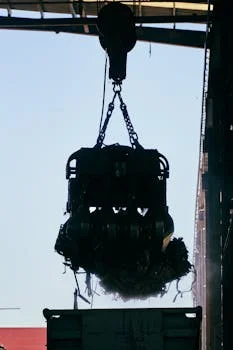
A textile plant in Vietnam, at about 800 m³/h, ran manual coarse screens with 60 mm openings. Pumps clogged about twice a month and pulled maintenance crews off production. Screen labor was about $30,000 a year for daily hand cleaning. Effluent TSS averaged 120 mg/L against a regulatory limit of 80 mg/L.
The plant installed a GX Series rotary mechanical bar screen from HydropureWater, with 5 mm bar openings. Pump clogs fell to less than 0.5 per month, which nearly removed unplanned stops tied to the screen. Cleaning labor fell to about $5,000 a year. Effluent TSS averaged 40 mg/L, inside the 80 mg/L limit that had been missed on the manual rack.
Annual savings from pump repairs, labor, and avoided compliance fines exceeded $45,000. Payback on that screen was 2.5 years against the capital spent. The duty was high flow plus variable fiber, which is where a 60 mm manual bar loses capture between cleanings. See the GX Series Rotary Mechanical Bar Screen for the unit used on that upgrade.
Who Should Use This Comparison
Plant engineers and EPC buyers who must choose among coarse bars, mechanical rakes, fine screens, and DAF at an industrial inlet are the readers this comparison is written for. A municipal trash rack above 38 mm with no oil belongs in a different selection, as does a stream that is already screened and fails only on dissolved COD. Comminutors are a poor stand-in for removal: US EPA (2003) says new designs generally avoid them because shredded plastics move into digestion and onto diffusers. Grinders that remain need inspection about every six months, and new bearings plus cutter teeth about every one to three years, on that same fact sheet.
Send solids size, peak hourly flow, channel width, and a photo of the existing rack with the headworks screen inquiry. We will mark which row of the framework fits and which band in the cost table applies to that flow. One channel sketch beats a catalogue page when the opening and the velocity are still undecided.
Frequently Asked Questions
What is the difference between a fine screen and a coarse screen?
A coarse screen uses 6–150 mm openings to remove rags, wood, and plastics, while a fine screen uses 1.5–6 mm openings for grit and smaller organics. Coarse units protect pumps and valves, while fine units protect MBR membranes from solids a coarse bar lets through. According to US EPA (2003), fine screens can remove 20–35% of suspended solids and BOD5. Most plants we size still set the coarse rack upstream so the fine mesh does not blind.
Can a coarse screen replace a fine screen in a plant?
No, a coarse screen cannot replace a fine screen, because 6–150 mm openings still pass solids that foul MBR membranes, heat exchangers, and small pumps. Fine screens at 1.5–6 mm, or DAF for oil, are required when those smaller solids are present. Missouri DNR (2019) says a fine screen should follow a coarse device, so the units are a pair. Most plants we review that skip the fine step just move the clog downstream.
What maintenance does a mechanical bar screen need?
A mechanical bar screen needs checks several times a shift and a cleaning outage about every 30 days. US EPA (25 July 2023) also sets reducer-oil changes at about 90 days and a yearly motor check. Also plan monthly lubrication and annual replacement of brushes or chains, on top of the quarterly inspection in the table. Manual coarse screens take 1–2 hours per day, which is why most plants we size fund the mechanical 30-day outage instead.
How do I calculate ROI when replacing a coarse screen?
Annual ROI equals avoided pump, labor, and penalty costs minus the new screen capital divided by its life. If annual savings are $50,000 and annualized capital is $20,000, the annual return is $30,000. Pump repairs from $12,000/year to $2,000/year and labor from $30,000/year to $5,000/year support a 3–5 year payback. The Vietnam textile case at 800 m³/h paid back in 2.5 years on savings above $45,000 a year.
Are rotating belt screens an alternative to a coarse bar?
Yes, rotating belt screens at 0.5–3 mm and drum screens at 0.25–2 mm are the small-solids alternative, at lower energy than DAF. Capital for those units is often $40,000–$250,000. The US EPA webinar of 25 July 2023 lists static fine screens at 0.5–3.0 mm with no moving parts in the filter. Keep a coarse rack ahead of either unit when rags are present, which is what most plants we size still do.