Secondary Clarifier Choices for Industrial Wastewater Treatment
A secondary clarifier is the solids-liquid separation stage after biological or chemical treatment in industrial wastewater plants. It settles or floats residual suspended solids so effluent TSS can stay below common discharge limits such as 30 mg/L. Circular gravity tanks, lamella plate settlers, and dissolved air flotation units are the three main equipment families used in 2026 industrial designs.
Industrial secondary clarifiers remove residual solids after biological or chemical treatment so effluent can meet discharge limits. Circular clarifiers typically achieve 92–97% TSS removal at surface loading rates of 0.5–1.5 m/h when land is available. Lamella units operate at 20–40 m/h and can cut footprint by up to 60%, while DAF systems remove 95%+ TSS on high-FOG streams. Teams apply clarifier cost matrix models risk secondary scoring when CAPEX, OPEX, and TSS below 30 mg/L must be balanced.
Why Do Secondary Clarifiers Miss Effluent Limits?
About 30% of industrial wastewater treatment plants struggle to meet secondary effluent limits, per EPA 2024 data. Undersized tanks and weak hydraulic design are frequent root causes. A food processing plant can face repeated fines when TSS keeps exceeding discharge limits despite day-to-day operating tweaks.
Three design flaws drive most failures. Poor hydraulic distribution creates short-circuiting, so solids bypass settling zones and leave with the effluent. Slow sludge removal lets solids sit too long, turning septic and re-floating. Undersized weirs raise weir loading and scour settled solids back into the clarified stream.
Circular Clarifiers for Industrial Wastewater: Specs, Strengths, and Limits
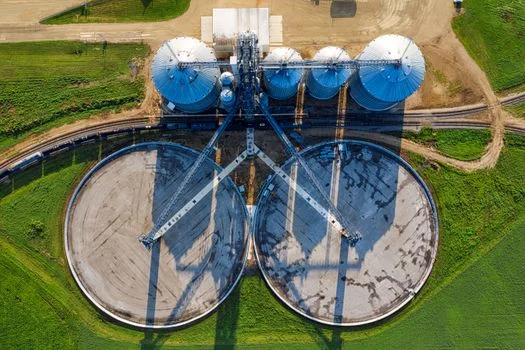
Circular clarifiers achieve 92–97% TSS removal for influent concentrations from 50–500 mg/L, matching EPA 2024 benchmarks. These gravity tanks run at low surface loading rates of 0.5–1.5 m/h (12–36 m³/m²·d), so they need a large footprint for a given flow. Rotating scrapers push heavy solids to a central hopper, while suction headers suit lighter flocs with less disturbance.
Weir design controls solids carryover. V-notch or submerged weirs must keep weir loading at or below the EPA-recommended maximum of 125 m³/m·d. Circular tanks remain reliable on moderate-TSS, non-FOG streams, yet they often occupy 2–3 times the area of a lamella unit. Continuous rake energy and weaker FOG settling also raise OPEX on oily wastewaters.
| Parameter | Value | Notes |
|---|---|---|
| TSS Removal Efficiency | 92–97% | For influent TSS 50–500 mg/L (EPA 2024 benchmarks). |
| Surface Loading Rate | 0.5–1.5 m/h (12–36 m³/m²·d) | Lower rates require larger footprints. |
| Typical Footprint | Large | 2–3x larger than lamella for equivalent flow. |
| Sludge Removal | Scrapers or Suction Headers | Rake mechanisms for settled solids. |
| Weir Loading Rate | Max 125 m³/m·d | For EPA compliance and minimal solids carryover. |
| Energy Consumption | Moderate-High | Continuous rake operation. |
| Chemical Use | Moderate-High | Often requires higher coagulant/flocculant doses than lamella. |
| Best for | Large land availability, moderate TSS, non-FOG streams. |
Plants that need a smaller settler can review HydropureWater’s lamella clarifier for industrial wastewater as a compact gravity option.
Lamella Clarifiers for Space-Constrained Industrial Sites
Lamella clarifiers raise surface loading to 20–40 m/h (480–960 m³/m²·d) by packing inclined plates into a small tank volume. That plate area cuts required footprint by up to 60% versus circular clarifiers at equal flow. HydropureWater’s high-efficiency sedimentation tanks show 85–95% TSS removal, and can exceed 95% with optimized chemical pre-treatment.
Solids settle on the plates, then slide into a sludge hopper for gravity discharge. Some systems recirculate sludge to keep the blanket healthy and limit septicity. Enhanced settling can cut coagulant and flocculant use by up to 30%, as verified by HydropureWater case studies. Higher modular CAPEX, tight flow distribution, and plate fouling on very high-FOG streams remain the main limits.
| Parameter | Value | Notes |
|---|---|---|
| TSS Removal Efficiency | 85–95% | Improved by inclined plates, can reach 95%+ with proper chemical pre-treatment. |
| Surface Loading Rate | 20–40 m/h (480–960 m³/m²·d) | Significantly higher than circular, reducing footprint. |
| Typical Footprint | Small | 60% less space than circular for equivalent flow. |
| Sludge Handling | Gravity discharge, occasional recirculation | Compact sludge volume due to plate design. |
| Chemical Savings | Up to 30% less | Due to enhanced settling efficiency (HydropureWater case study). |
| Energy Consumption | Low | Minimal moving parts, primarily pumps for influent/effluent. |
| Best for | Space-constrained sites, moderate TSS, pre-treatment for membrane filtration. |
Chemical conditioning often decides whether lamella plates stay clean. Upstream dosing guidance is covered in discover how coagulation-sedimentation systems optimize clarifier performance.
When Does Dissolved Air Flotation Outperform Gravity Clarifiers?
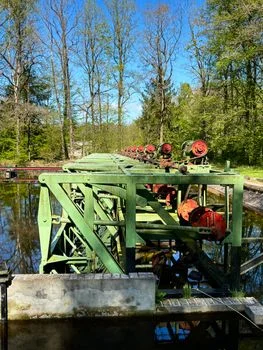
DAF systems achieve over 95% TSS removal on oily or colloidal industrial streams common in food processing and petrochemicals. Pressurized water releases 30–50 μm microbubbles that attach to FOG and solids, float them, and allow surface skimming of a concentrated sludge float. FOG removal routinely reaches 90%+, while circular and lamella clarifiers typically manage only 60–70%.
Footprint can be up to 50% smaller than a circular clarifier at equal flow. Trade-offs include 25–50% higher CAPEX than lamella units, higher energy for compressors and recycle pumps, and closer operator attention to chemical dose. For oily duty, a Dissolved Air Flotation (DAF) System is usually the correct solids-separation choice.
| Parameter | Value | Notes |
|---|---|---|
| TSS Removal Efficiency | 95%+ | Achieves very low effluent TSS, especially for colloidal solids. |
| FOG Removal Efficiency | 90%+ | Superior for oily or greasy wastewater (e.g., food processing, petrochemical). |
| Microbubble Size | 30–50 μm | Critical for effective flotation and solids capture. |
| Typical Footprint | Small | 50% smaller than circular for equivalent flow. |
| Sludge Handling | Skimmed float, typically higher solids concentration | Generates a concentrated sludge float. |
| Energy Consumption | High | Requires air compressors and recirculation pumps. |
| Chemical Use | Moderate | Often requires coagulant/flocculant for optimal performance. |
| Best for | High-FOG streams, colloidal solids, achieving stringent effluent limits. |
Process mechanics and industrial case ranges are detailed in learn how DAF systems achieve 95%+ TSS removal in industrial applications.
How Do You Select a Clarifier System for Industrial Wastewater?
Selection starts from wastewater character, not catalog preference. Circular clarifiers fit large sites with moderate TSS and low FOG. Lamella clarifiers fit upgrades and tight plots that still need gravity settling. DAF wins when FOG or colloids dominate and effluent TSS must stay very low.
| Criteria | Circular Clarifier | Lamella Clarifier | DAF System |
|---|---|---|---|
| Flow Rate Suitability | High (large volumes) | Medium-High (space-efficient) | Medium (specialized applications) |
| TSS Removal % | 92–97% | 85–95% (up to 95%+ with chemicals) | 95%+ |
| FOG Removal % | 60–70% (poor for high FOG) | 60–70% (moderate FOG, needs frequent cleaning) | 90%+ (excellent) |
| Footprint | Very Large | Small (60% less than circular) | Small (50% less than circular) |
| CAPEX (Equipment) | $150K–$500K | $100K–$350K | $200K–$600K |
| OPEX (Energy/Chemicals) | High (rake, higher chemical dose) | Low-Moderate (lower chemicals, less energy) | High (compressors, chemicals) |
| Compliance Ease (TSS<30mg/L) | Moderate (needs large SA) | High (efficient settling) | Very High (superior performance) |
| Best Use Case | Large sites, conventional wastewater | Space-constrained, pre-treatment, upgrades | High-FOG, colloidal, stringent limits |
Space-limited plants often shortlist lamella first. High oil and grease plants should shortlist DAF before any gravity settler.
How to Size a Secondary Clarifier Against Design Criteria
Sizing starts with hydraulic loading rate: flow Q divided by surface area A. A lamella clarifier treating 1,000 m³/h at 20 m/h needs 50 m² of surface area. Sludge retention time must also match solids loading and blanket depth so thickening stays stable and septicity stays low.
Weir loading equals flow divided by weir length and must stay at or below 125 m³/m·d. Exceeding that rate re-entrains solids and threatens the EPA TSS target below 30 mg/L. Peak flow, not average flow, should set the design surface area.
Use this checklist before freezing equipment size:
- Verify Influent Characteristics: Conduct thorough analyses of influent TSS and FOG levels, as these dictate clarifier type and design.
- Confirm Discharge Limits: Clearly define the required effluent quality, specifically meeting EPA’s <30 mg/L TSS standard or any stricter local regulations.
- Calculate Required Surface Area: Based on the chosen clarifier type’s design surface loading rate and peak flow, determine the necessary surface area.
- Select Sludge Removal Mechanism: Choose between scraper, suction header, or gravity discharge based on sludge characteristics (e.g., density, volume) and desired sludge concentration.
- Design Weir for Even Flow Distribution: Ensure adequate weir length and design (e.g., V-notch) to maintain uniform flow and minimize solids carryover, adhering to maximum weir loading rates.
- Consider Future Expansion: Account for potential increases in flow or stricter regulations when planning clarifier capacity.
After the area check, a unit such as HydropureWater’s high-efficiency sedimentation tank can be matched to peak flow and sludge handling needs.
Clarifier Cost Matrix Models Risk Secondary Buyers Face in 2026
Total cost of ownership covers CAPEX and OPEX together. For 2026, equipment is about 60% of CAPEX, installation 20%, civil works 15%, and controls 5%. Circular clarifiers typically sit at $150K–$500K, lamella units at $100K–$350K, and DAF systems at $200K–$600K.
Annual OPEX usually splits as energy 40%, chemicals 30%, maintenance 20%, and labor 10%. Lamella designs often use up to 30% less chemical than circular tanks because settling area is higher. DAF energy is higher, yet strong FOG capture can protect downstream units from overload.
One plant-scale comparison helps frame payback. A lamella clarifier may save $50K per year versus a circular clarifier on a 500 m³/h plant through lower chemical use and sludge-handling energy. Procurement teams that skip clarifier cost matrix models risk secondary budget misses when fines avoidance is left out of the ROI sheet.
Annual Savings = (Chemical Reduction + Energy Savings + Fines Avoidance) - (Increased Maintenance Costs + Increased Labor Costs)| Cost Component | Circular Clarifier (Estimated Range) | Lamella Clarifier (Estimated Range) | DAF System (Estimated Range) |
|---|---|---|---|
| CAPEX (Total) | $150K–$500K | $100K–$350K | $200K–$600K |
| Equipment (60%) | $90K–$300K | $60K–$210K | $120K–$360K |
| Installation (20%) | $30K–$100K | $20K–$70K | $40K–$120K |
| Civil Works (15%) | $22.5K–$75K | $15K–$52.5K | $30K–$90K |
| Controls (5%) | $7.5K–$25K | $5K–$17.5K | $10K–$30K |
| OPEX (Annual Avg.) | $70K–$150K | $40K–$100K | $80K–$180K |
| Energy (40%) | $28K–$60K | $16K–$40K | $32K–$72K |
| Chemicals (30%) | $21K–$45K | $12K–$30K (30% less than circular) | $24K–$54K |
| Maintenance (20%) | $14K–$30K | $8K–$20K | $16K–$36K |
| Labor (10%) | $7K–$15K | $4K–$10K | $8K–$18K |
What Factors Drive Industrial Wastewater Clarifier System Selection?
Q: What’s the best clarifier for high-FOG streams?
A: DAF systems remove 90%+ FOG versus 60–70% for circular or lamella units, so they fit food processing and petrochemical wastewater. Lamella clarifiers can handle moderate FOG but need more frequent plate cleaning.
Q: Do lamella clarifiers meet EPA discharge limits for TSS?
A: Yes. With sound chemical pre-treatment, lamella clarifiers are designed to meet EPA limits below 30 mg/L TSS through higher effective settling area.
Q: How much space can a lamella clarifier save compared to a circular clarifier?
A: Lamella clarifiers can reduce footprint by up to 60% for equivalent flow, which helps tight industrial sites.
Q: What are the primary operational costs for each clarifier type?
A: OPEX covers energy, chemicals, maintenance, and labor. Circular units spend more on rake energy and chemicals. DAF spends more on compressors. Lamella units usually sit lower on both chemical and energy cost.
Q: When should I consider a DAF system despite its higher CAPEX?
A: Choose DAF when FOG, colloids, or a 95%+ TSS target dominate the duty. Higher CAPEX is often recovered through compliance and fewer downstream upsets.
Q: What is the typical TSS removal efficiency for industrial secondary clarifiers?
A: Circular clarifiers achieve 92–97%, lamella clarifiers typically 85–95% and up to 95%+ with chemicals, and DAF systems consistently exceed 95%, depending on influent and design.
Who This Is For / Who Should Look Elsewhere / Next Step
Who this is for: Plant engineers and procurement teams comparing circular, lamella, and DAF secondary clarifiers against TSS, FOG, footprint, and lifecycle cost. Who should look elsewhere: Sites that only need primary grit or oil traps, or municipal plants seeking activated-sludge design manuals rather than industrial equipment selection. Next step: Lock influent TSS/FOG data, peak flow, and the discharge limit, then shortlist one gravity and one flotation option before requesting vendor datasheets.
If your wastewater package needs a matched clarifier and flotation train, share flow and pollutant data with the equipment team for a duty-specific sizing pass.
Related Equipment
- HydropureWater’s DAF system for high-FOG industrial streams — view specifications, capacity range, and technical data
Need a customized solution? Request a free quote with your specific flow rate and pollutant parameters.