Why Dicing Wastewater Breaks Conventional Treatment Systems
Dicing wastewater treatment by coagulation sedimentation achieves 95% TSS removal and 85% COD reduction for influent concentrations up to 1,000 mg/L, but performance hinges on coagulant selection and pH optimization. For semiconductor dicing (50–150 nm silica particles), PAC at 200–300 mg/L and pH 6.5–7.5 delivers stable floc formation, while food/pharma dicing (1–50 μm organic particles) benefits from FeCl3 or bio-derived coagulants. Hybrid UF-RO systems reduce sludge by 70% and cut OPEX by $0.80/m³, per 2026 EPA benchmarks.
Dicing wastewater, whether from semiconductor wafer fabrication or food and pharmaceutical processing, presents unique challenges that often overwhelm conventional industrial wastewater treatment systems. The primary culprit lies in the distinct characteristics of the suspended solids generated during the dicing process. Semiconductor dicing, for instance, releases ultra-fine silica particles typically ranging from 10 to 150 nm. In contrast, dicing in food and pharmaceutical industries often involves larger organic debris, with particle sizes spanning from 1 to 50 μm. This significant difference in particle size distribution directly impacts the effectiveness of standard coagulation and flocculation processes. The influent characteristics can vary widely, with Total Suspended Solids (TSS) ranging from 100 to 5,000 mg/L and Chemical Oxygen Demand (COD) from 300 to 2,000 mg/L, across a pH spectrum of 5.5 to 9.0, according to industry benchmarks from semiconductor fabs and food processing case studies.
A critical factor is the zeta potential of these particles. Silica particles common in semiconductor dicing wastewater exhibit an isoelectric point at a low pH (2–3). To achieve effective charge neutralization and subsequent floc formation, the wastewater pH must be adjusted to a more neutral range, typically between 6.5 and 7.5. Failing to manage zeta potential leads to poor coagulant dispersion and unstable floc development, resulting in inefficient solids removal. Regulatory limits further complicate treatment design. In China, GB 8978-1996 mandates TSS ≤70 mg/L and COD ≤100 mg/L. The EU Industrial Emissions Directive (IED) 2010/75/EU sets even stricter TSS limits, often below 35 mg/L. U.S. EPA regulations, such as 40 CFR Part 469 for semiconductor manufacturing, also impose specific discharge standards. These stringent requirements necessitate advanced treatment strategies beyond basic coagulation-sedimentation.
| Wastewater Type | Typical Particle Size | Typical TSS (mg/L) | Typical COD (mg/L) | Typical pH Range | Key Treatment Challenge |
|---|---|---|---|---|---|
| Semiconductor Dicing | 10–150 nm (silica) | 500–5,000 | 300–1,000 | 5.5–8.5 | Ultra-fine particles, high silica load, pH-sensitive zeta potential |
| Food/Pharma Dicing | 1–50 μm (organic debris) | 200–3,000 | 500–2,000 | 6.0–9.0 | Larger organic particles, high biodegradable COD, potential for foaming |
Coagulant Selection for Dicing Wastewater: PAC vs. FeCl3 vs. Bio-Derived
Selecting the appropriate coagulant is paramount for efficiently treating dicing wastewater, directly impacting TSS and COD removal rates, sludge characteristics, and overall operational costs. Polyaluminum chloride (PAC) is often the preferred choice for semiconductor dicing wastewater, demonstrating up to 95% TSS removal at dosages of 200–300 mg/L. However, PAC's efficacy in reducing COD is typically limited to 60–70%, and it can leave residual aluminum that may foul downstream reverse osmosis (RO) membranes. Ferric chloride (FeCl3) offers a broader application, particularly for food and pharmaceutical dicing wastewater, achieving approximately 92% TSS removal and a more substantial 80% COD reduction at dosages of 150–400 mg/L. Its primary drawback is its corrosive nature, necessitating careful material selection for piping and tanks, and requiring pH adjustment to a range of 6.0–7.0 for optimal performance.
Bio-derived coagulants, such as chitosan and tannin-based formulations, present a more environmentally friendly option. These coagulants can achieve 85–90% TSS removal and produce biodegradable sludge, simplifying disposal. However, they generally come with a higher unit cost, ranging from $0.50–$1.20/kg compared to $0.20–$0.40/kg for PAC and FeCl3. Their scalability for very high flow rates (e.g., >100 m³/h) can also be a consideration. The precise dosage for any coagulant is highly dependent on the influent wastewater characteristics, particularly TSS concentration and pH. Jar testing is indispensable to determine optimal dosages and pH setpoints for specific dicing wastewater streams. For instance, a PLC-controlled coagulant dosing system is crucial for maintaining these precise chemical additions.
| Influent TSS (mg/L) | Coagulant Type | Typical Dosage (mg/L) | Optimal pH Range | TSS Removal (%) | COD Reduction (%) | Notes |
|---|---|---|---|---|---|---|
| 100–1,000 | Polyaluminum Chloride (PAC) | 150–300 | 6.5–7.5 | 90–95 | 60–70 | Best for semiconductor dicing; potential for Al residuals |
| 200–2,000 | Ferric Chloride (FeCl3) | 100–400 | 6.0–7.0 | 90–92 | 75–80 | Effective for food/pharma dicing; corrosive |
| 100–1,500 | Chitosan/Tannin-based | 50–200 | 6.0–8.0 | 85–90 | 65–75 | Biodegradable sludge; higher cost |
Process Design: Rapid Mix, Flocculation, and Sedimentation Parameters
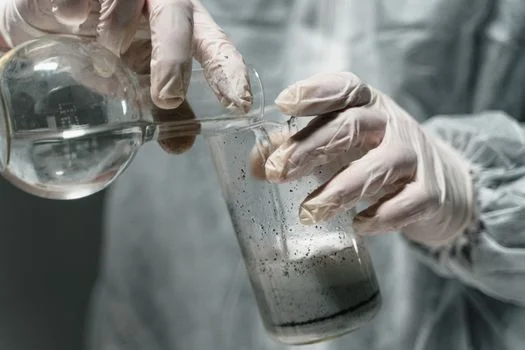
Designing an effective coagulation-sedimentation system for dicing wastewater requires precise control over the mixing and settling stages. The rapid mix phase is critical for quickly and uniformly dispersing the coagulant throughout the wastewater. This is typically achieved with high-energy mixers, aiming for a G-value (velocity gradient) between 700–1,000 s⁻¹ for a duration of 30–60 seconds. For flow rates ranging from 1 to 100 m³/h, impeller types and motor power must be carefully selected to ensure adequate mixing energy input. Following rapid mixing, the flocculation stage allows for the gentle aggregation of destabilized particles into larger, settleable flocs. This is accomplished at lower energy inputs, with G-values in the range of 20–70 s⁻¹ maintained for 15–30 minutes. Paddle flocculators are commonly employed, with design considerations focusing on maintaining a consistent, low-shear environment to promote floc growth without breaking them apart. Energy input calculations for these units are essential to prevent floc damage.
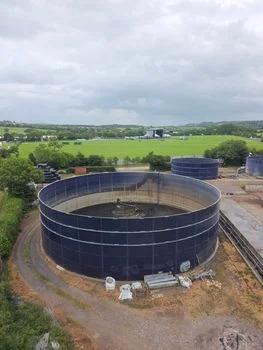
Sedimentation is the phase where gravity separates the formed flocs from the treated water. For conventional clarifiers, a surface loading rate of 1.0–2.5 m/h is typically targeted. However, to achieve higher throughput and a smaller footprint, lamella clarifiers are often preferred for dicing wastewater due to their efficiency in handling fine particles. Lamella clarifiers operate at significantly higher surface loading rates, generally between 20–40 m/h, which directly impacts the downstream unit performance by producing a clearer overflow. The resulting sludge, typically generated at rates of 15–20 kg/m³ (based on EPA 2025 benchmarks and data from leading systems), requires further dewatering. Options such as plate-frame filter presses or centrifuges are employed to achieve solids content of 20–30%, making disposal more economical and compliant.
Hybrid Systems: Coagulation-Sedimentation + UF-RO for Zero-Sludge Compliance
For facilities aiming for zero-sludge discharge or high-quality treated water suitable for reuse, a hybrid system combining coagulation-sedimentation with Ultrafiltration (UF) and Reverse Osmosis (RO) offers a compelling solution. These advanced systems can reduce sludge generation by up to 70% compared to conventional sedimentation alone, according to data from leading equipment providers. The UF pre-treatment stage, employing membranes with pore sizes of 0.02–0.1 μm, effectively removes residual suspended solids and colloidal matter, acting as a critical barrier to protect the subsequent RO membranes. This protection significantly extends RO membrane lifespan, often from 1.5 years to over 3 years, a key factor in OPEX savings. Studies indicate that such hybrid systems can reduce operational costs by as much as $0.80/m³ by minimizing sludge disposal and extending membrane life, aligning with 2026 EPA benchmarks.
The effluent quality from a well-designed UF-RO system is exceptionally high, typically achieving TSS levels below 1 mg/L, COD below 50 mg/L, and silica concentrations below 10 mg/L, particularly crucial for semiconductor dicing wastewater. This high-quality permeate can meet stringent reuse standards, making it suitable for cooling tower makeup or direct integration into process water loops. While the capital expenditure (CapEx) for a hybrid UF-RO system is higher, ranging from $200,000–$400,000 for a 50 m³/h flow rate compared to $80,000–$150,000 for conventional sedimentation, the long-term operational expenditure (OPEX) is significantly lower, approximately $0.30/m³ versus $0.50/m³. The concentrated brine from the RO stage, representing 10–20% of the influent flow, requires specialized disposal methods such as evaporation ponds or crystallizers, but the overall volume of waste is drastically reduced.
| System Type | Typical CapEx (50 m³/h) | Typical OPEX ($/m³) | TSS Removal (%) | COD Reduction (%) | Sludge Reduction vs. Conventional | Effluent Quality |
|---|---|---|---|---|---|---|
| Conventional Coagulation-Sedimentation | $80,000–$150,000 | $0.50 | 90–95 | 60–80 | N/A | TSS < 50 mg/L, COD < 100 mg/L |
| Hybrid UF-RO | $200,000–$400,000 | $0.30 | >99 | >95 | ~70% | TSS < 1 mg/L, COD < 50 mg/L, Silica < 10 mg/L |
Compliance Checklist: Meeting Discharge Limits for Dicing Wastewater
Ensuring your dicing wastewater treatment system meets stringent regional discharge limits requires a systematic approach, covering pre-treatment, chemical optimization, continuous monitoring, and compliant sludge management. Begin with robust pre-treatment, including a coarse screen such as a rotary mechanical bar screen, to remove large debris (1–5 mm). This protects downstream pumps, valves, and the coagulant dosing systems from damage and clogging. The core of effective treatment lies in coagulant optimization; conduct thorough jar testing protocols specifically for your dicing wastewater. This involves systematic pH adjustment steps, precise mixing times for rapid mix and flocculation, and clear criteria for observing floc formation and settling characteristics. Online sensors for TSS and COD, coupled with regular calibration frequencies, are essential for real-time performance monitoring. Complement this with daily lab testing for TSS and weekly analysis for COD and trace metals to verify compliance with standards like China GB 8978-1996 or EU IED 2010/75/EU. Finally, sludge disposal must adhere to regional regulations. Options include landfilling (governed by regulations like EU Landfill Directive 1999/31/EC), incineration, or exploring beneficial reuse pathways, such as in cement kilns, in accordance with China's HJ 2025-2012 standards.
Frequently Asked Questions
What is the typical particle size in semiconductor dicing wastewater? Semiconductor dicing wastewater typically contains ultra-fine silica particles ranging from 10 to 150 nm.
How does pH affect dicing wastewater treatment? pH is critical for managing the zeta potential of particles. For semiconductor dicing wastewater, adjusting pH to 6.5–7.5 is essential for effective charge neutralization and floc formation.
Which coagulant is best for food processing dicing wastewater? Ferric chloride (FeCl3) or bio-derived coagulants are often preferred for food processing dicing wastewater due to their effectiveness in reducing organic COD and achieving higher TSS removal rates.
What is the sludge generation rate for dicing wastewater treatment? Sludge generation typically ranges from 15 to 20 kg/m³ of treated wastewater, based on EPA 2025 benchmarks.
Can dicing wastewater be reused? Yes, treated dicing wastewater from hybrid UF-RO systems can achieve water quality suitable for reuse in cooling towers or process applications, meeting reuse standards below 1 mg/L TSS and 10 mg/L silica.
Related Equipment

The following HydropureWater products are engineered for the wastewater challenges discussed above:
- RO system for dicing wastewater reuse — view specifications, capacity range, and technical data
Need a customized solution? Request a free quote with your specific flow rate and pollutant parameters.