Why Dicing Wastewater Fails Traditional Treatment Systems
Dicing wastewater, a complex effluent from semiconductor fabrication, presents unique challenges that often overwhelm conventional treatment methods like sedimentation. The primary culprit is the presence of ultrafine silicon dust, typically ranging from 0.1 to 5 micrometers, alongside synthetic coolants containing additives such as polyethylene glycol (PEG) and tetramethylammonium hydroxide (TMAH). These ultrafine particles exhibit very low settling velocities, often less than 0.1 mm/s, making them inherently resistant to gravitational separation. Consequently, typical sedimentation systems struggle to achieve more than 60–70% Total Suspended Solids (TSS) removal for dicing effluent, as reported in EPA 2023 compliance reports. This persistent presence of fine particles not only compromises effluent quality but also leads to significant fouling issues in downstream processes, such as membrane filtration systems, increasing maintenance burdens and operational costs.
The effectiveness of sedimentation is further degraded by the nature of coolant additives. These surfactants can increase the wastewater's viscosity and alter the surface tension properties of the suspended particles, further inhibiting their ability to aggregate and settle. A notable case study from a semiconductor fab in Penang (2025 data) demonstrated a dramatic improvement, achieving a 90% reduction in fines after transitioning from a sedimentation-based system to a dissolved air flotation (DAF) solution, highlighting the inherent limitations of gravity-based separation for this specific wastewater stream.
| Wastewater Characteristic | Impact on Sedimentation Efficiency | Typical Sedimentation Removal (Dicing Effluent) |
|---|---|---|
| Ultrafine Silicon Dust (0.1–5 µm) | Low settling velocity (<0.1 mm/s) prevents aggregation and gravitational separation. | 60–70% TSS |
| Synthetic Coolant Additives (e.g., PEG, TMAH) | Increase viscosity, alter surface tension, and inhibit particle settling. | |
| High Suspended Solids Load | Can lead to inefficient blanket formation and carryover of solids. | - |
Dissolved Air Flotation (DAF) for Dicing Wastewater: Process Parameters and Engineering Specs
Dissolved Air Flotation (DAF) offers a technically superior solution for dicing wastewater by leveraging microbubble technology to capture and remove fine particulates that elude sedimentation. For dicing applications, influent wastewater typically presents with Total Suspended Solids (TSS) concentrations ranging from 500 to 3,000 mg/L and Chemical Oxygen Demand (COD) levels between 800 and 2,500 mg/L. The pH is generally maintained between 7.0 and 9.0, with particle sizes predominantly in the 0.1–5 µm range. To effectively manage these characteristics and ensure optimal performance, DAF systems designed for dicing wastewater operate at specific hydraulic loading rates (HLRs) of 8–12 m/h. This rate is crucial for preventing microbubble coalescence and ensuring sufficient contact time for particle attachment, a narrower range compared to the 5–15 m/h often cited for general industrial wastewater applications.
The air-to-solids ratio (A/S) is another critical parameter, typically set between 0.03 and 0.05 for dicing effluent. This slightly higher ratio, compared to the broader 0.02–0.06 range for general industrial use, accounts for the smaller particle size and lower density of silicon dust, ensuring adequate buoyancy for efficient flotation. Coagulants, such as polyaluminum chloride (PAC) or ferric chloride, play a vital role in the DAF process by destabilizing the negatively charged silicon particles, allowing them to aggregate into larger flocs that can be readily captured by microbubbles. With these optimized parameters, DAF systems consistently achieve effluent targets of TSS below 30 mg/L and COD below 100 mg/L, meeting stringent EPA and ISO 14001 standards.
| Parameter | Dicing Wastewater Influent | DAF System Specification (Dicing Application) | Typical Effluent Target |
|---|---|---|---|
| TSS | 500–3,000 mg/L | - | <30 mg/L |
| COD | 800–2,500 mg/L | - | <100 mg/L |
| pH | 7.0–9.0 | - | (Dependent on discharge limits) |
| Particle Size | 0.1–5 µm | - | - |
| Hydraulic Loading Rate (HLR) | - | 8–12 m/h | - |
| Air-to-Solids Ratio (A/S) | - | 0.03–0.05 | - |
| Coagulant Type | - | PAC, Ferric Chloride | - |
Discover how our DAF systems for dicing wastewater can be engineered to meet your facility's specific requirements.
DAF vs. Alternatives for Dicing Wastewater: Performance, Cost, and Compliance Comparison
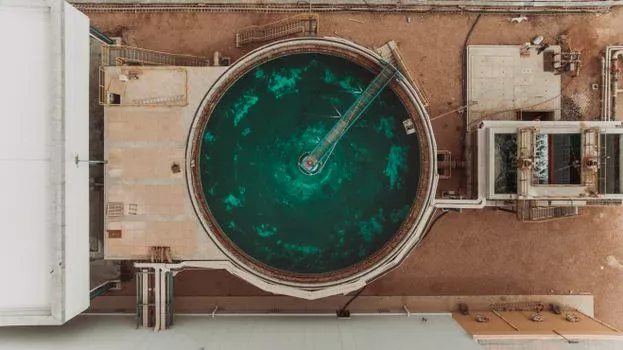
When evaluating wastewater treatment technologies for semiconductor dicing operations, a comparative analysis of performance, cost, and compliance is essential. Dissolved Air Flotation (DAF) consistently demonstrates significant advantages over traditional sedimentation for this application. While sedimentation systems might offer lower initial capital expenditure (CapEx), their limited TSS removal efficiency (around 70%) often necessitates costly downstream polishing or leads to non-compliance. Membrane Bioreactors (MBRs), on the other hand, can achieve very high TSS removal rates (up to 99%), suitable for water reuse, but at a substantially higher CapEx ($150,000–$250,000 for a 50 m³/h system) and operational expenditure (OPEX) ($0.40–$0.70/m³), primarily due to energy consumption and membrane replacement.
DAF systems, with a typical CapEx of $80,000–$120,000 for a 50 m³/h unit and OPEX of $0.15–$0.30/m³, strike a balance between performance and cost-effectiveness. They reliably achieve 95% TSS removal, meeting EPA <30 mg/L TSS discharge limits. when coupled with downstream filtration, DAF can achieve a zero-sludge discharge output, significantly reducing hazardous waste disposal costs by up to 40% compared to sedimentation, which generates a larger volume of sludge. Electrocoagulation (EC) offers an alternative with 85% TSS removal, but its OPEX can be higher due to electrode consumption.
| Treatment Technology | Typical TSS Removal Efficiency | Estimated CapEx (50 m³/h) | Estimated OPEX ($/m³) | Compliance Potential (TSS) |
|---|---|---|---|---|
| Dissolved Air Flotation (DAF) | 95% | $80,000–$120,000 | $0.15–$0.30 | Meets EPA <30 mg/L |
| Sedimentation | 60–70% | $50,000–$80,000 | $0.10–$0.20 | Often requires downstream treatment |
| Membrane Bioreactor (MBR) | 99% | $150,000–$250,000 | $0.40–$0.70 | High purity, suitable for reuse |
| Electrocoagulation (EC) | 85% | $70,000–$110,000 | $0.25–$0.45 | Variable, dependent on chemistry |
Explore the benefits of advanced wastewater treatment by reviewing our insights on MBR systems as an alternative to DAF for dicing wastewater, and understand the trade-offs.
Cost Breakdown for Dicing Wastewater DAF Systems: 2026 CapEx, OPEX, and ROI Calculator
Investing in a DAF system for dicing wastewater treatment requires a clear understanding of the associated capital and operational costs, as well as the potential return on investment (ROI). For a typical DAF system designed to treat 50 cubic meters per hour (m³/h) of dicing effluent, the initial Capital Expenditure (CapEx) generally ranges from $80,000 to $120,000. This figure includes the primary DAF tank, essential pumps, the air saturation system, and integrated control systems. Operational Expenditure (OPEX) for such a system typically falls between $0.15 and $0.30 per cubic meter of treated water. This OPEX is further broken down into energy consumption (estimated at $0.05–$0.10/m³), chemical costs for coagulation and flocculation ($0.03–$0.08/m³), and ongoing maintenance ($0.07–$0.12/m³).
The Return on Investment (ROI) for dicing facilities processing more than 100 m³/day of wastewater is often realized within an 18–24 month period. This payback is driven by significant savings derived from reduced fines requiring downstream remediation, minimized sludge disposal costs (especially when paired with downstream filtration for zero-sludge discharge), and avoidance of regulatory fines. Modular, skid-mounted DAF systems can further reduce installation costs by up to 30%, accelerating the ROI timeline. The basic ROI formula to consider is: (Annual savings from fines/sludge reduction + reduced operational issues) / (CapEx + Annual OPEX) = Payback period in years.
| Cost Component | Estimated Range (50 m³/h System) | Notes |
|---|---|---|
| Capital Expenditure (CapEx) | $80,000–$120,000 | Includes tank, pumps, air saturation, controls. Modular systems can reduce this by 30%. |
| Operational Expenditure (OPEX) | $0.15–$0.30 / m³ | |
| Energy | $0.05–$0.10 / m³ | Pumps and air compressor. |
| Chemicals | $0.03–$0.08 / m³ | Coagulants and flocculants. |
| Maintenance & Consumables | $0.07–$0.12 / m³ | Labor, spare parts, wear items. |
| Typical Payback Period | 18–24 months | For facilities >100 m³/day wastewater. |
Troubleshooting DAF Failures in Dicing Wastewater Treatment
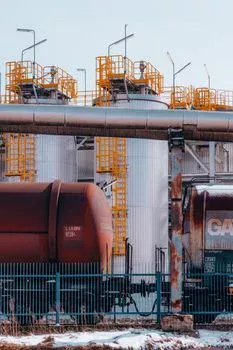
Effective operation of DAF systems for dicing wastewater requires proactive identification and resolution of common issues. One prevalent symptom is poor TSS removal, often falling below the 80% benchmark. A primary cause for this is influent pH outside the optimal range of 6.5–8.5. Silicon particles, especially at extreme pH values, can develop repulsive surface charges that prevent them from adhering to microbubbles. The fix involves precise pH adjustment using alkali (e.g., NaOH) or acid (e.g., H₂SO₄) via a PLC-controlled chemical dosing system. Another issue is microbubble coalescence, which reduces flotation efficiency. This can be triggered by high influent temperatures (above 35°C) or excessive surfactant concentrations in the coolant. Cooling the influent to below 30°C or introducing appropriate antifoam agents can mitigate this problem.
Clogging of the air saturation system's nozzles is a frequent concern due to the sub-micron silicon dust particles. To combat this, installing fine pre-filters (e.g., 5 µm) upstream of the saturation system and implementing a weekly backflushing schedule is crucial. High energy consumption can be an indicator of an improper air-to-solids ratio, typically when it exceeds 0.06. Adjusting air pressure or optimizing coagulant dosage can rectify this. A systematic diagnostic flowchart is key: first, check and adjust pH; next, measure influent and effluent TSS; then, inspect air saturation nozzles for blockages; finally, review the air-to-solids ratio and chemical dosing rates.
- Symptom: Poor TSS removal (<80%). Cause: pH outside 6.5–8.5 range, leading to particle repulsion. Fix: Adjust pH with NaOH/H₂SO₄ using a PLC-controlled chemical dosing for DAF pH adjustment.
- Symptom: Microbubble coalescence. Cause: High influent temperature (>35°C) or excessive surfactants. Fix: Cool influent to <30°C or add antifoam agents.
- Symptom: Clogged air saturation system nozzles. Cause: Fine silicon dust (<1 µm) fouling. Fix: Install 5 µm pre-filters and backflush weekly.
- Symptom: High energy use. Cause: Air-to-solids ratio >0.06. Fix: Reduce air pressure or increase coagulant dose.
Frequently Asked Questions
What’s the maximum TSS concentration DAF can handle for dicing wastewater?
DAF systems, when properly engineered with effective coagulation and flocculation, can handle influent TSS concentrations up to 3,000 mg/L for dicing wastewater. This capability is a significant advantage over sedimentation, which struggles with such high loads of fine particles.
Can DAF remove heavy metals from dicing wastewater?
DAF is primarily designed for the removal of suspended solids, oils, and greases. While it can remove some heavy metals that are complexed with suspended solids, it is not effective for dissolved heavy metals. For dissolved metal removal, downstream processes like ion exchange or chemical precipitation are required. Refer to our guide on heavy metal wastewater treatment by ion exchange for more information.
How often should DAF systems be maintained for dicing applications?
Routine maintenance is critical. Weekly tasks should include backflushing the air saturation system nozzles. Monthly calibration of coagulant dosing pumps is also recommended. More comprehensive inspections and cleaning of the DAF tank and sludge removal mechanism should be performed quarterly or as indicated by operational performance.
Is DAF suitable for zero-liquid discharge (ZLD) systems?
DAF is an excellent pre-treatment step within a ZLD system, effectively removing the bulk of suspended solids. However, DAF alone does not achieve ZLD. Further treatment steps, such as reverse osmosis (RO) or evaporation, are necessary to remove dissolved solids and achieve a zero-liquid discharge goal. Explore our RO systems for downstream polishing of DAF effluent.
What’s the lifespan of a DAF system for dicing wastewater?
With proper design, installation, and regular maintenance, a DAF system for dicing wastewater can have a lifespan of 15–20 years. The durability is attributed to robust construction materials and the relatively low mechanical stress on the primary treatment components.