A package wastewater treatment plant in Iraq typically treats 1–80 m³/h of domestic or light industrial sewage. Most units use A/O or MBR process trains and report 90–98% BOD/COD removal when sized for the stated hydraulic and organic loads. Skid-mounted or containerized layouts cut civil works, which suits camps, peri-urban districts, and sites with limited sewer networks.
Why Iraq Needs Compact Wastewater Treatment Solutions
Compact sewage plants for Iraq cover 1–80 m³/h with A/O or MBR trains. FOB China prices run about $25,000–$65,000 for 5–20 m³/h units and up to $220,000 for 50–80 m³/h MBR packages. They fit camps and peri-urban sites where sewerage coverage stays below 30% and over 70% of urban sewage remains untreated.
Climate adds design constraints that centralized plants often ignore. Summer air temperatures frequently exceed 45°C, so biological tanks need thermal protection and aeration headroom. Dust storms drive sand into open channels and pump wet wells. Grid outages are common outside major cities, so controls and blowers must tolerate generator changeover. Most plants we size for Iraqi camps therefore run aeration at the lower end of the design band during cooler night hours to save fuel.
Decentralized sites also lack long interceptor sewers. Modular trains let municipalities add capacity in 5–20 m³/h blocks instead of waiting for a single large STP. That sequencing reduces stranded capital when population forecasts are uncertain.
How a Package Wastewater Treatment Plant Works
These factory-built systems combine pretreatment, biological reaction, solids separation, and disinfection inside one envelope. Raw sewage first passes screening and grit removal so pumps and membranes are not abraded. The biological reactor then oxidizes organics and, in A/O layouts, denitrifies nitrogen in an anoxic zone before the aerobic zone.
A/O trains commonly deliver 90–95% BOD removal at flows of about 5–80 m³/h for housing estates, hotels, and small factories. MBR trains replace secondary clarifiers with ultrafiltration membranes, typically 0.1 μm PVDF, and can hold turbidity below 10 mg/L with 98%+ pathogen reduction when disinfection is included. That effluent quality supports restricted irrigation where reuse is the project goal.
PLC automation is standard on modern containerized STPs. Remote dashboards track DO, blower status, and tank levels so one technician can cover several sites. For municipal planners comparing underground A/O packages, the Underground Package Sewage Treatment Plant (WSZ Series) covers the 1–80 m³/h band used on many Iraqi camp and community bids.
Top Technologies Compared: A/O vs MBR vs DAF for Iraqi Applications
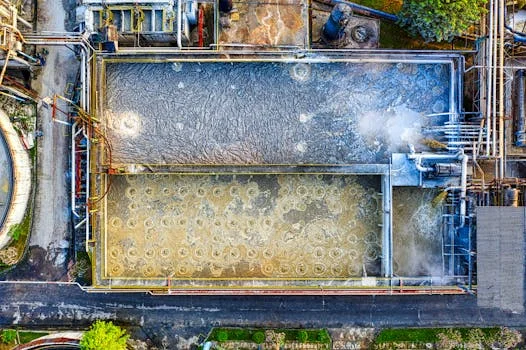
Technology choice for Iraqi projects turns on effluent limits, available footprint, and CAPEX headroom. A/O systems remain the cost-effective default for municipal and residential discharge where land is available and receiving waters are not highly sensitive. Capacities of 1–80 m³/h with 90–95% BOD removal cover most community and light-industry loads we see in bid documents.
MBR systems target tighter reuse or urban footprint limits. Effluent turbidity below 1 NTU and pathogen removal above 99% are typical when 0.1 μm membranes and disinfection are both online. Footprint can be about 60% smaller than a conventional A/O plant of equal flow, but blower and membrane scour energy raise OPEX. A high-efficiency MBR system with 0.1 μm filtration is the usual pick when irrigation reuse or very low TSS is written into the contract.
DAF is not a full biological plant. It removes 92–97% TSS and FOG from oilfield or food-process streams before biological polishing. In Basra and other industrial corridors, DAF pretreatment protects downstream A/O or MBR trains from oil shocks that would otherwise collapse sludge settleability.
Iraqi climate resilience cuts across all three options. Sealed enclosures, SS304/316 wetted parts, heat-reflective coatings, and solar-ready power panels reduce sand ingress and heat stress. Without those details, membrane flux and blower bearings fail earlier than the catalogue life suggests.
| Technology Type | Typical Capacity (m³/h) | Effluent Quality (BOD Removal) | Footprint | CAPEX (Relative) | OPEX (Relative) | Iraqi Suitability |
|---|---|---|---|---|---|---|
| A/O (Anoxic/Aerobic) | 1–80 | 90–95% BOD, good N removal | Medium | Lower | Medium | Residential, small industrial, cost-effective discharge |
| MBR (Membrane Bioreactor) | 1–80 | >98% BOD, <1 NTU turbidity, pathogen removal | Small (60% less than A/O) | Higher | Higher | Reuse applications, stringent discharge, urban areas |
| DAF (Dissolved Air Flotation) | Variable (industrial) | 92–97% TSS & FOG removal (pretreatment) | Medium | Medium | Medium | Industrial wastewater (oil, food processing) pretreatment |
Capacity, Cost, and Delivery: Real Data for Iraqi Projects
Procurement teams need clear capacity, price, and schedule bands before issuing RFQs. For remote camps or villages, 5–20 m³/h A/O or basic MBR packages typically cost $25,000–$65,000 FOB China based on HydropureWater field data from 2025. Factory lead time is usually 6–10 weeks, with on-site mechanical install in under 7 days when pads and utilities are ready.
At 50–80 m³/h, advanced MBR trains with chemical dosing and chlorine dioxide disinfection commonly sit at $120,000–$220,000 FOB China. Mid-range 20–50 m³/h units fall between those bands. Parallel skids scale later without rebuilding the whole civil package, which is useful when a camp expands from 500 to 2,000 residents over two seasons.
Discharge compliance remains a hard gate. Properly tuned A/O and MBR trains can meet Iraqi Municipal Decree No. 2 (2021) municipal discharge targets that typically call for BOD below 30 mg/L plus matching TSS limits. High-efficiency MBR effluent is often aligned with WHO-oriented reuse thinking for restricted irrigation. According to WHO’s Eastern Mediterranean review (2006), Iraq has not promulgated a standalone national reuse standard set. Contracts therefore cite WHO guideline values plus Ministry of Environment discharge codes.
| Capacity Range (m³/h) | Technology Type | Estimated Cost (FOB China) | Delivery Time (Weeks) | Installation Time (Days) |
|---|---|---|---|---|
| 5–20 | A/O or Basic MBR | $25,000–$65,000 | 6–10 | 3–7 |
| 20–50 | A/O or Standard MBR | $60,000–$150,000 | 8–12 | 5–10 |
| 50–80 | Advanced MBR (with options) | $120,000–$220,000 | 10–14 | 7–14 |
What Does a Package Sewage Plant Upgrade Cost?
Package sewage plant upgrades usually cost less than building a new train when tanks and pads remain sound. Typical upgrade scopes replace blowers, add an MBR cassette, or insert DAF pretreatment ahead of an aging A/O reactor. For a 20–50 m³/h Iraqi site, membrane or blower upgrades often land in the mid tens of thousands of dollars FOB for equipment alone, while a full parallel skid follows the $60,000–$150,000 band shown above.
Cost drivers that dominate change orders are power upgrades, chemical dosing skids, and inlet screening. Sites that skip a 6–10 mm rotary screen before membranes pay later in membrane replacements. If the goal is only to meet BOD <30 mg/L discharge, stay with A/O process upgrades. If the contract adds irrigation reuse, budget for MBR membranes plus disinfection rather than clarifier rebuilds alone.
Selection checklist before you issue an upgrade RFQ:
- Measured influent BOD, COD, TSS, FOG, and peak hourly flow (m³/h)
- Required effluent BOD/TSS and any reuse pathogen limit
- Available footprint and crane access for container swaps
- Grid voltage (typically 220V/50Hz) and generator capacity (kVA)
- Sand and ambient temperature design basis (°C)
- Spare-parts lead time to site and local technician coverage
- Whether future parallel capacity will share the same headworks
Which Iraq Wastewater Treatment Plant Projects Are Active?
Iraq wastewater treatment plant projects span camp-scale packages and city-scale World Bank programs. At the compact end, UNAMI previously tendered a 200 m³/day (about 8.3 m³/h) SBR package for its Baghdad Green Zone headquarters. Effluent targets were BOD <10 mg/L, COD <30 mg/L, and SS <10 mg/L under WHO and Iraqi Ministry of Environment codes. That scale matches the upper end of small package units used on secured compounds.
At city scale, the World Bank’s Baghdad Water Supply and Sewerage Improvement Project has carried about $150 million in commitments to improve water and wastewater services for roughly 5 million people. Newer appraisal work still records sewerage coverage below 30% and over 70% of urban sewage discharged untreated, which keeps demand high for both large STPs and fast package plants on the network fringe.
For EPC contractors, the practical split is clear. Use an Underground Package Sewage Treatment Plant (WSZ Series) or MBR train for camps, industrial parks, and peri-urban districts that cannot wait for trunk sewers. Reserve large civil STPs for dense Baghdad and Basra catchments already inside World Bank or ministry investment envelopes. Mixing both keeps untreated discharges down while the trunk network catches up.
Deployment in Iraq: Overcoming Sand, Heat, and Power Instability
Sand ingress remains the first mechanical failure mode on Iraqi package plants. Inlet rotary screens with 6–10 mm bar spacing and self-cleaning brushes, such as GX-series units, keep grit and plastics out of pumps and membranes. Skipping that stage shortens impeller and membrane life more than any other single omission we see in field audits.
Ambient temperatures above 45°C stress nitrifiers and raise blower discharge temperatures. Insulated tanks, heat-reflective coatings, and variable-speed blowers keep MLSS in a workable range. Components should be rated for high ambient duty; catalogue motors sized only for 40°C rooms trip or derate in summer.
Power instability is routine outside stable urban feeders. Designs usually assume 220V/50Hz with UPS backup for PLCs and diesel generators for blowers and pumps. SMS or SCADA alerts for power loss, low disinfectant, or pump faults let operators intervene before effluent slips past BOD or coliform limits. Remote camps that rely on generators alone should size fuel storage for at least 48–72 hours of aeration at design load.
Who This Is For and Next Step
This guide is for plant engineers, EPC contractors, and municipal buyers sizing 1–80 m³/h decentralized plants for Iraqi heat, dust, and weak grids. It is not a substitute for a full centralized STP design when a city already has trunk sewers and a funded civil package. If you have flow, influent COD, and discharge or reuse limits, request a sized proposal through the inquiry form so process and footprint can be checked against your site data.
Frequently Asked Questions
What is the lifespan of a compact sewage plant in Iraq?
Most package plants last 15–20 years when annual preventive maintenance is performed and wetted parts use SS304 or SS316 in saline or industrial service. Blower bearings, membrane modules, and diffuser membranes are wear items and usually need planned replacement inside that life. Sites that skip inlet screening or run without spare kits see earlier mechanical failures.
Can these plants be expanded later?
Yes. Modular package trains are built to add parallel units as population or industrial load grows. Shared headworks and a common PLC make expansion cheaper than a second standalone plant. Plan spare pad space and electrical capacity during the first install so the second skid drops in without rework.
Do they meet Iraqi environmental standards?
Properly configured A/O and MBR systems are designed to meet BOD, TSS, and fecal coliform limits under Iraqi Municipal Decree No. 2 (2021) for municipal discharge. Reuse projects usually also reference WHO guideline values because Iraq has not issued a standalone national reuse standard set. Always confirm the exact BOD/TSS numbers written in your local permit.
Are spare parts available locally?
Pumps, blowers, and PLCs are globally standardized models, but lead times into Iraq vary by city and customs lane. HydropureWater ships a 2-year critical spare kit with each plant so seals, diffusers, and sensors are on site from day one. Local stocking of air filters and disinfectant chemicals still needs a named site owner.
How fast can a plant be installed?
Most skid-mounted or containerized units reach mechanical completion in 3–7 days after delivery when the concrete pad, inlet manhole, and power feed are already finished. Wet commissioning and biomass build-up then take additional days depending on seed sludge and temperature. That schedule remains far shorter than cast-in-place STP construction.