What Determines Skid Mounted Plant Cost?
Skid mounted plant cost in 2025 ranges from $1,800 for compact RO units to over $75,000 for fully integrated industrial systems, with average packaged wastewater skids near $74,911.97. Final CAPEX depends on process type, design flow, automation depth, and regional compliance scope.
Manufacturer 2025 FOB lists for packaged or skid-mounted sewage plants still span about $15,000–$350,000+ by daily capacity (Weilan, 2025). System type is the primary cost driver. A basic filtration skid and a complex industrial wastewater system with biological treatment sit at opposite ends of the pricing spectrum. Flow capacity scales price directly; pumps, membranes, and tanks for a 10 m³/h system cost far more than those for a 500 L/H unit. Automation from basic relays to a full PLC-controlled skid system with IoT monitoring typically adds 15–25% to base equipment cost. Integrating HMI touchscreens and remote SCADA connectivity raises capital cost but cuts long-term operator labor. Strict U.S. or EU compliance often lifts material and safety scope by 10–20%, including 316L stainless steel for corrosive service or ATEX-rated parts for explosive atmospheres.
Cost Breakdown by Treatment Technology
Matching technology to the duty is the most effective way to control packaged water treatment system cost. Each system type has a distinct price profile based on complexity and components.
Reverse Osmosis (RO) Skids: Entry-level 500 L/H units for light commercial use start at $1,800. Industrial-scale industrial RO skid system with 95% recovery rate for 5–10 m³/h capacity, complete with antiscalant dosing and clean-in-place (CIP) systems, average $50,000–$75,000. These trains usually include sand, carbon, and softener pre-treatment to protect RO membranes from scaling and fouling, which is a major price driver.
Wastewater Treatment Skids: Integrated systems combining anaerobic/aerobic (A/O) treatment, sedimentation, and disinfection (for example common WSZ series) cost $40,000–$80,000 for 5–20 m³/h capacities. Price moves with automation depth and biological complexity. Membrane Bioreactor (MBR) configurations typically command a 15–20% premium over conventional clarifiers because of higher effluent quality and a smaller footprint. A fully automated skid-mounted wastewater treatment unit is often specified when civil works must stay minimal.
Seawater Desalination Skids: These are premium packages because of high-pressure pumps and corrosion-resistant alloys. A 1–5 m³/h RO train with robust pre-filtration and energy recovery devices costs $60,000–$120,000; hybrid solar-electric models cost more. Duplex stainless steel or titanium on seawater intake lines and high-pressure vessels is a large share of that CAPEX.
Chemical Dosing Skids: Automatic PLC-controlled units range from $8,000–$25,000. Final cost depends on pump-head count, chemical compatibility (for example HDPE for acids, SS316 for oxidants), and control integration. Leak detection, secondary containment, and automated calibration routines also move the quote.
| System Type | Typical Capacity | Key Components | Price Range (USD) |
|---|---|---|---|
| Compact RO Unit | 500 L/H | Single membrane, basic pre-filter | $1,800 - $5,000 |
| Industrial RO Skid | 5-10 m³/h | Multi-membrane array, CIP, dosing | $50,000 - $75,000 |
| Integrated Wastewater (A/O) | 5-20 m³/h | Biological reactor, clarifier, disinfection | $40,000 - $80,000 |
| Seawater Desalination | 1-5 m³/h | High-pressure pump, energy recovery | $60,000 - $120,000 |
| Chemical Dosing Skid | N/A (3-6 pumps) | PLC, calibration tanks, leak detection | $8,000 - $25,000 |
Each technology type has its own cost profile. Reading the ranges against your flow and effluent target keeps the first budget pass realistic.
What Drives Stainless Steel Process Skid Cost?
Stainless steel process skid cost rises mainly with alloy grade, wetted surface area, and welding or certification scope rather than frame steel alone. Earlier guidance often treated corrosive-service upgrades as a 10–20% compliance adder on the full package. Manufacturer 2025 guidance states stainless steel 304/316 construction can add 30%–50% versus coated carbon steel when tanks and piping are upgraded (Weilan, 2025). Specify 316L only where chloride, acid, or CIP chemistry justifies it; keep coated carbon steel on dry frames and non-wetted supports to protect CAPEX.
OEM vs. Western Integrator Pricing: What's the Real Difference?
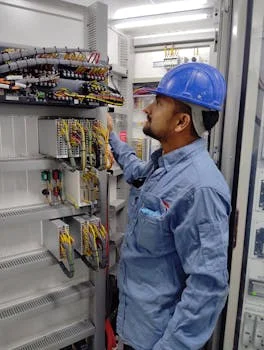
Chinese OEM versus Western integrator pricing is a cost-versus-risk decision for procurement teams. Chinese OEMs like HydropureWater typically offer OEM water treatment pricing that is 30–50% lower than U.S. or EU integrators for systems of equivalent capacity and specification. The gap reflects lower manufacturing overhead, supply-chain advantages, and a different service model.
Western integrators fold extensive front-end engineering, detailed compliance packages (for example P&IDs and FAT protocols), and after-sales contracts into the quote, often adding $15,000–$50,000 to project cost. That path suits owners with limited in-house process staff who want one accountable party. OEM packages need more owner oversight during specification and commissioning, yet they allow deeper customization and lower first capital outlay for repeat buyers with strong internal engineering teams.
How Do Skid and Containerised Plants Compare?
Skid-mounted packages usually need a prepared pad, interconnect piping, and field electrical tie-ins, while containerised plants arrive enclosed and weather-protected for faster site set-up. Installation and commissioning for mid-complexity skids still add about 10–15% of equipment cost when civil and power upgrades stay modest. Manufacturer guidance treats containerized or packaged plants as pre-assembled options that avoid on-site tank construction and shorten installation versus civil-built plants (Weilan, 2025). Choose skids when you need open access for maintenance or custom header layouts; choose containers when transport limits, outdoor exposure, or compressed schedules dominate.
What Is MBR Membrane Price per m²?
MBR membrane price per m² for industrial PVDF modules commonly falls near $10–40/m² for hollow fiber and $15–35/m² for flat sheet in volume buys, per manufacturer data (Loyalmem). Full MBR system installed cost is often stated around $150–300 per m³/day of capacity under the same manufacturer guidance. On complete wastewater skids, MBR still typically adds a 15–20% equipment premium over conventional clarifiers. An MBR system should be justified when reuse quality, footprint limits, or clarifier failure risk outweigh that membrane CAPEX and replacement cycle.
Total Cost of Ownership: Beyond the Purchase Price
The purchase price of a modular wastewater plant is often only 60–70% of the total financial commitment. A full lifecycle view is required before CAPEX approval.
Installation and commissioning can add 10–15% to system cost and rise further when civil works, electrical upgrades, or process tie-ins are heavy. Pouring a new foundation or running high-voltage feeders increases that first outlay quickly. Annual maintenance for a mid-sized skid averages $3,000–$7,000 and covers membrane replacement, chemical calibration, and sensor checks. Energy is a major OPEX line: MBR systems commonly use 1.2–1.8 kWh/m³, while brackish RO uses 2.5–4.0 kWh/m³. With proper care, a well-maintained skid often runs 10–15 years. Sites now trucking wastewater or buying bottled water frequently recover capital in 3–5 years by cutting haul and purchase fees.
| TCO Component | Low Estimate | High Estimate | Notes |
|---|---|---|---|
| Installation & Commissioning | 10% of Equipment | 15% of Equipment | Varies with site complexity |
| Annual Maintenance | $3,000 | $7,000 | Includes membranes, chemicals, parts |
| Energy Cost (per m³) | $0.30 | $0.60 | Based on avg. $0.12/kWh rate |
| System Lifespan | 10 years | 15 years | With proper maintenance and care |
How to Compare Quotes and Avoid Hidden Costs
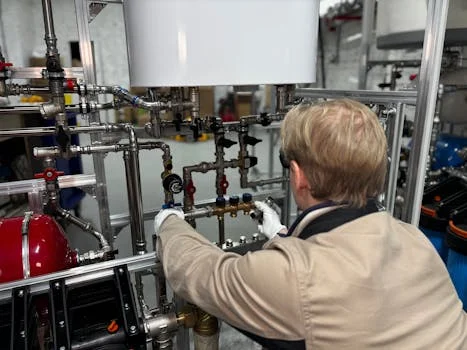
Apples-to-apples quote comparison is essential for budget control. Confirm each proposal includes skid mounting, pre-wiring, the main control panel, and full factory acceptance testing (FAT). Omissions here can add 10–20% later. Verify which certifications (CE, ISO, NSF) are standard versus paid options; EU and U.S. deployments usually cannot skip them. Ask for shipping, import duties, and on-site commissioning as separate lines. For international OEM water treatment orders, those items can exceed 15% of equipment cost. Request a starter spare kit (O-rings, gaskets, diaphragms) so downtime risk is priced before award.
Who this is for: plant engineers and procurement teams comparing OEM skid packages by capacity, material, and TCO. Who should look elsewhere: buyers needing only municipal civil-works plants above several thousand m³/day without modular constraints. Next step: send influent data, target effluent, and preferred material of construction with a Request a free quote so quotes stay comparable.
Frequently Asked Questions
What is the average cost of a skid mounted water treatment plant?
The average price is approximately $74,911.97 based on aggregated Alibaba and OEM data. That figure spans compact $1,800 units through industrial systems above $100,000. Final cost tracks process type, design flow, automation level, and compliance scope more than any single average number.
How much does a 10 m³/h wastewater treatment skid cost?
A 10 m³/h integrated package such as A/O plus MBR with full automation and disinfection typically costs $50,000–$80,000. Quotes rise when UV, ozone, or other tertiary polishing is required. Confirm whether FAT, skid wiring, and commissioning travel are inside the base price before comparing vendors.
Are Chinese-made skid systems reliable?
Yes, when the OEM builds to ISO and CE requirements and supplies full documentation with performance guarantees. Many units operate in the EU, U.S., and Asia under those conditions. Reliability follows factory testing, material certificates, and spare-parts support more than country of manufacture alone.
What’s included in a turnkey skid mounted system?
A true turnkey scope covers the skid frame, pumps and motors, controls, piping, instrumentation, and factory testing. Always verify delivery, commissioning, and performance validation in writing. Anything left as “owner supply” can erase the apparent CAPEX advantage of a low equipment quote.
Can skid systems be expanded later?
Modular designs often allow capacity upgrades by adding racks or process modules. Confirm pumps, controls, and piping headers are sized for future flow before the first purchase. Expansion is cheapest when hydraulic and electrical spare capacity is designed in at day one.