What Is a Package Wastewater Treatment Plant?
A package wastewater treatment plant is a prefabricated, compact, and fully integrated system designed for rapid deployment to treat sewage and industrial effluent. These units typically handle flows from 1 to 80 cubic meters per hour (26,000 to 2.1 million gallons per day), making them fundamentally different from large-scale municipal infrastructure like the 350,000 GPD plant in Portland, MI, or the 1.6 MGD facility in St. Louis, MI.
Package plants are manufactured, assembled, and tested in a controlled factory environment before being shipped to the site as a complete unit, either skid-mounted or within a containerized enclosure. This modular approach eliminates the lengthy delays and high costs associated with traditional on-site civil construction. They are commonly deployed for industrial facilities, remote communities, hospitals, and construction sites where space is limited or connection to a municipal sewer is impractical.
Modern package plants feature a high degree of automation, typically controlled by a programmable logic controller (PLC) with remote monitoring capabilities, which minimizes the need for a dedicated, on-site operator.
Why Michigan Businesses Choose Package Treatment Systems
Michigan's environmental and regulatory requirements make package treatment systems an ideal solution for many businesses and communities. The state's cold winters present a significant challenge for wastewater infrastructure, as freezing temperatures can damage equipment and halt biological processes. Package plants, particularly compact underground package wastewater treatment plant models, are designed to be buried for intrinsic freeze protection, ensuring year-round operation in northern climates.
Compliance with the Clean Water Act is a primary driver. The U.S. EPA Region 5 and the Michigan Department of Environment, Great Lakes, and Energy (EGLE) strictly enforce this act through National Pollutant Discharge Elimination System (NPDES) permits. Facilities must consistently meet effluent limits for parameters like Biochemical Oxygen Demand (BOD < 30 mg/L), Total Suspended Solids (TSS < 30 mg/L), and ammonia. Package plants are engineered from the outset to meet these stringent standards, providing a clear path to compliance with EPA Clean Water Act in Michigan.
Michigan’s rural and seasonal economy benefits from the flexibility of package systems. Remote resorts, campgrounds, and food processing plants in areas with limited infrastructure can utilize mobile or trailer-mounted units to manage their wastewater effectively without the exorbitant cost of extending sewer lines.
Key Technologies in Package Wastewater Plants
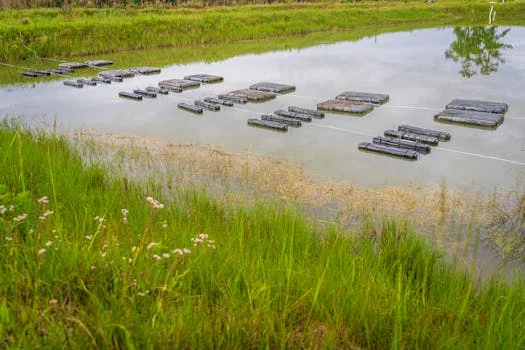
Selecting the right technology is critical and depends entirely on the waste stream's composition. The three most common processes in package plants are Anoxic/Oxic (A/O), Membrane Bioreactor (MBR), and Dissolved Air Flotation (DAF).
The A/O (Anoxic/Oxic) process is a robust biological treatment method ideal for domestic sewage and light industrial wastewater. It achieves 85–90% removal of BOD and TSS by sequentially using oxygen-free (anoxic) and oxygen-rich (aerobic) zones to break down organic matter and remove nutrients like nitrogen.
For a higher effluent quality, the MBR (Membrane Bioreactor) process combines biological treatment with membrane filtration. This technology delivers exceptional removal rates exceeding 95% for BOD and TSS, producing an effluent clear enough for reuse applications like irrigation or cooling tower make-up water. A significant advantage is its compact footprint, which is up to 60% smaller than conventional systems. Our high-efficiency MBR package treatment system provides more details.
For industrial applications laden with fats, oils, grease (FOG), or suspended solids, DAF (Dissolved Air Flotation) is the preferred primary treatment. By dissolving air into the wastewater under pressure and releasing it in a tank, micro-bubbles attach to contaminants, floating them to the surface for removal. DAF systems achieve 90–98% removal of FOG and suspended solids and are critical for food processing, metalworking, and petrochemical plants. Our DAF systems are designed for these high-strength applications.
All systems require final disinfection. Chlorine dioxide (ClO₂) generators are a highly effective option that meets both EPA and World Health Organization (WHO) standards for pathogen control.
| Technology | Best For | BOD/TSS Removal | Key Advantage |
|---|---|---|---|
| A/O (Anoxic/Oxic) | Domestic, Light Industrial | 85-90% | Proven, cost-effective nutrient removal |
| MBR (Membrane Bioreactor) | High-Quality Reuse, Space-Limited Sites | >95% | Smallest footprint, highest quality effluent |
| DAF (Dissolved Air Flotation) | Industrial FOG, Suspended Solids | 90-98% (FOG/SS) | Excellent primary treatment for challenging waste streams |
Technical Specifications: Flow Rates, Removal Efficiency & Footprint
For engineers integrating a system into a design, specific technical parameters are paramount. Package plants offer a wide range of capacities. For instance, standard WSZ series biological plants handle 1–80 m³/h, while dedicated DAF systems for industrial pre-treatment can scale from 4–300 m³/h by using parallel units.
Removal efficiency is a core performance metric. A well-designed A/O system consistently achieves effluent quality of BOD < 20 mg/L and TSS < 25 mg/L, comfortably within typical NPDES permit limits. An MBR system pushes this further, often achieving non-detectable levels with effluent quality of BOD < 5 mg/L and TSS < 5 mg/L.
The physical footprint is a major differentiator. A conventional activated sludge plant requires significant land for aeration tanks, clarifiers, and other basins. An MBR package plant consolidates this into a single, compact unit. A standard 10 m³/h (~66 GPM) MBR system may require a footprint as small as 2 meters by 6 meters (6.5 ft x 20 ft), a 60% reduction in space compared to conventional designs. This makes it ideal for urban sites or facilities with space constraints. Automation is standard, with full PLC control and integrated remote monitoring via SCADA systems, drastically reducing operational labor costs.
| Parameter | A/O System | MBR System | DAF System |
|---|---|---|---|
| Typical Flow Range | 1 - 80 m³/h | 1 - 80 m³/h | 4 - 300 m³/h |
| BOD Effluent Quality | < 20 mg/L | < 5 mg/L | N/A (Pre-Treatment) |
| TSS Effluent Quality | < 25 mg/L | < 5 mg/L | N/A (Pre-Treatment) |
| Footprint (10 m³/h unit) | ~30 m² | ~12 m² | Varies by design |
Cost of Package Wastewater Treatment Plants in Michigan
Capital expenditure (CAPEX) for a package plant varies significantly based on technology, flow rate, and level of automation. Operational expenditure (OPEX) is influenced by energy consumption, chemical usage, and sludge production.
A basic A/O package plant for a flow rate of 10 m³/h (~66 GPM) typically ranges from $80,000 to $120,000 installed. This is a cost-effective solution for standard municipal-strength wastewater.
An MBR system for a higher flow of 20 m³/h (~132 GPM) represents a higher initial investment, typically between $200,000 and $300,000. This higher CAPEX is offset by a smaller physical footprint, superior effluent quality for potential reuse, and lower sludge production, which reduces hauling costs.
A DAF system for industrial pre-treatment at 50 m³/h (~330 GPM) may cost between $150,000 and $250,000, with final cost highly dependent on the FOG/ solids loading and automation features. The return on investment (ROI) for any package system is realized through avoided sewer connection fees, eliminated wastewater hauling costs, compliance that prevents significant EPA fines, and, in the case of MBR, savings from water reuse. More on water treatment cost structures can be found here.
| System Type | Flow Rate Example | Estimated CAPEX Range | Key OPEX Consideration |
|---|---|---|---|
| A/O Package Plant | 10 m³/h (66 GPM) | $80,000 - $120,000 | Moderate energy, standard sludge handling |
| MBR Package Plant | 20 m³/h (132 GPM) | $200,000 - $300,000 | Higher energy (membranes), low sludge production |
| DAF Unit | 50 m³/h (330 GPM) | $150,000 - $250,000 | Chemical consumption (coagulants), sludge dewatering |
Top Suppliers and Installation Support in Michigan
When sourcing a package wastewater treatment plant in Michigan, partnering with a reliable supplier who offers robust technical support is crucial for long-term success. Manufacturers like HydropureWater provide factory-tested, export-compliant systems engineered for performance and durability. A key advantage is access to remote commissioning and support, ensuring your system is optimized without requiring immediate international travel.
Successful deployment hinges on local expertise. Reputable suppliers work with a network of Michigan-based partners who handle critical on-the-ground activities. This includes civil works (excavation, concrete pads), securing permits from EGLE, and integrating the packaged unit with existing collection sewers and discharge points. Ensure your supplier offers comprehensive warranty coverage, operator training programs, and seamless SCADA integration capabilities for smooth operation.
Frequently Asked Questions
What is the largest wastewater treatment plant in the US?
The Detroit Wastewater Treatment Plant is the largest single-site facility in the United States, serving over 3 million people.
What is a package wastewater treatment plant?
It is a compact, prefabricated system that treats wastewater using biological, membrane, or flotation processes in a single skid-mounted or containerized unit for rapid deployment.
Can package plants handle industrial wastewater?
Yes. The technology is selected based on the waste stream. DAF is used for oil and grease, MBR for high-strength organic waste, and A/O for mixed or municipal streams.
How much space does a package plant need?
They are highly space-efficient. A 10 m³/h unit can require as little as 2m x 6m (6.5ft x 20ft) of space, which is up to 60% smaller than a conventional concrete plant.
Are package plants compliant with Michigan EGLE regulations?
Yes, when they are correctly designed and specified to meet the effluent limits for BOD, TSS, ammonia, and other parameters stipulated in a facility's NPDES permit.