Why Residential RO Prices Don’t Apply to Industrial Buyers
Top search results show reverse osmosis water treatment cost price ranging from $150 to $450 for residential under-sink units—data that is irrelevant and misleading for industrial procurement. Industrial reverse osmosis systems start at 5 m³/h (20,000 GPD) and require robust components like multi-stage pressure vessels, high-pressure pumps rated for 15-25 bar, and PLC-based control systems. More critically, industrial feedwater from surface or process sources demands comprehensive pre-treatment, including a multi-media filter for RO pre-treatment to reduce silt density index (SDI) below 5, chemical dosing for scaling control, and automated backwash cycles. Residential systems lack these protections, making their cost structures and performance metrics non-scalable to pharmaceutical, food & beverage, or power generation applications.
Industrial systems are engineered for reliability, longevity, and continuous operation. They must integrate seamlessly with plant processes, often requiring custom-fabricated skids, corrosion-resistant piping, and real-time monitoring of flow, pressure, and water quality. Residential units prioritize simplicity and low initial cost, using standard plastic housings and basic filters. This fundamental difference in design drives the higher investment required for industrial applications.
Industrial RO System Cost Drivers Explained
Five technical factors dominate the capital expenditure (CAPEX) for an industrial RO system: capacity, recovery rate, automation level, materials of construction, and energy recovery. Capacity is the primary driver; systems producing 5–10 m³/h average $25,000–$60,000, while 50–100 m³/h units range from $200,000 to $500,000. Recovery rate—the ratio of purified permeate to feedwater—impacts both CAPEX and long-term operating costs. A standard 75% recovery system is less expensive upfront but wastes 25% of feedwater as concentrate. High-recovery systems (90–95%) add 15–25% to CAPEX but drastically reduce water waste and sewer discharge fees, offering a rapid return on investment in water-intensive industries.
Automation level significantly affects both cost and operational labor. A manual system saves approximately 20% on CAPEX compared to a PLC-controlled system with SCADA integration, remote monitoring, and automatic flush cycles. For corrosive feedwater or stringent sanitary requirements, upgrading from 304 to 316L stainless steel skids adds $8,000–$15,000. Finally, an energy recovery device (ERD) is a critical investment for high-flow systems, reducing power consumption by 30–50% and typically paying for itself in 14–18 months of operation.
Pre-treatment complexity directly influences system cost. A simple groundwater source may only need a particulate filter, while challenging surface water or process wastewater requires an extensive pre-treatment train. This can include clarification, dissolved air flotation (DAF), ultrafiltration (UF), or even ozonation, each adding tens of thousands of dollars to the project but essential for protecting the sensitive RO membranes from fouling and premature failure.
| Cost Driver | Impact on CAPEX | Operational Impact |
|---|---|---|
| Capacity (10 m³/h vs 50 m³/h) | +$150,000–$200,000 | Higher throughput, higher energy use |
| Recovery Rate (75% vs 95%) | +15–25% | Reduces water waste and discharge costs by 60%+ |
| Automation (Manual vs PLC/SCADA) | +20% | Cuts labor from 8 hrs/week to 1-2 hrs/week |
| Materials (304 SS vs 316L SS) | +$8,000–$15,000 | Essential for corrosive feedwater; extends lifespan |
| Energy Recovery Device (ERD) | +$15,000–$40,000 | Reduces energy consumption by 30–50% |
For a detailed look at system configurations, see our industrial RO water treatment system with 95% recovery.
Typical Industrial RO Configuration and Pricing by Capacity
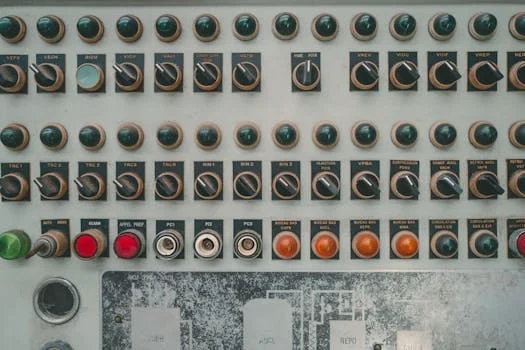
Industrial RO systems are engineered around specific flow rates and feedwater quality. A 5–10 m³/h system is typically a single-train design with multi-media pre-filtration, carbon filtration, and antiscalant dosing. Priced between $25,000 and $60,000, it handles feedwater with SDI <5 at 75% recovery and 15 bar feed pressure. A 20–30 m³/h system often incorporates dual-pass or two-stage RO for higher purity, a complete chemical dosing package, and an automated clean-in-place (CIP) system. Costing $90,000–$180,000, it achieves 85% recovery and is typically built on a 304 stainless steel skid.
Large-scale operations requiring 50–100 m³/h need a high-recovery system with an energy recovery device, a fully integrated CIP system, and online monitoring of pressure, conductivity, and pH. With a price tag of $250,000–$500,000, these systems achieve 90–95% recovery, are constructed from 316L stainless steel, and feature a PLC with human-machine interface (HMI) for full automation. A major recurring cost is membrane replacement; each standard 8-inch spiral-wound element costs $1,200–$2,500, with a typical 10 m³/h system containing 20–40 elements that require replacement every 3–5 years.
Auxiliary equipment also impacts total project cost. High-purity applications may require an integrated electrodeionization (EDI) unit for polishing, adding $20,000 to $50,000. Systems handling aggressive waste streams may need duplex stainless steel or specialized alloys for critical components, further increasing initial investment.
| Capacity (m³/h) | Typical Configuration | Recovery Rate | CAPEX Range (USD) |
|---|---|---|---|
| 5–10 | Single-train, multi-media pre-filter, carbon filter | 75% | $25,000–$60,000 |
| 20–30 | Dual-pass, chemical dosing, automated CIP, 304 SS | 85% | $90,000–$180,000 |
| 50–100 | High-recovery with ERD, PLC+HMI, CIP, 316L SS | 90–95% | $250,000–$500,000 |
Effective automatic chemical dosing is critical for maintaining these recovery rates and protecting the membrane investment.
Operating Costs and ROI: What You Pay After Purchase
The total cost of ownership for an industrial RO system is defined by operating expenses (OPEX), which typically range from $0.38 to $0.85 per cubic meter of purified water. Energy consumption is the largest variable OPEX. A standard RO system consumes 3–5 kWh/m³, costing $0.30–$0.50/m³ at $0.10/kWh. A system with an energy recovery device (ERD) cuts this to 1.8–3.0 kWh/m³, or $0.18–$0.30/m³. Membrane replacement is a significant periodic cost; for a 50 m³/h system with 100 elements, a full replacement at $2,000 per element costs $200,000 every 3–5 years.
Chemical cleaning (CIP) costs $1,500–$4,000 per cycle and is required 2–4 times annually depending on feedwater quality. Labor is another cost center: manual systems require 6–8 hours of operator attention per week, while automated PLC-based systems reduce this to 1–2 hours for monitoring and data recording. For facilities replacing purchased bottled water or facing high volumetric sewer surcharges, the ROI on a high-recovery industrial RO system is typically 2.5 to 4 years. The payback period is even shorter for plants that can reuse RO concentrate in other processes or avoid costs associated with boiler blowdown.
Preventative maintenance contributes to annual OPEX. This includes routine replacement of pre-filtration cartridges, calibration of pH and conductivity probes, and servicing of high-pressure pumps. While individual costs are relatively low, they collectively help prevent unscheduled downtime and expensive emergency repairs.
| OPEX Component | Cost Range | Frequency / Basis |
|---|---|---|
| Energy Consumption | $0.18–$0.50/m³ | Per m³ produced (with and without ERD) |
| Membrane Replacement | $24,000–$100,000 | Every 3–5 years (per 10-50 m³/h system) |
| Chemical Cleaning (CIP) | $1,500–$4,000 | 2–4 times per year |
| Labor | $100–$400/week | 1–8 hours per week |
| Total OPEX per m³ | $0.38–$0.85/m³ | Per cubic meter of permeate |
For a broader context on system costs, our industrial water purification system cost breakdown provides further analysis.
Frequently Asked Questions
What is the cost of a 50 m³/day RO system?
A 50 m³/day (approx. 2 m³/h) system is a small industrial unit. A standard recovery (75%) system costs $25,000–$40,000, while a high-recovery model with an ERD ranges from $35,000–$50,000. This price typically includes basic pre-filtration and a control panel, but excludes extensive civil works, piping to and from the unit, and electrical hookups, which can add 10-20% to the total installed cost.
How much does industrial RO membrane replacement cost?
Industrial spiral-wound RO elements (8” diameter) cost $1,200–$2,500 each. A typical 10 m³/h system contains 20–40 elements, making a full replacement a significant OPEX event costing $24,000–$100,000. Costs vary based on membrane type (e.g., brackish water, seawater, low-energy) and the quantity purchased. Buying spare elements during the initial project can sometimes secure a lower per-unit price.