What the Clean Water Act Requires for Industrial Facilities
The EPA Clean Water Act (CWA) requires industrial facilities to obtain an NPDES permit before discharging wastewater into U.S. waters. Under Section 301, unpermitted discharge is illegal. Facilities must meet technology-based effluent limits, such as 90% BOD and TSS reduction via secondary treatment, and comply with water quality standards set by TMDLs. Non-compliance risks fines exceeding $100,000 per day.
Section 301 of the CWA establishes a strict prohibition against discharging pollutants from a point source into U.S. waters without an NPDES permit. For industrial operations, a "point source" includes pipes, ditches, channels, tunnels, or containers. This definition encompasses nearly all industrial wastewater outfalls, making NPDES the central regulatory framework for sectors like food processing and manufacturing.
Industrial facilities categorized as point sources must obtain NPDES permits from the EPA or an authorized state agency. These permits dictate the specific technical parameters under which a facility must operate. The CWA mandates two layers of control: technology-based effluent limits (TBELs) and water quality-based effluent limits (WQBELs). TBELs are developed based on the performance of specific treatment technologies within an industry, such as Best Available Technology (BAT) for existing plants.
Enforcement is rigorous. Under the EPA’s 2025 inflation-adjusted penalty schedule, non-compliance can result in civil penalties exceeding $109,466 per violation, per day. These fines apply not only to illegal discharges but also to administrative failures, such as inadequate record-keeping. For plant engineers, this necessitates a move toward automated, high-reliability treatment systems.
How NPDES Permits Define Your Compliance Obligations
NPDES permits translate general CWA requirements into specific, enforceable discharge limits for industrial facilities. Every permit is unique to the facility’s geography and industry, but all share a common structure that includes effluent limitations and monitoring requirements.
National Pollutant Discharge Elimination System (NPDES) permits serve as the primary regulatory tool for translating general Clean Water Act requirements into specific, enforceable discharge limits for industrial facilities. Every permit is unique to the facility’s geography and industry, but all share a common structure that includes effluent limitations, monitoring and reporting requirements, and "standard conditions" regarding bypass and upset events. To maintain compliance, operations managers must interpret these permits as technical design briefs for their wastewater infrastructure.
At the core of the permit are the numeric discharge limits. These typically specify both a "Maximum Daily Limit" and a "Monthly Average Limit" for key parameters including Biochemical Oxygen Demand (BOD), Total Suspended Solids (TSS), pH levels, and Fats, Oils, and Grease (FOG). For specialized manufacturing, the permit will also include limits for priority pollutants such as Cadmium (Cd), Lead (Pb), and Mercury (Hg). These limits are derived from the EPA’s Effluent Guidelines found in 40 CFR Parts 400–471.
Beyond industry-wide standards, facilities in watersheds with impaired water bodies face additional constraints. If a river is listed as "impaired" under CWA Section 303(d), the state will establish a Total Maximum Daily Load (TMDL), allocating the maximum amount of a pollutant that the water body can receive while still meeting water quality standards.
Compliance is a continuous obligation. NPDES permits typically require monthly self-monitoring and the submission of Discharge Monitoring Reports (DMRs) to the EPA or state regulator. Permits are valid for a maximum of five years, and the "anti-backsliding" rule generally prohibits the EPA from issuing a new permit with less stringent limits than the previous one.
Common Industrial Pollutants and EPA Removal Requirements
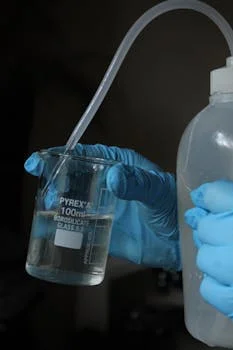
The EPA mandates that industrial facilities achieve secondary treatment standards under 40 CFR Part 133.
Under 40 CFR Part 133, the EPA mandates that industrial facilities achieve secondary treatment standards, which generally require a minimum of 85% removal of Biochemical Oxygen Demand (BOD) and Total Suspended Solids (TSS). These parameters are the most common benchmarks for point source pollution control. Industrial facilities face higher concentrations and more complex chemical compositions that require specialized pretreatment.
Fats, Oils, and Grease (FOG) represent another critical compliance risk, particularly for food processing and metalworking sectors. Most NPDES permits limit FOG discharge to less than 100 mg/L. Failure to manage FOG can lead to immediate violations of 40 CFR 110, which prohibits any discharge that causes a visible "sheen" on the surface of the receiving water.
Toxic pollutants, specifically heavy metals, are regulated under CWA Section 307. For industries like electroplating and chemical production, limits for metals such as Chromium (Cr), Lead (Pb), and Nickel (Ni) are often set at sub-milligram per liter levels. Meeting these limits requires precise chemical precipitation and filtration.
| Pollutant Category | Regulatory Basis | Typical NPDES Limit Range | Required Removal Efficiency |
|---|---|---|---|
| BOD5 (Biochemical Oxygen Demand) | 40 CFR 133 | 10 – 30 mg/L | 85% – 95% |
| TSS (Total Suspended Solids) | 40 CFR 133 | 10 – 30 mg/L | 85% – 95% |
| Fats, Oils, & Grease (FOG) | 40 CFR 110 / Sector Guidelines | < 100 mg/L (No Sheen) | 90% – 99% |
| Heavy Metals (Pb, Cd, Cr) | CWA Section 307 / BAT | < 0.1 – 1.0 mg/L | 85% – 99.9% |
| pH | Secondary Standards | 6.0 – 9.0 Standard Units | Neutralization Required |
Treatment Technologies That Meet CWA Effluent Limits
Industrial wastewater treatment equipment performance is measured by its ability to achieve Best Available Technology (BAT) standards.
Industrial wastewater treatment equipment performance is measured by its ability to achieve Best Available Technology (BAT) standards, which for many sectors requires removing up to 99% of specific regulated pollutants. For facilities struggling with high FOG and TSS loading, a high-efficiency DAF system for FOG and TSS removal is the industry standard. Dissolved Air Flotation (DAF) works by injecting micro-bubbles into the waste stream, which attach to solid particles and oils, floating them to the surface for mechanical removal.
When stringent water quality standards or TMDLs require superior effluent clarity, traditional clarifiers often fall short. A compact MBR system for secondary and tertiary treatment integrates biological degradation with membrane filtration. Membrane Bioreactors (MBR) replace the secondary clarifier with a physical barrier (ultrafiltration membranes), ensuring that no suspended solids or biomass escape into the effluent.
Heavy metal compliance requires a multi-stage approach. An automatic chemical dosing system is essential for maintaining the precise pH levels required for metal hydroxide precipitation. By dosing coagulants like ferric chloride or specialized polymers, facilities can reduce dissolved metals to insoluble solids that are then captured via sedimentation or DAF.
Pathogen control is an emerging focus for industrial NPDES permits, especially in food and beverage production. An on-site ClO₂ generator for pathogen control provides a powerful oxidizing agent that remains effective across a wide pH range and does not react with organic matter to form regulated carcinogens.
| Treatment Technology | Primary Pollutant Target | Achievable Removal Rate | CWA Compliance Role |
|---|---|---|---|
| DAF (Dissolved Air Flotation) | FOG, TSS, Insoluble BOD | 90% – 95% | Pretreatment / Primary Clarification |
| MBR (Membrane Bioreactor) | Dissolved BOD, TSS, Pathogens | 95% – 99%+ | Secondary & Tertiary Treatment |
| Chemical Dosing Systems | Heavy Metals, Phosphorus | 85% – 99% | Physicochemical Treatment / BAT |
| ClO2 Generation | Bacteria, Viruses, Odor | 99.9% Kill Rate | Final Disinfection |
Frequently Asked Questions
What are the requirements for the Clean Water Act?
The CWA requires industrial facilities to obtain an NPDES permit for any point source discharge into U.S. waters. It mandates compliance with technology-based effluent limits and water quality standards.
What are common EPA violations under the CWA?
Frequent violations include discharging without a permit, exceeding numeric effluent limits for BOD or TSS, and failing to conduct required monitoring.
Is the Clean Water Act still enforced?
Yes. In 2024, the EPA and state agencies resolved over 400 enforcement actions related to CWA violations. Enforcement has shifted toward data-driven oversight.
How do I get compliant with CWA wastewater rules?
The first step is to determine your industry's specific effluent guidelines under 40 CFR. You must then implement a treatment train capable of meeting those limits consistently.
What equipment is needed for CWA compliance?
The equipment depends on your permit limits. Most industrial plants require a combination of screening, oil-water separation (DAF), biological treatment (MBR), and chemical dosing for pH and metal control.