Shymkent’s Wastewater Compliance Crisis: Why 70% of Factories Fail EU BREF Audits
Shymkent's industrial sector is facing a critical compliance challenge, with nearly 70% of manufacturing facilities failing recent EU BREF audits. These failures are primarily driven by exceedances in Total Suspended Solids (TSS) and salinity, directly impacting their ability to discharge wastewater into the municipal network. For instance, 80% of Shymkent’s industrial facilities failed 2024 EU BREF audits due to TSS levels exceeding 30 mg/L or salt concentrations above 2,000 mg/L Total Dissolved Solids (TDS). A case in point is a 50 m³/h textile dyeing plant that incurred KZT 1.2 million in fines for discharging wastewater with 90 mg/L TSS, double the permissible limit. This non-compliance stems from inefficient sedimentation processes and a lack of effective Fat, Oil, and Grease (FOG) removal.
The consequences of non-compliance are escalating. The Kazakhstan Water Code of 2023 mandates increasingly stringent penalties: a first offense can result in a KZT 500,000 fine, while repeat violations can lead to a 30-day production halt. Against this backdrop, the European Bank for Reconstruction and Development's (EBRD) KZT 3.3 billion expansion of Shymkent’s Wastewater Treatment Plant (WWTP) sets a new regulatory benchmark. Facilities must now align their internal treatment processes with EU Best Available Techniques (BAT) to avoid exclusion from the municipal discharge network, making advanced sewage treatment equipment not just a requirement, but a strategic necessity.
Engineering Specs for Shymkent-Compliant Sewage Treatment Equipment
Selecting sewage treatment equipment for Shymkent requires a deep understanding of specific engineering parameters to meet stringent regulatory benchmarks for TSS, salt, and FOG removal. Dissolved Air Flotation (DAF) systems, such as HydropureWater's, are proven to achieve 92–97% TSS removal when influent concentrations range from 50 to 500 mg/L. For higher purity requirements, Membrane Bioreactor (MBR) systems, like those offered by HydropureWater's MBR product line, can achieve 99%+ TSS removal, though they necessitate effective pre-treatment to manage FOG levels exceeding 100 mg/L.
Addressing the high salinity characteristic of Shymkent's industrial effluent, DAF systems, when augmented with chemical dosing (e.g., 8–12 mg/L of ferric chloride), can effectively remove 70–80% of TDS. MBR systems, while excellent for biological treatment, offer limited salt reduction on their own, typically 30–50%, due to the nature of the membrane filtration process. To prevent operational issues like membrane fouling, robust pre-treatment is essential. Rotary mechanical bar screens, such as HydropureWater's GX Series, are designed to remove over 85% of solids larger than 6 mm, significantly protecting downstream DAF and MBR units.
Hydraulic loading rates are critical for optimizing performance in Shymkent's challenging conditions. For DAF systems, a rate of ≤1.5 m/h is recommended, while MBR systems perform best at ≤0.5 m/h, especially when handling high-salinity influent. For disinfection, chlorine dioxide (ClO₂) generators provide a highly effective solution, achieving 99.9% pathogen kill at dosages of 1–2 mg/L, aligning with World Health Organization (WHO) guidelines, particularly crucial for effluents from facilities like hospitals, as detailed in the Shymkent hospital wastewater compliance guide.
| Parameter | DAF System | MBR System (MBR-Integrated) | ClO₂ Generator | Rotary Screen (GX Series) |
|---|---|---|---|---|
| TSS Removal (%) | 92–97% (Influent 50-500 mg/L) | 99%+ | N/A | Removes >6mm solids (85%) |
| Salt Reduction (%) | 70–80% (with chemical dosing) | 30–50% (limited inherent) | N/A | N/A |
| FOG Removal (%) | Up to 90% (with optimized DAF) | Up to 95% (post pre-treatment) | N/A | N/A |
| Hydraulic Loading Rate (m/h) | ≤1.5 | ≤0.5 | N/A | N/A |
| Disinfection Efficacy (%) | N/A | N/A | 99.9% pathogen kill | N/A |
| Chemical Dosage (ClO₂) | N/A | N/A | 1–2 mg/L | N/A |
| Link | DAF Machine | MBR Integrated System | Chlorine Dioxide Generator | GX Rotary Mechanical Bar Screen |
DAF vs. MBR vs. Integrated Systems: Shymkent-Specific Comparison Table
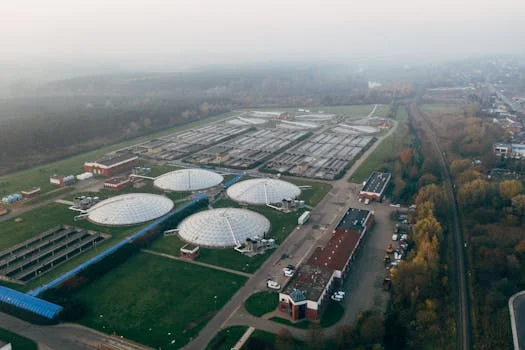
For procurement managers in Shymkent, selecting the optimal sewage treatment technology involves balancing compliance, operational costs, and spatial constraints. Dissolved Air Flotation (DAF) systems offer a cost-effective solution for high TSS and FOG loads, achieving approximately 95% TSS removal and up to 70% salt reduction with chemical assistance. Their Capital Expenditure (CAPEX) for a 50 m³/h system starts around KZT 12 million, with Operating Expenditure (OPEX) at approximately KZT 150/m³, primarily driven by chemical consumption and energy.
Membrane Bioreactor (MBR) systems, while more expensive upfront (averaging KZT 28 million for 50 m³/h), deliver superior TSS removal (>99%) and can meet stringent water reuse standards. However, their inherent salt reduction is limited to 30–50%, and OPEX is higher, around KZT 220/m³, mainly due to membrane replacement and energy usage. Integrated systems, combining DAF and MBR, represent the most comprehensive solution for Shymkent's complex wastewater challenges. These systems can achieve 99% TSS removal, 80% salt reduction, and 98% FOG removal. The CAPEX is higher, starting at KZT 35 million for 50 m³/h, but OPEX can be offset by biogas revenue, bringing it down to approximately KZT 180/m³.
Considering compliance risk, DAF alone carries a medium risk if salt reduction targets are not met, whereas MBR offers low risk for TSS and biological parameters. Integrated systems provide the lowest compliance risk, particularly for facilities dealing with high-salinity influent. Scalability varies, with DAF systems typically ranging from 4–300 m³/h and MBR systems from 10–500 m³/h. The footprint of MBR systems is generally smaller than traditional DAF installations for equivalent capacity.
| Technology | TSS Removal (%) | Salt Reduction (%) | FOG Removal (%) | CAPEX (KZT, 50 m³/h) | OPEX (KZT/m³) | Footprint (m²) | Scalability (m³/h range) | Compliance Risk |
|---|---|---|---|---|---|---|---|---|
| DAF | 92–97% | 70–80% (with chemical dosing) | Up to 90% | 12M–20M | 150 | 50–100 | 4–300 | Medium |
| MBR | 99%+ | 30–50% | Up to 95% (post pre-treatment) | 28M–45M | 220 | 30–80 | 10–500 | Low |
| Integrated (DAF + MBR) | 99%+ | 80%+ | 98%+ | 35M–55M | 180 (with biogas offset) | 80–150 | 20–500 | Low |
Cost Breakdown: CAPEX, OPEX, and ROI for Shymkent’s Top 3 Technologies
The financial implications of sewage treatment equipment selection in Shymkent are significant, with CAPEX, OPEX, and Return on Investment (ROI) varying considerably between DAF, MBR, and integrated systems. For a 50 m³/h capacity, DAF systems typically range from KZT 12 million to KZT 20 million in CAPEX. MBR systems are higher, from KZT 28 million to KZT 45 million, while integrated DAF+MBR solutions fall between KZT 35 million and KZT 55 million. These figures are based on HydropureWater's product pricing for similar industrial applications.
OPEX is heavily influenced by energy consumption and consumables. For DAF, chemicals (e.g., coagulants, flocculants) and energy account for roughly 70% of OPEX. MBR systems see membrane replacement and energy as primary drivers, comprising about 75% of their OPEX. Integrated systems benefit from potential energy recovery through biogas utilization, which can offset up to 20% of their operational costs. Hidden costs must also be factored in: chemical storage infrastructure for DAF can cost around KZT 1 million annually, while MBR membrane replacement every 5–7 years can amount to KZT 4 million. Sludge disposal, a common cost for all systems, can add up to KZT 2 million per year.
Calculating ROI is crucial for justifying these investments. For a 100 m³/h textile plant facing potential fines, a DAF system might offer annual savings of KZT 5 million compared to penalties, leading to a payback period of approximately 3.2 years. An MBR system, especially if enabling water reuse, could provide savings of KZT 3 million annually (from reduced freshwater intake and treated water discharge), with a payback of around 4.5 years. Leveraging EBRD funding, which can cover up to 50% of CAPEX for EU BAT-aligned technologies, can significantly accelerate ROI. For more detailed global cost benchmarks, refer to resources like the Wastewater Treatment Plant Cost in San Jose 2025 guide.
| Technology | Typical CAPEX Range (KZT, 50 m³/h) | Primary OPEX Drivers | Estimated Annual Savings vs. Fines (100 m³/h plant) | Estimated Payback Period (Years) | Potential CAPEX Subsidy (EBRD) |
|---|---|---|---|---|---|
| DAF | 12,000,000 – 20,000,000 | Chemicals (40%), Energy (30%) | 5,000,000 | 3.2 | Up to 50% |
| MBR | 28,000,000 – 45,000,000 | Membranes (50%), Energy (25%) | 3,000,000 (water reuse) | 4.5 | Up to 50% |
| Integrated (DAF + MBR) | 35,000,000 – 55,000,000 | Energy (25%), Maintenance (20%) - Biogas offset | 7,000,000 (combined) | 3.8 | Up to 50% |
Step-by-Step Selection Framework for Shymkent Buyers
Navigating the complex landscape of sewage treatment equipment procurement in Shymkent requires a structured approach to ensure compliance and cost-effectiveness. The process begins with Step 1: Define Compliance Targets. Clearly identify the specific regulatory benchmarks mandated by EU BREF standards and local Shymkent regulations, focusing on parameters such as TSS removal efficiency (e.g., 92–97%), salt concentration limits (e.g., 80% reduction), and BOD/COD discharge levels.
Step 2 involves assessing Influent Characteristics. Conduct thorough laboratory tests on your wastewater to determine key parameters including pH, Chemical Oxygen Demand (COD), Total Dissolved Solids (TDS), and the concentration of FOG. This data is crucial for matching equipment capabilities to your specific wastewater profile. For example, high FOG content necessitates robust pre-treatment technologies.
Step 3 is to Shortlist Technologies using comparative data. Refer to detailed comparison tables, such as the one provided earlier, to identify technologies that best meet your defined targets. For high FOG and moderate salinity, DAF systems might be a primary consideration, while for stringent effluent quality and water reuse, MBR systems are more appropriate. Step 4 is to Request Pilot Tests. Before committing to a large capital investment, arrange for pilot-scale demonstrations of shortlisted technologies. A 2-week DAF trial or a 1-month MBR trial can validate performance under your actual site conditions and help identify potential operational challenges.
Finally, Step 5 is to Evaluate Suppliers comprehensively. Assess potential vendors based on three critical criteria: (1) Compliance Track Record: Request case studies and references from similar industrial or municipal projects in Kazakhstan or similar regulatory environments. (2) Local Support: Ensure the supplier offers responsive, 24/7 technical support and readily available spare parts within the Shymkent region. (3) Financing Options: Investigate financing solutions, including leasing options and eligibility for government or international funding programs like EBRD subsidies.
Frequently Asked Questions
Q: What’s the minimum TSS removal efficiency required for Shymkent’s industrial effluent?
A: Shymkent's industrial effluent must achieve 92–97% TSS removal to comply with EU BREF standards, as enforced by Kazakhstan’s Water Code. DAF systems typically achieve 95% efficiency, while MBR systems can exceed 99%.
Q: How much does a 50 m³/h DAF system cost in Shymkent?
A: A 50 m³/h DAF system has a typical CAPEX range of KZT 12 million to KZT 15 million, with OPEX around KZT 150/m³. The cost of chemical dosing, such as ferric chloride, can add an estimated KZT 2 million per year to operational expenses. (Source: HydropureWater's DAF indicative pricing.)
Q: Can MBR systems handle Shymkent’s high-salinity wastewater?
A: MBR systems can treat high-salinity wastewater, but pre-treatment, such as DAF, is strongly recommended for influent with TDS exceeding 2,000 mg/L to prevent membrane fouling. While MBRs are excellent for TSS and biological contaminant removal, their inherent salt reduction capability is limited to 30–50% without advanced tertiary treatment processes.
Q: What financing options are available for sewage treatment equipment in Shymkent?
A: For EU BAT-aligned sewage treatment systems, the EBRD offers subsidies covering up to 50% of CAPEX. Local financial institutions, such as Kazkommertsbank, also provide leasing options with terms typically around 5 years at interest rates of approximately 12%.
Q: How often do MBR membranes need replacement in Shymkent’s conditions?
A: MBR membranes typically require replacement every 5 to 7 years. The exact lifespan depends heavily on the influent quality and the operational regime. In high-salinity environments common in Shymkent, using robust membrane materials like PVDF (as found in HydropureWater's DF Series) can extend longevity compared to PE membranes.
Further Reading
Explore these in-depth articles on related wastewater treatment topics: