What "Filter Press Supplier in Indonesia" Actually Means in 2026
A search for a filter press supplier in Indonesia returns two genuinely different equipment categories, and confusing them is the first procurement mistake. One is bag-filter housing for CPO, RO pre-treatment, and process-liquid polishing — vendors like bagfilterindonesia.com serve that niche. The other is a sludge-dewatering filter press: a multi-plate, hydraulically driven press that takes biosolids or chemical sludge at 0.5–3% dry solids and produces a filter cake at 25–35% DS plus a filtrate stream that still requires polishing. This article covers the second category only.
Within dewatering, the supplier question splits into two sourcing paths with very different risk profiles. Path one is an Indonesian distributor or authorized agent — JingWang Indonesia for the Jingjin brand is the clearest example — that holds plate stock locally, dispatches a commissioning team, and adds a 12–25% markup over the factory FOB price. Path two is a direct export relationship with a Chinese OEM (Jingjin, Haijiang, or HydropureWater), priced 15–30% lower but requiring the buyer to manage shipping, customs (HS code 8421.29), installation civil works, and Bahasa Indonesia documentation. Jingjin Equipment alone claims export to 130+ countries and credits itself as the main drafter of China's filter press industry standard, which functions as a useful credibility benchmark when scoring competing OEM claims.
The matrix that follows assumes the reader is a procurement officer or plant engineer preparing a shortlist — not a generic "best suppliers" list. For buyers evaluating a mid-range HydropureWater plate and frame filter press as the baseline, the same risk-and-reward trade-off applies to every other brand on the market.
Filter Press Specs That Matter for Indonesian Sludge
Filtration area, not plate count, is the headline number on any quotation. HydropureWater's catalog spans 1–500 m²; for typical Indonesian feed sludges, a 10–80 m² unit handles most palm-oil ETP and food-processing applications, 20–200 m² covers textile and tannery waste, and 50–500 m² is the mining and tailings band (HydropureWater field data, 2026). A common error is sizing by price tier instead of by the dry-solids mass balance: a 30 m² press running three cycles per shift can dewater about 6–8 tons DS/day with proper conditioning.
Hydraulic closing pressure is the second gating spec. Standard chamber presses run at 0.6–0.8 MPa, which suits the majority of municipal and industrial biosolids. Membrane filter presses, which inflate an elastomeric membrane to squeeze the cake before opening, operate at 1.0–1.5 MPa and push cake dryness 4–8 percentage points higher — relevant when landfill gate fees or co-incineration BTU economics make drier cake worthwhile. For POME and textile effluent, 0.7 MPa with extended pressing holds is more typical than high-pressure operation.
Plate material selection is dictated by chemistry, not preference. Polypropylene (PP) plates handle acidic and most chemical sludges up to ~80 °C and are the default for the Indonesian market. Cast iron plates are specified for high-temperature alkaline service above 80 °C. Rubber-coated plates suit abrasive mining tailings. Cycle time benchmarks: 15–30 min/cycle for conditioned municipal or food biosolids, 45–90 min for hard-to-filter POME without thermal conditioning, and 25–40 min for chemically conditioned POME at the polymer doses below.
| Parameter | Standard Chamber (PP plates) | Membrane (PP + elastomer) | Notes for Indonesia |
|---|---|---|---|
| Filtration area range | 1–500 m² | 10–300 m² | Match to DS/day, not flow/day |
| Hydraulic pressure | 0.6–0.8 MPa | 1.0–1.5 MPa squeeze | 0.7 MPa is POME default |
| Plate material | PP / cast iron / rubber-coated | PP membrane on PP body | Avoid PP above 80 °C |
| Automation level | Manual / hydraulic / PLC+HMI | PLC+HMI standard | PLC required at >100 m³/day feed |
| Cycle time | 15–30 min biosolids; 45–90 min POME | 20–40 min with squeeze | Conditioning drives 60% of cycle variance |
| Cake dryness | 25–30% DS | 30–35% DS | +4–8 pts from membrane squeeze |
| Footprint per m² | ~0.4–0.6 m² floor/m² filter area | +15% length | Plan for cake discharge aisle |
Supplier Comparison: 5 Real Options Serving Indonesia in 2026
Jingjin Equipment (Shandong) is the largest global OEM by volume, self-described as main drafter of the Chinese filter press industry standard, with stated exports to 130+ countries. In Indonesia, the brand is sold through authorized distributor JingWang, which holds plate stock and dispatches commissioning crews. Expect mid-to-high FOB pricing, 8–10 week sea transit from Qingdao to Tanjung Priok, and the strongest after-sales footprint among Chinese OEMs in the market.
Hengshui Haijiang Filter Press Group (Hebei) is a mid-tier OEM with strong Alibaba activity and competitive pricing, but lower brand recognition in Indonesia and less local spare-parts inventory. Delivery runs 10–12 weeks; commissioning is usually handled by the buyer's EPC contractor. HydropureWater (Shandong production, Hangzhou commercial office) sells direct export without an Indonesian distributor markup, covers 1–500 m² in the catalog, and ships PLC-automated units with optional on-site commissioning support.
Local Indonesian engineering houses — typically PT filter-system integrators — re-sell Chinese or Japanese units and add integration, civil works, and commissioning services; useful when the buyer's in-house team lacks sludge-handling experience. Japanese brands (Kurita Water Industries, Tsukishima Kikai) sit at 2–3× the Chinese OEM price band, are specified at large mining and oil-and-gas sites, and offer strong local service but 16–24 week lead times due to factory scheduling in Japan.
| Supplier | Origin | Price band (FOB) | Automation | Plate material options | Local parts stock | Lead time to Indonesia |
|---|---|---|---|---|---|---|
| Jingjin (via JingWang) | Shandong, China | Mid-to-high | PLC+HMI standard | PP, cast iron, rubber-coated | Yes (JingWang Indonesia) | 8–10 weeks |
| Haijiang | Hebei, China | Low-to-mid | Hydraulic / PLC optional | PP, cast iron | Limited; air-freight on demand | 10–12 weeks |
| HydropureWater | Shandong, China (Hangzhou office) | Mid; no distributor markup | PLC+HMI standard | PP, cast iron, membrane | Via direct shipment; growing local agent network | 8–10 weeks |
| Local Indonesian integrators | Indonesia | Re-sell + 20–35% service margin | Varies (depends on source unit) | Varies | Yes (consignment stock typical) | Stock-dependent; 4–8 weeks |
| Japanese (Kurita, Tsukishima) | Japan | Premium 2–3× Chinese OEM | PLC+HMI; full SCADA optional | PP, SS, specialty alloys | Yes (manufacturer rep offices) | 16–24 weeks |
2026 Price Benchmarks: What a Filter Press Actually Costs in Indonesia
Indicative 2026 FOB equipment pricing by filtration area tier runs $18,000–$45,000 for 1–20 m² units, $45,000–$120,000 for 20–100 m² mid-tier presses, and $120,000–$220,000 for 100–500 m² large industrial units (HydropureWater field data, 2026; cross-checked against Haijiang and Jingjin public listings, 2026-01). Freight from Shanghai or Ningbo to Tanjung Priok adds $3,000–$12,000 CIF on 1–20 m³ of cargo at 8–12 weeks transit; Surabaya runs roughly $1,500 higher on the same shipment.
Local distributor markup sits at 12–25% over the factory FOB price and covers commissioning, Bahasa Indonesia documentation, and a starter spare-parts kit. At indicative 2026 rates of Rp 16,000–16,500/USD, a 50 m² mid-tier unit lands between Rp 1.1 billion and Rp 1.7 billion landed cost when sourced direct from a Chinese OEM with CIF Jakarta freight. The same unit through an Indonesian distributor typically lands at Rp 1.4–2.0 billion, but with a working service relationship behind it.
Hidden costs that should be added to the budget before sign-off: installation civil works at Rp 150–400 million depending on soil conditions and cake-handling infrastructure, an automatic polymer dosing skid sized to feed rate, annual filter-cloth replacement at roughly 5% of CAPEX (HydropureWater field data, 2026), and operator training — typically 3–5 days on-site for a 50 m² PLC-equipped unit. For buyers already working on a related CAPEX line, the SBR wastewater treatment cost 2026 guide covers a comparable IDR-denominated budget framework for upstream biological treatment.
| Cost line | Indicative 2026 range | Basis |
|---|---|---|
| Filter press 1–20 m², FOB China | $18,000–$45,000 | Small ETP / lab / pilot |
| Filter press 20–100 m², FOB China | $45,000–$120,000 | Mid-tier POME, textile, food |
| Filter press 100–500 m², FOB China | $120,000–$220,000 | Mining, large municipal |
| CIF Jakarta freight (1–20 m³) | $3,000–$12,000 | 8–12 weeks sea transit |
| Distributor markup over FOB | 12–25% | Includes commissioning |
| 50 m² unit landed (direct OEM) | Rp 1.1–1.7 billion | At Rp 16,000–16,500/USD |
| Civil works & installation | Rp 150–400 million | Per project |
| Annual filter cloth OPEX | ~5% of CAPEX | Replace-on-condition |
Compliance: Filter Press Filtrate and Permen LH No. 5/2021
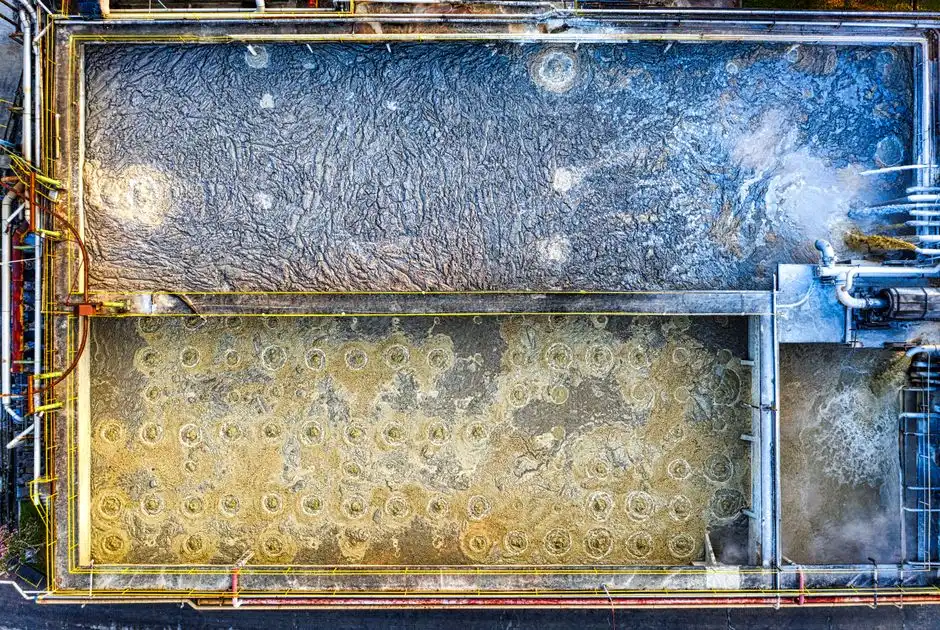
Permen LHK No. 5/2021 sets the discharge quality standards for most industrial wastewater streams in Indonesia — COD, TSS, pH, oil and grease, ammonia, and a long list of sector-specific parameters. A filter press does not produce a discharge-ready stream on its own; the filtrate it generates typically carries residual COD of 200–1,500 mg/L and TSS of 100–500 mg/L depending on feed solids, polymer dose, and cloth condition (HydropureWater field data across POME, textile, and food biosolids, 2026). Permen LH No. 5/2021 COD limits for many industrial categories fall at 100–250 mg/L, so downstream polishing — typically a multimedia sand filter or MBR — is almost always required before river or off-site discharge.
The filter cake, by contrast, is the disposal target and should be specified in the supplier contract: confirm 25–35% dry solids against your landfill acceptance criteria or any co-incineration moisture ceiling. Suppliers participating in the CIPOL (Cleaner Production) certification pathway will document lower polymer consumption and higher cake dryness on request — a useful differentiator when scoring bids, because CIPOL documentation aligns with the Ministry of Environment's broader push toward resource-efficient wastewater management. For the upstream biological step that feeds the press, the multi-media filter for food processing reference covers comparable 99% TSS-removal design targets relevant to polishing filter-press influent.
Sizing Example: A 50 m³/day Palm-Oil ETP Filter Press
A typical Indonesian palm-oil mill ETP produces 50 m³/day of waste-activated sludge at 0.8–1.2% dry solids, with a target cake dryness of 28–32% DS for landfill disposal. Converting the mass balance: 50 m³/day × 1.0% DS = 500 kg DS/day, or roughly 1.6–1.8 tons of wet cake at 30% DS. A 25–35 m² chamber press with 0.7 MPa hydraulic pressure and 30 min cycle time running two batches per shift handles this throughput comfortably; 30 m² is the usual spec'd size, leaving margin for feed variability and polymer optimization.
Polymer conditioning is where most POME dewatering failures originate. Cationic polyacrylamide at 3–6 kg per ton of dry solids is the working range; pair the press with an automatic polymer dosing skid because overdosing — common with manual preparation — fouls filter cloth within days and forces unscheduled shutdowns. Cycle time on a conditioned POME feed typically settles at 25–40 min, so two cycles per shift clears 50 m³/day with an operator on hand for cake release and cloth inspection.
Automation recommendation: a PLC + HMI unit is justified above 16 hr/day operation because manual-hydraulic presses consume operator attention during plate shifting, cake discharge, and cloth wash cycles. Below 8 hr/day, a manual-hydraulic unit is defensible on CAPEX grounds. For a baseline equipment reference covering the sizing logic above, see the HydropureWater plate and frame filter press catalog page.
Due-Diligence Checklist Before You Sign a Filter Press PO
- Audit the factory. Request ISO 9001 certification and confirm whether the plate-molding workshop is in-house or outsourced. Outsourced plate production is a common source of porosity defects and inconsistent PP weld lines. Ask for a recent shipment reference list with at least three Indonesian installations of comparable size.
- Confirm local spare-parts inventory. Filter cloth and hydraulic seal lead times above 2 weeks inside Indonesia are a production risk on a 24/7 dewatering line. Require the supplier to name the local stocking agent and provide a written lead-time commitment for the top 10 wear parts.
- Insist on FAT documentation. For any CAPEX above $50,000, request a factory acceptance test video at the agreed pressure and cycle time. On-site witness testing is justified above $150,000 and typically adds 3–5 days to the supplier's schedule — budget for it.
- Lock warranty terms in writing. Minimum 12 months on the hydraulic power pack, 6 months on filter plates against cracking or weld failure, and a written commissioning sign-off condition precedent to the warranty start date. Verbal commitments from Alibaba-stage sales staff do not survive a freight claim.
- Verify documentation and language support. Bahasa Indonesia operator manual, HMI in Bahasa (or bilingual Bahasa/English), and an on-site commissioning visit included in the price — not as a quoted extra. For buyers managing a hotel or commercial wastewater line in parallel, the SBR wastewater treatment cost 2026 guide covers the same documentation expectations on a smaller CAPEX scale.
Frequently Asked Questions
What is the price of a filter press in Indonesia in 2026? Indicative 2026 FOB pricing from Chinese OEMs runs $18,000–$45,000 for 1–20 m² units, $45,000–$120,000 for 20–100 m², and $120,000–$220,000 for 100–500 m². Add $3,000–$12,000 CIF Jakarta freight, plus 12–25% if sourcing through an Indonesian distributor.
How long is the filter press cycle time for palm oil sludge? Conditioned POME at the bench scale runs 25–40 min per cycle; unconditioned POME with high fiber and oil content can stretch to 45–90 min. Polymer dose at 3–6 kg cationic polyacrylamide per ton DS is the main lever.
What is the difference between a plate-and-frame and a membrane filter press? A plate-and-frame (chamber) press uses fixed-volume chambers filled by feed pressure; a membrane press inflates an elastomeric diaphragm to squeeze the cake after the fill cycle, delivering 30–35% DS versus 25–30% DS for chamber presses at the cost of higher CAPEX and more complex maintenance.
Can filter press filtrate be discharged directly to river in Indonesia? No. Filter press filtrate typically carries 200–1,500 mg/L COD and 100–500 mg/L TSS, above Permen LH No. 5/2021 limits for most industrial categories. Downstream polishing — multimedia sand filter or MBR — is required before river or off-site discharge.
How do I size a filter press for a 50 m³/day wastewater treatment plant? For a 50 m³/day feed at 0.8–1.2% DS and a 28–32% DS cake target, spec a 25–35 m² chamber press at 0.7 MPa hydraulic pressure with two cycles per shift. A 30 m² unit is the usual specification, paired with an automatic polymer dosing skid to stabilize conditioning.