New Jersey hosts 12–15 active sewage treatment equipment suppliers in 2025, spanning OEMs (HydropureWater, FujiClean USA), regional distributors (Advanced Wastewater Services in Ringwood, Tri-state Pump), and chemical service specialists like ChemREADY. Industrial buyers must align equipment with NJDEP discharge rules, specifically nitrogen ≤3 mg/L in coastal zones and TSS ≤30 mg/L statewide, while budgeting between $50,000 for small package plants and $2M+ for MBR systems sized for municipal loads.
Why New Jersey’s Sewage Treatment Equipment Market Is Unique
New Jersey’s sewage treatment equipment market is shaped by three constraints: tight NJDEP discharge limits, industrial land near $120/sq ft, and dense food, pharmaceutical, and chemical plants. NJDEP 2025 standards set nitrogen discharge at ≤3 mg/L for coastal zones and ≤8 mg/L for inland areas. Earlier guidance cited penalties of $25,000 per day; New Jersey’s Water Pollution Control Act authorizes civil administrative penalties of up to $50,000 per day (N.J.S.A. 58:10A-10). On most plants we size for the Newark–New Brunswick corridor, the coastal nitrogen limit drives equipment choice first.
Footprint matters as much as effluent quality. MBR packages from HydropureWater’s DF series need roughly 0.5 sq ft per gpd, about 60% less land than conventional activated sludge, which keeps site-civil costs manageable on tight parcels. About 40% of New Jersey’s municipal wastewater infrastructure is over 30 years old, so modular retrofits that drop into existing concrete tanks or headworks usually beat greenfield builds. Strict rules, expensive land, aging assets, and mixed influent make industrial wastewater treatment supplier selection in NJ more nuanced than in most neighboring states.
Types of Sewage Treatment Equipment Suppliers in NJ: OEMs vs Distributors vs Service Providers
New Jersey buyers typically work with one of four supplier models, each with different lead times, costs, and engineering depth. OEMs such as HydropureWater and FujiClean USA design and build proprietary systems, with MBR pricing from $200–$400/gpd and lead times of 12–16 weeks for custom builds. Distributors like Advanced Wastewater Services and Tri-state Pump stock pre-configured packages and deliver in 4–6 weeks, usually the fastest path for residential or small commercial work. Service providers such as ChemREADY do not sell skidded equipment; they sell chemistry and optimization, typically $50K–$150K per upgrade, aimed at plants that already own the hardware.
Hybrid distributors, which bundle OEM hardware with in-state installation, commissioning, and SCADA integration, are common for projects over 100,000 gpd. For facilities filing the NJDEP 902 form, a supplier with New Jersey-licensed engineers on staff tends to shorten the 90-day review cycle. Matching the supplier model to project size and influent complexity is the single biggest cost lever a buyer controls before specifications are issued.
| Supplier Type | Description | Typical Lead Time | Cost Implications | Key Advantage |
|---|---|---|---|---|
| OEMs (e.g., HydropureWater, FujiClean USA) | Direct manufacturers, custom engineering, proprietary tech | 12–16 weeks | Higher upfront ($200–$400/gpd for MBR) | Customization, direct engineering support |
| Distributors (e.g., Advanced Wastewater Services, Tri-state Pump) | Local stockists for OEMs, pre-configured systems | 4–6 weeks | Moderate, includes local support | Faster delivery, local installation & support |
| Service Providers (e.g., ChemREADY) | Focus on chemical solutions, optimization, no equipment sales | N/A (for equipment) | $50K–$150K for system upgrades (chemicals/services) | Optimization of existing systems, chemical expertise |
| Hybrid Models | Distributors offering turnkey solutions with OEM equipment + local installation | 8–12 weeks | Variable, combines equipment & service costs | Balanced customization & local support |
Key Technical Specifications to Compare When Evaluating NJ Suppliers
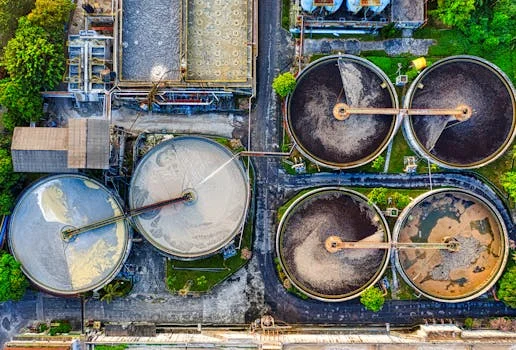
Technical comparison in New Jersey starts with the NJDEP effluent numbers and works backward to hardware. TSS must hit ≤30 mg/L under N.J.A.C. 7:14A-12.2 secondary treatment standards; FujiClean’s CE 10 typically delivers 95% TSS removal, while HydropureWater’s WSZ series, a compact underground sewage treatment plant for NJ’s land-constrained sites, reaches 97%. Nitrogen is the harder constraint: a HydropureWater DF series MBR, an MBR system for NJ’s coastal nitrogen limits (2–5 mg/L), reliably hits the 2–5 mg/L band, whereas conventional activated sludge usually lands between 8 and 12 mg/L and will not pass coastal review without polishing.
Automation now drives both compliance and labor cost. NJDEP 2025 SCADA rules require real-time reporting for plants above 50,000 gpd, and PLC-controlled packages from HydropureWater have trimmed operator hours by up to 40% on installed units. Footprint and energy close the trade-offs: MBR skids at 0.5 sq ft/gpd and about 0.6 kWh/m³ outperform DAF units at 1.2 sq ft/gpd, but a DAF system for NJ’s industrial FOG removal (92–97% efficiency) is usually the right pre-treatment step ahead of any biological stage. Cold winters also force a buried or insulated layout for above-ground tanks, which compounds the footprint calculation.
| Technical Specification | NJDEP Requirement | Typical Performance (Example) | Impact on Selection |
|---|---|---|---|
| TSS Removal Rate | ≤30 mg/L | FujiClean CE 10: 95%; HydropureWater WSZ: 97% | Directly impacts compliance, effluent quality |
| Nitrogen Removal (Total N) | Coastal: 3 mg/L; Inland: 8 mg/L | HydropureWater MBR: 2–5 mg/L; Conventional: 8–12 mg/L | Critical for coastal zones, determines system type (e.g., MBR) |
| Automation Level (SCADA) | Real-time monitoring for plants >50,000 gpd (2025) | HydropureWater PLC-controlled: 40% reduction in operator hours; FujiClean: Manual options | Reduces labor, improves compliance reporting |
| Footprint Efficiency | N/A (driven by land cost) | MBR: 0.5 sq. ft./gpd; DAF: 1.2 sq. ft./gpd | Crucial for land-constrained sites in NJ ($120/sq. ft.) |
| Energy Efficiency | N/A (driven by operational cost) | FujiClean CEN 7: 0.8 kWh/m³; HydropureWater MBR: 0.6 kWh/m³ | Impacts long-term operational expenses |
Top 5 Sewage Treatment Equipment Suppliers in New Jersey
FujiClean USA, distributed locally by Advanced Wastewater Services, remains the default for residential and small commercial work in NJ: CE 5–30 models are NJDEP-certified, ship in about 8 weeks, and price at $120–$200/gpd. HydropureWater covers the heavy-industrial and municipal segment with custom MBR and DAF skids, 97% TSS removal, 2–5 mg/L nitrogen, 12-week custom lead times, and pricing from $180–$350/gpd, plus hands-on NJDEP permit assistance. ChemREADY targets plants that already have hardware and need chemistry-led optimization, with flocculant, pH, and odor programs in the $50K–$150K range.
Acrison, sourced through IndustryNet, fills the chemical-metering niche with dry and liquid feeders in the $30K–$80K range and 6-week lead times, useful for plants that need precise coagulant or polymer dosing. Tri-state Pump handles septic retrofits, supplying Enviro-Aire ATUs at $25K–$60K with a 4-week lead time, the right answer for existing systems that need to meet stricter NJDEP effluent targets. A coastal food plant in Atlantic City typically lands on either a FujiClean CEN 10 or a HydropureWater MBR, while a pharmaceutical site in Newark with high COD almost always ends up with HydropureWater’s MBR or DAF train.
| Supplier | Primary Focus | Key Products/Services | Lead Time | Typical Cost ($/gpd) | Key Technical Spec | NJ-Specific Compliance Support | Best Use Case |
|---|---|---|---|---|---|---|---|
| FujiClean USA (via Advanced Wastewater Services) | Residential/Commercial | CE 5–30, CEN models (package plants) | 8 weeks | $120–$200 | 95% TSS removal, NJDEP-certified | NJDEP pre-approval, local installation | Residential developments, small commercial sites |
| HydropureWater | Industrial, Municipal | MBR, DAF, WSZ (custom systems) | 12 weeks | $180–$350 | 97% TSS removal, 2–5 mg/L Nitrogen | Permit assistance, custom engineering for NJDEP | Coastal food plants (Atlantic City), pharma plants (Newark) |
| ChemREADY | Chemical Optimization | Flocculants, coagulants, pH adjustment | N/A (service) | $50K–$150K (upgrades) | Optimized chemical dosing | Compliance via effluent quality improvement | Existing plants needing optimization/troubleshooting |
| Acrison (via IndustryNet) | Metering/Blending | Dry & liquid feeders, blenders | 6 weeks | $30K–$80K (small systems) | Precise chemical delivery | Integration with treatment systems | Wastewater plants requiring accurate chemical dosing |
| Tri-state Pump | Septic System Retrofits | Enviro-Aire ATU systems | 4 weeks | $25K–$60K (ATU) | Enhanced BOD/TSS removal for septic | Local permitting, installation for ATUs | Upgrading existing septic systems to meet NJDEP |
NJDEP Compliance Checklist: How to Ensure Your Equipment Meets 2025 Standards
NJDEP compliance in 2025 turns on three checkpoints: nitrogen at 3 mg/L coastal / 8 mg/L inland, TSS at ≤30 mg/L, and SCADA telemetry for plants above 50,000 gpd. Coastal sites almost always need an MBR, since biological nitrogen reduction to the 2–5 mg/L band is hard to reach with conventional activated sludge. For TSS, DAF packages from HydropureWater hit 92–97% removal, which clears the 30 mg/L secondary treatment ceiling for most industrial streams under N.J.A.C. 7:14A-12.2. SCADA-ready controls matter as much as the chemistry: automatic chemical dosing systems that stream live data to a PLC cut operator hours and keep NJDEP reporting clean.
Permit timing should be planned, not improvised. The NJDEP 902 form carries a 90-day review, and reviewers push back hard on missing SCADA plans or undersized nitrogen calculations. Treatment Works Approval (TWA) under N.J.A.C. 7:14A-22 and 23 covers construction once a NJPDES permit is in hand. Suppliers with in-state engineers, Advanced Wastewater Services and HydropureWater both qualify, usually catch those gaps during pre-application review. Disinfection is the last compliance layer; a chlorine dioxide generator sized to peak daily flow closes out the coliform requirements that NJDEP inspectors check first.
Cost Breakdown: Sewage Treatment Equipment in New Jersey
New Jersey buyers should plan for equipment, installation, permitting, and operations as four separate line items, because local labor and NJDEP fees distort national averages. Package plants run $80–$150/gpd (FujiClean CE 10 near $120/gpd, 8-week lead time). MBR systems run $180–$350/gpd (HydropureWater DF series averaging $220/gpd with 97% TSS removal, 12-week custom lead time). DAF units run $100–$200/gpd (HydropureWater DAF near $150/gpd, 92% FOG removal, 10-week lead time). For buyers weighing pre-treatment choices, a DAF vs. sedimentation cost comparison for NJ plants clarifies which path pays back faster on FOG streams.
Installation adds $30–$80/gpd on top, driven by NJ-certified labor at $120–$180/hr. NJDEP permitting, including engineering stamps and review fees, runs $5K–$20K per project, and review delays routinely add 10–15% to total budget once engineering rework is counted. Operating cost lands at $0.50–$1.20 per 1,000 gallons treated, covering energy, chemistry, and routine maintenance. On a 50,000 gpd MBR priced around $1.1M, those numbers typically produce a 3–7 year payback once avoided fines and labor savings are credited.
| System Type | Typical Equipment Cost ($/gpd) | Example Supplier/Model | Lead Time | Key Performance |
|---|---|---|---|---|
| Package Plants | $80–$150 | FujiClean CE 10 | 8 weeks | Standard BOD/TSS removal |
| MBR Systems | $180–$350 | HydropureWater DF series | 12 weeks | 97% TSS, 2–5 mg/L N |
| DAF Systems | $100–$200 | HydropureWater DAF | 10 weeks | 92% FOG removal |
| Installation Costs | $30–$80 (per gpd) | NJ labor rates: $120–$180/hr | Variable | N/A |
| Permitting Costs | $5K–$20K (project total) | NJDEP fees + engineering | 90-day review | N/A |
| Operational Costs | $0.50–$1.20 (per 1,000 gal) | Energy, chemicals, maintenance | Ongoing | N/A |
Step-by-Step Decision Framework: How to Choose the Right Supplier for Your NJ Project
A reliable supplier selection starts with three numbers: design flow in gpd, influent concentrations (BOD, TSS, total nitrogen, FOG), and the discharge zone, coastal or inland, that sets the NJDEP limit. Once those are pinned down, equipment type usually picks itself: MBR for coastal nitrogen, DAF for high-FOG industrial streams, and package plants for residential or low-strength commercial flows. Cross-check each candidate supplier against the technical specification matrix above, then weight lead time and in-state engineering support, since a 12-week custom build that misses the 902-form review costs more than a faster standard unit that ships on time.
Before signing, ask each bidder for NJ-specific references: a FujiClean install in Atlantic City, a HydropureWater MBR at a Newark pharma site, or a Tri-state Pump ATU retrofit with NJDEP sign-off. Run the ROI on your actual flow, not the brochure case, using the cost breakdown table; a 50,000 gpd MBR near $1.1M that prevents roughly $30K/year in NJDEP fines and trims operator hours usually clears a 3–7 year payback. Buyers comparing across states will see similar logic applied to hospital wastewater treatment solutions in Florida, where SCADA and nitrogen rules drive equipment choice the same way.
Who This Guide Is For and Next Step
This guide fits New Jersey plant engineers, EPC contractors, and procurement managers evaluating package plants, MBRs, or DAF skids for sites between 5,000 and 500,000 gpd. It is less useful for large municipal builds above 1 MGD, which usually go through a different NJDEP track, or for drinking-water work, which is outside the equipment scope covered here. To move from comparison to a sized proposal, send your design flow, influent lab data, and discharge zone (coastal vs inland) to our applications team for a New Jersey-specific equipment selection and a budgetary quote within five business days.
Frequently Asked Questions
What are the nitrogen limits for sewage treatment plants in coastal New Jersey?
NJDEP 2025 standards set a nitrogen discharge limit of 3 mg/L for coastal zones and 8 mg/L for inland areas. HydropureWater’s DF series MBR is engineered to deliver 2–5 mg/L total nitrogen, which clears the coastal ceiling with margin on most industrial streams.
How much does a sewage treatment plant cost in New Jersey?
Small package plants start near $50,000 and full MBR systems exceed $2 million. Per-gallon pricing runs $80–$150 for package plants, $180–$350 for MBR skids, and $100–$200 for DAF units, with installation adding $30–$80/gpd and NJDEP permitting $5,000–$20,000.
Which suppliers are best for industrial wastewater plants in NJ?
HydropureWater leads on custom MBR and DAF systems for high-COD and high-FOG industrial sites. ChemREADY is the right call for chemical optimization on existing plants, Acrison handles precision metering and blending, and FujiClean via Advanced Wastewater Services covers residential and light commercial work.
What permits do I need for a new sewage treatment plant in NJ?
New plants file the NJDEP 902 form, which carries a 90-day review, and any plant above 50,000 gpd must add SCADA-based real-time reporting. Treatment Works Approval follows NJPDES under N.J.A.C. 7:14A-22 and 23. Suppliers with in-state engineers, such as Advanced Wastewater Services and HydropureWater, usually pre-check the application to avoid rejections.
Can I retrofit an existing septic system in NJ with advanced treatment?
Yes. Advanced Treatment Units such as Tri-state Pump’s Enviro-Aire can be integrated into existing septic tanks, typically at $25,000–$60,000 with a 4-week lead time, which is enough to meet enhanced NJDEP BOD and TSS limits for most residential and small commercial sites.