DAF vs Sedimentation Cost Difference: 2025 Engineering Breakdown with ROI & Decision Framework
For industrial wastewater treatment, dissolved air flotation (DAF) systems typically have 15-25% higher capital costs than sedimentation tanks but can reduce total cost of ownership by 30-40% for high-flow or space-constrained plants. DAF’s 3× higher sludge solids content cuts disposal costs by up to 60%, while its 92-97% TSS removal in 15-30 minutes (vs 2-4 hours for sedimentation) enables smaller footprints and faster ROI in food processing, pulp & paper, and petrochemical applications. This guide provides a data-driven cost breakdown and decision framework for 2025 projects.
Why Cost Isn’t Just About the Price Tag: The Hidden Expenses in Wastewater Pre-Treatment
Capital expenditure (CAPEX) is often the focus of procurement, yet it represents only 30-40% of the total cost of ownership (TCO) for wastewater equipment over a 10-year lifecycle (EPA 2023 benchmark). For industrial engineers, the "sticker price" of a clarifier or a DAF unit is frequently eclipsed by secondary expenses that accrue daily. Consider a mid-sized dairy plant processing 500 m³/day; if using a traditional sedimentation system, they may pay upwards of $50,000 per year in sludge disposal costs alone due to the high water content in the settled solids.
Beyond equipment, civil engineering and footprint requirements drive significant project costs. Industrial concrete pads for heavy wastewater infrastructure typically range from $150–$300/m², depending on soil load-bearing capacity and local labor rates. Because sedimentation tanks require a much larger surface area to allow for gravity settling, the civil work costs can sometimes double the total project budget compared to a compact DAF installation. chemical usage—specifically coagulants and flocculants—can add $0.10–$0.50/m³ to OPEX (HydropureWater field data, 2025). When evaluating how primary clarifiers remove 60%+ TSS in food processing, engineers must account for the physical space these units occupy, which could otherwise be used for revenue-generating production lines.
Finally, unplanned downtime for cleaning and maintenance can cost an industrial facility between $1,000 and $5,000 per hour in lost production. Sedimentation systems, while mechanically simpler, are prone to sludge bulking and require extensive manual cleaning of weirs and baffles. DAF systems, though more mechanically complex, offer automated skimming and faster recovery from process upsets, which directly impacts the bottom-line profitability of the treatment plant.
How DAF and Sedimentation Work: The Engineering Behind the Costs
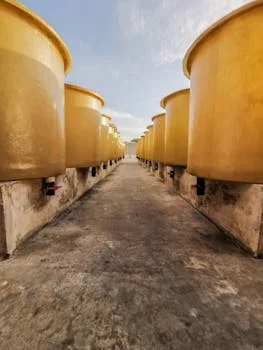
The cost disparity between these two technologies is rooted in physics. Sedimentation relies on gravity-driven separation, where solids must be denser than water to settle. This process is governed by Stokes' Law, requiring a long hydraulic retention time (HRT) of 2–4 hours to ensure particles reach the bottom of the basin. Consequently, sedimentation systems require a large footprint, typically 10–20 m² per m³/hr of flow (industry benchmarks). In contrast, DAF systems for industrial wastewater utilize microbubble flotation (30–50 μm bubbles) to attach to solids and lift them to the surface. This active separation allows for an HRT of only 15–30 minutes and a drastically smaller footprint of 2–5 m² per m³/hr of flow.
A critical engineering advantage of DAF is the resulting sludge quality. Because DAF uses air to "thicken" the solids at the surface, the separated sludge typically reaches a solids content of 3–5%. Traditional sedimentation produces a much thinner sludge, usually 1–2% solids. This means that for the same amount of removed TSS, a sedimentation tank generates 2–3 times the volume of wet sludge, significantly increasing the load on downstream dewatering equipment and raising disposal fees.
| Parameter | Sedimentation (Clarifier) | Dissolved Air Flotation (DAF) | Engineering Impact |
|---|---|---|---|
| Separation Force | Gravity (Passive) | Buoyancy (Active) | DAF handles lighter-than-water solids (FOG) better |
| Hydraulic Retention Time | 120–240 minutes | 15–30 minutes | DAF is 4–8x faster, reducing tank volume |
| Surface Loading Rate | 0.5–1.5 m/hr | 5.0–15.0 m/hr | DAF requires 70–80% less floor space |
| Sludge Solids Content | 1% – 2% | 3% – 5% | DAF reduces sludge volume by 50–70% |
| Energy Consumption | 0.05–0.1 kWh/m³ | 0.1–0.3 kWh/m³ | DAF has higher power demand for air saturation |
Chemical dosing also differs between the two. While lamella clarifiers for compact sedimentation can improve efficiency, they still typically require 50–150 mg/L of coagulant and 1–5 mg/L of polymer to achieve high TSS removal. DAF systems, due to the aggressive nature of microbubble attachment, often require 20–30% less coagulant to achieve the same or better effluent quality (HydropureWater field data, 2025). When considering how CAF compares to DAF and sedimentation, DAF remains the superior choice for high-efficiency TSS and FOG removal despite the higher energy input required for the air saturation system.
Capital Cost Breakdown: DAF vs Sedimentation for 2025 Projects
For 2025 projects, the capital cost for a DAF system is generally higher due to the inclusion of the air saturation system (recycle pump, air compressor, and saturation vessel) and the mechanical skimmer assembly. HydropureWater 2025 pricing for a 100 m³/hr DAF unit ranges from $15,000 to $30,000, depending on material selection (e.g., SS304 vs. SS316) and automation levels. A comparable sedimentation tank or lamella clarifier for the same flow rate would cost between $10,000 and $20,000.
However, the equipment cost is only one part of the CAPEX. Installation of a DAF system typically accounts for 20–30% of the equipment cost, whereas sedimentation installation is slightly lower at 15–25% due to simpler piping. The real divergence occurs in civil works. Because a sedimentation system for a 200 m³/hr plant requires a footprint of roughly 40–60 m², the concrete and structural costs can reach $12,000–$18,000. A DAF system for the same flow requires only 10–15 m², keeping civil costs under $5,000.
| Plant Capacity (m³/hr) | DAF Equipment Cost (USD) | Sedimentation Equipment Cost (USD) | DAF Total CAPEX (Incl. Civil) | Sedimentation Total CAPEX (Incl. Civil) |
|---|---|---|---|---|
| 50 m³/hr | $12,000 – $18,000 | $8,000 – $12,000 | $18,000 – $25,000 | $15,000 – $22,000 |
| 200 m³/hr | $35,000 – $55,000 | $25,000 – $40,000 | $50,000 – $75,000 | $45,000 – $70,000 |
| 500 m³/hr | $80,000 – $120,000 | $60,000 – $90,000 | $110,000 – $160,000 | $120,000 – $180,000 |
As flow rates increase, the "footprint penalty" for sedimentation becomes so severe that the total CAPEX (equipment + civil works) often exceeds that of a DAF system. At 500 m³/hr, the massive concrete basins required for sedimentation make DAF the more economical choice from day one in many industrial settings.
Operating Costs: Where DAF Saves Money (And Where It Doesn’t)
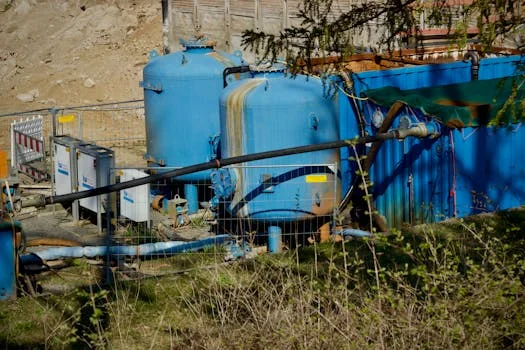
Operating costs (OPEX) are where DAF systems typically justify their higher initial investment. The primary cost drivers in OPEX are chemicals, energy, sludge disposal, and labor. While DAF has higher energy requirements due to the air saturation pump (adding approximately $0.02–$0.06/m³ to the cost), it significantly outperforms sedimentation in sludge management.
Sludge disposal is often the single largest OPEX item for industrial plants. Because DAF produces sludge that is 3 times more concentrated than sedimentation sludge, the volume of waste to be hauled away is reduced by 50–60%. For a plant paying $150/ton for sludge disposal, this reduction can save tens of thousands of dollars annually. To maximize these savings, many plants pair their separation system with a plate and frame filter press to further dewater the sludge before disposal.
| OPEX Category | Sedimentation (per 1,000 m³) | DAF (per 1,000 m³) | Annual Difference (500 m³/day plant) |
|---|---|---|---|
| Chemicals | $150 – $300 | $120 – $240 | $5,000 – $10,000 Savings (DAF) |
| Energy | $10 – $30 | $40 – $80 | $5,000 – $9,000 Extra Cost (DAF) |
| Sludge Disposal | $400 – $800 | $150 – $300 | $45,000 – $90,000 Savings (DAF) |
| Maintenance Labor | 3–5 hours/week | 1–2 hours/week | $2,000 – $4,000 Savings (DAF) |
Precise chemical management is essential for controlling these costs. Implementing PLC-controlled chemical dosing for DAF and sedimentation ensures that coagulants are not wasted during periods of low influent TSS, which can further improve the OPEX profile of a DAF system. In a case study of a 500 m³/day food processing plant, switching from a traditional clarifier to a DAF system resulted in a net OPEX saving of $32,000 per year, primarily driven by reduced sludge volume and more efficient chemical usage.
ROI Calculator: When DAF Pays for Itself Faster Than Sedimentation
The decision to invest in DAF over sedimentation should be based on the Payback Period, calculated as: (Capital Cost Difference) / (Annual OPEX Savings). In many industrial scenarios, the higher capital cost of a DAF is recouped in less than 24 months. This is particularly true for industries with high TSS or FOG (Fats, Oils, and Grease) loads, such as food processing and petrochemicals.
For example, in a pulp and paper application where disposal costs are high and effluent TSS exceeds 1,000 mg/L, the efficiency of DAF in removing fibers allows for fiber recovery, which adds a secondary revenue stream. In these cases, the ROI can be as short as 1.2 years. Conversely, for a small textile plant with low-volume, low-TSS wastewater and cheap land for expansion, a sedimentation tank might never be "beaten" by a DAF on an ROI basis.
| Industry Scenario | Avg. Influent TSS | Disposal Cost | Est. Payback Period (DAF vs SED) |
|---|---|---|---|
| Food Processing (Meat/Dairy) | 1,500 mg/L | $150/ton | 1.8 – 2.2 Years |
| Pulp & Paper | 2,000 mg/L | $100/ton | 1.4 – 1.9 Years |
| Petrochemical | 500 mg/L (high FOG) | $200/ton | 2.0 – 2.5 Years |
| Small Scale Textile | 300 mg/L | $80/ton | 4.5 – 6.0 Years |
General rule for 2025: DAF is almost always the more cost-effective choice for plants processing more than 200 m³/hr or those with influent TSS levels above 300 mg/L. For smaller or cleaner streams, the simplicity of a sedimentation tank may still prevail. For those operating in Europe, it is helpful to review the DAF system requirements and costs in Europe to understand how local energy prices and disposal regulations impact these ROI calculations.
Decision Framework: Which System Fits Your Project?
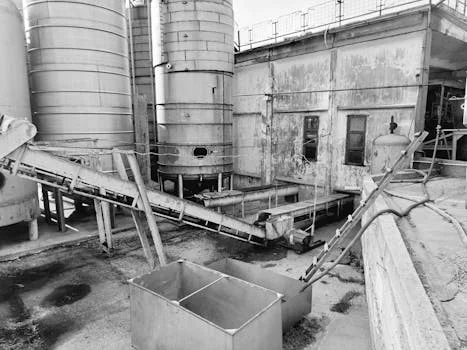
To select the optimal system, engineers should follow a structured decision-making process that prioritizes long-term TCO over initial CAPEX. Use the following five-step framework to evaluate your project parameters:
- Assess Influent Characteristics: If your wastewater contains high levels of Fats, Oils, and Grease (FOG) or light, fibrous solids, DAF is the clear winner. If the solids are heavy and inorganic (e.g., sand, grit, metal shavings), sedimentation is more appropriate.
- Evaluate Footprint Constraints: Measure the available real estate. If the required sedimentation footprint exceeds 20% of your available treatment area, the civil engineering costs for a clarifier will likely make DAF the cheaper total project.
- Calculate Sludge Disposal Impact: Obtain a firm quote for sludge hauling and disposal. If costs exceed $100/ton, the 3x thickening capability of DAF will provide significant annual savings.
- Analyze Flow Volatility: Does your plant experience sudden spikes in TSS or flow? DAF systems can handle 2–3× TSS shock loads much better than sedimentation tanks, which can "wash out" during spikes.
- Compare Payback Periods: Use the ROI framework above. If the payback period for DAF is under 3 years, it is generally the superior choice for industrial procurement.
| Factor | Choose DAF If... | Choose Sedimentation If... |
|---|---|---|
| Primary Contaminant | FOG, Algae, Light Organics | Sand, Grit, Heavy Metals |
| TSS Concentration | > 300 mg/L | < 200 mg/L |
| Available Space | Limited / Indoor | Abundant / Outdoor |
| Disposal Costs | High (>$100/ton) | Low (<$50/ton) |
| Process Stability | Frequent Shock Loads | Consistent, Steady Flow |
Frequently Asked Questions
How often should a DAF be drained and cleaned?
In industrial applications, a DAF system should be drained and cleaned every 1–3 months, depending on the TSS load and the presence of heavy solids that might settle at the bottom. In contrast, sedimentation tanks often require weekly or even daily sludge removal from the bottom hoppers to prevent septic conditions (Top 3 industry data).
What is the difference between sedimentation and dissolved air flotation?
The primary difference is the separation mechanism: sedimentation relies on gravity to settle dense solids (requiring 2–4 hours), while DAF uses microbubbles to float solids to the surface (taking 15–30 minutes). DAF typically achieves 11% higher separation efficiency for light organic solids compared to gravity settling (Top 1 research data).
Is DAF more expensive than sedimentation?
DAF generally has 15–25% higher capital costs due to its mechanical complexity. However, it can reduce the total cost of ownership (TCO) by 30–40% for high-flow or space-constrained plants because it significantly lowers sludge disposal fees and requires a much smaller concrete footprint.
Can DAF handle higher TSS loads than sedimentation?
Yes. DAF systems are designed to process influent TSS ranging from 500 to 5,000 mg/L. Traditional sedimentation is typically limited to 200–1,000 mg/L; beyond this, the required tank size becomes impractical and the risk of solids "carry-over" into the effluent increases significantly.
Does DAF require more chemicals than sedimentation?
No. In fact, DAF typically uses 20–30% less coagulant because the microbubble attachment process is more efficient at capturing small flocs than gravity settling. This allows for smaller, tighter floc formation, which requires less chemical input (Top 1 field data).