Primary clarifiers are the cornerstone of food processing wastewater treatment, removing 60% of suspended solids and 30-40% of BOD before biological treatment. For a typical snack production plant processing 1.25 million gallons per day, a primary clarifier can reduce downstream treatment costs by up to 40% while meeting EPA effluent limits of 30 mg/L TSS and 250 mg/L BOD. This guide provides 2025 engineering specs, cost benchmarks, and compliance data to help food processors select the right clarifier for their application.
How Primary Clarifiers Work in Food Processing Wastewater
Primary clarifiers remove suspended solids and associated biochemical oxygen demand (BOD) from food processing wastewater through gravity separation, serving as a critical first step in reducing pollutant loads for downstream biological treatment. This physical treatment process is effective for the high concentrations of organic and inorganic solids characteristic of the food industry. For instance, in snack production plants, clarifiers efficiently settle potato starch and particulate matter, while in meat processing facilities, they remove blood proteins, animal fats, and muscle tissue fragments. Dairy operations utilize them to separate milk solids and butterfat.
The process begins as influent wastewater, often characterized by high concentrations (TSS typically 500-3000 mg/L, BOD 1000-5000 mg/L, and FOG 200-1500 mg/L), enters the clarifier's settling zone. Here, the flow velocity significantly decreases, allowing heavier suspended particles to settle to the tank bottom due to gravity. Simultaneously, lighter components, such as fats, oils, and grease (FOG), float to the surface. Scum baffles, similar to those installed in large-scale snack production plants (Monroe Environmental case study), are essential for containing and directing this floating FOG layer. Rotating skimmers then collect the FOG from the surface, preventing carryover into the effluent.
A typical primary clarifier process flow involves influent entering a quiescent zone, where solid particles settle into a sludge blanket at the bottom. This settled sludge is continuously or intermittently collected and removed by a rotating scraper mechanism. The clarified water, with significantly reduced TSS and BOD, overflows a weir at the tank's periphery, becoming the effluent for subsequent treatment stages. For most food processing applications, hydraulic retention times typically range from 1.5 to 3 hours, which is optimized for effective solids separation from the often high-strength and varied influent streams.
Engineering Specs for Food Processing Primary Clarifiers
Optimal primary clarifier performance in food processing relies on precise engineering parameters tailored to the unique characteristics of food wastewater. Surface loading rates for food processing applications typically range from 600 to 1200 gpd/ft², aligning with EPA 2024 guidelines for effective treatment of high-strength industrial wastewater. This range ensures sufficient settling time for the diverse particle sizes and densities found in food industry streams, from fine flour particles in baking to larger food scraps in vegetable processing.
Hydraulic retention times (HRT) are critical for maximizing solids removal, with 1.5 to 3 hours considered optimal for achieving 60% TSS removal in food applications. This HRT allows adequate time for flocculation and gravitational settling of suspended solids. The sludge blanket depth in primary clarifiers for food processing is typically maintained between 2-4 feet, providing sufficient volume for settled solids before withdrawal. Sludge withdrawal frequency usually occurs 2-4 times per day, preventing anaerobic conditions and ensuring consistent clarifier performance.
Scum removal mechanisms are particularly vital for FOG-heavy streams common in dairy and meat processing. Rotating skimmers are highly effective, continuously sweeping the surface to collect floating FOG. Fixed baffles, while simpler, are less efficient for high FOG loads and may require more manual intervention. Material selection is also a key consideration; stainless steel (e.g., 304 or 316L) is often preferred for its superior corrosion resistance against acidic or caustic cleaning agents used in food plants, although coated carbon steel can be a cost-effective alternative for less aggressive wastewater. the elevated temperature of food wastewater, often 30-40°C, can positively impact settling efficiency by reducing water viscosity, which promotes faster particle settling.
| Parameter | Typical Range for Food Processing | Notes / Impact |
|---|---|---|
| Surface Loading Rate (SLR) | 600-1200 gpd/ft² | Per EPA 2024 guidelines for high-strength wastewater; affects settling efficiency. |
| Hydraulic Retention Time (HRT) | 1.5-3 hours | Optimal for 60% TSS removal in food applications. |
| Sludge Blanket Depth | 2-4 feet | Ensures adequate storage before withdrawal; prevents carryover. |
| Sludge Withdrawal Frequency | 2-4 times/day | Prevents anaerobic conditions and sludge bulking. |
| Scum Removal Mechanism | Rotating Skimmers (preferred) | Highly effective for FOG-heavy streams (e.g., dairy, meat processing). |
| Material Selection | Stainless Steel (304/316L) or Coated Carbon Steel | Corrosion resistance against sanitizers and wastewater constituents. |
| Operating Temperature | 30-40°C | Higher temperatures reduce viscosity, improving settling rates. |
For applications requiring even higher efficiency in a smaller footprint, particularly for high-solids streams, a lamella clarifier for high-efficiency solids removal might be considered, as it leverages inclined plates to increase the effective settling area.
Primary Clarifier vs. Alternatives for Food Processing: 2025 Efficiency & Cost Comparison
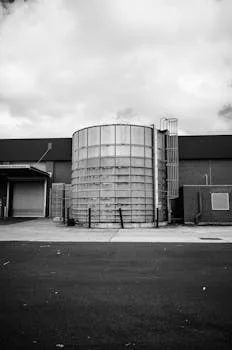
Selecting the optimal primary treatment technology for food processing wastewater involves a trade-off between removal efficiency, capital investment, operating costs, and footprint. While primary clarifiers are a foundational choice, alternatives like Dissolved Air Flotation (DAF) systems, conventional sedimentation tanks, and lamella clarifiers offer varying advantages depending on influent characteristics and discharge requirements.
| Technology | TSS Removal (%) | BOD Removal (%) | FOG Removal (%) | Footprint (ft²/1000 gpd) | Capital Cost ($/gpd) | Operating Cost ($/1000 gal) | Best For (Food Applications) |
|---|---|---|---|---|---|---|---|
| Primary Clarifier | 60% | 30-40% | 30-50% | 1.0-2.0 | $0.50-$5.00 | $0.05-$0.20 | High solids loads (>1000 mg/L TSS), moderate FOG, cost-conscious, pre-treatment for biological. |
| DAF System | 90% | 50-70% | 90-99% | 0.2-0.5 | $2.00-$8.00 | $0.20-$0.80 | High FOG (>500 mg/L), high TSS, stringent effluent limits, compact footprint, pre-treatment for anaerobic. |
| Sedimentation Tank (Conventional) | 50% | 25-35% | 20-40% | 1.5-3.0 | $0.30-$4.00 | $0.03-$0.15 | Low-to-moderate solids, low FOG, very large footprint available, lowest capital cost. |
| Lamella Clarifier | 70% | 40-50% | 40-60% | 0.3-0.8 | $1.50-$6.00 | $0.10-$0.30 | Moderate-to-high solids, limited footprint, pre-treatment for biological or physical-chemical. |
Primary clarifiers are often preferred for food processing despite their relatively lower efficiency compared to DAF systems due to their lower capital cost, simpler operation, and robustness in handling high solids loads. They are particularly effective when the primary goal is significant load reduction before biological treatment, rather than achieving very low effluent limits in a single step. For a more detailed comparison, refer to our detailed comparison of DAF systems vs. clarifiers for food processing.
The performance of primary clarifiers can be significantly enhanced through chemical dosing, such as the addition of coagulants (e.g., ferric chloride, alum) and flocculants (e.g., polymers). For food wastewater, chemical pre-treatment can increase TSS removal to 80-90% and FOG removal to 70-80%, but it adds approximately $0.10-$0.30/1000 gal in operating costs due to chemical consumption and increased sludge volume. A DAF system for FOG and TSS removal in food processing, while having higher capital and operating costs, typically achieves superior FOG and TSS removal without extensive chemical pre-treatment.
A decision framework for selecting the right technology can be summarized by influent characteristics:
- If FOG > 500 mg/L: A DAF system is generally more effective and often necessary to meet discharge limits.
- If TSS > 2000 mg/L and FOG < 500 mg/L: A primary clarifier, potentially enhanced with chemical dosing, offers a cost-effective solution for significant load reduction.
- If footprint is severely limited and moderate-to-high TSS removal is needed: A lamella clarifier provides a compact solution.
- If minimal primary treatment is required and ample land is available: A conventional sedimentation tank offers the lowest capital cost.
2025 Cost Benchmarks for Primary Clarifiers in Food Processing
Understanding the financial implications of primary clarifier installation and operation is crucial for effective project budgeting and return on investment (ROI) analysis in food processing facilities. Capital costs for primary clarifiers vary significantly with capacity, material selection, and level of automation. For smaller systems (less than 50,000 gpd), capital costs typically range from $2-$5 per gallon per day (gpd) of capacity. Medium systems (50,000-500,000 gpd) fall into the $1-$3/gpd range, while large systems (over 500,000 gpd) can achieve economies of scale, costing $0.50-$1.50/gpd (HydropureWater field data, 2025).
| Cost Category | Cost Range | Notes / Drivers |
|---|---|---|
| Capital Costs (Installed, per gallon per day capacity) | ||
| Small Systems (<50,000 gpd) | $2-$5/gpd | Higher per-unit cost due to fixed equipment expenses. |
| Medium Systems (50,000-500,000 gpd) | $1-$3/gpd | Typical for many medium-sized food processing plants. |
| Large Systems (>500,000 gpd) | $0.50-$1.50/gpd | Economies of scale for large-scale operations (e.g., major snack plants). |
| Operating Costs (per 1000 gallons treated) | ||
| Electricity (pumps, mixers) | $0.05-$0.20 | Varies with system automation and flow rates. |
| Chemicals (if used) | $0.02-$0.10 | Coagulants/flocculants for enhanced removal. |
| Labor (monitoring, sludge removal) | $0.05-$0.15 | Typically 1-2 hours/day for routine tasks. |
| Sludge Disposal | $0.10-$0.30 | Depends on volume, dewatering, and disposal method (landfill vs. beneficial reuse). |
Operating costs for a primary clarifier generally range from $0.05-$0.20 per 1000 gallons treated for electricity (pumps, mixers), $0.02-$0.10 for chemicals (if polymers are used), and $0.05-$0.15 for labor (typically 1-2 hours per day for monitoring and sludge removal). Sludge disposal, a significant component, can cost $0.10-$0.30 per 1000 gallons, depending on dewatering efficiency and whether the sludge is sent to a landfill or utilized for beneficial reuse. For example, a 200,000 gpd primary clarifier costing $300,000 can save an estimated $80,000 per year in downstream biological treatment costs (based on a 40% reduction in biological load), yielding a payback period of approximately 3.75 years. Cost drivers include material selection (stainless steel vs. coated carbon steel), the level of automation for sludge and scum removal, and the complexity of associated sludge handling equipment (e.g., dewatering presses). Optimizing these factors for specific food processing applications can significantly impact the overall project economics.
Compliance and Permitting for Food Processing Primary Clarifiers
Adherence to regulatory requirements is non-negotiable for food processing facilities operating primary clarifiers, impacting both design and operational protocols. The U.S. Environmental Protection Agency (EPA) sets national effluent limits for direct dischargers, typically targeting 30 mg/L TSS and 250 mg/L BOD. For indirect dischargers sending wastewater to a Publicly Owned Treatment Works (POTW), pretreatment standards are enforced to protect the municipal system from harmful pollutants, particularly high FOG and solids loads. These pretreatment standards often require facilities to achieve specific reductions or meet local limits before discharge.
State-specific requirements can impose stricter limits than federal guidelines. For instance, California's regional water boards often mandate more stringent discharge limits for dairy processors, sometimes as low as 10 mg/L TSS and 100 mg/L BOD, necessitating advanced primary treatment or additional downstream processes. The permitting process involves obtaining a National Pollutant Discharge Elimination System (NPDES) permit for direct dischargers or a pretreatment permit from the local POTW for indirect dischargers. Both require detailed wastewater characterization and treatment plans. Monitoring and reporting requirements typically include daily TSS and BOD testing, with results submitted in monthly Discharge Monitoring Reports (DMRs).
Common compliance issues in food processing primary clarifiers include FOG carryover, which can lead to sewer blockages or POTW upsets; short-circuiting, where wastewater bypasses effective settling zones; and sludge bulking, which impairs settling and can result in high effluent TSS. Addressing these issues often involves optimizing hydraulic loading, ensuring proper scum and sludge removal, and potentially implementing chemical pre-treatment to enhance flocculation. Understanding regional variations is also critical; for example, regional compliance and equipment selection for food processing wastewater in areas like Norway involves unique challenges and regulations.
Frequently Asked Questions
What are clarifiers used for in the food industry?
Clarifiers in the food industry primarily remove suspended solids (TSS), fats, oils, and grease (FOG), and a portion of biochemical oxygen demand (BOD) from wastewater. This pre-treatment step is crucial for reducing the pollutant load before subsequent biological treatment, helping food processing plants meet environmental discharge limits and reduce operational costs by preventing downstream equipment fouling.
What is the typical cost of a primary clarifier for food processing?
The capital cost for a primary clarifier in food processing ranges from $0.50 to $5.00 per gallon per day (gpd) of capacity, depending on system size. Operating costs typically fall between $0.05 and $0.20 per 1000 gallons treated, influenced by electricity, labor, chemicals (if used), and sludge disposal expenses. These costs are benchmarked for 2025, reflecting current market conditions and technology.
How does a primary clarifier differ from a secondary clarifier?
A primary clarifier is used for initial physical separation of settleable solids, FOG, and some BOD from raw wastewater, typically removing 60% TSS. A secondary clarifier, conversely, is positioned after biological treatment (e.g., activated sludge) to separate the microbial biomass (activated sludge) from the treated water, ensuring clear effluent and returning biomass to the biological reactor.
What are key design parameters for a primary clarifier in food processing?
Key design parameters include surface loading rates (600-1200 gpd/ft²), hydraulic retention times (1.5-3 hours), sludge blanket depth (2-4 feet), and efficient scum removal mechanisms. These parameters are optimized for the high TSS, BOD, and FOG concentrations typical of food processing wastewater, ensuring effective gravity separation and solids capture.
What is the difference between a primary clarifier and a sedimentation tank?
While often used interchangeably, "sedimentation tank" is a general term for any tank where solids settle by gravity. A "primary clarifier" specifically refers to the first sedimentation stage in wastewater treatment, designed to remove raw, settleable solids and FOG before biological processes. Primary clarifiers often include mechanical scrapers for sludge removal and skimmers for FOG, making them more specialized than a basic sedimentation tank.