Regina Sewage Treatment Equipment Suppliers: 2025 Engineering Guide with Costs, Compliance & ROI
Regina’s sewage treatment equipment market in 2025 is dominated by suppliers offering water softeners and sewer cleaners, but industrial and municipal projects require specialized systems like DAF (92–97% COD removal), MBR (<1 μm filtration), or package plants (1–80 m³/h capacity). Saskatchewan’s effluent limits (e.g., 25 mg/L TSS, 10 mg/L BOD) demand equipment with precise technical specs. This guide compares Regina’s top suppliers, provides cost benchmarks ($50K–$2M), and includes a compliance checklist for SK Ministry of Environment permits.Why Regina’s Sewage Treatment Needs Are Unique in 2025
Saskatchewan’s Ministry of Environment (SK MoE) sets stringent effluent limits for 2025, including 25 mg/L for Total Suspended Solids (TSS), 10 mg/L for Biochemical Oxygen Demand (BOD), and 1 mg/L for ammonia, necessitating advanced sewage treatment equipment for compliance. Regina’s industrial base, which includes significant food processing operations like AGT Foods, mining support services, and various manufacturing facilities, each generates distinct wastewater profiles. Food processors, for example, produce high levels of Fats, Oils, and Grease (FOG), while mining operations often contend with heavy metals and suspended solids. In 2023, 68% of industrial facilities in Regina were cited for TSS exceedances, highlighting a pervasive compliance challenge (SK MoE annual report). The region's extreme climate, characterized by freeze-thaw cycles and harsh -40°C winters, demands equipment designs that incorporate insulated tanks, buried piping, and cold-weather aeration systems to prevent operational disruptions and ensure consistent performance. Regina’s municipal system, which relies on the Buffalo Pound Water Treatment Plant, influences local supplier capabilities and sets a high bar for effluent quality expectations, even for decentralized systems. The inherent hard water in Regina, typically ranging from 200–300 mg/L CaCO₃, also impacts equipment selection, requiring corrosion-resistant materials and often necessitating pre-treatment solutions to protect system integrity and efficiency.| Parameter | SK MoE Effluent Limit (2025) | Typical Industrial Source (Regina) | Impact on Equipment Selection |
|---|---|---|---|
| Total Suspended Solids (TSS) | 25 mg/L | Food Processing, Manufacturing, Mining | Requires efficient solids separation (e.g., DAF, MBR) |
| Biochemical Oxygen Demand (BOD) | 10 mg/L | Food Processing, Municipal Sewage | Demands robust biological treatment (e.g., MBR, A/O) |
| Ammonia (NH₃-N) | 1 mg/L | Municipal Sewage, Agricultural Processing | Nitrification/denitrification capabilities essential |
| Fats, Oils, & Grease (FOG) | No specific limit (addressed via BOD/TSS) | Food Processing (e.g., AGT Foods) | Pre-treatment like DAF is crucial for removal |
| Heavy Metals | Varies by metal (e.g., 0.5 mg/L for Cu) | Mining, Manufacturing | Requires chemical precipitation or advanced filtration |
Sewage Treatment Equipment Types for Regina Projects: Technical Specs and Use Cases
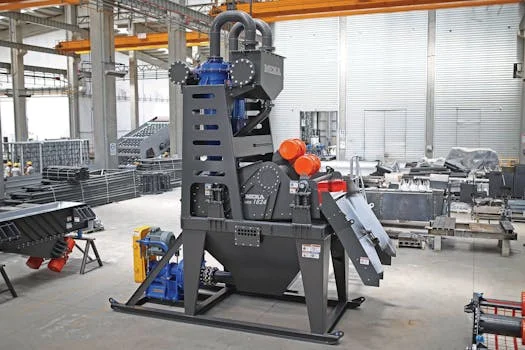
| Equipment Type | Key Technical Specs | Ideal Regina Use Case | HydropureWater Model/Series |
|---|---|---|---|
| Dissolved Air Flotation (DAF) | 92–97% COD removal, 99% FOG removal, 4–300 m³/h capacity, 0.5–1.0 bar air pressure | Food processing (e.g., AGT Foods) with high oil/grease loads | DAF line |
| Membrane Bioreactor (MBR) | <1 μm filtration, 60% smaller footprint, 10–2,000 m³/day capacity, 0.1 μm PVDF membranes, 0.3–0.5 kWh/m³ energy use | Hospitals (e.g., Regina General) for reuse-quality effluent, commercial developments | DF Series |
| Package Plants (Integrated) | 1–80 m³/h capacity, buried or mobile, A/O process, 90% BOD removal, minimal operator required | Rural subdivisions (e.g., Pilot Butte, White City), trailer parks, remote industrial sites | WSZ Series |
Saskatchewan Compliance Checklist: Permits, Effluent Limits, and Reporting for 2025
Achieving and maintaining compliance with Saskatchewan’s environmental regulations is a multi-step process for any sewage treatment project in Regina. The SK Ministry of Environment (SK MoE) mandates specific permit requirements: Form E-100 for new facilities and Form E-101 for modifications to existing systems, typically requiring a 90-day processing time as of 2024 data. Effluent limits for Regina projects are rigorously enforced, including 25 mg/L TSS, 10 mg/L BOD, 1 mg/L ammonia, and a strict 200 CFU/100mL for E. coli, reflecting 2025 updates from the SK MoE. Monitoring requirements are also clearly defined, with facilities discharging more than 100 m³/day mandated to install continuous pH, TSS, and flow meters, in addition to conducting quarterly lab tests for BOD, ammonia, and various metals. A significant compliance pitfall in Regina is improper sludge management, which led to 42% of facilities failing initial inspections in 2023 (SK MoE 2023 report). To streamline submissions and tracking, the SK MoE provides an online ePermitting portal. Proper chemical dosing and disinfection are often critical for meeting these stringent limits; for example, an automatic chemical dosing system can ensure consistent treatment, while a chlorine dioxide generator can effectively manage E. coli levels. Before submitting your permit application, ensure you have:- Completed SK MoE Form E-100 or E-101.
- Detailed engineering drawings and specifications for the proposed treatment system.
- A comprehensive wastewater characterization report, including flow rates and contaminant concentrations.
- A sludge management plan outlining disposal methods and frequencies.
- An emergency response plan for potential spills or system failures.
- Proof of land ownership or lease agreements.
- Documentation of public consultation, if required for the project scope.
- A proposed monitoring and reporting schedule compliant with SK MoE guidelines.
Regina Sewage Treatment Equipment Suppliers: 2025 Comparison Matrix
| Supplier | Equipment Types Offered | Capacity Range (Typical) | Lead Time (Standard Systems) | Service Area | Cost Range (Estimated, Installed) |
|---|---|---|---|---|---|
| Excalibur Water Systems | Water Softeners, Filtration, UV Sterilization, RO, Nanofiltration | Residential to Commercial (low flow) | 4–8 weeks | Regina & surrounding areas | $10K–$100K (Primarily pre-treatment) |
| Fer-Marc Equipment | Sewer Cleaners, Vactor Trucks, Water Recyclers | N/A (Equipment for municipal infrastructure maintenance) | 6–10 weeks | Saskatchewan | $100K–$500K (Maintenance vehicles) |
| Gordon’s Sanitation | Septic Systems, Package Plants, Holding Tanks | 1–50 m³/h | 8–12 weeks | Regina & rural SK | $30K–$200K |
| ATAP Infrastructure Management Ltd | Onsite Wastewater Systems, Treatment Plants (various tech) | 5–500 m³/h | 10–16 weeks | Saskatchewan | $100K–$1M+ |
| HydropureWater (via Canadian distributor) | DAF, MBR, Package Plants, Chemical Dosing, Sludge Dewatering | 1–2,000 m³/h | 8–20 weeks | Global (local distribution/service) | $50K–$2M+ |
ROI Calculator for Regina Projects: Cost vs. Compliance Savings
A data-driven Return on Investment (ROI) calculation is essential for justifying significant capital expenditures on sewage treatment equipment in Regina, enabling procurement managers to build robust business cases. The fundamental ROI formula for these projects is: (Annual Compliance Savings + Operational Savings) / (Capital Cost + Annual Operations & Maintenance). Compliance savings are a major factor, as SK MoE fines for permit violations average $15K per violation (2024 data). For a facility experiencing three violations annually, proper equipment could yield $45K in direct savings from avoided fines. Operational savings also contribute significantly to ROI. DAF systems, for example, can reduce sludge disposal costs by 30–50% (per EPA 2023 benchmarks) due to higher solids concentration. MBR systems offer the additional benefit of enabling water reuse for non-potable applications like irrigation or cooling towers, which can cost $0.50/m³ compared to $2.50/m³ for city water in Regina. Consider a Regina-specific example: a 50 m³/h DAF system installed for a food processor. With a capital cost of $250K, this system could potentially save $60K per year in avoided fines and $40K per year in reduced sludge disposal costs. Assuming annual Operations & Maintenance (O&M) costs of $15K, the ROI calculation would be ($60,000 + $40,000) / ($250,000 + $15,000) = $100,000 / $265,000 = 0.377. This translates to a payback period of approximately 2.65 years, making it a financially sound investment. To compare DAF and sedimentation costs for Regina projects, further analysis is available. An interactive ROI calculator template (e.g., in Excel or Google Sheets) can be structured with pre-filled Regina data, including local sludge disposal costs (e.g., $150/tonne), water rates, and estimated energy costs, allowing for customized project evaluations. Key inputs would include system capital cost, estimated annual O&M, projected number of avoided violations, estimated water reuse volume, and current utility costs.Frequently Asked Questions

What are the primary effluent limits for sewage treatment in Regina?
The Saskatchewan Ministry of Environment (SK MoE) mandates strict effluent limits for 2025, including 25 mg/L for Total Suspended Solids (TSS), 10 mg/L for Biochemical Oxygen Demand (BOD), 1 mg/L for ammonia, and 200 CFU/100mL for E. coli. These limits apply to industrial and municipal discharges.
Key Takeaway: Compliance with these specific limits is non-negotiable for all Regina projects.
How do Regina’s harsh winters affect sewage treatment equipment selection?
Regina’s -40°C winters and freeze-thaw cycles necessitate specialized equipment features such as insulated tanks, heat-traced and buried piping, and robust cold-weather aeration systems. These design considerations prevent freezing, maintain biological activity, and ensure continuous operation.
Key Takeaway: Climate-resilient design is crucial for reliable performance in Regina.
What are the typical cost ranges for DAF, MBR, and package plants in Regina?
Based on 2025 data, installed costs for DAF systems in Regina range from $80K–$500K, MBR systems from $150K–$2M, and package plants from $50K–$300K. These figures include equipment and installation, but can vary based on capacity and customization.
Key Takeaway: Project scale and technology choice significantly influence overall investment.
What permits are required from the SK Ministry of Environment for new facilities?
New sewage treatment facilities in Saskatchewan must apply for a permit using SK MoE Form E-100. This application requires detailed engineering plans, wastewater characterization, and a sludge management strategy. The typical processing time for these permits is 90 days.
Key Takeaway: Initiate the E-100 permit application early in the project timeline.
How can a Regina facility calculate the ROI of new sewage treatment equipment?
ROI can be calculated as (Annual Compliance Savings + Operational Savings) / (Capital Cost + Annual O&M). For instance, avoiding an average SK MoE fine of $15K per violation, coupled with sludge disposal reductions (30-50% for DAF), contributes to significant savings and a positive ROI.
Key Takeaway: Quantify avoided fines and operational efficiencies to build a strong business case.
What are common compliance pitfalls for industrial facilities in Regina?
A significant challenge is improper sludge management, which resulted in 42% of facilities failing initial SK MoE inspections in 2023. Other pitfalls include exceeding TSS or BOD effluent limits and inadequate monitoring.
Key Takeaway: Comprehensive sludge management and consistent monitoring are vital for compliance.