What Does an SBR System for Hotel Wastewater Actually Cost in 2026?
Hotel developers in Bali, the Maldives, Phuket, and the Caribbean are running into the same wall in 2026: the municipal sewer trunk they were promised three years ago still does not reach the parcel, the discharge permit has a hard compliance deadline, and the CFO wants a number, not a process diagram. Sequencing batch reactor (SBR) systems are the most common new-build answer for that 50–500 m³/day window, and the 2026 installed cost lands between $90 and $380 per m³ of daily treatment capacity (CAPEX), with operating cost at $0.10–$0.28 per m³ treated (OPEX) (HydropureWater field data, 2026). The wide spread is driven by tankage material (poured concrete vs GRP panel), the automation tier (manual timers vs PLC with remote SCADA), and whether the effluent is targeting irrigation reuse or municipal sewer discharge.
For a worked example that a procurement lead can put in front of an owner: a 200-room tropical resort at 0.75 m³ per occupied room × 200 rooms × 80% occupancy produces roughly 150 m³/day of design flow. That plant lands between $45,000 and $95,000 installed in 2026, depending on tankage and reuse scope. Against the Western benchmark of ~$2,600 per m³ for replacement wastewater infrastructure quoted in the AS-SBR/UF-MBR hotel performance study, new-build SBR at $90–$380/m³ represents 3–9% of that replacement cost — the line item a CFO will sign off on. For scale context, the only public SBR municipal build I can anchor to is a $4.7 million US plant (project cost disclosed in the public bid documents), which sits 20–50× larger than any hotel plant and is not directly comparable, but does show where the unit-cost curve steepens on the high end.
For small boutique properties with limited site footprint, a factory-built packaged A/O sewage treatment plant is the usual alternative to site-built SBR concrete tanks; we come back to that trade-off in the comparison section.
SBR Design Parameters That Drive Hotel Plant Cost
Five inputs swing the SBR price more than any others, and a procurement engineer who can defend each one in a design review controls roughly 70% of the final number. They are: per-room unit flow, peak-season hydraulic factor, influent concentration, reuse vs discharge target, and ambient temperature.
Hotel wastewater is moderate-strength compared to food-and-beverage or slaughterhouse effluent, but it is far from domestic baseline. The typical design envelope an SBR cycle must handle is COD 250–800 mg/L, BOD₅ 150–400 mg/L, TSS 100–300 mg/L, FOG 30–80 mg/L, NH₃-N 10–30 mg/L (HydropureWater field data, 2026; consistent with the AS-SBR hotel study). All-inclusive resorts with on-site laundry and pool backwash sit at the upper end; city-center business hotels sit at the lower end.
| Parameter | Typical range (hotel) | Effect on SBR cost |
|---|---|---|
| Unit flow per occupied room | 0.5–1.0 m³/room·day | Drives tank volume directly; all-inclusive resorts at top of range |
| Peak-season hydraulic factor | 2.0–2.5× average | #1 cause of undersized plants; equalization basin often required |
| BOD loading | 0.15–0.30 kg BOD/m³·day | Defines MLSS target (3,000–4,500 mg/L) and aeration blower sizing |
| SBR cycle time | 4–6 hours (fill + react + settle + decant) | Two-tank designs decouple cycle from hydraulic detention |
| Ambient temperature | 25–32°C tropical; <15°C penalizes nitrification 30–50% | Cold sites need longer HRT, heated tankage, or carrier media |
| Effluent target | Sewer discharge vs irrigation reuse vs toilet flush | Reuse adds polishing train; toilet-flush grade requires MBR |
For tropical destinations the temperature factor is favorable: water at 28–30°C accelerates nitrification kinetics, which lets the SBR hit 90–95% BOD removal and >80% ammonia removal in a standard 4-hour react phase. The peak-season hydraulic factor is the one engineers most often under-apply: a resort that runs 65% occupancy in low season and 95% in high season is not a 65% plant — it is a 95% plant with a 2.0–2.5× peaking factor on top, or roughly 190–240 m³/day for that 200-room example. Skipping the peak factor is the single most common reason mid-scale hotel SBRs fail in their first high season. For deeper design treatment on high-strength industrial applications, the SBR design parameters for high-strength industrial wastewater guide covers the kinetic side; for tropical compliance specifics the tropical-island wastewater treatment compliance and process design reference is the right companion read.
2026 SBR Cost Breakdown by Hotel Size Tier
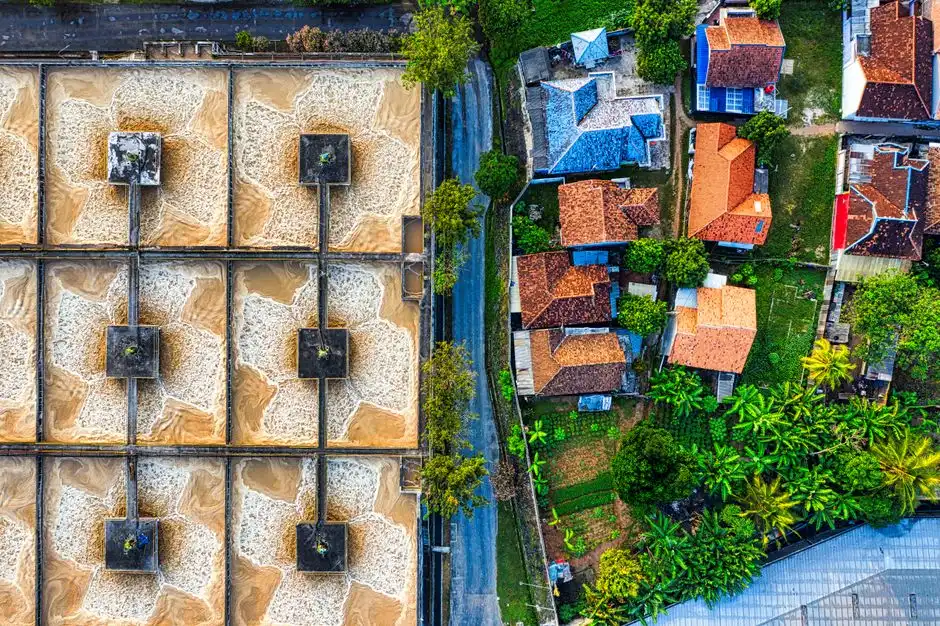
The fastest way to read this article is to find your hotel size in the table and read off the CAPEX row. Four tiers cover the full 15–500 m³/day hotel spectrum, and each one is anchored to a different procurement path — a single skid for a boutique, a two-tank PLC skid for a mid-scale resort, a multi-tank SCADA plant for a destination resort, and a competitive-bid plant for resort clusters where SBR starts losing ground to MBR.
| Tier | Property profile | Design flow | CAPEX (USD, 2026) | Scope included |
|---|---|---|---|---|
| Tier 1 — Boutique / small resort | 20–50 rooms | 15–40 m³/day | $18,000–$42,000 | Single-tank packaged SBR, manual or timer-based decant, basic chlorination |
| Tier 2 — Mid-scale hotel | 100–250 rooms | 75–190 m³/day | $45,000–$95,000 | Two-tank SBR, PLC automation, UV or chlorine dioxide disinfection system, equalization |
| Tier 3 — Large resort / island destination | 300–600 rooms | 225–450 m³/day | $130,000–$260,000 | 3–4 tank SBR, full SCADA, sludge dewatering, reuse-grade polishing |
| Tier 4 — Resort cluster / mixed-use | ≥700 rooms | ≥500 m³/day | $300,000+ | SBR competes with MBR; pricing becomes project-specific |
Two practical notes. First, the Tier 1 numbers assume a factory-built GRP or epoxy-coated steel tank; a poured-concrete in-ground basin at the same flow adds roughly 20–35% to the civil portion but is sometimes the only option where site access prevents a skid delivery. Second, the Tier 4 number is the inflection point — once flow clears 500 m³/day, the SBR tank footprint, the number of blowers, and the SCADA I/O count all push the unit cost back up, and MBR starts to compete on footprint despite its higher membrane cost. Flag this with the design engineer before locking in scope.
SBR vs MBR vs Packaged A/O for Hotels: 2026 Comparison
The three realistic options for a 50–500 m³/day hotel plant in 2026 are SBR, packaged A/O (typically an underground integrated sewage treatment plant skid), and MBR. They are not interchangeable, and the wrong choice typically shows up in either OPEX overrun or reuse-quality failure two years after handover.
| Criterion | SBR | Packaged A/O (WSZ-type) | MBR |
|---|---|---|---|
| CAPEX (per m³/day) | $90–$380 | $60–$180 | $220–$520 |
| OPEX (per m³ treated) | $0.10–$0.28 | $0.08–$0.22 | $0.18–$0.42 |
| Footprint | Medium (2–4 tanks) | Small (buried skid) | Smallest (~60% of SBR) |
| Effluent BOD / TSS | <20 / <20 mg/L | <30 / <30 mg/L | <10 / <10 mg/L |
| Ammonia removal | 80–95% | 60–80% | 95–99% |
| Reuse fit | Irrigation | Landscape buffer only | Toilet flush, cooling tower |
| Operator skill required | Low–medium | Low | Medium–high (membrane care) |
| Membrane replacement | None | None | $0.04–$0.07/m³ annualized |
The decision rule of thumb I use on bid reviews: SBR wins for ≤300 m³/day with discharge to municipal sewer or irrigation reuse; packaged A/O wins for ≤80 m³/day with a landscaping irrigation buffer and a hard site-footprint constraint; MBR wins only when reuse is mandated at toilet-flush or cooling-tower makeup quality, or when the available footprint is genuinely less than what an SBR basin train would need. For an MBR plant, the two relevant equipment lines are the MBR membrane bioreactor system skid and the PVDF flat sheet membrane module that goes inside it. More detail on cutting whole-plant OPEX is in the guide on 12 strategies to cut wastewater treatment operating costs.
OPEX Breakdown: What Hotels Actually Pay Per Cubic Meter in 2026
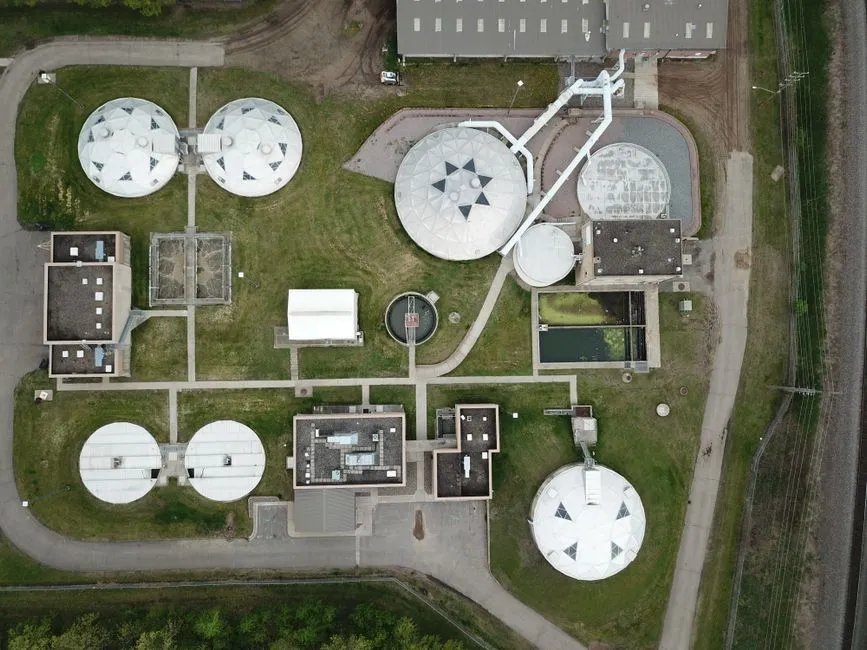
OPEX is where the CFO challenge usually lands, because it is recurring and it shows up in the P&L. For a 2026 hotel SBR at $0.10–$0.28 per m³ treated, the line items split in a fairly consistent pattern: aeration dominates, sludge handling is the second lever, and chemicals plus labor split the remainder.
Aeration accounts for 55–65% of OPEX, which works out to $0.06–$0.16/m³ at current industrial electricity tariffs in Southeast Asia and the Caribbean (HydropureWater field data, 2026). Dissolved-oxygen control via VFD blowers on a 4–20 mA signal from a DO probe cuts this 20–30% versus fixed-speed blowers, and is the single highest-ROI control loop on the whole plant. Sludge handling runs 15–20% of OPEX, or $0.02–$0.05/m³, including dewatering and hauling; a plate and frame filter press reduces hauling volume by 75–80% and typically pays back in 18–30 months at island sites where sludge hauling is a barge or long truck move. Chemicals (coagulant, pH adjustment, residual chlorine if used) run 5–10% of OPEX at $0.01–$0.03/m³, metered by an automatic chemical dosing system rather than hand-dosed. Labor and maintenance is the remaining 15–20%, $0.02–$0.06/m³; a fully automated SBR with PLC and remote alarming runs unattended for 8–12 hours between operator checks, which is one of the reasons SBRs have displaced older continuous-flow plants in remote tourism sites. The annual number a finance team can audit: roughly $5,500–$15,500 per year for a 150 m³/day resort plant at 2026 tariffs.
Pretreatment and Reuse Upgrades That Move the SBR Price
Most hotel SBRs in tropical destinations are not sold as a bare reactor; they ship with a pretreatment and polishing train that the procurement engineer needs to scope explicitly. Four items cover roughly 90% of the optional scope, and each has a defensible price range the engineer can budget against.
FOG and grease removal via a dissolved air flotation unit upstream of the SBR adds $15,000–$45,000 to the package but reduces OPEX 12–18% by preventing filamentous bulking and reducing aeration demand on rag-bound mixed liquor. For all-inclusive resorts with on-site kitchens, this is not optional; the typical hotel kitchen effluent carries 50–150 mg/L FOG if it is not pre-separated, and that will kill an SBR's settle phase within a single high-season week. A DAF system for FOG removal sized at 20–30% of the average SBR flow handles the load comfortably. Bar screening at headworks adds $3,000–$8,000 and protects the downstream fine-bubble diffusers from ragging; a rotary mechanical bar screen with 3–5 mm spacing is the usual choice. Reuse polishing (sand filter + UV or chlorine dioxide) adds $20,000–$60,000 and pushes the effluent to irrigation or toilet-flush quality; a chlorine dioxide disinfection system is preferred over sodium hypochlorite in tropical heat because it does not degrade in storage. Sludge dewatering adds $25,000–$80,000 but cuts sludge volume 75–80%, which pays back in 2–3 years on island sites where hauling is the dominant sludge cost.
Payback and ROI: When an SBR Justifies Itself for a Hotel
Two anchor numbers drive the ROI case for a hotel SBR in 2026. The first is the $2,600 per m³ Western infrastructure replacement benchmark cited in the AS-SBR/UF-MBR hotel performance study, which means a 150 m³/day resort avoids on the order of $390,000 in deferred municipal hookup or replacement cost by installing on-site treatment. The second is the mid-scale resort SBR installed cost of $70,000 for the 200-room worked example — a capital cost that is roughly 18% of the deferred-infrastructure value before counting any operational savings.
Simple payback against 5-year municipal tariff escalation, including avoided connection fees and hauling cost, runs 3.5–5.5 years for a discharge-to-sewer plant. With on-site reuse for landscape irrigation — typical savings of $8,000–$18,000 per year in displaced potable water at tourism-site tariffs — payback shortens to 2.5–4 years. On a 20-year whole-life basis, a hotel SBR at $0.18/m³ OPEX and $80,000 CAPEX totals $185,000–$210,000, which lands 35–55% below the 20-year cost of municipal sewer tariffs plus connection fees in tourism-heavy regions (HydropureWater field data, 2026). The two variables that swing this the most are local electricity tariff and the proportion of the treated stream that displaces potable water for irrigation — the case is much stronger on a remote island with diesel generation than it is on a city-center hotel with a metered municipal sewer at $0.30/m³. Comparable SBR cost benchmarks for high-load industrial applications are laid out in the SBR cost benchmarks for high-load industrial applications reference.
Frequently Asked Questions
How much does an SBR cost for a 100-room hotel in 2026?
A 100-room tropical resort at 0.75 m³ per occupied room and 80% occupancy produces roughly 60 m³/day, which lands in the Tier 1 to Tier 2 boundary at $30,000–$70,000 installed CAPEX and $0.10–$0.28/m³ OPEX, depending on tankage and disinfection scope. Most 100-room properties need a two-tank PLC SBR rather than a single-tank skid because of the peak-season hydraulic factor.
What is the SBR cycle time for hotel wastewater?
A standard 4–6 hour cycle is sufficient for hotel-strength wastewater: 45–60 min fill, 90–120 min react (aerated), 30–45 min settle, 20–30 min decant, and a 10–20 min idle. Two-tank designs decouple cycle time from hydraulic detention, which is the configuration I recommend for any hotel above 100 m³/day.
Can an SBR handle high FOG from a hotel kitchen?
Not directly. Hotel kitchen effluent carries 50–150 mg/L FOG, which will destroy the SBR settle phase within days. A DAF unit upstream of the SBR is mandatory for all-inclusive resorts and is good practice for any hotel with on-site food and beverage; the DAF cuts FOG to <20 mg/L and protects the SBR.
Does SBR work in cold climates below 15°C?
Nitrification rate drops 30–50% below 15°C, and the SBR cycle has to lengthen to 6–8 hours or MLSS has to be raised. For temperate or high-altitude sites, heated tankage, carrier media for biofilm attachment, or a switch to MBR is the usual answer. Tropical destinations do not have this constraint and can run standard 4-hour cycles year-round.
When should a hotel choose MBR instead of SBR?
MBR is the right call when reuse is mandated at toilet-flush or cooling-tower makeup quality (BOD <10 mg/L, TSS <10 mg/L), when footprint is constrained below what an SBR basin train would need, or when flow exceeds 500 m³/day and the SBR tank count starts to dominate the site plan. For a packaged alternative at the small end, the underground integrated sewage treatment plant covers the 15–80 m³/day boutique range.