Why Brussels Hotels Need a Dedicated Wastewater Strategy in 2026
Brussels hospitality wastewater sits at the intersection of three mandatory compliance layers in 2026: the Brussels-Capital Region environmental permit (Ordinance of 5 March 2009, as amended through 2025), the Hydria/Vivaqua sewer connection rules governing discharge into the Brussels agglomeration collector network, and EU Directive 91/271/EEC, which applies to any discharge exceeding 2,000 population equivalents (p.e.) or 10 m³/day. A 200-key hotel generating 78 m³/day crosses both triggers on volume alone (per 91/271/EEC Article 3).
Brussels operates a combined-sewer system in 18 of 19 communes, meaning heavy rainfall routinely triggers WWTP bypass at the Brussels-South (Brussel-Zuid) RWZI. The regional authority therefore expects on-site flow equalization sized for at least 6 hours of peak diurnal flow — anything shorter is now a permit red flag in 2026 environmental impact assessments. Where reuse is proposed, EU Drinking Water Directive 98/83/EC becomes the binding standard for toilet-flush, laundry, and irrigation water, with E. coli ≤0 CFU/100 mL for any direct-contact reuse.
Spa-heavy operations push hydraulic and FOG loading well above the guest-room baseline. Waer Waters in Groot-Bijgaarden — 34,000 m² of facilities, 28 saunas, 27 pools including a 25 m lap pool, opened 2012 — is the closest real Belgian benchmark for how wellness amenities amplify a hospitality waste stream. A Brussels property aiming at a similar amenity mix should expect flows 40-60% above a room-only equivalent.
Brussels & EU Effluent Limits a Hotel Must Hit in 2026
EU Directive 91/271/EEC Annex I sets BOD ≤25 mg/L, COD ≤125 mg/L, and TSS ≤35 mg/L for discharges between 2,000 and 10,000 p.e. (91/271/EEC Annex I, Table 1). Total phosphorus tightens from ≤2 mg/L (10,000–100,000 p.e.) to ≤1 mg/L (>100,000 p.e.). Brussels-Capital Region typically tightens phosphorus to ≤1 mg/L and adds total nitrogen ≤15 mg/L for properties discharging to the Senne or its tributaries (per Brussels-Capital Region environmental permit templates, 2025-09).
At the Hydria/Vivaqua pretreatment boundary, FOG must be ≤50 mg/L; readings above this threshold trigger a mandatory fat-trap plus DAF for kitchen and laundry FOG removal upgrade before the biological stage. The standard discharge envelope is:
| Parameter | EU 91/271/EEC limit | Brussels-Capital Region (typical) | Hydria/Vivaqua pretreatment |
|---|---|---|---|
| BOD₅ | ≤25 mg/L | ≤25 mg/L | — |
| COD | ≤125 mg/L | ≤125 mg/L | — |
| TSS | ≤35 mg/L | ≤35 mg/L | — |
| Total P | ≤1–2 mg/L | ≤1 mg/L | — |
| Total N | ≤15 mg/L (sensitive areas) | ≤15 mg/L | — |
| FOG | — | — | ≤50 mg/L |
| pH | — | 6.5–9.0 | 6.5–9.0 |
| Temperature | — | ≤30°C at discharge manhole | ≤30°C |
These values are the process design target. Any package plant quoted without a written performance guarantee against this envelope is a procurement risk.
Sizing the Hotel's Daily Flow: Rooms, Spa, Laundry, Kitchen
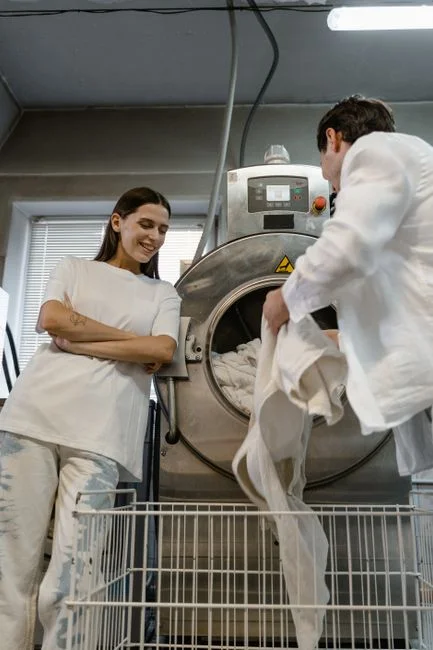
Hotel wastewater sizing must be built from unit loadings, not vendor defaults. A 4-star property runs 250 L per occupied room per day, with 5-star suites reaching 400 L. Spa and wellness add 0.04–0.06 m³ per guest-visit, and pool backwash typically runs 5–10% of pool volume per day (per HydropureWater field data, 2026). On-site laundry consumes 30–60 L per kg of linen — a 200-key hotel changes roughly 8–12 kg/room/day, so 8–12 m³/day just from linen. Restaurant covers run 25–50 L each, with kitchen FOG concentrations of 1,000–5,000 mg/L requiring upstream removal.
Design at 2.5× average diurnal flow to absorb the morning shower surge; peak factors below 2.0× typically cause hydraulic washout in the biological stage. Equalization should hold at least 6 hours at peak flow.
| Source | Unit loading | 200-key worked example | Daily volume |
|---|---|---|---|
| Guest rooms (75% occupancy) | 250 L/room/day | 150 rooms × 250 L | 37.5 m³ |
| Restaurant (80 covers, 2 seatings) | 35 L/cover | 160 covers × 35 L | 5.6 m³ |
| On-site laundry | 40 L/kg linen | 2,000 kg × 40 L | 12.0 m³ |
| Spa / wellness (60 visits) | 0.05 m³/visit | 60 × 0.05 m³ | 3.0 m³ |
| Pool backwash (80 m³ pool) | 7% volume/day | 80 × 0.07 | 5.6 m³ |
| Staff & back-of-house | 50 L/employee/day | 60 staff × 50 L | 3.0 m³ |
| Subtotal average | — | — | ~66.7 m³/day |
| Peak factor 2.5× | — | — | ~167 m³/day |
A property of this profile needs a biological stage sized for ~80 m³/day nominal, with hydraulic capacity to ~200 m³/day at peak. Sizing below this envelope will trigger permit refusal under the Hydria hydraulic review.
Process Train Options: From Pre-Treatment to Disinfection
Every Brussels hotel wastewater train is the same five-stage stack, with equipment selection driven by flow and reuse intent.
Stage 1 — Headworks: Rotary drum or bar screen at 3–6 mm aperture protects downstream pumps and membranes from lint, hair, and food solids. Screening upstream of any MBR membrane bioreactor for hotel reuse is non-negotiable; the membrane warranty is voided by fibrous loading.
Stage 2 — FOG removal: DAF for kitchen and laundry FOG removal (4–300 m³/h) typically achieves 90–95% FOG/TSS reduction before biology. A grease trap alone is insufficient when kitchen FOG exceeds 1,000 mg/L.
Stage 3 — Biological: Either a WSZ buried A/O package plant for flows under 50 m³/day, or an MBR with PVDF submerged flat-sheet membranes at 0.1 μm nominal pore size. MBR eliminates the secondary clarifier and delivers reuse-quality effluent directly.
Stage 4 — Disinfection: A ClO₂ disinfection generator is preferred over UV for any reuse line because residual chlorine dioxide persists in the distribution loop, controlling biofilm. Ozone is a viable alternative for polishing-only loops with short retention.
Stage 5 — Sludge: Lamella thickener plus plate-and-frame filter press for cake dry solids ≥30% DS. Hydria/Vivaqua sludge acceptance requires DS ≥20% for off-site hauling; ≥30% is the design target.
WSZ Buried Package vs. MBR: Which Fits Your Brussels Property?
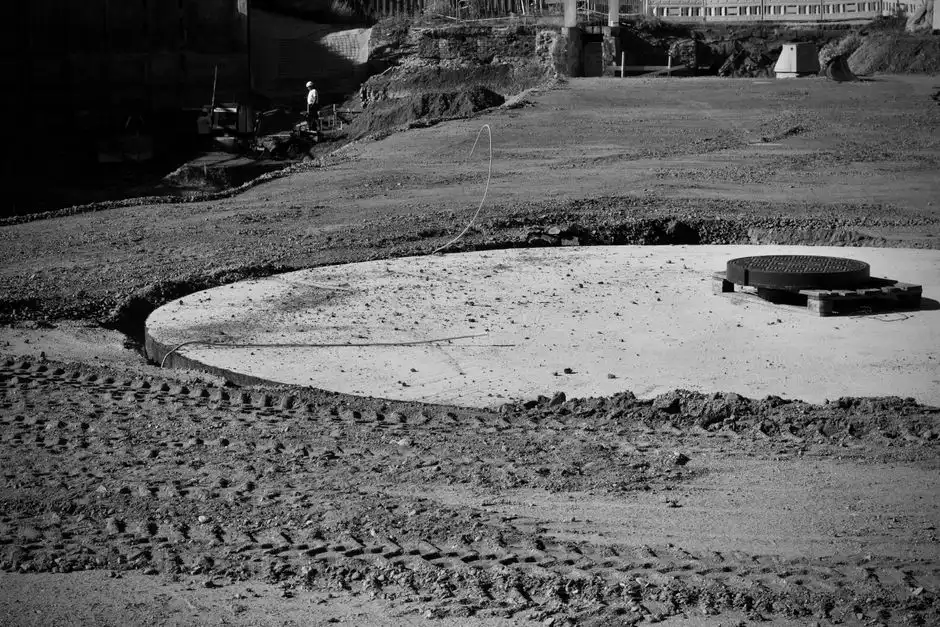
The shortlist for a 2026 Brussels hotel is almost always WSZ buried A/O versus MBR, with a hybrid option for larger sites. Selection depends on flow, footprint, reuse intent, and whether the site has open ground or is a constrained inner-city retrofit.
| Criterion | WSZ buried A/O | MBR (PVDF submerged) | Hybrid: WSZ + MBR polish |
|---|---|---|---|
| Flow range | 1–80 m³/h (≤50 m³/day typical) | 10–2,000 m³/day | >100 m³/day |
| Effluent BOD/COD/TSS | ≤25 / ≤125 / ≤35 mg/L | ≤5 / ≤30 / ≤1 mg/L | ≤5 / ≤30 / ≤1 mg/L |
| Footprint | Buried, landscaping above | Above-ground, 60% smaller than CAS | Buried roughing + small MBR skid |
| Reuse-ready | No (additional polish needed) | Yes (toilet flush, irrigation, laundry) | Yes |
| Operator skill | Low (monthly inspection) | Medium (membrane CIP every 6–12 months) | Medium |
| CAPEX (50 m³/day baseline) | €25,000–€90,000 | €80,000–€250,000 | €110,000–€320,000 |
| OPEX (per m³ treated) | €0.30–€0.50 | €0.60–€0.90 | €0.55–€0.80 |
| Brussels permit familiarity | High — widely accepted | High — required for any reuse line | Medium — needs engineering justification |
WSZ is the right call for sites with open ground, flows under 50 m³/day, and no reuse ambition. MBR is the right call for any property pursuing laundry or toilet-flush reuse, or where the inner-city footprint rules out burial. The hybrid only pays back when flow exceeds 100 m³/day and a single MBR skid becomes oversized (HydropureWater field data, 2026).
CAPEX, OPEX, and ROI for a 2026 Brussels Hotel Installation
Cost ranges below are 2026 turnkey figures for a Brussels hotel installation, including civil works, MEP, commissioning, and 12-month performance warranty.
200-key hotel, 80 m³/day MBR turnkey: CAPEX €150,000–€280,000. OPEX €0.60–€0.90/m³ treated, covering energy (membrane air scour + blowers), sludge hauling, chemistry, and membrane replacement on a 7–10 year cycle. Sludge hauling alone runs €80–€120 per m³ of dewatered cake at ≥30% DS.
WSZ package for 50 m³/day: CAPEX €35,000–€70,000. OPEX €0.30–€0.50/m³. No reuse offset because effluent quality is below 98/83/EC for any direct-contact application.
Water-reuse credit: Brussels potable tariff is €2.50–€4.00/m³ (Hydria/Vivaqua published rates, 2025-Q4). Reusing MBR effluent for laundry and toilet flush at a 200-key property typically offsets 25–35 m³/day, cutting MBR payback to 4–6 years when energy and sludge OPEX are netted against the credit.
Permit and compliance overhead: Budget €8,000–€15,000 for the Hydria/Vivaqua connection permit, the Brussels-Capital Region environmental permit amendment, the influent/effluent sampling station, and the annual self-monitoring report required under 91/271/EEC Article 5. These are non-discretionary; no permit, no discharge.
Frequently Asked Questions
What is the minimum biological treatment a Brussels hotel needs to discharge to the Hydria/Vivaqua sewer?
Any hotel exceeding 10 m³/day or 2,000 p.e. must meet 91/271/EEC Annex I limits: BOD ≤25 mg/L, COD ≤125 mg/L, TSS ≤35 mg/L, and total phosphorus ≤1–2 mg/L (91/271/EEC Annex I). A 4-star 200-key hotel at ~67 m³/day crosses both triggers, requiring a full biological stage — typically WSZ A/O for under 50 m³/day or MBR for higher flows (per Brussels-Capital Region permit templates, 2025-09).
Can a Brussels hotel reuse treated wastewater for laundry or toilet flushing in 2026?
Yes, provided the reused water meets EU Drinking Water Directive 98/83/EC parameters for the intended use, with E. coli ≤0 CFU/100 mL for any direct-contact reuse. An MBR with PVDF flat-sheet membranes (0.1 μm) followed by ClO₂ disinfection typically achieves this envelope. WSZ effluent alone does not, and would require an additional polishing step.
How long does an MBR membrane last in hotel duty, and what does replacement cost?
PVDF submerged flat-sheet membranes in hospitality duty typically last 7–10 years before replacement, assuming proper screening, monthly in-situ cleaning, and quarterly CIP with citric acid or NaOCl. Replacement membrane cost runs €40–€70/m² of membrane area installed. For an 80 m³/day MBR with ~200 m² of membrane, budget €8,000–€14,000 every 7–10 years.
Do I need a DAF unit for kitchen and laundry flows in Brussels?
Yes if your combined FOG concentration exceeds 50 mg/L at the Hydria/Vivaqua pretreatment boundary. Most hotel kitchens discharge at 1,000–5,000 mg/L FOG, so a grease trap alone is insufficient. A DAF unit upstream of the biological stage typically achieves 90–95% FOG removal and protects downstream membranes or biomass from oil fouling (HydropureWater field data, 2026).