
Why Plant-Wide Condition Monitoring Is a 2026 Budget Priority
Wastewater infrastructure in the United States earned a D+ in the ASCE 2025 Report Card for America's Infrastructure, with a documented $69 billion funding gap between current investment and need (per Pumps & Systems, 2025). At the same time, urbanization is pushing more flow through the same plants: 83% of the US population lives in urban areas today, a figure projected to reach 89% by 2050 (University of Michigan, cited in Pumps & Systems, 2025). Lean operations and small maintenance crews have very little margin for surprise failures, which is why condition monitoring is moving from a pilot project to a 2026 capital line item.
A 2023 utility survey of 450 respondents found 65% had adopted some form of digital maintenance tool, yet 54% admitted they were not actually leveraging the data effectively (per Pumps & Systems, 2025). That gap matters: a sensor network only pays back if the readings are turned into scheduled work orders.
Plant-wide condition monitoring, defined for this article, is the continuous or periodic measurement of vibration, temperature, motor current, lubrication, and process variables across all critical assets, with analytics that flag developing faults weeks to months before failure. Selecting the lowest-maintenance wastewater pump technologies for 2026 is one half of that strategy; the other half is knowing the moment any of them start to drift out of spec.
2026 Installed-Cost Range: What Plants Actually Pay
Across US municipal and industrial projects quoted in 2026, a fully installed plant-wide condition monitoring system runs $50,000 to $2,000,000+, with a per-asset benchmark of $1,500 to $8,000 per monitored point (HydropureWater field data, 2026). The wide range is real: a 25-asset wastewater plant with wireless vibration nodes and a SaaS dashboard lands near the low end, while a 500+ asset multi-train industrial facility with fully wired analyzers and an on-premises historian pushes past the seven-figure mark.
The per-asset number is built up from sensor unit cost, mounting hardware, wiring or wireless gateway share, software license, and a slice of integration and commissioning. The low end typically represents wireless triaxial vibration plus temperature on a non-critical asset; the high end represents multi-parameter wired analyzers on critical rotating equipment such as large blowers, centrifuges, or high-head pump motors. The figures below exclude the pump, motor, or blower itself and assume the plant already operates a SCADA, PLC, or building automation system; greenfield sites add network and power infrastructure cost on top.
| Cost bucket | % of total installed cost | What it covers |
|---|---|---|
| Sensors and field hardware | 25–35% | Triaxial vibration, temperature, ultrasound, MCSA, oil-condition probes, mounting |
| Network and gateways | 10–15% | Wired 4–20 mA / Ethernet or wireless mesh, gateways, switches, PoE |
| Software and dashboards | 15–25% | On-prem historian or SaaS subscription, analytics, alarm routing |
| SCADA / CMMS integration | 10–20% | OPC UA, REST API, MQTT, tag mapping, work-order triggers |
| Installation and commissioning | 15–25% | Conduit, cable tray, lift rental, hazardous-area cert, loop checks |
For a 200-asset plant, those percentages convert to roughly $100K–$140K on sensors, $40K–$60K on network, $60K–$100K on software, $40K–$80K on integration, and $60K–$100K on installation and commissioning. Plant managers should treat those numbers as the working envelope for a first-pass capital request, not a quote.
What the Cost Covers: Sensors, Edge, Network, Software, Integration
A condition monitoring bid is a stack of line items, and reading that stack is what separates a defensible budget from an over-scope contract.
Sensors. Triaxial vibration sensors cost $400–$1,500 each depending on frequency range, ingress protection, and hazardous-area certification (HydropureWater field data, 2026). Temperature, ultrasound, motor current signature analysis (MCSA), and oil-condition probes are added by asset class: pumps typically need vibration plus temperature, motors add MCSA, blowers add ultrasound, and gearboxes add oil debris or ferrography probes.
Edge hardware. Modern variable-speed drives embed monitoring directly into the drive and act as both the actuator and a sensor node, establishing a baseline of power consumption and vibration against which anomalies are reported in real time (per Danfoss water and wastewater monitoring documentation, 2025). For moving equipment such as clarifier scrapers and grit collectors, smart-plastics sensors measure pull force and chain break events on the energy chain itself, triggering an automatic shutdown before a complete mechanical failure (per igus smart plastics documentation, 2025).
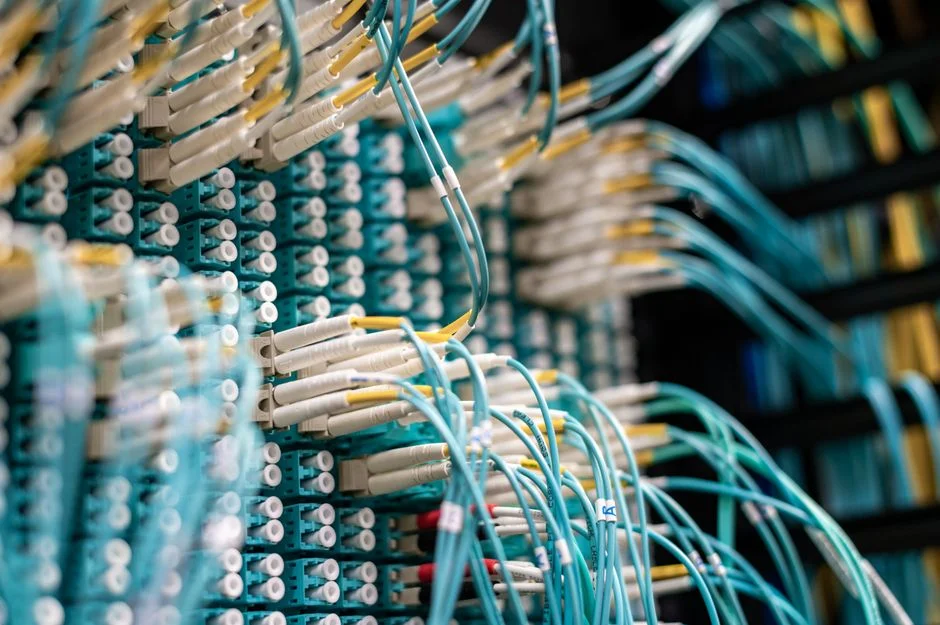
Network. Wired architectures use 4–20 mA loops or industrial Ethernet with Power over Ethernet and structured cabling; wireless uses WirelessHART, LoRaWAN, or private 4G/5G mesh. Wireless lowers installation labor by an estimated 30–50% on greenfield sites (HydropureWater field data, 2026) but raises per-node unit cost by 20–40%.
Software. On-premises deployments run an analytics server, historian, and dashboard stack and cost $20,000–$150,000 in capex depending on tag count. SaaS subscriptions run $50–$300 per asset per month. Plants where cloud exposure is a cybersecurity concern typically favor on-premises edge analytics, which keep data inside the plant network and avoid any external round-trip (per Danfoss 2025).
Integration. SCADA, PLC, and CMMS data exchange typically uses REST API, OPC UA, or MQTT. Alert delivery that includes SMS and email out of the box is worth specifying, since many plants route alarms through their existing SCADA rather than maintaining a parallel notification stack (per igus i.Cee documentation, 2025). For chemical-feed balance-of-plant, a PLC-controlled chemical dosing skid can publish dosing and analyzer signals to the same historian.
| Layer | Typical 2026 unit cost | Lifetime / replacement |
|---|---|---|
| Triaxial vibration sensor | $400–$1,500 | 8–10 years, field-replaceable |
| Wireless vibration/temperature node | $800–$2,500 | 5–7 years, battery-limited |
| On-prem analytics server + historian | $20,000–$150,000 | 5–7 years, virtualization-friendly |
| SaaS subscription per asset per month | $50–$300 | n/a, recurring |
| SCADA/CMMS integration (per system) | $5,000–$40,000 | One-time, plus change-order risk |
Five Variables That Move Your Final Number
The same plant, scoped two different ways, can produce bids that differ by 2x or more. These are the levers that move the number.
- Asset count and criticality tier. The Pareto principle still applies: covering only the top 20% of critical assets cuts the project to roughly half the full-coverage cost while still capturing most of the avoided-downtime value (HydropureWater field data, 2026).
- Wired online vs. wireless online vs. route-based handheld. Route-based manual readings using handheld analyzers run $50–$150 per reading visit and suit non-critical assets where a monthly walk-down is acceptable (per Pumps & Systems, 2025). Continuous wireless is the right pick for critical rotating equipment, and continuous wired is reserved for the highest-criticality assets where signal reliability and bandwidth matter more than install cost.
- On-premises vs. cloud. On-premises edge analytics eliminates recurring SaaS fees and reduces the plant's exposure to cloud-side cyber incidents, which is a specific design feature of current-generation smart drives for water utilities (per Danfoss 2025). Cloud deployments are faster to commission but add 5-year subscription cost that often approaches the original capex.
- In-house vs. outsourced analysis. In-house vibration experts are scarce and can suffer data fatigue, missing the subtle signature changes that precede failure (per Pumps & Systems, 2025). Outsourced AI + human-verification services run $1,000–$10,000 per month depending on asset count and SLA.
- Existing infrastructure. Plants with current SCADA, modern PLCs, and structured cabling save 10–20% on integration. Legacy sites with serial-only instrumentation need gateway and protocol-conversion budget added, often a hidden 15–25% premium.
ROI and Payback: Building a 2026 Business Case
A condition monitoring capital request has to put a number on what the plant is currently losing. Four avoided-cost inputs drive the model: unplanned downtime hours, average production loss per hour, the cost of an NPDES permit violation event (which can exceed $10,000 per day for serious discharges), and the cost of an emergency pump or motor replacement (typically $30,000–$150,000 installed for mid-size equipment, HydropureWater field data, 2026).
The detection lead time matters. The common failure modes in wastewater pumping — misalignment, bearing defects, lubrication breakdown, and cavitation — are detectable weeks to months before functional failure, which is the window in which condition monitoring converts a catastrophic event into a planned work order (per Pumps & Systems, 2025). The ASCE 2025 Report Card specifically recommends condition monitoring as a critical component of asset management practice for extending asset lifespan and prioritizing capital investment, which strengthens the narrative in front of a CFO.
| Line item | Year 1 | Year 2 | Year 3 | 3-year total |
|---|---|---|---|---|
| Installed CAPEX (200 assets) | $400,000 | — | — | $400,000 |
| Avoided catastrophic pump failures (2/yr at $80K) | -$160,000 | -$160,000 | -$160,000 | -$480,000 |
| Avoided downtime (200 hr/yr at $2,000/hr) | -$400,000 | -$400,000 | -$400,000 | -$1,200,000 |
| Outsourced analytics service | $36,000 | $36,000 | $36,000 | $108,000 |
| Net annual cash flow | -$124,000 | -$524,000 | -$524,000 | -$1,172,000 |
| Payback period | Under 12 months on avoided downtime alone | |||
Note that the avoided-cost lines above are direct cash, not productivity proxies. A reader should swap in their own plant's production-loss-per-hour and historical failure-rate numbers — the structure of the table stays the same. For a deeper look at how pump-side monitoring drives those numbers, the smart pump monitoring and predictive maintenance guide walks through a parallel municipal case.
Procurement Checklist: Questions to Ask Every Vendor
Walking into a vendor meeting with the same five questions makes scope-gap discoveries much cheaper to resolve.
- Analytics method. Is the system rule-based, AI/ML, or both, and can the model perform fleet-wide clustering so a single failing machine is detected by comparing it to identical assets under similar duty? (per Hendrickx et al., Springer 2019, on fleet-wide time-series clustering).
- Data residency. Can the system run entirely on-premises with no cloud round-trip, including the analytics layer? Cloud-free architectures are documented for water utility drives (per Danfoss 2025).
- Integration scope. Confirm SCADA, PLC, and CMMS integration via REST API, OPC UA, or MQTT, and whether alert delivery includes SMS and email without an add-on (per igus i.Cee documentation, 2025).
- Exclusions. Ask what is explicitly excluded: structural cabling, conduit, hazardous-area certification, lift equipment, and after-hours installation. These are the items that routinely add 20–40% to a turnkey bid.
- 5-year TCO. Request a 5-year total cost of ownership breakdown showing subscription, support, sensor replacement, and decommissioning alongside turnkey capex. Plants that skip this step get surprised at year three.
Frequently Asked Questions
What does a plant-wide condition monitoring system cost per asset in 2026?
Installed cost in 2026 runs $1,500 to $8,000 per monitored asset, with the low end covering wireless vibration plus temperature on non-critical equipment and the high end covering multi-parameter wired analyzers on critical rotating machines (HydropureWater field data, 2026). Plant-wide totals span $50,000 for a small 25–50 asset plant to $2,000,000+ for a 500+ asset multi-train facility.
Is wireless condition monitoring cheaper than wired?
Wireless lowers installation labor by an estimated 30–50% on greenfield sites but raises per-node unit cost by 20–40% (HydropureWater field data, 2026). For a retrofit plant with existing conduit and structured cabling, the labor savings shrink and wired often wins on total cost.
How long does payback take on a condition monitoring system?
A 200-asset plant spending $400,000 installed can pay back in under 12 months on avoided downtime alone, with 2x to 3x returns over a 3-year horizon once catastrophic failure avoidance is included (HydropureWater field data, 2026). Plants with redundant spares and lower production-loss-per-hour rates will see longer paybacks, typically 18 to 36 months.
Can condition monitoring run without sending data to the cloud?
Yes. Modern smart drives embed analytics on the device and can run cloud-free on the plant network, keeping all data on premises and avoiding external round-trips (per Danfoss 2025). Wireless and wired sensor networks can be architected the same way, with on-premises historians and dashboards.
What failure modes does condition monitoring detect first?
Vibration-based systems detect misalignment, bearing defects, lubrication issues, cavitation, and imbalance, which together account for the majority of rotating-equipment failures in wastewater service (per Pumps & Systems, 2025). Modern AI analytics can compare signatures across a fleet and flag a single outlier machine against dozens of identical units, catching developing faults weeks before they would show up in a monthly handheld reading.
Related Equipment
- MBR membrane bioreactor system — specifications, capacity range, and technical data