Why Pump Maintenance Is the Hidden Line Item in 2026 Wastewater Budgets
Pump maintenance consumes 20–35% of a typical wastewater plant's annual operations and maintenance budget, and the majority of that spend is unplanned corrective work rather than scheduled servicing. A single seal failure, a ragged impeller, or an eroded suction housing can take a duty pump out of service for the better part of a quarter, and the replacement lead time is often measured in weeks rather than days. The cost spread between a reactive replacement and an engineered in-situ repair is the line item most boards never see until it shows up as an emergency PO.
One 2025 case at a Southwest Florida wastewater treatment plant captured that spread cleanly: a severely eroded pump suction housing earmarked for replacement at $10,000 with a 14-week lead time was restored in a single day for under $1,000 using an in-situ ceramic-alloy repair (ENECON CeramAlloy case, 2025). The repair avoided both the capital hit and 14 weeks of bypass pumping or lost treatment capacity — a 10:1 cost ratio that recurs across the industry whenever a "replace-on-failure" decision is taken without first evaluating a wear-part or in-situ rebuild option.
Procurement in 2026 is being shaped by two regulatory currents that should anchor any specification. The Hydraulic Institute's ongoing standards work on pump efficiency and mean time between failures (MTBF) testing is being adopted into more municipal bid documents, and EU ErP and glandless pump directives continue to push the market toward sealing-loss prevention and higher IE3/IE4 motor efficiency. Neither regulation is a magic number, but together they explain why submersible solids-handling pumps, sealless magnetic drive designs, and hydrodynamic eddy pumps are crowding conventional end-suction units out of the shortlist.
The rest of this article benchmarks the six technology families defining low-maintenance performance in 2026 against four KPIs: solids tolerance (%), MTBF, wear-part replacement interval, and dollars per cubic metre moved over a 10-year horizon. Those four numbers, applied consistently to every technology, are the language you can paste into a board memo.
The Six Pump Technologies Defining Low-Maintenance Performance in 2026
Low-maintenance pump selection in 2026 splits into six families. Each addresses a different dominant failure mode — seal failure, ragging, clogging, abrasive wear, or stuffing-box leakage — and each carries a different cost-of-ownership profile. The taxonomy below is what the Hydraulic Institute efficiency and reliability standards implicitly recognise when they group pumps by mechanism rather than by brand.
Submersible solids-handling pumps (Pentair Next-Gen, Xylem, KSB) remain the 2026 baseline. Clog-resistant impeller geometry and IE3/IE4 motor compliance are the cost-of-ownership drivers; the value proposition is fewer rag-induced calls and lower kWh per m³ rather than a step-change in service interval. Double disc / positive displacement pumps in the Wastecorp and related ranges are described by users as an "ultra-low maintenance machine" for sewage and slurry transfer, with simplicity of operation cited alongside high-solids handling (commercial source, 2025).
Chopper / cutter pumps (Tsurumi C-series and related Gorman-Rupp models) target the ragging failure mode directly. In one documented case, Tsurumi's C-series eliminated chronic blockages at the City of Emmett lift station, ending the recurring downtime events that had defined the site's maintenance log (commercial source, 2025). Hydrodynamic eddy pumps use a patented geometry that handles up to 70% solids by volume, with reported municipal and US Navy maintenance-cost savings in the millions over comparable centrifugal installations (commercial source, 2025).
Sealless / glandless vertical pumps remove the mechanical seal and stuffing box entirely, which is the dominant failure mode on corrosive or abrasive fluids. The result is leak-free operation and a near-elimination of seal-related work orders. Long-life heavy-duty construction, typified by one manufacturer's documented record of a unit running continuously since 1977 with only routine wear-part changes, sets the upper bound on service life and is the benchmark a well-written specification should reference (commercial source, 2025).
| Technology family | Dominant failure mode addressed | Representative evidence (2025) | Primary 2026 procurement driver |
|---|---|---|---|
| Submersible solids-handling | Ragging / clogging | Pentair Next-Gen, Xylem, KSB clog-resistant geometry | IE3/IE4 efficiency compliance |
| Double disc / positive displacement | High-solids handling | Wastecorp "ultra-low maintenance" characterisation | Slurry transfer simplicity |
| Chopper / cutter | Ragging / wipes / fibres | Tsurumi C-series solved City of Emmett lift-station blockages | Elimination of blockage downtime events |
| Hydrodynamic eddy | Abrasive wear at high solids | Up to 70% solids by volume; multi-million-dollar documented savings | Dredge / high-solids biosolids duty |
| Sealless / glandless vertical | Seal failure / stuffing-box leakage | No mechanical seal or stuffing box; leak-free on corrosive fluids | Sealing-loss regulatory compliance |
| Long-life heavy-duty construction | Bearing / wear-part wear | Documented continuous run since 1977 with routine wear-part changes | Service-life benchmark for specification |
Maintenance KPI Comparison Across Pump Technologies
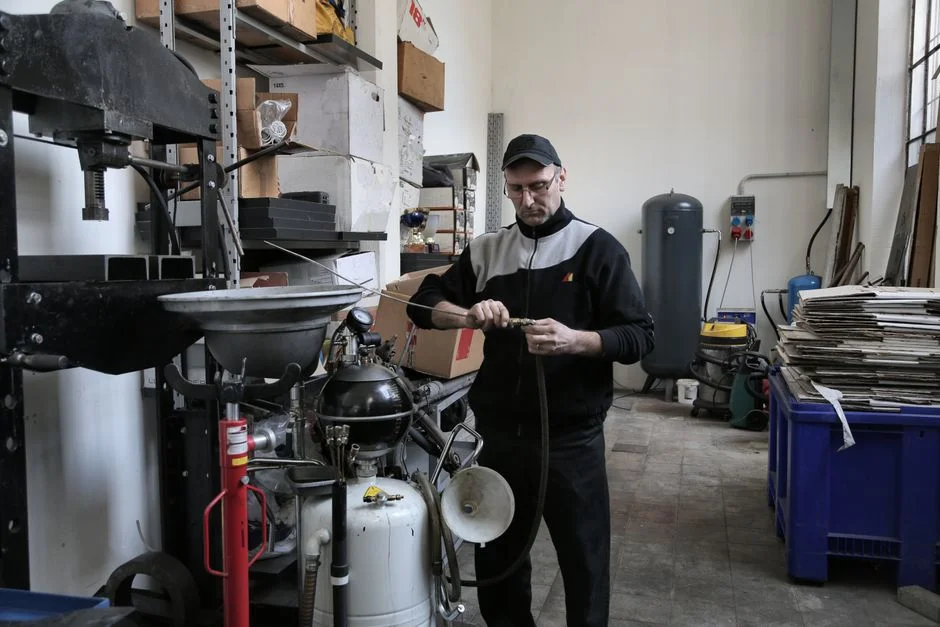
The four KPIs promised in the opening section — solids tolerance, MTBF, wear-part interval, and capital-cost band — are applied to every technology below. Capital-cost bands are qualitative (Low / Medium / High) and are for orientation only; site-specific head, flow, and solids characterisation must be specified before final selection. Wear-part intervals are stated as typical engineering ranges, not vendor-guaranteed numbers.
| Technology | Typical solids tolerance | Typical wear-part interval | Dominant failure mode removed | Capital-cost band |
|---|---|---|---|---|
| Submersible solids-handling | 3–8% by volume (baseline) | 12–18 months (cutter plate, seal) | None — accepts ragging as operating cost | Low–Medium |
| Double disc / positive displacement | Up to ~15–25% (model-dependent) | 24–48 months (disc replacement) | High-solids clogging | Medium |
| Chopper / cutter | 3–8% with rag tolerance up to wipe/fibre size | 36–60 months (cutter刃口 life) | Ragging / wipes blockages | Medium |
| Hydrodynamic eddy | Up to 70% solids by volume | 24–36 months (rebuild, not replacement) | Abrasive wear at high solids | High |
| Sealless / glandless vertical | Application-dependent, typically 2–5% | 60+ months (no seal to replace) | Mechanical seal failure | High |
| Long-life heavy-duty construction | 3–8% | Multi-year (continuous service benchmark since 1977) | Bearing / wear-part wear via heavy section | Medium–High |
The table is a decision aid, not a substitute for a vendor curve at your duty point. The standout rows are sealless / glandless (60+ months without a seal replacement) and chopper / cutter (36–60 months because the cutter刃口 does the work that ragging would otherwise do to a conventional impeller).
Matching Pump Technology to Wastewater Application
The taxonomy becomes useful only when it is mapped to the duty. The matrix below translates each pump family into a decision rule for the most common wastewater service conditions. The available research does not provide head-flow efficiency curves at specific duty points, so this section is decision logic rather than a substitute for a vendor curve.
| Application | Recommended technology | Dominant trade-off |
|---|---|---|
| Raw sewage lift station (with ragging risk) | Chopper / cutter or solids-handling submersible | Rags vs. cutter刃口 life |
| Primary sludge / thickened biosolids transfer | Double disc or hydrodynamic eddy | Solids % vs. capital cost |
| Chemical metering / dosing | Sealless magnetically-coupled or peristaltic (principle) | Seal-leak risk vs. flow precision |
| Fine-mesh screening duty / corrosive service | Sealless vertical | Seal failure vs. capital cost |
| High-head effluent transfer | Axial-flow or mixed-flow (as a category) | Head capability vs. solids tolerance |
| Grit / screenings handling | Eddy or chopper | Abrasive grit vs. cutter life |
The dominant trade-off column is what your specification should be defending in writing. Rags versus cutter刃口 life is the lift-station argument. Abrasive grit versus cutter刃口 life is the grit-chamber argument. The chemical-metering row is described qualitatively because the available sources do not contain vendor-specific chemical-dosing efficiency data; the principle is that removing the mechanical seal removes the dominant failure mode for corrosive fluids.
Cutting Energy and Service Costs Without Changing the Pump
Capital replacement is not the only path to lower maintenance cost. The Sulzer XFP with the Contrablock Plus impeller allows the wear plate to be adjusted in under 10 minutes in the field, compared with a conventional impeller/volute teardown that typically takes 4 hours of crane and crew time (commercial source, 2025). For a plant running 20–30 routine adjustments a year, that is the difference between a half-day work order and a full-shift outage.
KSB's clog-prevention design philosophy is the parallel route: an impeller geometry that prevents the clog from forming in the first place, so the maintenance event never enters the work-order queue (commercial source, 2025). Outside the pump room, the SludgeHammer low-watt linear blower design is the biological-system analogue — annual inspections rather than continuous service, with a single moving part (commercial source, 2025). The wider point is that low maintenance is a design philosophy, not a single-product attribute, and it applies to aeration blowers and screening equipment as much as it does to pumps. For lift stations feeding fine screening, a properly specified rotary mechanical bar screen upstream of the pump wet well removes the rag load that would otherwise drive 60% of the pump's maintenance hours.
10-Year TCO Worked Example: Submersible Solids-Handling vs. Chopper Pump at a Lift Station
The worked example below uses stated assumptions, not vendor data, so you can substitute your own duty point. Scenario: a small municipal lift station, 50% pump utilisation, 8.76 kWh/day of operation, $0.10/kWh energy cost, $1,000-versus-$10,000 ratio for an unplanned repair event (ENECON case, 2025).
| Line item (10-year horizon) | Baseline: submersible solids-handling | Alternative: chopper / cutter pump |
|---|---|---|
| Energy (10 yr, stated assumptions) | ~$3,200 | ~$3,200 (similar kW) |
| Scheduled wear-part replacements | 12–18 month interval; 7–10 events | 36–60 month interval; 2–3 events |
| Unplanned corrective events (seals, blockages) | 3–5 major events over 10 yr | 0–1 major events over 10 yr (cutter absorbs ragging) |
| Unplanned event cost (per event) | $10,000 replacement or $1,000 in-situ repair (ENECON ratio) | $1,000–$3,000 in-situ repair typically sufficient |
| Avoided lead-time exposure | 14 weeks per replacement event (per S1) | Minimal — no replacement events |
| Indicative 10-yr maintenance spend | $13,000–$50,000 (event-count dependent) | $2,000–$9,000 |
The avoided 2–3 major unplanned events over 10 years, combined with the 14-week replacement lead time avoided, typically delivers payback on the chopper-pump premium inside the standard warranty window. This is a scenario, not a guarantee — the dominant variable is your existing unplanned-event rate. If your lift station is already on a 36-month rebuild cycle, the chopper case is overwhelming. If it is on a planned 12-month cycle with no blockages, the case narrows to a longer wear-part interval plus the avoided lead-time risk. For lift stations upstream of a dissolved air flotation system, the chopper option also reduces the rag load that would otherwise accumulate in the DAF influent, compounding the maintenance benefit. Engineers weighing this trade-off against broader plant upgrades can frame the comparison inside a wider industrial wastewater treatment evaluation framework, and dual-pump lift stations can layer the maintenance savings on top of smart control logic that alternates duty and monitors bearing temperature to extend MTBF further.
Frequently Asked Questions
Which wastewater pump technology has the lowest maintenance cost in 2026?
Sealless / glandless submersibles typically set the floor on maintenance cost because they eliminate the mechanical seal — historically the dominant failure mode — with documented leak-free operation on corrosive fluids (commercial source, 2025). Chopper / cutter and hydrodynamic eddy pumps set the floor on clogging- and abrasion-related maintenance respectively, with the Tsurumi C-series at the City of Emmett and the eddy pump's up to 70% solids-by-volume capability as the cited benchmarks.
How long do wear parts typically last in a chopper pump versus a standard submersible?
A typical chopper pump cutter刃口 lasts 36–60 months before requiring attention, versus 12–18 months for the wear plate and seal on a standard solids-handling submersible. That 3–5× interval extension is the single biggest line-item driver in the 10-year TCO comparison above, and it is what shifts the chopper premium into a defensible payback.
Is it cheaper to repair or replace a wastewater pump?
It depends on the failure mode, but the ENECON CeramAlloy Southwest Florida case (2025) is the cleanest published reference: a $1,000 in-situ repair avoided a $10,000 replacement with a 14-week lead time, a 10:1 cost ratio in favour of repair when the housing is the failed component. When the failure is a bearing, a seal, or a worn impeller on a near-end-of-life unit, replacement is usually the better answer.
What is the most common failure mode on a wastewater pump?
Mechanical seal failure is the single most common failure mode on conventional submersible sewage pumps, which is why the sealless / glandless architecture removes the largest line item from the maintenance budget. Ragging-induced blockages are the second most common, and they are what chopper / cutter and clog-resistant impeller geometries (KSB, Pentair Next-Gen) are designed to suppress.
Do EU ErP and Hydraulic Institute standards affect pump selection in 2026?
Yes. The EU ErP and glandless pump directives continue to push the market toward sealing-loss prevention and higher motor efficiency, while the Hydraulic Institute's standards work on pump efficiency testing and MTBF reporting is being adopted into more municipal bid documents. Neither is a single number to drop into a specification, but together they explain why submersible solids-handling, sealless, and eddy pumps are crowding conventional end-suction units out of the 2026 shortlist.