Why the cheapest dosing pump is rarely the cheapest to run
Total operating cost over a 5-year horizon — not pump sticker price — is the metric a US plant engineer or procurement manager should benchmark against when selecting a chemical dosing pump. The components are concrete and dollar-denominated: chemical consumption, electrical energy at roughly $0.12/kWh (US industrial average, EIA 2026), wear parts (tubes, diaphragms, valves, seals), skilled-maintenance labor at $80–$95/h, and unplanned downtime hours. For a typical 100–500 GPH municipal or industrial dosing service running 8,000 h/year, chemical spend alone is 60–75% of the 5-year OPEX stack; wear parts and labor split the remainder.
Accuracy drives both compliance and cost. EPA's Safe Drinking Water Act sets legal limits on over 90 contaminants, and the list is revised periodically (S4); underdosing triggers permit excursions and public-notification costs, while overdosing wastes ferric chloride, polymer, sodium hypochlorite, or caustic. Field experience on US wastewater skids consistently shows 15–30% lower chemical spend when moving from a worn diaphragm or piston pump to a calibrated peristaltic unit (HydropureWater field data, 2026). That delta is the single largest lever in any 5-year cost model, and it dwarfs a $3,000–$15,000 CAPEX gap. For a deeper look at how accuracy feeds into energy and chemical line items on adjacent equipment, see the ion exchange energy-reduction guide.
Three dosing-pump architectures competing in US plants
US plants in 2026 choose between three positive-displacement architectures, and the engineering constraints of each drive both the cost model and the maintenance schedule.
Peristaltic (tube-compression) pumps isolate the process fluid inside a flexible tube; only the tube contacts the chemical, and rollers or shoes compress it to move a precise slug. Watson-Marlow Fluid Technology Solutions' Qdos line covers 0.1–2,000 mL/min (S4) and the pumphead is replaced without tools once the upstream and downstream valves are isolated. No pulsation dampener, degassing valve, or back-pressure valve is required, which removes roughly $400–$900 of installed auxiliary cost per skid and a recurring maintenance line item (S4).
Diaphragm metering pumps are the dominant high-pressure architecture in the US municipal and industrial market. Microprocessor-controlled solenoid or motor drives actuate a flexible diaphragm against a fixed liquid end; check valves handle inlet and outlet. The published US-spec envelope spans the Walchem E Series at 20 GPH / 300 PSI, the IX Series at 80 GPH / 247 PSI, and the LK Series at 856 GPH / 220 PSI (S3). Liquid-end materials — PP, PVDF, 316 SS, Hastelloy, PTFE — are selected per chemistry using MSDS plus published corrosion guides (S3). Diaphragm pumps typically require a pulsation dampener and a back-pressure valve to operate cleanly, especially on polymer or viscous-chemical service.
Solenoid and piston metering pumps sit at the lower-CAPEX end of the diaphragm family, with $5,000–$20,000 purchase bands (HydropureWater 2026 cost benchmarks). They cover light-duty proportional dosing — small cooling-tower bleed, low-flow pH trim, intermittent polymer feed — where 1–2 GPH and 100–150 PSI are sufficient. Useful, but the wear-part OPEX is proportionally higher than mid-range peristaltic or diaphragm hardware at the same flow.
Across all three, the right architecture is the one that matches your chemistry, pressure, and flow. Matching is the first step; the second is the cost model. For plant-engineering context on integrated dosing skids, see the automatic chemical dosing system specification page.
Side-by-side comparison: accuracy, pressure, maintenance, compatibility
Peristaltic and diaphragm pumps are both positive-displacement, but the cost stack differs sharply when you look at the maintenance interval, the auxiliary-valve count, and the CAPEX band. The matrix below is built from the published Qdos 0.1–2,000 mL/min range (S4), Walchem E/IX/LK pressure and flow ratings (S3), and the 2026 HydropureWater cost benchmarks.
| Parameter | Peristaltic (e.g. Qdos-class) | Diaphragm metering (Walchem E / IX / LK) | Solenoid / piston (light duty) |
|---|---|---|---|
| Dosing accuracy / repeatability | ±1%; 0.1–2,000 mL/min range | ±1–2% repeatability (E, IX, LK) | ±2–5% typical, proportional control |
| Max pressure | ≤100–150 PSI typical | 150–300 PSI (E 300, IX 247, LK 220 PSI) | 100–150 PSI typical |
| Max flow (continuous) | Up to ~2,000 mL/min Qdos; larger tube pumps higher | E 20 GPH, IX 80 GPH, LK 856 GPH | 1–10 GPH typical |
| Chemical compatibility | Excellent; tube material selected (silicone, Viton, Tygon) | Broad via PP, PVDF, 316 SS, Hastelloy, PTFE liquid ends | Limited; avoid abrasive/corrosive service |
| Wear-part interval | Tube 3–6 months continuous duty | Diaphragm/valve 6–12 months | Seal/piston 6–12 months, shorter at high duty |
| Auxiliary valves | None required (no dampener, no back-pressure) | Pulsation dampener + back-pressure valve typical | Pulsation dampener common |
| CAPEX band (US, 2026) | $500–$2,000 | $5,000–$20,000 | $300–$1,500 |
The headline takeaway for procurement: peristaltic wins on CAPEX, maintenance labor, and auxiliary simplicity; diaphragm wins on pressure ceiling and flow headroom. The tiebreaker is duty cycle, and that's where the OPEX model takes over. For predictive-maintenance context that further reduces the labor line item on either architecture, see the smart pump monitoring and predictive maintenance guide.
Sizing the pump correctly: the capacity formula and a worked US example
Right-sizing is itself an operating-cost lever: an oversized pump runs at low stroke frequency where accuracy collapses and tube/diaphragm wear accelerates, while an undersized pump is a compliance risk. The standard dosing-capacity formula (HydropureWater 2026 engineering data) is:
Q (L/h) = (Target concentration mg/L × Wastewater flow m³/h × 1000 L/m³) / Dosing-solution concentration mg/L
Worked US example: a 100 m³/h municipal wastewater train targeting 5 mg/L of ferric chloride from a 100,000 mg/L (10%) stock solution.
Q = (5 mg/L × 100 m³/h × 1000) / 100,000 mg/L = 500,000 / 100,000 = 5 L/h
5 L/h is mid-range for a Qdos 60 or a Walchem E Series pump head; both leave 50–70% turndown for diurnal flow swings, which protects accuracy and tube life. For a 500 m³/h industrial pretreatment skid at the same target dose, the same math returns 25 L/h, putting you in Qdos 120 or IX Series territory. The mistake to avoid is over-specifying by 5–10× "for headroom" — accuracy at the bottom of the stroke range and wear-part cost both suffer.
5-year operating cost model: peristaltic vs diaphragm in a US plant
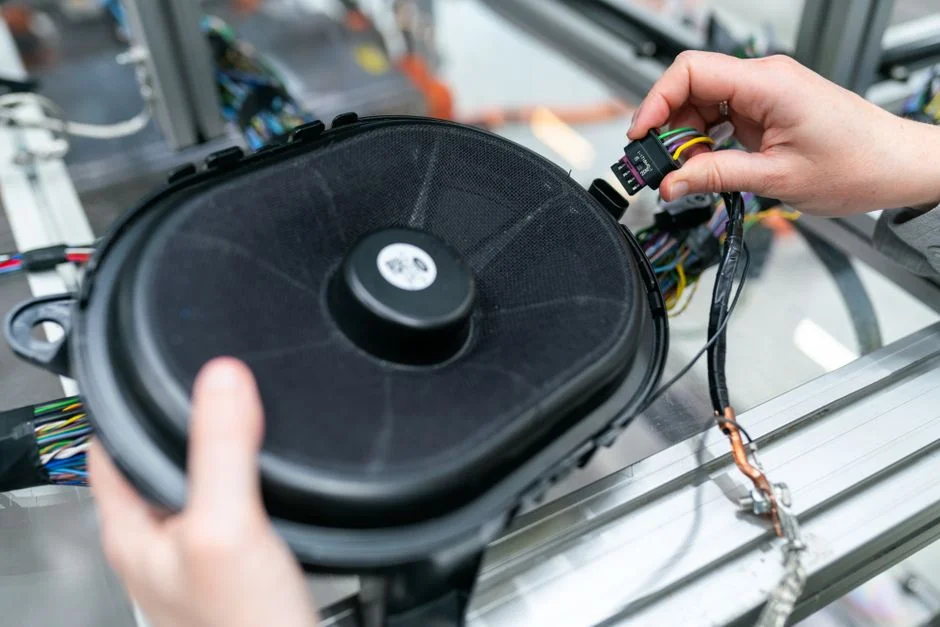
The model below uses a 50 GPH equivalent US municipal coagulant service, 8,000 operating hours/year, $0.12/kWh industrial electricity (EIA 2026), and $95/h skilled-maintenance labor. Chemical spend is held flat and the 15–30% reduction is applied to the peristaltic column to show the dominant OPEX lever.
| Cost line item | Peristaltic (Qdos-class) | Diaphragm metering (E/IX-class) |
|---|---|---|
| CAPEX (mid-range, 2026) | $1,200 | $10,000 |
| Wear parts (5 yr) | 2 tube sets/yr × $180 × 5 = $1,800 | 1 diaphragm/valve set/yr × $1,200 × 5 = $6,000 |
| Labor (5 yr) | 1 hr/change × 2/yr × $95 × 5 = $950 | 4 hr/changeover × 1/yr × $95 × 5 = $1,900 |
| Auxiliary-valve maintenance (5 yr) | $0 (no dampener/back-pressure valve) | $1,500 (dampener + back-pressure valve service) |
| Energy (5 yr) | ~$300 (low draw) | ~$600 (solenoid/motor drive) |
| Chemical spend (5 yr, baseline) | $50,000 | $50,000 |
| Chemical over-dosing penalty (typical diaphragm) | — | +15–30% (waste) embedded in baseline |
| 5-yr OPEX (incl. chemical) | $7,000–$12,000 with 15–30% chemical savings | $18,000–$30,000 including over-dose |
Two engineering data points anchor the model in real-world outcomes rather than theory. First, a Qdos Conveying Wave Technology installation at the Hessisch-Lichtenau WWTP delivered a 97.5% reduction in phosphorus load over the first year by enabling accurate ferric chloride sulphate dosing (S4) — proof that accuracy translates into measurable environmental and chemical-use outcomes. Second, the peristaltic architecture's tool-free pumphead changeout removes a meaningful share of the labor line item (S4) and, with leak detection that auto-stops the pump on pumphead failure, eliminates most spill-related cleanup time. Comparable pump architectures are integrated on the automatic chemical dosing system platform.
US compliance drivers: EPA pretreatment and SDWA dosing accuracy
Two US regulatory frameworks make dosing-pump accuracy a defensible compliance asset, not a marketing claim. First, EPA's Safe Drinking Water Act sets legal limits on over 90 contaminants, and the list is revised periodically (S4); underdosing a treatment chemical (chlorine, fluoride, ferric chloride, polymer) puts the utility out of compliance and triggers public-notification and potential fines. Second, 40 CFR Part 403 categorical pretreatment standards require industrial discharges to meet specific pollutant limits at the discharge point, and EPA inspectors audit the repeatability of chemical-feed performance, not just the pump's nameplate. Specifying a dosing skid with documented ±1% accuracy and a leak-detection shutoff (S4) gives a plant engineer a defensible record during a pretreatment audit. Tool-free pumphead changeout is also a spill-prevention control — operators never open a chemical-wetted liquid end during routine service — which is an operator-safety and a Clean Water Act spill-reporting issue, not a feature checkbox. A worked example of how US pretreatment limits shape pump specification is detailed in the 2026 article on how EV plants near Auburn, ME meet 2026 pretreatment limits before sewer discharge.
Selection framework: which pump to specify for common US duties
Use this three-rule decision framework when writing a US plant specification or reviewing a vendor proposal:
- Coagulant, flocculant, pH adjustment, polymer, and ferric chloride dosing at low-to-medium pressure (≤150 PSI) in US municipal and industrial duties → specify peristaltic (Qdos-class). Lowest 5-year OPEX, no auxiliary valves, 3–6 month tube changeouts with tool-free pumphead swap, and 15–30% chemical savings versus a diaphragm or piston baseline.
- High-pressure injection above 150 PSI, viscous polymer, sanitary food-and-beverage duty, or flows above the peristaltic envelope → specify a diaphragm metering pump (Walchem E or IX class) with liquid-end materials matched to the MSDS and corrosion-guide data (S3). Expect higher CAPEX, auxiliary valves, and 6–12 month diaphragm/valve intervals.
- Light-duty proportional dosing, small intermittent flows, or low-pressure cooling-tower trim → specify a solenoid pump and accept the higher wear-part OPEX relative to the CAPEX savings. Useful, but not the lowest 5-year OPEX choice at scale.
Frequently Asked Questions
What is the cheapest chemical dosing pump to operate in a US wastewater plant?
For low-to-medium pressure coagulant, flocculant, polymer, and pH-adjustment duties, a peristaltic pump delivers the lowest 5-year total operating cost in the US. HydropureWater field data (2026) shows 15–30% lower chemical spend versus a diaphragm or piston baseline, with $500–$2,000 CAPEX and 3–6 month tube changeouts that take minutes, not hours.
How long do peristaltic pump tubes last compared with diaphragms?
At continuous duty, peristaltic tubes typically run 3–6 months (HydropureWater 2026 benchmarks), while diaphragm/valve sets on metering pumps run 6–12 months. The maintenance-labor multiplier is also unfavorable to diaphragms: a peristaltic pumphead changeout takes about an hour with no tools and no chemical contact, while a diaphragm changeover typically runs 4 hours and requires liquid-end disassembly.
Are diaphragm metering pumps still required for high-pressure dosing?
Yes. When injection pressure exceeds 150 PSI — boiler-feed, high-pressure polymer, or sanitary food-and-beverage service — diaphragm metering hardware is the right choice. US-spec examples include the Walchem E Series at 300 PSI, the IX Series at 247 PSI, and the LK Series at 220 PSI (S3). The OPEX trade-off is real, but the pressure and flow headroom are not available in a peristaltic envelope.
How does EPA pretreatment compliance affect dosing-pump choice?
Under 40 CFR Part 403, EPA inspectors audit the repeatability of chemical-feed performance at the discharge point, not just the pump nameplate. A peristaltic unit with documented ±1% accuracy is a compliance asset, and the leak-detection auto-shutoff (S4) is a defensible spill-prevention control. Overdosing wastes chemical and can push pH or metals past categorical limits; underdosing triggers permit excursions.
Can I retrofit a peristaltic pump into an existing diaphragm skid?
Typically yes, and the retrofit usually simplifies the skid. Peristaltic pumps do not require a pulsation dampener, degassing valve, or back-pressure valve (S4), so removing the diaphragm unit lets you drop those auxiliaries and reclaim footprint. Verify pressure, flow, and chemistry compatibility against the peristaltic tube material before issuing the change order.