Which Federal Standards Govern EV and Auto Plant Discharges
Auto assembly and EV battery plants near Auburn must satisfy three overlapping federal layers before any wastewater reaches a sewer: 40 CFR Part 467 (Metal Finishing, which explicitly applies to SIC 3711 Motor Vehicles and Passenger Car Bodies and is the default for stamping, e-coat, and chassis welding lines); 40 CFR Part 469 (Electrical and Electronic Components, whose subparts C and D govern semiconductor and battery-component rinse water common in gigafactories); and 40 CFR Part 433 (Metal Finishing categorical standards, used as the catch-all when SIC 3711 does not apply but the site still generates metal-bearing rinse water). These categorical standards draw their statutory authority from Clean Water Act Sections 307(b) and (c) (33 U.S.C. §1317), which let EPA set numeric effluent limits by industry subcategory. Underneath the categorical layer sits 40 CFR Part 403, the General Pretreatment Regulations, which impose the absolute floor: no dilution as a substitute for treatment (40 CFR 403.6(d)), no pass-through, no interference, no slug loads, and a 48-hour advance notice rule for any substantial change in pollutant character — adopted verbatim into Auburn IN Sewer Ordinance §50.024. Engineers who skip straight to a federal number without checking the local ordinance routinely miss that local limits are almost always more restrictive than the categorical floor, especially for copper and zinc. These federal regulations establish the baseline for all industrial wastewater treatment facilities.
| 40 CFR Part | Applies To | Typical EV/Auto Operations Covered | Authority |
|---|---|---|---|
| Part 467 | Metal Finishing (SIC 3711 Motor Vehicles) | Stamping, e-coat, chassis welding, phosphating rinse | CWA §307(b)/(c) |
| Part 469 | Electrical and Electronic Components | Cathode/anode coating rinse, cell formation, PCB rinse | CWA §307(b)/(c) |
| Part 433 | Metal Finishing (catch-all) | Standalone metal-finishing shops on plant site | CWA §307(b)/(c) |
| Part 403 | All SIUs (baseline) | Slug control, dilution prohibition, reporting | CWA §307(b) |
For a parallel walk-through of how a semiconductor fab maps to the same regulatory stack, see this semiconductor pretreatment compliance blueprint.
Auburn-Area Local Limits That Override Federal Floors
The City of Auburn, Indiana publishes a single metals table in Sewer Ordinance §50.024 (page 50-20) that any auto/EV plant discharging to the Auburn POTW must meet verbatim. The values are reproduced below in the exact order they appear in the ordinance. Where the local daily maximum is tighter than the 40 CFR 467 or 469 limit, the local value drives the design basis — copper at 0.2 mg/L daily max is the canonical example, well below most categorical ceilings. The City may also modify a federal categorical limit under 40 CFR 403.7 if the local treatment works demonstrates "consistent removal," but the burden of proof sits with the POTW, not the discharger. These local limits dictate the final performance requirements for onsite pretreatment systems.
| Constituent | Maximum Daily Discharge (mg/L) | Monthly Average (mg/L) |
|---|---|---|
| Arsenic | 1.2 | 0.6 |
| Cadmium | 1.1 | 0.6 |
| Copper | 0.2 | 0.1 |
| Lead | 1.1 | 1.1 |
| Mercury | 0.04 | 0.04 |
| Nickel | 20 | 10 |
| Silver | 0.5 | 0.5 |
| Total Chromium | 18.0 | 18.0 |
| Zinc | 10 | 5 |
| Cyanide | 0.8 | 0.4 |
Source: City of Auburn, Indiana Code of Ordinances, Sewer Ordinance, Chapter 50, §50.024. pH outside the 5.5–9.5 standard-unit window triggers an automatic violation under §50.018, and the LEL ceiling is 5% on two successive readings or 10% on any single reading at the discharge point. On the Alabama side, the H.C. Morgan Water Pollution Control Facility is permitted at 25 MGD (max month average daily flow), operates as conventional activated sludge with UV disinfection, and holds an NPDES permit through ADEM — but local metals limits are issued through the individual discharge permit rather than a public table, so the engineer must request the SIU's permit directly. Auburn AL's WPCF is the first privatized wastewater plant in the United States and is currently operated by Veolia Water North America under contract with the City; new SIUs should expect to coordinate baseline monitoring and slug-control filings through Veolia's pretreatment coordinator. For a parallel metals-and-mining view, the mining and metals pretreatment guide walks through the same local-limits logic.
Mapping EV and Auto Waste Streams to Unit Operations
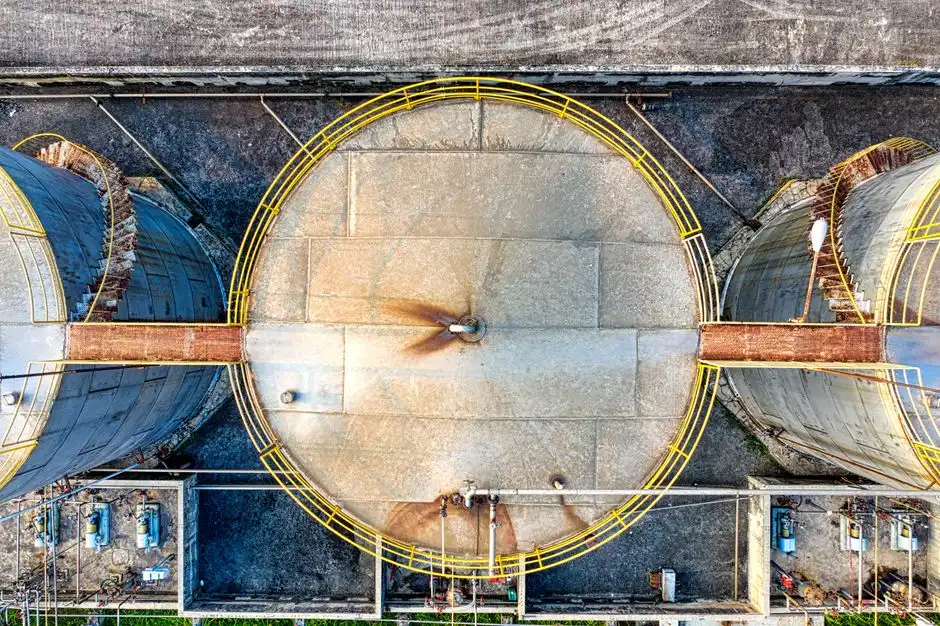
Auto and EV plants should not blend all process drains into a single black-box equalization sump; the chemistry of each stream drives the unit-operation choice. Stamping and machining coolant carries high free oils and tramp lubricants, so equalization with oil skimming precedes any chemistry, then a dissolved air flotation system for oil and grease removal as the workhorse — typically 70–90% FOG reduction before metal precipitation. E-coat and paint-shop wastewater contains surfactants, pigments, and suspended solids, and runs through pH adjustment to 6–9 followed by DAF; zinc-phosphate pre-treatment rinses add a measurable zinc load and frequently drive the design basis for the metals train. EV cathode and anode coating rinse water contains NMP solvent, PVDF binder, and conductive carbon, and must be collected separately for either solvent recovery (preferred) or advanced oxidation before discharge — commingling it with metal-bearing streams complicates both the chemistry and the hazardous-waste determination. Battery cell electrolyte spills containing LiPF6 hydrolyze to HF on contact with moisture and demand a dedicated acid-resistant equalization tank, never the general process sump. Gigafactory cooling-tower and boiler blowdown is typically segregated as non-contact cooling and is exempt from categorical standards under the SIU definition — but the exemption must be documented with the POTW (40 CFR 403.3(v) excludes "noncontact cooling and boiler blowdown wastewater" from the process-wastewater threshold). Chassis welding and phosphating rinse water is the conventional metal-bearing stream that anchors 40 CFR 467 compliance. Effective wastewater management relies on segregating these streams to optimize treatment chemistry.
| Waste Stream | Key Pollutants | Primary Unit Operation | Governing Rule |
|---|---|---|---|
| Stamping/machining coolant | Free oils, tramp lubricants | Oil-skim eq. tank → DAF system for oil and grease removal | 40 CFR 467 |
| E-coat / paint shop | Surfactants, pigments, Zn (from phosphate) | pH adjust 6–9 → DAF → metals precipitation | 40 CFR 467 |
| Cathode/anode coating rinse | NMP, PVDF, carbon | Segregated collection → solvent recovery or AOP | 40 CFR 469 |
| Electrolyte spill (LiPF6) | HF on hydrolysis | Dedicated acid-resistant eq. tank | 40 CFR 403 / RCRA |
| Cooling tower / boiler blowdown | Low TDS, trace metals | Documented exclusion, direct discharge | 40 CFR 403.3(v) |
| Welding / phosphating rinse | Ni, Zn, total Cr | pH adjust → precipitation → clarifier → filter | 40 CFR 467 |
For pH-loop design specifics, the automatic pH control system design article covers PLC-controlled dosing in detail.
The 2026 Pretreatment Train in Practice
A compliant 2026 train for a mixed EV/auto discharger near Auburn follows a fixed sequence; each step exists because a specific regulatory or operating requirement cannot be met by any other step in the chain. (1) Flow and load equalization sized for 8–24 hours of retention damps slug loads and is explicitly required by Auburn IN §50.024. (2) PLC-controlled pH adjustment using an automatic chemical dosing system for PLC-controlled pH adjustment and coagulant dosing holds the wastewater inside the 5.5–9.5 SU window before downstream chemistry. (3) Dissolved air flotation using a DAF system for oil and grease removal rated for the 4–300 m³/h flow band removes free and emulsified FOG. (4) Coagulation, flocculation, and lamella clarification using a lamella clarifier for TSS and metals sludge drops suspended solids and precipitates heavy metals as hydroxides at controlled pH. (5) Multi-media filtration using a multi-media filter as a polishing step protects downstream reuse equipment and acts as the final barrier before the discharge sampler. (6) Continuous online monitoring of pH, TSS, and flow at the discharge sampler, with a 24-hour composite automatic sampler for compliance reporting — typically a 40 CFR 403.12(b)(5)-(6) requirement. An optional branch for closed-loop rinse-water reuse adds UF or RO downstream of the multi-media filter, simultaneously reducing sewer discharge and SIU loading. These unit operations work in tandem to ensure consistent compliance.
Compliance, Monitoring, and POTW Coordination
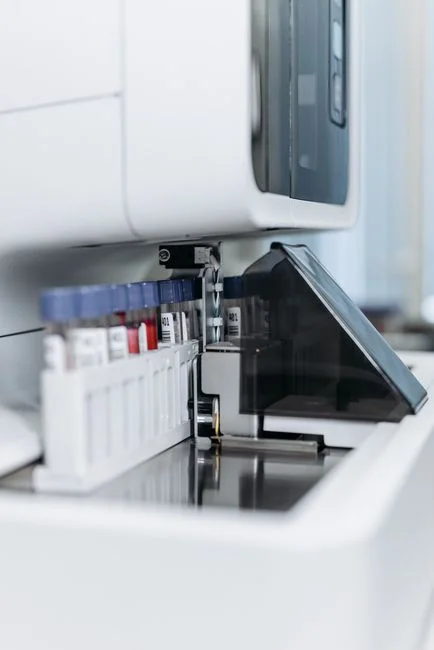
An auto/EV plant will almost always qualify as a Significant Industrial User under the three-prong test codified in 40 CFR 403.3(v) and adopted by Auburn IN: ≥25,000 gpd of process wastewater (sanitary, noncontact cooling, and boiler blowdown excluded), ≥5% of the POTW's average dry-weather hydraulic or organic capacity, or POTW designation. New dischargers must submit a Baseline Monitoring Report within 180 days of any change and notify the POTW in writing of any listed or characteristic hazardous waste discharge under 40 CFR 261 (per Auburn IN §50.024). The plant must give 48-hour advance notice for any substantial change in pollutant volume or character, immediate telephone notice for any spill or slug load, hold discharge temperature below 40°C (104°F) at the POTW introduction, and keep LEL below 5% successive / 10% single at the discharge point. For monitoring-program structure — sampling locations, BMPs, surrogate parameters — the comparing industrial wastewater treatment solutions guide offers a vendor-neutral framework.
Frequently Asked Questions
What does "significant industrial user" (SIU) actually mean for an EV plant?
An SIU is any industrial user that (a) is subject to a categorical pretreatment standard, (b) discharges ≥25,000 gpd of process wastewater (excluding sanitary, noncontact cooling, and boiler blowdown), (c) contributes a process stream that makes up ≥5% of the POTW's average dry-weather hydraulic or organic capacity, or (d) is designated by the POTW as having reasonable potential to interfere or pass through (40 CFR 403.3(v); Auburn IN §50.024). An auto assembly or gigafactory-scale battery
Frequently Asked Questions
What is the difference between 40 CFR 433 and 40 CFR 467 for an auto plant?
40 CFR 433 (Metal Finishing Point Source Category) applies to the core manufacturing processes of an automotive plant, such as electroplating, coating, etching, and chemical milling. It sets categorical pretreatment standards for total toxic organics (TTO) and specific heavy metals.
40 CFR 467 (Aluminum Forming Point Source Category) specifically regulates facilities involved in the hot or cold forming of aluminum. An automotive plant may fall under both categories if it performs both complex metal finishing and aluminum extrusion or rolling operations, requiring compliance with the stricter of the two standards where processes overlap.
What is the daily maximum copper limit for sewer discharge near Auburn, Indiana?
For facilities discharging into the Auburn municipal sewer system, the daily maximum limit for copper is generally set at 3.38 mg/L, consistent with standard categorical pretreatment requirements for metal finishers. However, local limits established by the City of Auburn’s Industrial Pretreatment Program may impose more stringent site-specific requirements based on the local POTW's headworks loading capacity.
How does a DAF system work in an automotive paint shop wastewater treatment train?
A Dissolved Air Flotation (DAF) system is used to remove suspended solids, oils, and greases from paint shop effluent by saturating the wastewater with dissolved air under pressure. When the pressure is released in the flotation tank, millions of microscopic bubbles attach to the paint particulates and contaminants, causing them to float to the surface as sludge.
This skimmed sludge is mechanically removed, while the clarified water is drawn from the bottom of the tank for further treatment or discharge. In automotive applications, this process is critical for reducing total suspended solids (TSS) and chemical oxygen demand (COD) before the water reaches downstream biological treatment or final filtration stages.
Do EV battery gigafactories have to monitor NMP in their discharge?
Yes, EV battery gigafactories are increasingly required to monitor N-Methyl-2-pyrrolidone (NMP) in their wastewater discharge. NMP is a high-volume solvent used in cathode slurry preparation, and because it is highly water-soluble and potentially toxic, local pretreatment authorities often require specific mass-balance reporting and analytical monitoring.
While NMP is not yet universally regulated under a specific federal categorical standard, it is often categorized as a non-conventional pollutant. Facilities must typically implement advanced oxidation processes (AOP) or specialized membrane filtration to ensure concentrations remain below local limit thresholds set by the receiving wastewater treatment plant.
What temperature and LEL limits apply at the sewer discharge point?
Standard industrial discharge permits generally prohibit the introduction of wastewater with temperatures exceeding 104°F (40°C) to prevent damage to sewer infrastructure and biological treatment processes at the municipal plant. Discharges must be cooled via heat exchangers or cooling ponds prior to entering the sewer system.
Regarding Lower Explosive Limit (LEL) standards, local ordinances typically prohibit any discharge that causes the atmosphere in the sewer system to exceed 5% of the LEL of any combustible gas. This requires continuous or periodic monitoring for volatile organic compounds (VOCs) and flammable solvents to ensure that no explosive vapors are generated within the collection system.