Why Liberty, US is a meaningful anchor for 2026 semiconductor pretreatment
Semiconductor plants near Liberty, US meet 2026 pretreatment limits before sewer discharge by segregating wastewater into pH neutralization, fluoride precipitation, and copper treatment streams, then polishing with UF, RO, and ion exchange — a configuration consistent with 40 CFR 468 Semiconductor Category effluent guidelines, 40 CFR 403 General Pretreatment Standards, TCEQ TPDES requirements, and local POTW limits. Samsung Austin Semiconductor, a comparable Texas fab, has held City of Austin pretreatment compliance since 2012 (per GWI Magazine, 2020-01).
"Near Liberty, US" reads as more than geography: it places a fab inside the regulatory stack that any Gulf-Coast semiconductor site inherits. The relevant layers are (1) federal categorical limits under 40 CFR 468 for the Semiconductor and Related Industries category, (2) the General Pretreatment Standards in 40 CFR 403 that every Significant Industrial User must satisfy, (3) the Texas Pollutant Discharge Elimination System (TPDES) program administered by TCEQ, and (4) the local POTW's specific local limits, which are the most variable layer of the four. Samsung Austin's compliance record against the City of Austin's local limits is the closest public Texas precedent for a Liberty-area fab.
The cost of missing those limits is concrete: Clean Water Act enforcement penalties escalate quickly, and POTW surcharge programs add day-fines for every exceedance (per siliconsemiconductor.net). EPA frames the pollutant universe with 65 toxic-pollutant elements/groups and 126 specific "Priority Pollutants" that any fab pretreatment design has to anticipate. For engineers specifying a Liberty-area site, a useful first read is this semiconductor fab process-wastewater compliance guide, which maps the same regulatory layers onto a comparable European site.
What comes out of a fab drain: the three-stream segregation template
Modern fab wastewater contains over 200 organic and inorganic chemicals, including acids, alkalis, copper, lead, arsenic, antimony, ammonium, fine oxide particles, salts, solvents, and other organics and inorganics (per siliconsemiconductor.net). A single combined train cannot handle that influent inventory at the precision today's POTW local limits demand. The standard 2026 answer is segregation: primary wastewater treatment is segregated into pH neutralization, fluoride treatment, and copper treatment (per GWI Magazine, 2020-01).
The engineering rationale is straightforward — each stream has a different chemistry, a different target discharge parameter, and a different dewatering endpoint. Splitting flow early also isolates process upsets: a spike in one bath does not cascade through a 1,000-gpm combined equalization tank and trip the final discharge monitor (per GWI Magazine, 2020-01). Samsung Austin's stated reason for segregation is exactly this — "balancing the needs of multiple constituents when treating wastewater" and "changes in process chemistry" that require the ability to "pre-treat or treat in parallel to existing systems" (per GWI Magazine, 2020-01).
For a Liberty-area fab, the three-stream template is the starting point for any equipment list. The pieces are not exotic — equalization, dosing skids, clarifiers, a filter press, an ion-exchange skid — but the order and segregation are non-negotiable. Skipping segregation and trying to polish a blended stream with RO or ion exchange is the most common cause of premature membrane fouling and resin exhaustion that the writer has seen in fab retrofit audits.
Stream 1 - pH neutralization before the sewer
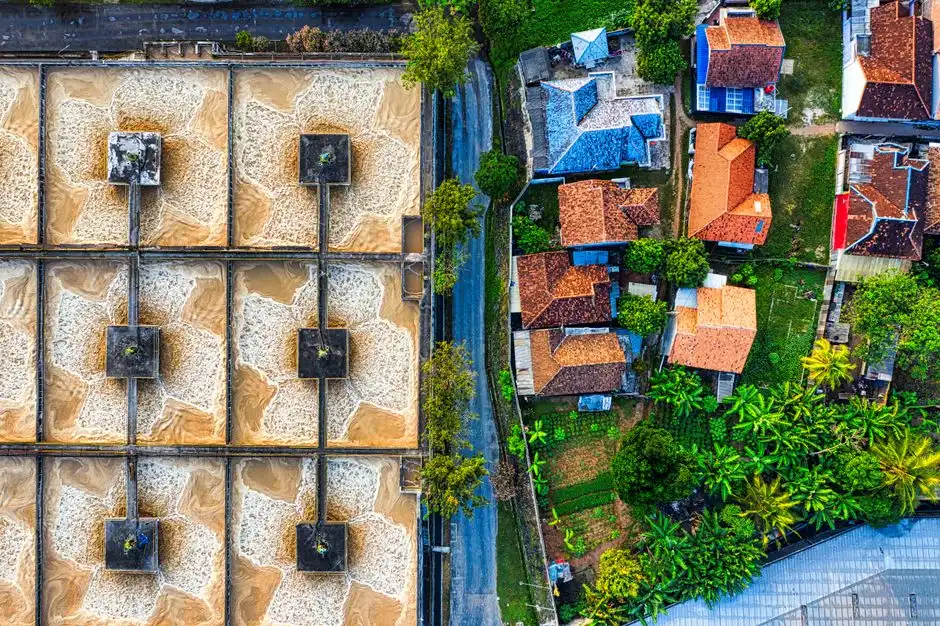
The pH neutralization stream adjusts pH to meet internal quality requirements prior to discharge (per GWI Magazine, 2020-01). On a 2026 Liberty-area fab, this stream receives acid and alkaline rinses, spent cleaning chemistries, and any low-volume concentrate dumps from process tool maintenance. The unit operation is conventional: an equalization tank with mechanical mixing, an in-line pH probe, and a PLC-controlled coagulant and pH dosing skid that feeds acid (typically sulfuric or hydrochloric) or caustic (NaOH) based on a setpoint band. Typical POTW pH acceptance bands for industrial discharge in the U.S. fall in the 6-9 range; the exact number is set by the receiving POTW and must be confirmed with the local authority before the P&ID is frozen.
Design points that bite a project: the equalization tank needs to be sized for the largest single-batch acid or caustic dump from the tool line, not the average flow, and the pH probe has to be in a recirculating loop with a self-cleaning junction so HF-bearing streams do not etch the reference electrode. The dosing pump capacity should be selected at 1.5x the calculated stoichiometric demand so the loop can recover from an upset within one residence time. A Liberty-area site typically pairs the pH skid with a downstream equalization tank that feeds the fluoride and copper trains, so the pH band leaving the pH skid also has to be compatible with the precipitation chemistry that follows — calcium fluoride precipitation prefers a slightly alkaline pH for lowest solubility, while copper ion exchange is most efficient on a near-neutral, low-TDS feed.
The dosing skid itself is a small but critical package; for a typical equipment class, see the PLC-controlled coagulant and pH dosing skid commonly used on fab neutralization lines.
Stream 2 - fluoride precipitation to CaF2 cake
The fluoride waste stream uses chemical precipitation and a dewatering process that produces calcium fluoride (CaF2) filter cake, which is sent to a local end-user to be reused in that end-user's own wastewater treatment process (per GWI Magazine, 2020-01). The chemistry is textbook: dissolved fluoride (F⁻) reacts with calcium (typically from lime, Ca(OH)₂, or CaCl₂) to form CaF₂, which has a Ksp on the order of 1.5 × 10⁻¹⁰ and precipitates out of solution at concentrations well below typical POTW fluoride limits. The precipitated sludge is then thickened and dewatered.
Mechanical dewatering is what makes this a 2026-relevant circular-economy story rather than a hazardous-waste headache. A filter press for CaF2 and metal-sludge dewatering typically drops the cake to 55-65% solids, which is dry enough to handle and transport. The dewatered CaF2 is sold to a local end-user — historically a ceramic manufacturer or another industrial wastewater plant — for reuse in their process (per GWI Magazine, 2020-01).
The reason the filter press matters for disposal economics is that a cake that passes EPA's Toxicity Characteristic Leaching Procedure (TCLP) can be disposed of as non-hazardous waste in a municipal landfill. Polymer flocs often fail TCLP because the floc structure is fragile and ruptures under the pressure of dewatering, releasing trapped metals back into the filtrate (per siliconsemiconductor.net). A 2026 Liberty-area fab that picks the wrong floc chemistry pays for it twice — once in polymer cost, and again in hazardous-waste disposal pricing for a cake that cannot go to a Subtitle D landfill.
Stream 3 - copper treatment: from co-precipitation to ion exchange
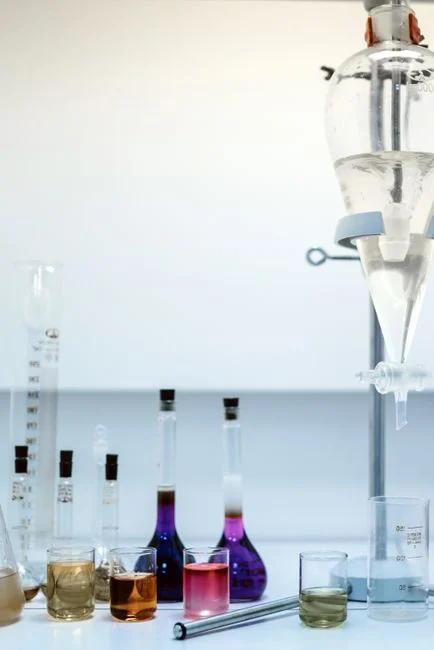
The copper system at Samsung Austin is in the final stages of being converted to an ion exchange system from a chemical co-precipitation system, improving safety and environmental quality of treatment. Quantified gains at that reference site: ion exchange will reduce chemical treatment by 2 million lb/yr, eliminate 1.5 million lb/yr of solids generated, and reduce the overall system footprint by 65% (per GWI Magazine, 2020-01). Those three numbers are the benchmark a Liberty-area engineer should hold any vendor proposal against.
The shift is real and worth specifying in 2026. Co-precipitation with caustic or lime generates a copper-bearing hydroxide sludge that has to be dewatered, TCLP-tested, and either shipped as hazardous or stabilized for landfill — exactly the waste-handling problem that adds OpEx on the older copper train. A chelating ion-exchange resin targeted at divalent copper strips Cu²⁺ down to sub-ppm levels, generates a much smaller waste volume (regenerant brine plus spent resin at end of life), and removes a chemical-dosing skid from the tank farm. The tank-farm footprint is a meaningful constraint on retrofits: a 65% footprint cut is the difference between fitting the new train inside an existing slab and pouring a new containment pad.
Honest caveats, because the writer has watched two pilots go sideways: ion-exchange resin selectivity for low-concentration Cu is sensitive to competing cations (Ca²⁺, Na⁺) and to chelants dragged in from the copper-plating chemistry, so piloting is non-optional. Hydrogen peroxide remains a cost-effectiveness challenge for the industry, both as a polishing reagent and for resin cleaning (per GWI Magazine, 2020-01). Budget for a six-month on-site pilot with two candidate resins before the resin specification is locked.
The recycle train that reduces sewer load: UF, RO, and brine recovery
The pretreatment story is not only about meeting discharge limits — it is also about shrinking the load that goes to the sewer in the first place. The UPW makeup train is a standard multimedia cartridge filtration → reverse osmosis → ion exchange → UV (organics control) → degasification → ultrafiltration sequence (per GWI Magazine, 2020-01). For a Liberty-area fab, that train doubles as the first line of defense against sewer loading: any ion that the UPW system recovers as RO permeate is an ion that never reaches the pretreatment system.
The reclaim train is where the 2026 numbers get interesting. UPW rinse streams are collected, monitored for quality, treated with activated carbon and ion exchange, and reused as UPW makeup. The reclaim source at the reference site is about 60% of total UPW makeup volume (per GWI Magazine, 2020-01). On top of that, a Brine Recovery RO system commissioned in late 2019 recovers 75% of the first-pass RO reject, cutting city-water makeup to the UPW system by 90 million gal/yr (per GWI Magazine, 2020-01). That is the precedent a Liberty-area fab should size against in 2026.
| Unit operation | Function | Design duty |
|---|---|---|
| Multimedia cartridge filtration | Particles, suspended solids | < 5 µm nominal |
| Reverse osmosis (1st pass) | Dissolved solids removal | ~75% recovery to permeate; 25% reject |
| Brine recovery RO | Recover reject from 1st-pass RO | 75% reject recovery (per GWI Magazine, 2020-01) |
| Ion exchange (polishing) | Ionic contamination | Resistivity > 18.2 MΩ·cm at UPW outlet |
| UV (185/254 nm) | TOC reduction, microbial control | Sub-ppb TOC at outlet |
| Degasification | Dissolved oxygen / CO₂ control | DO < 1 ppb at UPW outlet |
| Ultrafiltration | Sub-micron particles | ~0.01 µm nominal, final barrier |
Two equipment classes anchor this train: an industrial RO system with a brine-recovery stage for the reject-recovery loop, and a UF system for sub-micron solids control on the UPW polish. The writer's experience is that the reject-recovery RO pays back fastest when the site has a scrubber or cooling-tower makeup demand large enough to absorb the recovered permeate — the closer the Liberty-area fab's site water balance matches the reference site, the cleaner the payback.
Pollutants vs. limits: the 2026 compliance table every fab engineer should keep
The table below maps the most-encountered fab pollutants to the regulatory layer that controls them. It is the kind of one-page reference a Liberty-area EHS manager can put on a wall and an EPC firm can pull into a P&ID review. The federal basis column anchors to 40 CFR 468 (Semiconductor category) and 40 CFR 403 (general pretreatment); the Texas basis column anchors to the TCEQ TPDES program; the POTW column is the variable layer and the one that drives local limit setting. 2026 local limit values vary by POTW — the engineer should confirm the exact number with the receiving POTW before any equipment is ordered.
| Pollutant | Federal basis | Texas basis | POTW basis | Typical measurement |
|---|---|---|---|---|
| pH | 40 CFR 403 General Pretreatment | TCEQ TPDES | Local limit, typically 6-9 | In-line pH probe / grab |
| Fluoride (F⁻) | 40 CFR 468 Semiconductor Category | TCEQ TPDES | Local limit, often < 25-50 mg/L | ISE probe or ion chromatography |
| Copper, total | 40 CFR 468 / 403 categorical | TCEQ TPDES | Local limit, often < 1-3 mg/L | ICP-MS or ICP-OES |
| Lead, arsenic, antimony | 40 CFR 403 Priority Pollutants (per EPA, 126 substances listed) | TCEQ TPDES | Local limit | ICP-MS |
| Total suspended solids (TSS) | 40 CFR 403 | TCEQ TPDES | Local limit, often < 250-400 mg/L | EPA Method 160.2 |
| Ammonia (as N) | 40 CFR 403 | TCEQ TPDES | Local limit | Ion chromatography or colorimetric |
| Total organic carbon (TOC) | 40 CFR 468 / 403 | TCEQ TPDES | Local limit | TOC analyzer |
The fluoride and copper rows are the highest-leverage entries for a Liberty-area fab because they are the streams that drive both the chemistry train and the cake-disposal economics. The Priority Pollutants framing matters because the receiving POTW's local limit list is built from the EPA's 65 toxic-pollutant elements/groups and 126 specific substances (per siliconsemiconductor.net) — a Liberty-area fab's sampling plan should cover at least the metals and organics on that list, not just the parameters in its own internal chemistry list.
Pretreatment, not haul-off: the 2026 decision framework
The three real options for a fab wastewater stream are haul to a liquid hazardous waste disposal site (extremely costly), on-site treatment to sewer-dischargeable effluent with a non-hazardous sludge, or on-site treatment plus closed-loop reuse. Haul-off is the benchmark against which everything else is measured, and it is the option that almost never wins on a 20-year NPV (per siliconsemiconductor.net). The interesting design choice is between source treatment and end-of-pipe treatment, and between floc chemistries.
Polymer or inorganic chemical flocculants produce fragile flocs that release pollutants under dewatering pressure and tend to fail TCLP, sending the cake to a hazardous-waste landfill. Bentonite-based separating agents (such as the CLEARTREAT-style products referenced in the literature) carry a net negative charge with a large specific surface area, encapsulate suspended solids in durable flocs, and pass TCLP so the cake can be landfilled as non-hazardous waste (per siliconsemiconductor.net). For a Liberty-area fab, the difference is roughly an order of magnitude in $/lb of sludge disposal cost, which dominates the OpEx of the solids train.
A three-question decision framework that has worked on fab retrofits: (1) Will the receiving POTW accept this flow at the proposed loading — i.e., confirm the local limit and the industrial user's allocation under 40 CFR 403 before the P&ID is frozen? (2) Will the sludge pass TCLP at the chosen floc stoichiometry — request TCLP data on a lab-made cake at design solids, not vendor cut-sheet values? (3) Can the chosen chemistry be dewatered on a standard filter press at > 55% solids, or does the plant need a specialty dewatering device? When source segregation is incomplete and TSS spikes carry through, upstream DAF for suspended-solids and metals removal and a high-efficiency sedimentation tank act as a buffer ahead of the main treatment train. The cost levers that move the NPV most, in order, are: TCLP pass/fail on the cake, RO reject recovery (90 M gal/yr precedent at the reference site), and ion-exchange conversion of the copper train (2 M lb/yr chemical reduction).
Frequently Asked Questions
What federal and state regulations apply to a fab near Liberty, US in 2026?
Federal categorical limits under 40 CFR 468 (Semiconductor and Related Industries), 40 CFR 403 General Pretreatment Standards, the Clean Water Act framework, TCEQ TPDES program requirements, and the receiving POTW's local limits. EPA's 65 toxic-pollutant elements/groups and 126 Priority Pollutants drive what the POTW local-limit list actually contains (per siliconsemiconductor.net).
How is fluoride removed from fab wastewater, and what happens to the CaF2 cake?
Fluoride is precipitated with calcium (lime or CaCl₂) to calcium fluoride (CaF2), thickened, and dewatered on a filter press. The CaF2 cake is sent to a local end-user and reused in that end-user's own wastewater treatment process (per GWI Magazine, 2020-01). If the cake passes EPA TCLP, it can be disposed of as non-hazardous waste in a municipal landfill (per siliconsemiconductor.net).
Why is copper treatment moving to ion exchange, and what does the operator gain?
Ion exchange replaces the chemical co-precipitation that produces a copper-bearing hydroxide sludge. At the reference site, the conversion cuts chemical treatment by 2 million lb/yr, eliminates 1.5 million lb/yr of solids, and shrinks the system footprint by 65% (per GWI Magazine, 2020-01). Operators also remove a floc-handling hazard and simplify TCLP compliance. Piloting is still required — hydrogen peroxide remains an industry cost-effectiveness challenge (per GWI Magazine, 2020-01).
Which POTW parameter is most often the bottleneck for fab discharge?
Copper, fluoride, and pH are the three most common bottlenecks because they are the parameters a fab controls directly through the segregation template. Metals like lead, arsenic, and antimony, and ammonia, can also be locally limiting and are the reason the influent inventory should be screened against the EPA's 126 Priority Pollutants (per siliconsemiconductor.net) before the P&ID is frozen.
Can sludge from fab wastewater go to a municipal landfill in Texas?
Yes, if the sludge passes EPA's TCLP. Polymer- or inorganic-flocculant cakes frequently fail TCLP and must be shipped as hazardous waste. Bentonite-based separating agents encapsulate suspended solids in durable flocs that pass TCLP, so the cake can be landfilled as non-hazardous waste (per siliconsemiconductor.net). Confirm with the receiving POTW and the landfill before specifying the floc chemistry.