
Hollow-fiber ultrafiltration systems from 2,000 to 40,000 L/h using 0.03 micron PVDF membranes. Removes bacteria, colloids and suspended solids without chemicals, accepts up to 300 ppm turbidity, with automatic backwash and air scour. For municipal, rural and RO pretreatment duty.
Ultrafiltration uses hollow-fiber membranes with a 0.03 µm pore size to physically remove suspended solids, bacteria, protozoa, colloids and most viruses without any chemical dosing. Anything larger than the pore is retained; dissolved salts and minerals pass through. That makes UF the right tool when the problem is turbidity and microbiology rather than salinity — surface water, river water, reservoir water and mountain spring water — and the standard pretreatment stage ahead of reverse osmosis. The KJ-UF platform spans 2,000 to 40,000 L/h in standard models and 6 to 4,000 m³/day overall.
Raw water passes through a quartz sand filter to strip coarse solids, then activated carbon where chlorine, taste and odour need removal, then a precision cartridge filter. The pretreated water is fed into hollow-fiber ultrafiltration modules, where it is driven through the 0.03 µm membrane wall from outside to inside. Filtrate is collected from the fiber lumens; retained solids accumulate on the membrane surface. At set intervals the system reverses flow and injects air to scour the accumulated layer off the fibers and flush it to drain. Because the separation is a physical sieve rather than a chemical or biological process, output quality does not drift with load, and startup is immediate after a shutdown.
| Model | Capacity | Control Type | Dimensions L×W×H (mm) | Process / Membrane |
|---|---|---|---|---|
| KJ-UFM-2T-B | 2,000 L/h | Manual | 900 × 550 × 1600 | Quartz sand + UF; AQU90 × 4 pcs, 120 kg |
| KJ-UFA-2T-A | 2,000 L/h | Automatic | 800 × 600 × 1600 | Quartz sand + UF; AQU90 × 4 pcs, 120 kg |
| KJ-UFA-2T-C | 2,000 L/h | Automatic | 1000 × 710 × 1600 | Raw pump + sand + precision filter + UF; 0.24 kW |
| KJ-UFA-4T-D | 4,000 L/h | Full automatic | 1900 × 800 × 1850 | Sand + carbon + precision + UF + ozone; 5-core 20" |
| KJ-UFA-6T-A | 6,000 L/h | Full automatic | 1400 × 1050 × 1900 | Sand + precision filter + UF; 5-core 20" |
| KJ-UFA-8T-A | 8,000 L/h | Full automatic | 3300 × 800 × 2100 | Sand + carbon + precision + UF; 5-core 20" |
| KJ-UF-10T | 10,000 L/h | Automatic | 3900 × 800 × 2100 | AC380V/50Hz, 0.06 kW, 1,020 kg |
| KJ-UF-15T | 15,000 L/h | PLC S7-200 Smart | 8500 × 1200 × 2800 | AQU200 × 10 pcs |
| KJ-UF-25T | 25,000 L/h | Automatic + backwash | — | AQU200 × 16 pcs, 5.5 kW |
| KJ-UF-40T | 40,000 L/h | Automatic + backwash | — | AQU200 × 16 pcs, 5.5 kW |
An all-in-one immersed variant of the 25 T/h unit is also available. Inlet water temperature 5–35 °C across the range.
Ultrafiltration is where HydropureWater partner plants have the deepest project record — municipal water plants at 60 and 120 m³/hour, town water works at 80 m³/hour, and rural drinking-water safety schemes at 200 m³/day. That matters because UF performance in the field is decided by how the backwash and air-scour regime is tuned to the actual raw water, not by the membrane datasheet. We size the module count, backwash pump and air flow against your turbidity and suspended solids profile, and supply manual, automatic or immersed configurations depending on whether the site has full-time operators.
UF has a 0.03 µm pore and removes particles, bacteria and colloids while letting dissolved salts and minerals through. RO removes dissolved salts as well. If your problem is turbidity or microbiology, UF is cheaper to run and retains beneficial minerals. If your problem is salinity, hardness or TDS, you need RO — frequently with UF in front of it as pretreatment.
Up to 300 ppm turbidity and 100 ppm total suspended solids. Water dirtier than that needs a coagulation or sedimentation stage upstream, otherwise backwash frequency rises to the point where net output collapses.
A 0.03 µm membrane retains bacteria and protozoa completely and removes most viruses, but virus particles can be smaller than the pore. Where potable water is the end use, UF is normally followed by UV or ozone disinfection as a final barrier — the KJ-UFA-4T-D includes an ozone generator in its standard process for exactly this reason.
PVDF hollow-fiber modules typically last several years when the automatic backwash and air-scour cycle is maintained and feed turbidity stays within specification. Routine maintenance is cartridge filter changes and periodic chemical cleaning; module replacement is a planned event rather than a frequent one.

Complete turnkey bottled water lines integrating RO treatment, pure water storage, PET bottle blowing (350-1500 ml), 8-8-3 filling, labelling, inkjet coding and sleeve shrink packaging - specified as one balanced scope rather than separate machines.
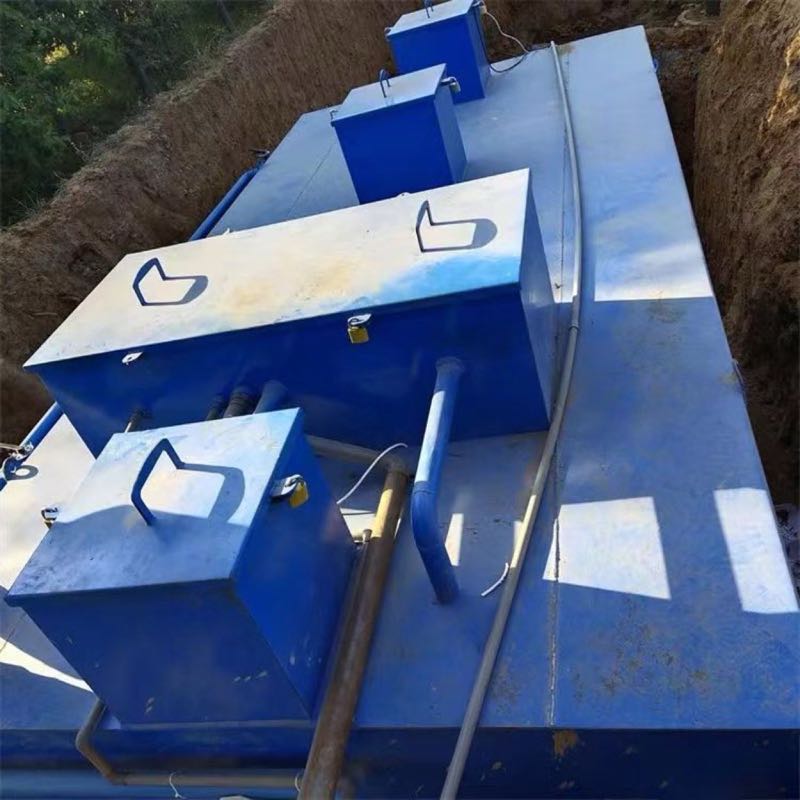
WSZ series underground integrated sewage treatment plant combines anoxic/aerobic (A/O) biological contact oxidation with sedimentation and disinfection in a single buried package unit. Fully automated with no operator required, it handles 1–80 m³/h for residential communities, hotels, hospitals, factories, and rural areas. Can be installed below grade with landscaping above, or mounted on a trailer for mobile deployment.
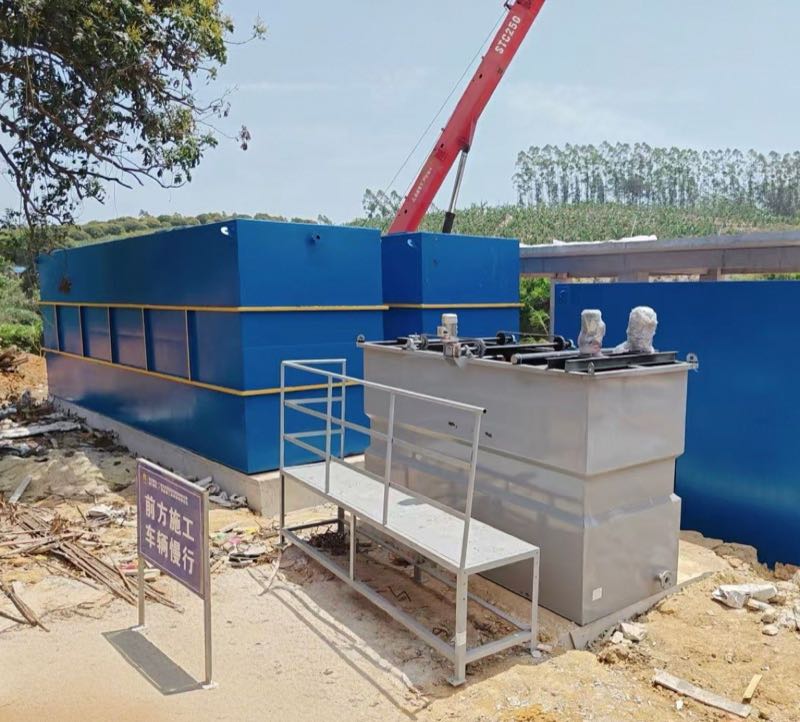
Dissolved air flotation (DAF) system for high-efficiency removal of suspended solids, FOG, oil & grease, and colloidal matter from industrial wastewater. Micro-bubble technology with automatic skimming handles 4–300 m³/h across 13 standard models. Proven in food processing, pulp & paper, textile, metalworking, petrochemical, and municipal pre-treatment applications.
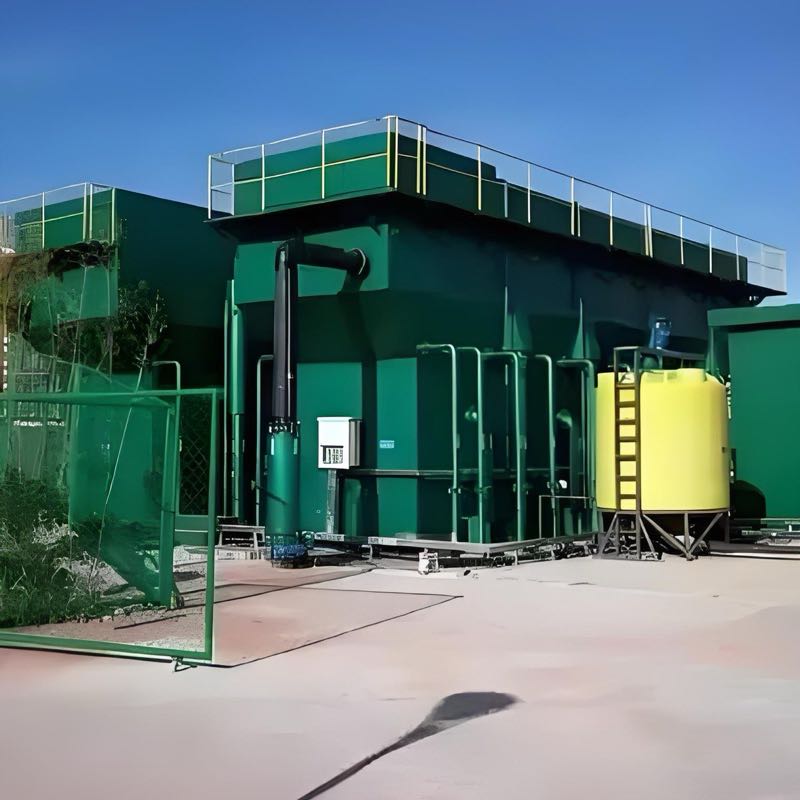
JY series all-in-one water purification system integrates coagulation, flocculation, sedimentation, filtration, and automatic backwash in a single compact unit. Fully automatic operation treats surface water with turbidity up to 3,000 mg/L to below 3 mg/L. Ideal for rural water supply, small towns, industrial process water, and mine water treatment with capacities from 10 to 200 m³/h.
Get a free consultation and customized quote from our engineering team.
