What Are Canada’s Wastewater Systems Effluent Regulations (WSER)?
Under wastewater treatment regulations Canada, WSER (SOR/2012-139) sets Fisheries Act effluent floors for systems collecting ≥100 m³/d influent. Authorization requires non-acutely lethal effluent, CBOD and SS averages ≤25 mg/L, residual chlorine ≤0.02 mg/L if chlorine is used, and un-ionized ammonia below 1.25 mg/L as N at 15°C ± 1°C.
WSER covers deposits to fish-bearing waters or places that may enter them. WSER was registered in 2012 to create a national baseline where provincial rules previously varied. Substantive amendments in SOR/2024-97, published 5 June 2024, reopened transitional authorizations for eligible systems. They also expanded temporary bypass authorizations for planned sewer work and clarified administrative duties.
WSER does not cover every Canadian discharge. Systems in Nunavut, the Northwest Territories, and north of the 54th parallel in Quebec or Newfoundland and Labrador are excluded. Pulp and paper mills follow the Pulp and Paper Effluent Regulations instead. On-site industrial, commercial, or institutional systems designed for influent with less than 50% blackwater and greywater combined also fall outside WSER and are typically controlled through provincial approvals.
Wastewater Treatment Regulations Canada: Key Effluent Limits
Federal operators must meet numerical and biological limits at each final discharge point. Effluent is acutely lethal if, at 100% concentration, it kills more than 50% of rainbow trout in a 96-hour test under Reference Method EPS 1/RM/13, with an optional pH-stabilization procedure EPS 1/RM/50.
Earlier summaries often cited BOD and TSS as 7-day rolling averages at ≤25 mg/L and ≤35 mg/L. Those texts also listed a pH band of 6.0–9.0 and a “no visible sheen” oil clause. The current WSER authorization conditions (SOR/2012-139, s. 6) instead use carbonaceous BOD (CBOD) and suspended solids (SS) averages of ≤25 mg/L each. Those averages are determined over a month, quarter, or calendar year based on deposited flow. Total residual chlorine and un-ionized ammonia are prescribed deleterious substances alongside CBOD and SS.
Averaging period scales with size. For many continuous plants depositing more than 17 500 m³/d on average in the prior year, CBOD and SS averages are monthly. Mid-size continuous systems commonly use quarterly averages. Smaller intermittent or long-retention systems may use annual averages. A single grab sample of total residual chlorine must not exceed 0.10 mg/L when a dechlorination system is required.
| Parameter | Limit | Measurement Period |
|---|---|---|
| Carbonaceous Biochemical Oxygen Demand (CBOD) | ≤ 25 mg/L average | Month, quarter, or year by flow band |
| Suspended Solids (SS) | ≤ 25 mg/L average (earlier guides often cited ≤ 35 mg/L) | Month, quarter, or year by flow band |
| Total Residual Chlorine | ≤ 0.02 mg/L average; ≤ 0.10 mg/L grab with dechlorination | When chlorine or a chlorine compound is used |
| Un-ionized Ammonia | < 1.25 mg/L as N at 15°C ± 1°C | Maximum concentration |
| Acute Lethality | < 50% mortality at 100% effluent | 96-hour rainbow trout test |
| pH / Oil & Grease (legacy summary) | Earlier texts cited pH 6.0–9.0 and no visible sheen | Not authorization limits in current WSER s. 6 |
How Do Wastewater Systems Meet Environmental Discharge Regulations?
Wastewater systems meet environmental discharge regulations by staying inside the WSER authorization envelope and any stricter provincial permit. Owners must file an identification report and monitor CBOD and SS at the final discharge point through an accredited laboratory. They must keep records for at least five years and submit monitoring reports within 45 days after each reporting period.
Sampling frequency rises with flow. Continuous systems depositing about 2 500 m³/d or less typically sample CBOD and SS monthly. Systems between roughly 2 500 and 17 500 m³/d sample every two weeks. Larger plants sample weekly or three days per week. Acute lethality testing is generally required above 2 500 m³/d, with quarterly or monthly cadence unless a reduced schedule is earned after consecutive non-lethal results.
Combined sewer overflow points need separate tracking of deposit days, duration, and volume, with an annual overflow report due by 15 February. Unauthorized deposits of deleterious substances into fish-bearing waters remain subject to Fisheries Act notification and mitigation duties beyond routine WSER reporting.
How Industrial Facilities Differ from Municipal Systems
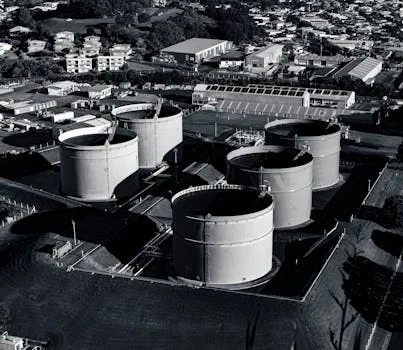
Industrial facilities often face a different compliance path than municipal plants. Many on-site industrial pretreatment systems collect mostly process water, so they sit outside WSER under section 2(4) when blackwater and greywater are under 50% of design influent. Those sites are usually governed by provincial Environmental Compliance Approvals, sewer-use bylaws, or sector rules rather than the federal WSER baseline alone.
Where an industrial stream does enter a WSER-regulated system, or where provincial limits apply, loads are typically more variable than domestic sewage. Food processors can spike fats, oils, and grease. Metal finishers can add metals and cyanide. Petrochemical sites can add solvents and complex organics. Provincial permits frequently set parameter-specific limits tighter than the federal CBOD and SS floors and require daily composite sampling for a wider suite of analytes.
Bypass risk is higher for industrial pretreatment. Temporary bypass authorizations under the 2024 WSER amendments can cover planned maintenance on sewer systems. A failed industrial pretreatment train may still force a production shutdown if an uncontrolled release would be acutely toxic. Redundancy, equalization, and documented contingency plans therefore matter as much as average effluent quality.
Treatment Technologies That Meet Canadian Effluent Standards
Technology selection should map directly to the CBOD, SS, ammonia, chlorine, and acute-lethality thresholds that govern authorization. High-strength industrial streams rarely meet those limits with primary clarification alone.
A high-efficiency DAF system for industrial TSS and FOG removal commonly achieves 80-95% removal of suspended solids and fats when coagulants and flocculants are dosed ahead of the float cell. That performance helps keep SS averages at or below 25 mg/L and reduces sheen risk before biological treatment. For compact footprints or near-reuse targets, a compact MBR system for near-reuse-quality effluent can hold BOD and TSS below 5 mg/L under stable operation, well under the federal averages.
Chemical polishing through an automatic chemical dosing system supports TSS and phosphorus control when loads swing. Real-time sensors adjust coagulant feed and limit chemical waste. Where chlorine residual must stay below 0.02 mg/L on average, dechlorination is mandatory if chlorine is used. Alternatively, a chlorine dioxide generator can provide disinfection with lower trihalomethane formation than free chlorine in many organic-rich wastes.
| Compliance Challenge | Proven Technology | Typical Performance |
|---|---|---|
| High TSS/FOG (Food Processing) | Dissolved Air Flotation (DAF) | 80-95% TSS removal |
| High BOD/Nitrogen (Chemical Manufacturing) | Membrane Bioreactor (MBR) | <5 mg/L BOD, <10 mg/L TSS |
| Variable/Complex Loads | Chemical Coagulation & Dosing | Enhanced TSS/P removal >90% |
| Pathogen Control & Dechlorination | Chlorine Dioxide Generation | Pathogen kill without DBPs |
Provincial Variations and Enforcement Practices
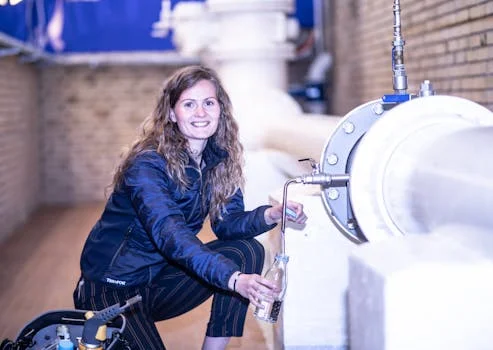
Provincial frameworks routinely tighten or extend the federal floor. Ontario Environmental Compliance Approvals under the Environmental Protection Act can set metal, nutrient, and toxicity limits well below WSER averages. Those approvals also fix sampling points and reporting calendars in the approval text. British Columbia authorizations under the Environmental Management Act, Alberta release conditions, and Quebec’s Directive 019 are further examples of provincial overlays that plant engineers must read alongside WSER.
Oil and gas sites in Alberta may also face Alberta Energy Regulator directives on produced water and lease runoff. Food, pulp, and chemical plants should assume sector guidance plus municipal sewer bylaws when discharging to a publicly owned treatment works. Enforcement tools include orders, permit suspension, and prosecutions that can reach directors and officers, with many enforcement outcomes published in government databases.
Who This Is For and Next Step
This guide is for plant engineers, EPC contractors, and procurement managers sizing treatment against Canadian federal and provincial discharge rules. It is less useful for systems clearly under 100 m³/d average influent, northern excluded geographies, or pulp mills already under sector-specific federal rules.
Selection checklist before you buy or upgrade:
- Confirm whether WSER applies (≥100 m³/d influent; ≥50% sanitary share for on-site ICI systems).
- List provincial or sewer-use limits that are stricter than CBOD/SS ≤25 mg/L.
- Match averaging and sampling frequency to your deposited flow band.
- Design for acute lethality, ammonia, and chlorine residual—not only BOD/TSS.
- Plan equalization and FOG or metals pretreatment for industrial peaks.
- Document bypass contingencies and transitional-authorization eligibility if upgrades run past compliance dates.
- Budget accredited lab costs and five-year record retention.
If you need equipment sized to a specific permit limit set, HydroPure can review influent data and map DAF, MBR, dosing, or disinfection options to the controlling parameter.
Frequently Asked Questions
What are Canada’s wastewater effluent regulations?
Canada’s core federal instrument is the Wastewater Systems Effluent Regulations (SOR/2012-139) under the Fisheries Act. Systems collecting 100 m³/d or more of influent and discharging to fish-bearing pathways must keep CBOD and SS averages ≤25 mg/L, meet chlorine and un-ionized ammonia limits when applicable, and pass acute lethality testing. Provinces often impose tighter site-specific conditions on top of that federal floor.
Does WSER apply to every industrial plant?
No. On-site industrial, commercial, or institutional systems designed for less than 50% blackwater and greywater are outside WSER. Pulp and paper mills use separate federal effluent regulations. Many factories instead hold provincial approvals or sewer-use permits. Always verify the application section of SOR/2012-139 and your provincial instrument before assuming federal WSER sampling rules apply.
Can you bypass treatment temporarily in Canada?
Yes, but only with authorization. The June 2024 amendments expanded temporary bypass authorizations for planned maintenance and construction on sewer systems. Unauthorized bypasses that deposit deleterious substances into fish-bearing waters remain Fisheries Act violations and trigger notification and mitigation duties. Industrial plants should treat bypass as a last resort and may need to idle production if pretreatment fails.
Are small wastewater systems exempt from WSER?
Systems collecting less than 100 m³/d average daily influent are generally outside WSER application. Earlier summaries sometimes said size never mattered; the current regulation sets the 100 m³/d threshold in section 2. Provincial or municipal rules can still apply to small dischargers even when federal WSER does not.National CBOD and SS averages of ≤25 mg/L were not relaxed by those amendments.
Further Reading
Explore these in-depth articles on related wastewater treatment topics:
- industrial wastewater compliance strategies in regulated markets
- U.S. wastewater compliance benchmarks for cross-border operations
For a deeper technical dive, operators should consult Environment and Climate Change Canada's official "Guidance for the Wastewater Systems Effluent Regulations" document, which provides detailed interpretations of the regulations and examples of compliance scenarios. Additionally, the Canadian Council of Ministers of the Environment (CCME) website hosts valuable resources on national water quality guidelines.