
What UF Can and Cannot Remove from Detergent Wastewater
An ultrafiltration system for detergent wastewater uses a pressure-driven membrane to retain surfactant micelles, emulsified oil, colloids, and suspended solids while allowing much of the water and some smaller dissolved species to pass. It is usually a pretreatment or physical-separation step, not a complete treatment train. MDPI reported 83.6% recovery of excess residual detergent and 71% COD removal in one laundry-wastewater system, but real wastewater caused 80–91% permeability loss. Industrial selection should therefore define COD, surfactant type, oil, hardness, temperature, flow, recovery, and concentrate disposal before choosing PVDF hollow-fiber UF, with DAF upstream and NF or RO downstream when required.
UF separates by size exclusion rather than by removing every molecule of detergent. RACO Man gives a general UF pore range of 0.001–0.1 micrometers, while Water & Wastewater gives 1–100 nanometers; these are general definitions rather than detergent-duty selection limits.
The physically retained fraction can include surfactant micelles, emulsified oil, colloids, suspended solids, bacteria, and other larger contaminants. Some low-molecular-weight surfactant and individual solute fractions can pass with the permeate. MDPI’s 2023 laundry study reported recovery of 83.6% of excess residual detergent, with 71% COD removal attributed mainly to micelle rejection. That result is application-specific: the study also reported 80–91% permeability loss during filtration of real laundry wastewater, compared with up to 8% in detergent solution.
UF does not reliably remove dissolved salts or ions. RACO Man identifies this as a principal limitation, and high-salinity reuse requirements may therefore require reverse osmosis or another desalination step. The correct boundary is process objective: UF is relevant for physical separation, water recovery, reuse preparation, or protection of downstream membranes. It is not the right first barrier for untreated, highly oily wastewater because retained oil and solids accelerate fouling.
Characterize the Detergent Wastewater Before Sizing the UF
A credible UF sizing calculation begins with a site-specific feed-analysis package, not a nominal flow rate or a generic membrane-rejection percentage. The process engineer needs enough information to establish hydraulic loading, foulant loading, recovery, membrane compatibility, and concentrate handling.
Request COD, total surfactants or MBAS, individual surfactant identity, oil and grease, suspended solids, turbidity, pH, hardness, conductivity, temperature, and hourly flow. Also identify whether the source is industrial laundry wash water, automotive parts-washer effluent, textile scouring liquor, or another detergent-bearing process. Those streams share a basic contamination mechanism, but their oil, solids, temperature, and reuse requirements differ.
HydropureWater’s 2026 field data describe a broad detergent-stream envelope of COD 1,000–15,000 mg/L, total surfactants 200–2,000 mg/L, oils and grease 100–5,000 mg/L, and pH 6–10. These are screening benchmarks, not final design values. Composite sampling across operating conditions and direct analysis of the actual reuse or discharge objective remain necessary.
Surfactant identity matters because the same nominal pore size does not produce the same rejection for every formulation. HydropureWater’s 2026 guide reports rejection of 98–99% for LAS, 95–97% for SLES, and 90–95% for APG under its tested or modeled conditions, with low-molecular-weight fractions able to pass through 0.01–0.1-micrometer pores. Treat these percentages as chemistry-specific guidance, not guaranteed plant performance.
Temperature must also be confirmed. MDPI’s 2023 study assumed laundry wastewater at 25–40 °C and states that the proposed implementation may be less suitable above 80 °C. That observation applies to that submerged system and should not be converted into a universal membrane-temperature limit.
| Required feed input | Engineering use | Decision affected |
|---|---|---|
| COD and total surfactants or MBAS | Defines organic and surfactant loading | UF area, pretreatment, downstream polishing |
| Oil and grease, suspended solids, turbidity | Identifies principal foulant load | DAF requirement and feed conditioning |
| Individual surfactant identity | Establishes micelle behavior and rejection risk | Pore selection and NF or RO need |
| Hardness, pH, conductivity, temperature | Establishes scaling and material-compatibility constraints | Membrane, CIP, and operating limits |
| Design flow, operating hours, required recovery | Sets hydraulic and membrane-area basis | Skid capacity, controls, concentrate outlet |
Define the concentrate outlet before requesting a price. Permitted disposal, an evaporator, or surfactant recovery changes both process design and operating cost. For an oily stream, evaluate DAF pretreatment for oily detergent wastewater rather than assuming that UF can absorb the full oil load.
Place UF in the Detergent Wastewater Treatment Train
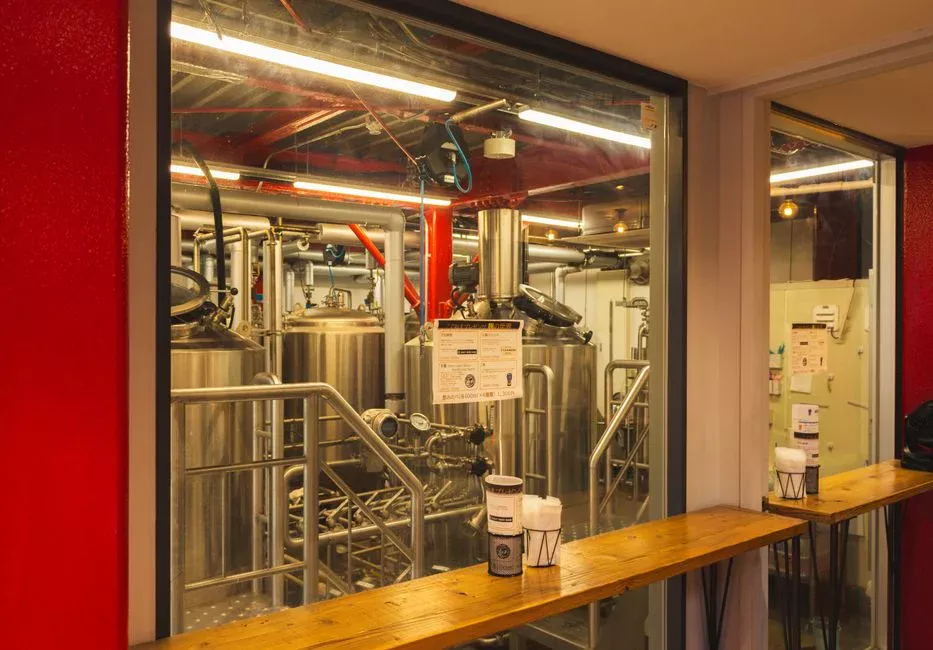
A detergent-wastewater treatment train should be selected as a sequence: equalization, upstream oil and solids removal, UF physical separation, optional dissolved-species polishing, and managed concentrate handling.
- Equalize the incoming stream for flow, temperature, and contaminant variation.
- Remove free and emulsified oil and floatable solids with DAF or an equivalent process.
- Use UF to retain remaining micelles, colloids, oil droplets, and suspended solids.
- Add NF or RO when the reuse objective requires tighter dissolved-species or salt control.
- Route UF concentrate and RO reject to a defined disposal, recovery, or evaporation destination.
HydropureWater’s 2026 sizing guidance uses DAF at 1.2 times UF feed flow, UF at 1.0 times plant design flow, and RO at 1.0 times UF permeate flow in a design context where UF recovery is approximately 90%. These ratios are a guide for equivalent comparison; they do not replace feed testing, hydraulic review, and vendor design calculations.
DAF comes first because it removes the most aggressive foulants before they reach the membrane. HydropureWater’s 2026 guide reports 60–80% removal of free and emulsified oil and floatable solids. The same guide reports COD typically below 500 mg/L and surfactant below 50 mg/L after UF, with RO polishing used where reuse requires conductivity below 50 µS/cm. Those values apply to the stated treatment-train context, not to every detergent wastewater.
Downstream reverse osmosis reduces the suspended-solids and colloidal load presented to the RO membrane. MDPI’s 2023 study separately notes that crossflow UF can serve as post-treatment for residual detergent and further reuse. In a DAF–UF–RO train, however, UF and RO perform different functions: UF provides physical separation, NF targets smaller dissolved species where required, and RO addresses dissolved salts and conductivity.
| Stage | Primary function | Reason for placement |
|---|---|---|
| Equalization | Stabilize hydraulic and feed conditions | Limits shock loading to downstream equipment |
| DAF or equivalent | Remove oil and floatable solids | Reduces the most aggressive UF-fouling load |
| UF | Retain micelles, residual emulsions, colloids, and solids | Provides physical separation and prepares reuse or RO feed |
| NF or RO | Polish smaller dissolved species or salts | Required when the end use exceeds UF capability |
| Concentrate management | Disposal, recovery, or evaporation | Closes the process and determines operating cost |
When comparing a standalone UF skid with a full installation, make the scope explicit. The industrial reverse-osmosis polishing stage may be necessary for reuse, but it should not be presented as part of a UF-only package unless the proposal expressly includes it.
Control Fouling and Protect Membrane Performance
Stable detergent-wastewater performance depends more on feed conditioning and operating discipline than on nominal pore size alone. HydropureWater’s 2026 guide identifies three principal fouling mechanisms: surfactant gel-layer formation, oil wetting, and calcium–surfactant complex scaling when feed hardness exceeds 200 mg/L as CaCO₃.
The academic evidence shows why a clean-water or detergent-only test cannot validate a real wastewater design. MDPI reported permeability loss of up to 8% when filtering detergent solution, but 80–91% when filtering real laundry wastewater. The real feed therefore introduced fouling mechanisms that the simplified surfactant test did not reproduce.
That study used a submerged, gravity-driven system, not a pressurized cross-flow skid. It reported flux of 15.6 L/(m²·h) at 10 kPa and 25.2 L/(m²·h) at 6 kPa; the higher-pressure condition had a flux 38% below the 6 kPa result. The practical lesson is that increasing pressure did not compensate for fouling in that system.
For emulsified, oily detergent wastewater, HydropureWater’s 2026 operating guidance identifies cross-flow UF as standard because tangential flow scours the membrane and limits consolidation of the gel layer. Dead-end filtration remains more suitable for low-solids, low-oil polishing. Membrane area, recovery, cross-flow velocity, TMP, and backwash frequency must be designed together; increasing area alone does not remove an incompatible feed.
HydropureWater reports a stable-flux range of 50–150 LMH for PVDF hollow-fiber detergent duty, compared with 200–400 LMH for clean groundwater using the same module geometry. The detergent range is a design reference under the guide’s conditions, not a guaranteed site flux. Supplier guarantees should be tied to the specified feed, temperature, recovery, and cleaning regime.
Use automated backwash, air scour, and a chemistry-matched clean-in-place protocol. HydropureWater’s 2026 guide describes NaOH and citric-acid cleaning for applicable detergent streams and CIP every 1–4 weeks where DAF pretreatment is provided. Cleaning frequency must follow measured permeability decline and identified foulant rather than a calendar rule alone. Review the available RO and UF membrane elements only after the chemical-compatibility and cleaning strategy has been established.
Choose the Membrane and UF Configuration
PVDF hollow fiber is a practical default for many detergent duties, but the selection must follow feed chemistry, temperature, cleaning requirements, recovery, and space constraints. RACO Man notes that hollow fiber provides high packing density and high membrane area per volume, while flat sheet offers easier access for cleaning.
HydropureWater’s 2026 guide describes PVDF hollow fiber as its detergent-duty default, with 3–5-year membrane life and 50–150 LMH stable flux under the stated duty. Subject to temperature, pH, and chemical compatibility, PVDF offers a practical balance between chemical tolerance, fouling resistance, and installed footprint.
PES is an alternative where higher flux or tighter molecular-weight cut-off matters more than PVDF chemical tolerance. The 2026 guide gives PES a 5–7-year life under matched chemistry. Ceramic is a specialized option for feeds above 70 °C, aggressive CIP, or a 10-plus-year amortization horizon; the guide places its capital cost at 3–5 times the PVDF baseline.
| Option | Selection advantage | Main constraint |
|---|---|---|
| PVDF hollow fiber | High packing density; detergent-duty default; automatic backwash and air-scour compatibility | Confirm temperature, pH, and CIP chemistry |
| PES | Higher-flux or tighter-cut-off option under matched chemistry | Review chemical tolerance and operating envelope |
| Ceramic | Specialized high-temperature or aggressive-cleaning application | Higher capital cost and different footprint economics |
| Flat sheet | Easier physical access for cleaning | Lower packing density and larger footprint |
HydropureWater’s catalog configuration uses 0.03-micron PVDF hollow-fiber membranes, capacity from 2,000 to 40,000 L/h, automatic backwash, and air scour. These are catalog configuration values, not a guarantee of suitability. Final selection still requires confirmation of detergent chemistry, temperature, pH, feed oil, recovery, and concentrate handling.
Cross-flow and dead-end modes should be matched to the job. HydropureWater’s 2026 guide identifies cross-flow for emulsified oily detergent wastewater and dead-end for low-solids, low-oil polishing. When evaluating a PVDF hollow-fiber ultrafiltration system, ask the supplier to state membrane area, design flux, recovery, TMP, and the operating basis behind any performance guarantee.
Estimate Cost, Operating Risk, and Payback
A first-pass UF budget should separate the UF skid from the complete treatment train and should treat operating assumptions as variables rather than facts. HydropureWater’s 2026 quotation range for UF skids is $40,000–$500,000+ depending on flow rate, with directional operating cost of $0.08–$0.32/m³. These are planning benchmarks, not quotations for a specific feed.
The 2026 guide identifies several commonly omitted items: a CIP skid at $15,000–$30,000, PLC and HMI controls at $8,000–$20,000, and feed and backwash tanks with transfer pumps at $10,000–$40,000. It places a DAF–UF–RO system above $500,000, while the UF stage alone is generally lower. Installation, commissioning, piping, utilities, and concentrate equipment still require flow-specific pricing.
| Cost item | 2026 budgeting evidence | Scope caution |
|---|---|---|
| UF skid | $40,000–$500,000+ | Flow rate and configuration dependent |
| UF-stage OPEX | $0.08–$0.32/m³ | Directional range, not a site quotation |
| CIP skid | $15,000–$30,000 | May be an optional adder |
| PLC and HMI | $8,000–$20,000 | May be an optional adder |
| Feed and backwash tanks with pumps | $10,000–$40,000 | Confirm tank volume and duty |
| Full DAF–UF–RO train | Above $500,000 | Not comparable with UF-only scope |
Concentrate disposal, membrane replacement, CIP chemicals, energy, and operator time drive operating cost. HydropureWater’s 2026 guide says the broad $0.08–$0.32/m³ range is strongly influenced by concentrate-disposal cost. A low-disposal-cost site can therefore have a materially different business case from a site hauling away concentrated surfactant wastewater.
The same guide gives a typical 10–30-month payback range, but haul-away cost, operating hours, water reuse, and surfactant recovery determine the actual result. Do not rely on a generic arithmetic example. Require a site-specific savings model using measured flow, concentration, disposal rate, recovery, operating hours, and the selected concentrate route. Use the detergent wastewater UF cost and payback model as a framework, then populate it with verified site data.
Build a Vendor RFQ That Produces Comparable Proposals
An RFQ produces comparable proposals only when every bidder uses the same feed, recovery, treatment objectives, and equipment scope. Headline skid prices are otherwise not comparable.
Require every bid to state feed flow, operating hours, temperature, COD, surfactant type and concentration, oil and grease, hardness, turbidity, pH, and required permeate or reuse quality. Provide enough analytical history to show variability rather than one composite sample.
Require each offer to identify membrane material, pore size, module configuration, membrane area, design flux, TMP, recovery, cross-flow mode, backwash method, air scour, and automatic controls. A guaranteed flux or rejection value should identify the feed and operating conditions used to establish it.
Request a complete mass balance covering feed volume, permeate, concentrate, COD, surfactant, and oil across DAF, UF, and any downstream polishing stage. State the design recovery at each stage and provide the expected concentrate characteristics.
Define the commercial boundary explicitly: tanks, pumps, DAF, CIP skid, PLC/HMI, installation, commissioning, operator training, membrane replacement, first-year spares, utilities, and warranty. Also ask vendors to separate the base skid, optional adders, annual OPEX assumptions, and sensitivity cases for disposal cost and operating hours.
Require a written operating and maintenance plan covering monitoring, cleaning triggers, CIP chemistry, membrane protection, and spare-parts availability. Ask where the concentrate will go and who owns that disposal route. If pumps, valves, or filter media are being proposed as project accessories, include their scope in the same water-treatment parts and filter-media schedule so omissions are visible during technical review.
Frequently Asked Questions
What is the realistic 2026 cost of an ultrafiltration system for detergent wastewater?
HydropureWater’s 2026 budget range is $40,000–$500,000+ for a UF skid and $0.08–$0.32/m³ for operating cost. A reliable quotation requires design flow, feed analysis, temperature, recovery, membrane area, controls, CIP scope, and concentrate handling. The figures are directional benchmarks rather than a price for an undefined skid.
How do I size a UF system for detergent wastewater?
Design flow and operating hours establish hydraulic capacity; feed analysis establishes membrane area, pretreatment, and concentrate requirements. Specify COD, surfactant identity, oil, hardness, temperature, pH, recovery, and end-use quality. Do not size from total flow alone.
Does UF alone meet detergent wastewater discharge or reuse limits?
UF does not reliably remove dissolved salts or all low-molecular-weight surfactant fractions. Where the permit or reuse specification requires lower dissolved-species, conductivity, or surfactant levels, add NF, RO, or another validated treatment stage and confirm the final quality with representative testing.
Should a detergent-wastewater project specify PVDF, PES, or ceramic UF?
Match the material to the actual chemistry, temperature, cleaning regime, flux target, and replacement horizon. PVDF hollow fiber is a common detergent-duty starting point; PES may suit higher-flux or tighter-cut-off duties, while ceramic supports specialized high-temperature or aggressive-cleaning applications. Confirm all operating limits during engineering.
How do I compare UF vendors fairly?
Require identical feed assumptions, recovery, membrane area, CIP scope, controls, downstream treatment, concentrate route, warranty, and OPEX definitions in every proposal. The purchasing check is a line-by-line scope reconciliation, not acceptance of the lowest quoted skid price.