What EV and automotive factories are actually trying to remove
For EV and auto manufacturing wastewater in Huntington, choose DAF when the primary targets are free oil, coolant carryover, FOG or buoyant solids; choose a clarifier when the stream is dominated by dense metal fines, grit, casting sand or precipitated solids. Mixed streams often justify DAF followed by a lamella clarifier or another solids-polishing step. The correct 2026 decision is based on wastewater sampling, particle buoyancy, flow variation, footprint, sludge handling and permit requirements—not equipment type alone. DAF generally offers compact treatment and concentrated float, while gravity clarification usually has lower energy demand but depends on settleable solids.
An EV assembly plant and a battery-cell, casting, stamping or metal-finishing operation should not be treated as one “automotive” wastewater stream. Build a source-by-source inventory before selecting equipment, using the transportation equipment wastewater treatment comparison as a framework, then validate each stream with current sampling.
| Factory stream | Contaminants to verify | Primary-treatment question |
|---|---|---|
| Machining coolant and cutting fluid | Free oil, emulsified oil, FOG, suspended solids, colloids | Is DAF needed for buoyant oil and coolant carryover? |
| Stamping and parts washing | Hydraulic oil, lubricants, detergents, suspended fines | Can streams be segregated, or is a mixed treatment train required? |
| Painting and coating | Paint solids, emulsified coating residues, surfactants | Will primary separation address the governing pollutant? |
| Casting and metal finishing | Sand, grit, dense metal-bearing solids, pH and dissolved metals | Is gravity clarification sufficient, or is precipitation required? |
| Battery-process wastewater | Process-specific dissolved metals, acidity or alkalinity, suspended solids | Which pollutants must be addressed before primary treatment? |
| Stormwater and sanitary flows | Variable solids, oils, metals and dilute sanitary waste | Should these flows remain segregated or be combined? |
For every stream, request current analytical results and identify whether the target is free oil, emulsified oil, FOG, suspended solids, colloids, dissolved metals or a mixed contaminant. Also identify the final route: direct discharge, discharge to a POTW, internal reuse or another authorized destination. Equipment selection and permit compliance are separate decisions, but the selected process must support the intended discharge route.
How DAF and gravity clarification separate different particles
Dissolved air flotation separates particles by buoyancy: saturated air is released as microbubbles, the bubbles attach to or carry conditioned particles upward, and a skimmer removes the resulting float. Clarification separates by gravity: settleable solids move downward and are collected as sludge. Dense, readily settleable material is therefore the stronger gravity-separation candidate.
Clearwater Industries’ published DAF description gives a microbubble range of 30–50 microns and recommends chemical coagulation and flocculation to improve conditioning and bubble contact (Clearwater Industries, April 2026). The industrial DAF system for EV and auto wastewater is consequently most relevant when the objective is to recover free oil, FOG or other buoyant material—not merely to remove particles that will settle.
Oil films, FOG and coolant-associated organics are normally favorable DAF targets because separation depends on flotation rather than settling. Casting sand, heavy grit and dense metal-bearing solids are normally more suitable for gravity or lamella clarification, where the target is recoverable settled solids. A compact lamella clarifier for dense industrial solids should be considered when settling area, sludge collection and solids concentration drive the design.
Neither process is a universal substitute for chemical precipitation, biological treatment, filtration or other unit operations. If dissolved metals or other soluble pollutants govern compliance, physical separation alone does not resolve the problem. The buyer must identify those pollutants during sampling and define any downstream treatment before ordering primary equipment.
Match each factory stream to the most suitable primary treatment
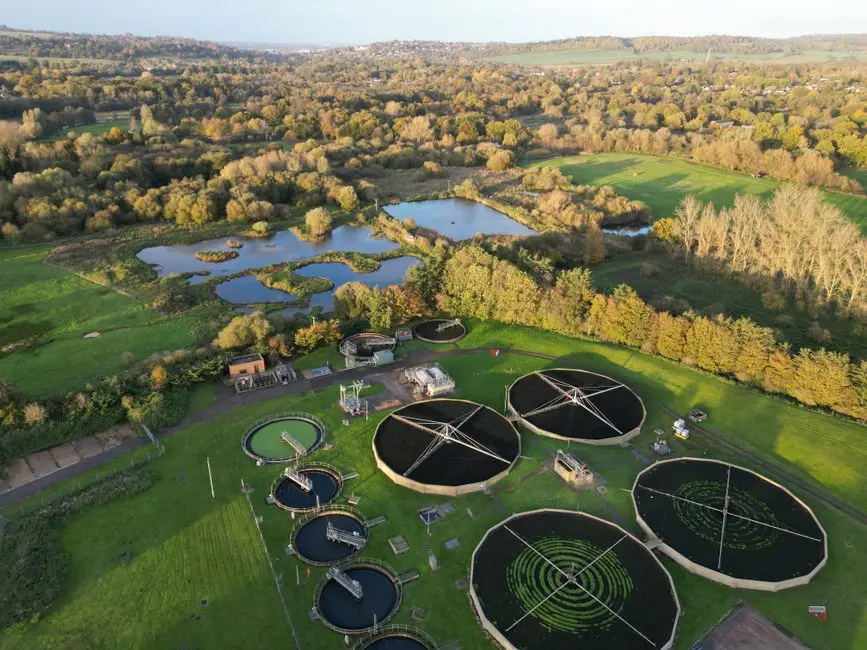
The most defensible starting point for each stream is DAF for buoyant oils and gravity clarification for dense solids; mixed streams require a pilot-backed treatment train rather than a single-unit assumption.
| Stream condition | Leading candidate | Required confirmation |
|---|---|---|
| Machine coolant, hydraulic oil or parts-washer discharge with free oil or FOG | DAF | Jar or pilot testing of emulsified oil, coolant chemistry and peak flow |
| Casting, stamping, grinding or metal-finishing discharge dominated by dense solids | Clarifier or lamella clarifier | Settling tests, solids characterization and sludge handling review |
| Both buoyant oil and settleable solids | DAF followed by lamella clarification | Pilot confirmation of stream sequence, conditioning and solids handling |
| Paint-bearing stormwater, soluble metals or battery-process water | Additional unit processes may be required | Identify the governing pollutant and applicable pretreatment requirements |
For machining coolant, hydraulic-oil and parts-washer streams containing free oil or FOG, DAF is the preferred primary candidate. The qualification is important: emulsified oil may not behave like free oil, and coolant chemistry can change bubble attachment and conditioning demand. Jar tests should establish whether chemical conditioning improves separation before pilot work begins.
For casting, stamping, grinding and metal-finishing streams carrying dense solids, a clarifier or lamella clarifier is the stronger gravity-separation candidate. If the stream also contains buoyant oil, a DAF-to-lamella sequence is technically plausible, but it remains a candidate—not a guaranteed specification—until representative testing confirms both stages.
Paint-bearing flows, stormwater containing settled or dissolved contaminants, soluble-metal streams and battery-process wastewater may require chemical treatment, filtration or biological treatment beyond primary clarification. Equalization, pH control, chemical conditioning and downstream solids handling are prerequisites for either DAF or clarification. The automatic chemical dosing system should therefore be evaluated within the process basis rather than treated as an accessory.
Compare footprint, sludge, energy and operating demands
DAF’s principal site advantage is compact separation with skimmable float, while its operating burden includes air saturation, recycle pumping, chemical conditioning, controls and attention to the flotation mechanism. A clarifier uses gravity separation and generally avoids aeration-equivalent energy demand, but it may require a larger basin, structural work, sludge collection and more detention.
| Comparison item | DAF | Clarifier or lamella clarifier |
|---|---|---|
| Principal site benefit | Compact separation and recoverable float | Simple gravity separation of settleable solids |
| Main equipment demands | Air saturation, recycle pumping, controls, conditioning and skimmer maintenance | Basin structure, collection and sludge-removal systems |
| Sludge-dewatering interface | Float must be routed to the selected dewatering method | Underflow must be evaluated for thickening and dewatering |
| Operating focus | Chemical demand, recycle and float handling | Hydraulic distribution, settling performance and sludge removal |
| Pricing basis | Site-specific quotation | Site-specific quotation |
HydropureWater’s lamella-clarifier specification lists 20–40 m/h surface loading. That is a product-specific reference, not a universal sizing value for every EV or automotive wastewater stream. Final loading must reflect the selected module, wastewater characteristics and the manufacturer’s design basis.
Sludge handling belongs in the initial comparison. The supplied plate-and-frame filter-press range is 1–500 m², with manual, hydraulic or fully automatic PLC options. Ask the equipment supplier to demonstrate that the proposed DAF float or clarifier sludge will feed the selected press without creating an unusable blend. See the sludge dewatering technology comparison and the plate-and-frame filter press options.
Do not use generic equipment prices or unsupported removal percentages for budgeting. Request separate quotations for equipment, foundations, electrical work, chemicals, operator labor, maintenance, bypass provisions and final sludge disposal. The installed scope and operating costs—not purchase price alone—determine the economic choice.
Size the system from wastewater evidence—not the factory label
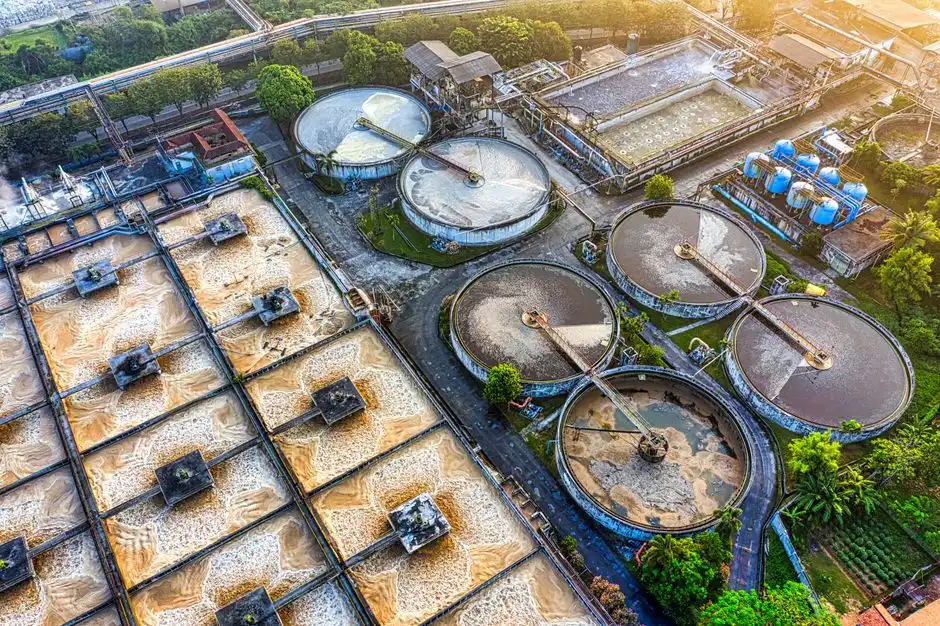
Correct sizing starts with segregated flows and peak-load behavior, not an averaged plant total or a catalog capacity selected from the word “automotive.” Request average and peak flow, batch-discharge behavior, operating shifts, production changes and expected EV or vehicle-production expansion. For each stream, request TSS, FOG or oil and grease, oil content, turbidity, relevant metals, pH and temperature results.
The supplied research does not establish universal acceptance limits for EV or automotive wastewater, so analytical results must be tied to the applicable permit, POTW requirements or internal reuse specification. Calculate hydraulic and contaminant loading after identifying peak periods. A production line that discharges a concentrated batch after cleaning can govern equipment size even when its daily average flow is modest.
HydropureWater’s DAF capacity range is 4–300 m³/h across 13 standard models. Treat that as a preliminary equipment-screening boundary only. Final selection depends on wastewater characteristics, peak flow, operating redundancy and the manufacturer’s design.
The supplier request should state equalization volume, duty/standby philosophy, bypass requirements, control objectives and future expansion needs. Ask how the system handles a production interruption, maintenance drain or abnormal batch discharge. A capacity that works only under steady averaged flow is not an adequate design basis. Additional concept-selection guidance appears in the industrial ETP and DAF sizing guide.
Validate performance with a pilot before the 2026 purchase order
A representative pilot should establish whether the proposed process performs on the factory’s actual wastewater before a permanent system is purchased. Use a mobile DAF or comparable pilot to measure oil, FOG and TSS response under production chemistry, and test the clarifier or lamella option for the settleable-solids fraction where feasible.
| Pilot activity | Information to record | Decision supported |
|---|---|---|
| Startup | Treated water quality, float or sludge condition, control stability | Whether the equipment can establish stable operation |
| Steady production | Oil, FOG, TSS response, chemical consumption and energy use | Expected operating burden and treatment performance |
| Representative batch dumps | Peak-load response and recovery behavior | Equalization, redundancy and final sizing |
| Solids handling trial | Float or sludge solids and downstream dewatering behavior | Compatibility with the selected sludge-treatment system |
EPA report 832-R-12-011, Emerging Technologies for Wastewater Treatment and In-Plant Wet Weather Management (March 2013), warns that some performance information may come from manufacturers and could not be verified with full-scale case studies, while some cost information relied on estimated savings without field data. The report specifically advises collecting current information when evaluating technologies, estimated costs and stated performance.
That warning supports industrial wastewater pilot testing rather than reliance on generic removal claims. Use pilot results, current permit conditions and the industrial user’s written acceptance criteria as the basis for final sizing and guarantees. The DAF engineering specifications and supplier checklist provides a useful structure for documenting those responsibilities.
Check Huntington discharge and pretreatment risk before ordering
Equipment selection must begin with the intended destination: direct discharge, POTW pretreatment or internal reuse requires a different process and documentation basis. Require the supplier to identify that intended route in the proposal and obtain written confirmation from the receiving authority where required.
Physical removal and permit compliance are not interchangeable. DAF and clarification can remove oil and suspended solids, but neither establishes compliance for dissolved metals, toxicity, pH or other regulated pollutants by itself. The receiving authority’s current permit or pretreatment requirements should therefore be reviewed against the pilot-treated water, not merely the untreated influent.
EPA 832-R-12-011 lists magnetite ballasted sedimentation among physical/chemical technologies, but the underlying report is dated March 2013. Current equipment availability, treatment performance, costs and regulatory requirements must be checked before selection, consistent with the EPA report’s own warning that current information is needed.
Request a complete submittal covering the process basis, guarantees, materials, controls, chemical compatibility, drawings, controls narrative, O&M manual, spare parts and warranty. Also define who owns permit compliance, pilot reporting, installation, training and downstream sludge handling. For a related acquisition and wastewater-requirements workflow, see the 2026 wastewater requirements checklist.
Frequently Asked Questions
What should a Huntington EV factory choose for oily coolant wastewater?
DAF is the leading candidate when the targets are free oil and FOG, but the purchase should wait for testing of emulsions, coolant chemistry and peak flow. Confirm the required oil, FOG and TSS performance through representative pilot work before sizing.
When is a clarifier more economical than DAF?
A clarifier is most defensible when the wastewater is dominated by settleable heavy solids, adequate space exists and lower chemical and energy demand outweigh civil-basin requirements. Compare complete installed costs—including foundations, sludge handling, labor and disposal—not equipment purchase price alone.
How much does a DAF system cost for EV or auto wastewater?
The supplied research does not support a universal price for this application. Request a site-specific quote covering conditioning equipment, controls, civil work, installation, sludge handling, operator labor, training and lifecycle consumables. Provide flow, analytical results, operating schedules and the intended discharge route before comparing bids.
Can one system handle every wastewater stream in an EV or auto plant?
Usually not without segregation and pretreatment. Mixed streams can require DAF, clarification, chemical treatment, filtration or biological treatment in combination. Identify which contaminants govern each discharge and pilot the complete treatment train before making a single-system specification.
How do I choose a DAF or clarifier supplier?
Require a documented design basis, representative performance data, performance guarantees, materials and controls details, O&M support, pilot support and a clear permit-compliance responsibility. Also require the submittal to state exclusions, chemical assumptions, sludge characteristics and the consequences of production or batch-flow variation.