What Changes When Google Acquires a German Plant?
When Google acquires a plant in Germany, the site's existing wastewater obligations remain central to due diligence. The buyer should verify the industrial discharge permit, sewer pretreatment agreement, monitoring records, wastewater characterisation, treatment capacity and outstanding compliance issues before transfer. The acquisition may also change the operator, production process, waste profile, ownership or permit holder in a way requiring notification or approval. Exact requirements depend on the plant, receiving sewer and applicable authorities, so no blanket German limit should be assumed.
The acquisition does not by itself remove the plant's enforceable wastewater duties. Google's corporate policies do not replace site-specific permit conditions, pretreatment requirements, monitoring duties or liabilities arising from past operations. A transaction may transfer contractual and corporate control while leaving the responsible permit holder, operating company, production scope or discharge route unchanged—or it may affect all of them. Each point needs documentary confirmation rather than assumption.
The immediate diligence action is to freeze the evidence trail before signing or closing: obtain the current permit file, sewer agreement, monitoring data, enforcement correspondence, treatment contracts and outstanding capital-work list. The wastewater guide for beverage-plant acquisitions provides a useful acquisition context, but the German permit and sewer documents remain the controlling evidence for the acquired site.
Legal, EHS and process engineering should jointly determine whether the transaction changes the legal operator, permit holder, production scope, wastewater-generating processes, ownership structure, financing arrangements or responsibility for monitoring. Until the competent authority or sewer operator confirms the required notification, consent or documentation path, closing should not assume that continuity of operations equals continuity of regulatory status.
Build a Germany Wastewater Due-Diligence Checklist
The acquisition review should separate documentary entitlement from demonstrated operating performance. The former establishes what the site may discharge and to whom; the latter tests whether the plant can consistently meet those conditions under realistic production and upset conditions.
- Permit package: Request the current German industrial discharge permit and every attached drawing, monitoring condition, reporting duty and compliance schedule.
- Connection and sewer terms: Obtain the sewer pretreatment agreement, connection approval, applicable local discharge conditions, fee structure and any reserved-capacity requirements.
- Operating evidence: Collect the available process-flow diagrams, wastewater mass balance, laboratory results, calibration records, logbooks, incident reports and regulator correspondence.
- Treatment history: Review O&M records, chemical use, sludge or filter-cake destinations, maintenance backlog, bypass history and emergency-response arrangements.
- Transaction implications: Confirm whether the acquisition changes the permit holder, operator, process, flow, pollutant profile, discharge point or ownership structure in a way the competent authority or sewer operator must review.
This approach follows the evidence logic in the industrial ETP acquisition due-diligence guide. Unresolved matters should be classified as closing conditions, indemnities, price adjustments or post-close capital commitments. They should not be assumed correctable through ordinary operations after transfer.
| Diligence evidence | What the buyer must establish | Transaction treatment if unresolved |
|---|---|---|
| Industrial discharge permit and attachments | Authorised discharge scope, limits, monitoring, reporting and compliance schedule | Closing condition, specific indemnity or price adjustment |
| Sewer pretreatment agreement and connection approval | Applicable sewer conditions, capacity allocation and discharge route | Authority or sewer-operator confirmation before closing |
| Flow and pollutant records | Measured loads at normal, peak and credible upset conditions | Post-close characterisation and sized capital commitment |
| Exceedances, bypasses and enforcement correspondence | Cause, corrective action, recurrence and closure evidence | Indemnity for known liabilities; condition for unresolved enforcement exposure |
| Treatment O&M, maintenance and residuals records | Actual performance, reliability, backlog and disposal compliance | Purchase-price adjustment or funded transition plan |
Characterise the Wastewater Before Selecting Treatment
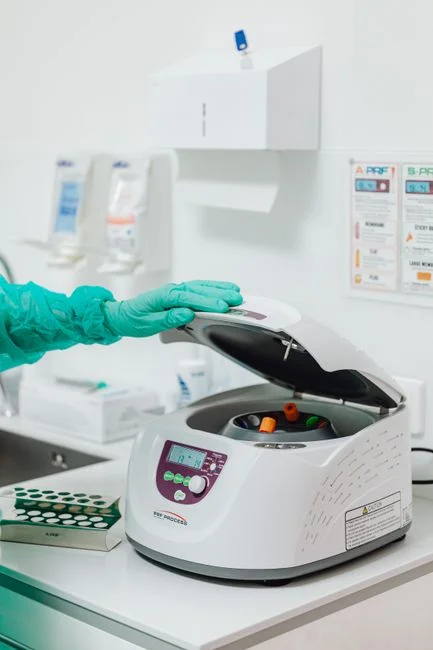
Treatment selection must begin with a source-by-source wastewater inventory, not an equipment catalogue. The acquired plant's process flow determines which streams require segregation, equalisation, pretreatment, biological treatment or direct disposal.
Start with production rinse, wash, cleaning, cooling, blowdown, laboratory and sanitary streams, then identify storm-water interfaces where they can affect the selected route. Draw a process-flow diagram that separates high-flow dilute streams from lower-flow concentrated streams. Identify streams that can be recycled or segregated before they mix with regulated effluent.
Request measured flow, pH, suspended solids, oil and grease, chemical oxygen demand, nitrogen and phosphorus data where relevant, plus process-specific constituents supported by the plant records. Include sampling method, sample location and operating condition; a laboratory value without its context is not a reliable design basis.
Use the verified data to calculate existing and projected pollutant loads. Compare those loads with the operating capacity of the installed treatment assets and with the sewer or receiving-water constraints documented in the permit. If one of those inputs is absent, record it as an open diligence item rather than inserting an assumed flow or concentration.
Then separate the treatment objectives: sewer acceptance, direct environmental compliance, on-site reuse, sludge handling and resource recovery. A unit that produces reusable water may still leave an unresolved concentrate or residual stream. The DAF-versus-clarifier analysis for petroleum wastewater illustrates why application-specific contaminants and discharge objectives must drive the comparison.
The broader design basis also includes resource use, not only final effluent quality. The peer-reviewed Water review “Use, Potential, Needs, and Limits of AI in Wastewater Treatment Applications”, published in 2024, identifies process energy consumption, greenhouse-gas emissions and resource recovery as simultaneous requirements for wastewater facilities. That supports a multidisciplinary selection process covering treatment, controls, energy and residuals.
Match Treatment Options to the Acquired Plant
The appropriate treatment train depends on confirmed contaminants, flow variability, target effluent quality, footprint, residuals handling and controls requirements. Catalogue flow ranges can frame the enquiry, but they do not replace vendor design against the acquired plant's duty.
| Option | Published selection envelope | Where it may fit | Diligence checks before selection |
|---|---|---|---|
| DAF | HydropureWater catalogue: 4–300 m³/h across 13 standard models | Industrial pretreatment when suspended solids, FOG, oil and grease or colloidal material are confirmed | Flow profile, contaminant loading, chemical demand, sludge removal and solids destination |
| Integrated MBR | HydropureWater catalogue: 10–2,000 m³/day | Combined activated sludge and submerged membrane filtration where effluent quality and footprint justify the stage | Organic loading, membrane compatibility, cleaning, redundancy, controls and residual handling |
| Ultrafiltration | HydropureWater catalogue: 2,000–40,000 L/h; 0.03-micron PVDF membranes; up to 300 ppm turbidity | Clarification or RO pretreatment within a broader treatment system | Feed chemistry, turbidity, flux, cleaning chemistry, recovery and downstream compatibility |
| Automatic chemical dosing | PLC-controlled dosing; no published fixed output range | Coagulant, flocculant or pH adjustment after reactions and compatibility are defined | Dosing range, storage, containment, materials, interlocks, operator competence and chemical supply |
| Plate-and-frame filter press | No project capacity established by the supplied research | Separation where the programme generates a dewaterable sludge | Sludge volume and rheology, plate sizing, cycle time, cake handling, logistics and permitted destination |
For a preliminary commercial screen, the automotive-plant wastewater acquisition requirements provides a useful equipment-selection structure, but its jurisdiction cannot substitute for German site evidence.
DAF is relevant only where the physical contaminants justify it. An industrial DAF pretreatment system should be sized around measured hydraulic and contaminant loads, not the upper catalogue limit. Likewise, an integrated MBR wastewater treatment system should be evaluated against biological loading, membrane design, footprint and reliability needs. UF is a clarification or RO-pretreatment stage, not a complete industrial ETP by itself.
Chemical dosing requires identified reactions, materials compatibility and a defensible dose range. A plate-and-frame press applies to sludge dewatering only after the downstream cake route is verified. For every option, final duty, redundancy, materials, controls and regulatory configuration require project-specific vendor design.
Verify Permit Continuity and Compliance Performance
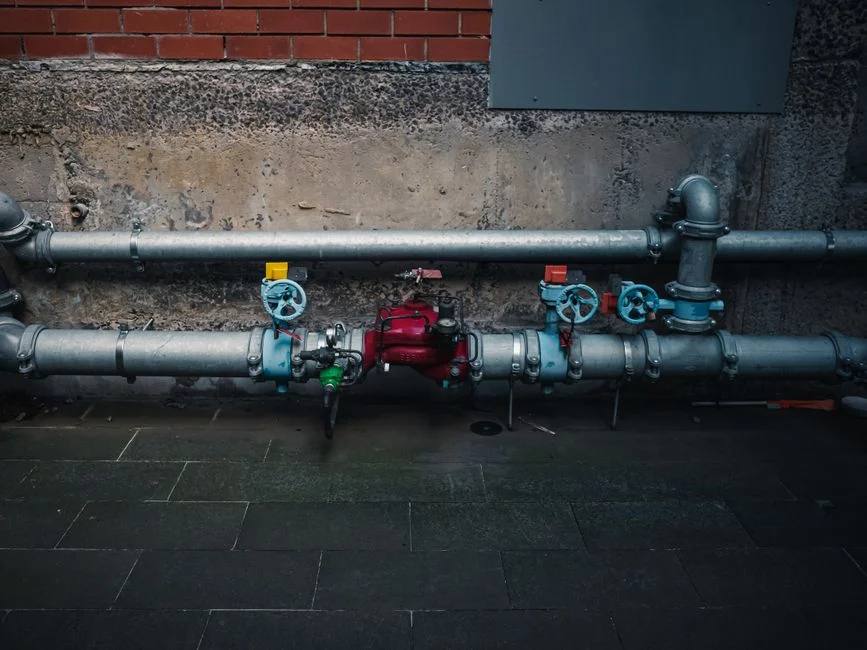
Permit continuity depends on the site operating within its documented conditions; it cannot be demonstrated by averaging historical effluent results. Compare permit limits with the highest credible operating condition, including production peaks, upset events, storm periods and maintenance outages.
Check that sampling points, instruments, calibration, laboratory methods, record retention and reporting workflows remain valid through the change of operator. If the incoming team changes laboratories, sampling personnel, control-system ownership or maintenance contractors, confirm that these changes do not interrupt the monitoring chain.
Trace every exceedance from the raw result through corrective action, root cause, capital fix and closure evidence. A recurring exceedance may affect treatment reliability, permit standing and transaction value even where each individual event was formally closed.
Review bypass, spill, sludge-disposal and emergency-containment events against site procedures and permit conditions. For bypasses, identify what initiated the event, whether monitoring and reporting occurred, and whether corrective work changed the underlying failure mode.
The comparison of petroleum plants meeting sewer limits highlights the practical need to connect operating evidence with discharge controls. For Germany, ask the responsible authority or sewer operator to confirm the required notification, consent or documentation path for the proposed transaction. Do not infer approval from a consultant announcement or corporate acquisition report.
Plan the Transition Without Creating a Compliance Gap
A plant transition plan should assign responsibility before ownership transfers. Build four linked lists: pre-close, closing day, first 30 days and long-term actions. Each item should have a named owner across permits, monitoring, chemicals, sludge, maintenance and reporting.
- Pre-close: Freeze the permit and evidence trail, identify authority contacts, resolve material permit gaps and agree the treatment of outstanding liabilities.
- Closing day: Confirm permit and operator responsibilities, controlled documents, reporting contacts, chemical custody, waste destinations and emergency contacts.
- First 30 days: Verify monitoring continuity, review operating deviations and confirm that inherited O&M records and corrective actions remain auditable.
- Long term: Implement verified characterisation, capacity upgrades, monitoring improvements and any agreed post-close capital commitments.
Incoming personnel should follow existing operating procedures and the permit until written training and authorised-operator arrangements are complete. Before handover, verify spares, chemical stock, laboratory support, control logic, alarms, bypass arrangements and emergency contacts. Any temporary operator arrangement should have a defined end date and accountable owner.
For a new or modified treatment train, commissioning acceptance should cover documented process guarantees, effluent performance, reliability and operator training. Define how test data will be compared with the permit or sewer conditions and who accepts residual performance risk.
Sweco's corporate announcement reports modernisation, climate resilience, ageing infrastructure and stricter EU requirements as drivers for German water-sector investment in 2026. It supports the need for transition planning, but its market commentary is not evidence of plant-specific compliance. The 2026 engineering guide on MBR treatment may inform technical review; it cannot replace the acquired site's permit, performance data or authority correspondence.
Frequently Asked Questions
What should Google's acquisition team request before closing?
Request the current industrial discharge permit and attachments, sewer pretreatment agreement, connection approval, monitoring results, calibration records, O&M history, enforcement correspondence, bypass records, residual-disposal documents, treatment contracts and the outstanding capital-work list. Confirm in writing which entity will be the legal operator and permit holder after closing. No blanket German limit should be assumed without the plant-specific documents and authority or sewer-operator confirmation.
How much will wastewater compliance and treatment cost?
A defensible estimate requires the acquired plant's measured flow, pollutant profile, treatment target, residual-handling route, site
Frequently Asked Questions
Does Google need a new wastewater permit when it acquires a plant in Germany?
Under the German Water Act (Wasserhaushaltsgesetz - WHG), a change in operator does not automatically invalidate an existing discharge permit (Einleitgenehmigung). However, the new operator must notify the relevant local water authority (Untere Wasserbehörde) of the transfer. If the acquisition involves process modifications, increased discharge volumes, or new chemical substances, a formal permit amendment or a new application under Section 57 WHG is mandatory to remain compliant with the updated 2026 environmental standards.
What should an acquisition team request from a German plant's wastewater records during due diligence?
The team must request the current "Einleitbescheid" (discharge permit) specifying maximum allowable concentrations (mg/l) for parameters like COD, BOD5, nitrogen, phosphorus, and heavy metals. Additionally, request the last 24 months of self-monitoring reports (Eigenkontrollverordnung), maintenance logs for the on-site pretreatment facility, and proof of compliance with the "Abwasserverordnung" (AbwV) specific to the plant's industrial sector (e.g., Annex 40 for metal processing or Annex 22 for chemical production).
How much does it cost to upgrade wastewater treatment after buying a German industrial plant?
Upgrade costs are highly variable based on the gap between current effluent quality and 2026 regulatory thresholds. Minor upgrades for monitoring and sensor integration typically range from 50,000 EUR to 150,000 EUR. Major structural investments, such as installing membrane bioreactors (MBR) or advanced oxidation processes (AOP) to meet stricter micropollutant limits, can range from 1 million EUR to over 5 million EUR, depending on the required flow capacity (m³/day) and the complexity of the influent contaminant profile.
How should a buyer select and size wastewater treatment equipment for an acquired plant?
Equipment selection must be based on a comprehensive mass balance analysis of the facility's process water. Sizing should account for peak hydraulic loads and "worst-case" contaminant concentrations identified in the historical monitoring data, while incorporating a 20-30% safety margin for future regulatory tightening. Systems must be designed in accordance with German DIN EN standards and verified through pilot testing to ensure they can achieve the specific discharge limits mandated by the local "Indirekteinleitergenehmigung" (indirect discharge permit) or direct discharge requirements.
What is the biggest wastewater compliance risk when a multinational acquires a German factory?
The primary risk is the "legacy liability" associated with contaminated soil or groundwater resulting from historical non-compliance with the Federal Soil Protection Act (BBodSchG). If a buyer inherits a system that has been discharging pollutants in excess of permit limits, the local water authority can enforce immediate remediation orders or impose significant fines under the Environmental Liability Act (Umwelthaftungsgesetz). Furthermore, failing to account for the tightening of the "Abwasserabgabengesetz" (Wastewater Charges Act) can lead to unexpected, recurring financial penalties based on total pollutant load discharged.