

What Sets the San Antonio Sewer Limit?
Petroleum plants near San Antonio meet sewer pretreatment limits by characterizing each wastewater stream, obtaining the applicable SAWS industrial wastewater discharge permit, and installing enough treatment to satisfy categorical, technically based local, and permit-specific requirements. SAWS incorporates the EPA General Pretreatment Regulations in 40 CFR Part 403 into its TCEQ-approved program and San Antonio City Code Chapter 34. A typical train starts with source control and equalization, then uses oil-and-solids removal, pH adjustment, and additional treatment as required. Facilities may need pretreatment when BOD or TSS exceeds 250 mg/L, while industrial users discharging more than 25,000 gallons of process water per day may require a permit. The final design must be confirmed against the facility’s permit and SAWS local limits.
SAWS industrial pretreatment operates within the Texas Pollutant Discharge Elimination System framework. The SAWS industrial pretreatment guidance states that the program is required by the TPDES permit for each SAWS wastewater recycling center and controls pollutants entering the sanitary sewer system. EPA’s General Pretreatment Regulations in 40 CFR Part 403 establish the national program framework. Those requirements are integrated into the TCEQ-approved program and incorporated into San Antonio City Code Chapter 34, Article V, Division 3. The permit application is the starting point for equipment selection, not a later administrative step.
Four different sets of requirements can apply simultaneously: categorical limits, technically based local limits, individual permit conditions, and discharge prohibitions. SAWS identifies technically based local limits in City Code Section 34.472(4)(b) as limits derived for nonresidential users. Facilities manufacturing or processing materials regulated under 40 CFR Subchapter N, Parts 405–471, are categorical industrial users and are subject to categorical limits, individual permitting, and monitoring. The available research does not establish a universal petroleum-plant limit for oil and grease, pH, salinity, or every petroleum-derived toxic constituent; those parameters must be checked against the applicable standard and permit.
| Requirement | What it controls | Documents to request |
|---|---|---|
| Categorical standard | Pollutant-specific limits for a regulated industrial category | Applicable 40 CFR Subchapter N standard and applicability determination |
| Technically based local limits | Pollutant levels calculated for nonresidential users | Current San Antonio local-limit provisions and the applicable calculations |
| Individual permit | Site-specific limits, monitoring, sampling, reporting, and discharge controls | Current industrial wastewater discharge permit and all special conditions |
| Discharge prohibitions | Waste characteristics that may not enter the sewer | Chapter 34 prohibitions and permit-specific restrictions |
Before selecting a unit, request the current permit, local limits, applicable categorical standard, discharge prohibitions, monitoring frequency, sampling point, reporting protocol, and compliance calendar. Facilities discharging more than 25,000 gallons of process water per day are subject to pretreatment provisions and may require an SAWS Industrial Wastewater Discharge permit, according to SAWS industrial pretreatment guidance. Review this petroleum plant pretreatment workflow for the same permit-first sequence.
Characterize the Wastewater Before Choosing Equipment
Each petroleum-plant stream should remain traceable from its source to the approved sewer sampling point because combining streams can change both hydraulic loading and contaminant demand. Start with a drain map that separates process wash water, tank and vessel drainage, oily floor washings, vehicle wash water, cooling-water blowdown, stormwater, and other streams. Do not characterize a diluted mixture and use it to size equipment for an oily batch drain, or assume that stormwater is equivalent to process wastewater.
Obtain representative laboratory results for oil and grease, TSS, BOD, pH, and conductivity or another approved salinity indicator. Add constituents identified by the facility’s permit, categorical standard, or internal process risk review. Produced water is particularly difficult to remediate because its physical and chemical composition is complex; the 2021 study Water, “Pretreatment Techniques for Produced Water with Subsequent Forward Osmosis Remediation,” identifies fouling as a challenge in subsequent forward-osmosis treatment. That finding supports careful pretreatment and actual-stream testing rather than one technology selected from a produced-water label.
SAWS guidance establishes a screening point for industrial waste: except for prohibited characteristics, wastewater with BOD or TSS above the normal domestic sewage concentration of 250 mg/L must be pretreated to that concentration. This is not a complete petroleum-wastewater specification. It does not establish a universal oil-and-grease limit, pH range, salinity limit, toxic-pollutant removal target, or acceptable discharge route. The available research also does not supply a plant-specific produced-water salinity limit for San Antonio.
| Design input | What the engineer needs | Why it changes the decision |
|---|---|---|
| Stream inventory and drain map | Source, destination, segregation controls, and responsible operating unit | Prevents treatment claims based on an unrepresentative combined flow |
| Flow records | Average, peak, batch duration, and discharge timing | Defines equalization and hydraulic capacity |
| Analytical reports | Representative oil and grease, TSS, BOD, pH, conductivity, and permit constituents | Establishes the actual treatment objectives |
| Chemical inventory | Products, constituents, concentrations, and dosing assumptions | Tests material and chemical-control compatibility |
| Compliance documents | Permit, local limits, categorical standard, and sampling point | Connects equipment performance to enforceable conditions |
Sizing also depends on flow variability, batch versus continuous discharge, and whether the sampling plan will capture the full operating range. A short laboratory composite can miss an oily slug, while a day-average result can conceal a discharge excursion. This source-mapping step also provides the operating data needed for the facility wastewater characterization approach.
Build a Pretreatment Train That Protects the Sewer
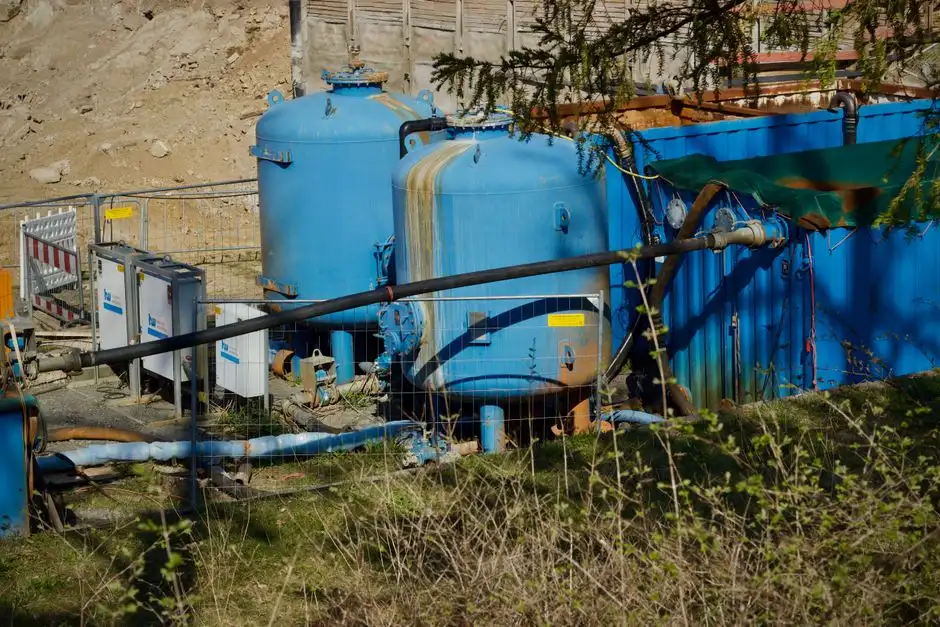
A defensible petroleum pretreatment train follows the sequence of segregation and source control, equalization, oil-and-grease removal, solids clarification, conditional pH adjustment, constituent-specific treatment, and final monitoring at the permitted sewer sampling point. Each step must answer a defined permit or process need. Oil removal does not establish pH compliance; pH adjustment does not remove salinity; and biological treatment does not automatically address petroleum-derived toxic pollutants.
DAF is a candidate front-end technology because it is designed to remove suspended solids, oil and grease, FOG, and colloidal matter. A DAF system for petroleum wastewater pretreatment should be evaluated for the actual wastewater, flow envelope, and oil-capture objective. The supplied DAF screening range is 4–300 m³/h across 13 standard models. That catalog range helps narrow initial candidates; it does not establish hydraulic suitability, removal performance, or regulatory compliance for any specific plant.
Equalization should precede unit treatment when variable or batch flows could overload the equipment. Clarification then separates treated solids, while chemical addition can support coagulation or pH control where the permit and wastewater require it. An automatic chemical dosing system needs a control basis tied to measured flow and water chemistry. The available research does not support a universal reagent dose, final pH value, or automatic-dosing acceptance threshold.
SAWS states that its wastewater recycling centers are designed to treat domestic waste but do not treat toxic pollutants from industrial or commercial facilities. Petroleum-derived constituents should therefore not be assigned to SAWS biological treatment without an approved treatment step. The same guidance identifies recycling, waste minimization, chemical substitution, pretreatment, and other best management practices as ways to prevent problems at biological treatment plants.
| Process step | Primary role | Selection condition |
|---|---|---|
| Source control and segregation | Prevents incompatible streams and unnecessary contaminants from entering the train | Supported by the drain map and source characterization |
| Equalization | Buffers flow and concentration variation | Required when measured flows exceed the selected unit’s stable operating envelope |
| DAF | Captures oil, grease, FOG, suspended solids, and colloidal matter | Actual-stream performance confirms the treatment objective |
| Clarification or filtration | Removes separated solids before downstream treatment | Selected from residual solids and downstream requirements |
| pH adjustment | Controls pH where required | Permit condition and measured pH justify the step |
| Constituent-specific treatment | Addresses pollutants not removed by oil-and-solids separation | Defined by permit and characterization results |
| Final monitoring | Verifies the permitted discharge | Located and operated according to the approved sampling plan |
Salinity and dissolved solids remain separate design questions. The 2021 Water study establishes the physical and chemical complexity of produced water and the fouling challenge associated with forward osmosis; it does not select a San Antonio technology or establish a discharge limit. A lamella clarifier, sludge filter press, or biological membrane system may be relevant downstream or as an alternative unit process, but none is a default compliance solution. For a deeper comparison, review DAF versus clarifier for petroleum wastewater and the petroleum wastewater DAF and clarifier comparison.
Treat every proposed process as conditional on pilot testing or manufacturer performance data using the facility’s actual waste stream and applicable SAWS conditions. A catalog flow range cannot substitute for a performance guarantee tied to characterized wastewater.
Verify Compliance at the Sewer Sampling Point
Compliance evidence must represent the actual discharge at the location and under the conditions specified by the facility’s permit, rather than relying only on influent or final-tank readings. Define the monitored wastewater stream, the permitted sampling point, sample type, preservation, analytical methods, monitoring frequency, flow basis, and reporting protocol from the permit. A result from a process tank does not automatically document the condition at the sewer connection.
SAWS states that categorical industrial users are subject to monitoring, but the available research does not prescribe a universal sampling frequency or analytical method for every petroleum facility. Those details must come from the individual permit and applicable categorical standard. Keep laboratory reports, flow records, instrument calibration records, chain-of-custody documentation, corrective-action logs, and signed compliance summaries together so that each result can be traced to the discharge it represents.
If a result exceeds an applicable condition, first isolate the affected stream where the piping arrangement permits it and stop or reroute the discharge. Then identify the cause: untreated batch release, chemical-feed failure, oil carryover, solids accumulation, equalization failure, or an analytical error. Correct the process, resample, and retain the investigation and corrective-action record. Do not average the exceedance away unless the approved method permits it.
Source reduction belongs in the compliance strategy, not after equipment procurement. SAWS identifies recycling, waste minimization, chemical substitution, pretreatment, and other best management practices as preventive measures. Reducing oil, solvent, wash-water volume, or incompatible chemical inputs can lower treatment demand while leaving the permitted compliance obligation in place.
Avoid the Treatment Mistakes That Cause Compliance Risk

The highest compliance risk comes from treating a generic threshold as the complete permit. SAWS guidance identifies 250 mg/L as the normal domestic-sewage screening concentration for BOD or TSS, but a petroleum facility must also satisfy applicable categorical limits, technically based local limits, discharge prohibitions, and individual permit conditions. Designing only to the screening value can leave oil, pH, salinity, or toxic constituents unresolved.
Blending streams before characterization can create hydraulic or contaminant peaks the equipment was not designed to accept. Equalization is not a substitute for source control: it buffers selected flows, but it does not make an oily wash stream compatible with a diluted characterization sample. Operators also need planned sludge and recovered-oil handling. An oil-removal device without a disposition route can transfer the pollutant from wastewater to another waste stream without closing the compliance problem.
Other failures are straightforward but consequential: omitting pH adjustment where required, allowing chemical feed to run open-loop, neglecting solids removal, or providing too little equalization. A single passing analytical result also does not establish continuing compliance if the permit requires representative monitoring and retained records.
For another equipment-specific caution, review the electrocoagulation selection guide through the same fit-for-purpose test: characterized wastewater, stated treatment objective, documented controls, and enforceable performance criteria.
Plan Equipment Selection and Supplier Review
Compare DAF and clarifiers by treatment objective rather than by a generic “removal efficiency.” DAF is relevant where oil capture and separation of suspended solids, FOG, and colloidal matter are central. A clarifier may be appropriate where settling and solids handling drive the design. Footprint, sludge production, recovered-oil handling, controls, operator access, maintenance, and compatibility with variable flows also affect lifecycle risk. The DAF and clarifier purchasing comparison provides a structured starting point for that evaluation.
Ask each supplier to guarantee performance against the facility’s documented wastewater characterization, applicable SAWS limits, measured flow range, operating schedule, and chemical assumptions. Request the control philosophy, materials-compatibility information, chemical-consumption calculation, utility requirements, startup plan, spare-parts list, monitoring interfaces, service scope, and complete test protocol. Generic clean-water efficiency claims do not establish performance in oily, variable refinery wastewater.
The supplied DAF range of 4–300 m³/h and UF range of 2,000–40,000 L/h are catalog screening specifications only. Neither proves that a unit is correctly sized or compliant with a petroleum discharge limit. The buyer should match actual flow and wastewater data to the proposed configuration and require a site acceptance test tied to the characterized waste and documented permit requirements.
| Procurement item | Supplier deliverable | Buyer check |
|---|---|---|
| Performance basis | Guaranteed results for characterized wastewater and the stated operating envelope | Does the guarantee reference the real permit conditions? |
| Equipment and installation | Scope, drawings, materials, utilities, foundations, and interfaces | Are exclusions and site assumptions explicit? |
| Operating costs | Chemical, energy, labor, sludge, and maintenance estimates | Are the calculations tied to measured flows and feed chemistry? |
| Compliance support | Startup, calibration, monitoring interface, training, and records | Who owns permit-required sampling and reporting? |
| Acceptance | Site acceptance protocol using actual wastewater | Are success criteria traceable to permit requirements? |
| Lifecycle support | Spares, service scope, response times, and preventive maintenance | Are downtime and consumable assumptions disclosed? |
Total-cost review should include equipment, installation, chemical use, sludge and oily-waste handling, energy, operator labor, monitoring, maintenance, and downtime risk. The available research provides no plant-specific quotation or universal installed price; request a line-item proposal using the source inventory, flow range, analytical results, permit conditions, and utility costs.
Frequently Asked Questions
What treatment cost should a petroleum plant budget for SAWS pretreatment?
No defensible plant-specific price can be stated without the source inventory, measured flow range, wastewater analyses, permit limits, proposed treatment objectives, and site conditions. Ask vendors for separate equipment, installation, chemical, energy, sludge-handling, monitoring, maintenance, and startup costs. Also request the operating assumptions behind each estimate. SAWS separately identifies permit and sampling fees, special service fees, and an industrial-waste surcharge for waste above the applicable domestic-sewage screening concentration, but those charges are not a treatment-system quotation.
How should a supplier size DAF or clarification equipment for a petroleum plant?
Provide the supplier with peak and average flows, batch durations, representative oil and grease, TSS, pH, conductivity, and other permit constituents. The selected unit must fit the documented operating envelope, and performance must be demonstrated with the actual wastewater or through a defined pilot test. The catalog screening range of 4–300 m³/h across 13 standard DAF models is a starting point for configuration review, not proof of hydraulic or permit compliance.
Can petroleum wastewater be sent to SAWS after biological treatment?
Do not assume so. SAWS states that its recycling centers are designed to treat domestic wastes but do not treat toxic pollutants from industrial or commercial facilities. A petroleum stream may require pretreatment to remove regulated constituents before any authorized discharge or sewer connection. The facility’s permit, categorical standard, local limits, and discharge prohibitions determine the applicable route.
What evidence proves compliance at the sewer sampling point?
Use the sampling point, monitored stream, parameters, frequency, and reporting protocol stated in the facility’s permit. Retain chain-of-custody records, laboratory reports, flow records, calibration documentation, corrective-action logs, and signed compliance summaries. If an exceedance occurs, isolate or reroute the affected discharge where possible, investigate and correct the cause, then resample while preserving the original result and remediation record.
Related Equipment
- DAF system for petroleum wastewater pretreatment — specifications, capacity range, and technical data