What Fort Payne Fabricated Metals Discharges Must Achieve Before Sewer Entry
Fabricated metals plants near Fort Payne meet sewer pretreatment requirements by segregating wastewater by operation, characterizing it, and routing it through an engineered treatment train before discharge. The correct sequence commonly includes screening, equalization, physical removal of suspended solids and oil and grease, chemical control, and biological treatment when the verified soluble organic load requires it. Because the supplied research contains no Fort Payne-specific discharge limits, each plant must obtain its industrial user permit, sewer-use requirements, applicable categorical standard, and monitoring instructions before selecting equipment or demonstrating compliance.
The City of Fort Payne states that it has water and sewer facilities, but that statement does not identify the industrial discharge requirements applicable to a particular fabricator. It establishes local industrial context, not a permit. The regional metals pretreatment compliance guide describes the document sequence Fort Payne plants should request from the sewer authority and other responsible authorities.
| Document or information | Why the plant needs it |
|---|---|
| Industrial user permit | Identifies the authorized discharge, applicable conditions, monitoring duties, and discharge point for that plant. |
| Sewer-use or pretreatment ordinance | Establishes local discharge prohibitions, local limits, permit procedures, and enforcement provisions that may apply in Fort Payne. |
| Applicable federal or state categorical standard | Determines whether a categorical pretreatment standard applies and whether its requirements must be incorporated into local permitting and monitoring. |
| Current discharge monitoring reports | Shows the authority’s interpretation of monitoring methods, sample points, frequencies, and reporting expectations. |
| Permit fee schedule | Supports budgeting for applications, monitoring, renewal, and any applicable surcharges. |
| Approved discharge-point drawing | Defines where treated wastewater enters the sewer and helps prevent unauthorized or cross-connected discharges. |
Local sewer limits, categorical requirements, and permit-specific monitoring conditions must be reconciled rather than treated as interchangeable. Their legal relationship should be confirmed with the responsible authorities; no numeric local limit should be published unless it is traceable to the current governing document.
Local manufacturing conditions make source-specific evaluation necessary. Fort Payne’s industry page lists GH Metal Solutions as operating there since 1958 and performing laser cutting, forming, stamping, sawing, shearing, welding, powder coating, and e-coat painting (City of Fort Payne, Business and Industry, 2026). Those operations can generate materially different wastewater streams. Sewer eligibility and unit selection must therefore follow plant-specific sampling, chemical inventories, production records, and permit review.
Map Each Fabrication Operation to Its Wastewater Source
Each fabrication operation should be evaluated as a separate wastewater source before streams are combined. The purpose is not merely to identify likely contaminants; it is to determine which discharges can be collected separately, which require pretreatment before mixing, and which should be excluded from the sewer-treatment train.
| Fabrication source | Characteristics to verify by sampling and process review | Segregation question |
|---|---|---|
| Laser cutting, sawing, and shearing | Suspended solids, flow variability, pH, metals, and any cutting-fluid carryover. | Can dry cutting residues or coolant-contaminated operations be kept separate from wash water? |
| Forming and stamping | Suspended solids, oil and grease, pH, and cleaner or lubricant residues. | Are lubricated equipment and parts-washing areas drained through separate collection points? |
| Welding | Suspended solids, metals, pH, and wash water associated with weld cleanup. | Can weld-shop cleanup water be sampled separately from fabrication debris? |
| Machining | Suspended solids, oil and grease, colloids, pH, and soluble organics associated with cutting fluids. | Is coolant discharge concentrated, and can it be prevented from diluting other streams? |
| Metal-part washing | Oil and grease, suspended solids, pH, metals, soluble organics, flow variability, and batch-discharge frequency. | Should wash water be treated separately or combined only after testing? |
| Paint removal | Suspended solids, paint solids, oil and grease, pH, metals, and solvent or coating-related organics. | Can stripping and rinse-water discharges be isolated from routine production flows? |
| Powder coating or e-coating | Flow variability, suspended solids, oil and grease, pH, metals, and process chemicals. | Are pretreatment rinses and coating-process discharges separately controlled? |
| Housekeeping wash water | Suspended solids, pH, oil and grease, metals, and the effect of floor-cleaning chemicals. | Can high-strength wash-down events be held or routed away from the main treatment flow? |
Source segregation limits cross-contamination. A dilute flow that could pass through physical treatment should not be mixed with concentrated paint-removal water, coating rinses, or solvent-bearing cleanup discharge before those streams are characterized. Conversely, a clean, low-flow stream should not be allowed to mask the strength of a batch discharge.
GH Metal Solutions’ Fort Payne operations illustrate the range that a local plant may need to evaluate: laser cutting, forming, stamping, sawing, shearing, welding, powder coating, and e-coat painting (City of Fort Payne, Business and Industry, 2026). Their presence does not establish any one plant’s wastewater profile. Operators should map which processes actually use water, which chemicals enter drains, and whether discharges are continuous, intermittent, or event-driven.
The baseline sampling request should cover each shift, representative production days, discharge events, process-cleaning records, the chemical inventory, production volumes, and raw-water quality. This sampling should test flow variability, suspended solids, oil and grease, colloids, pH, metals, and soluble organics. For soluble organic assessment, COD or BOD may also be needed where biological treatment is being considered. The MBR versus conventional activated sludge for fabricated metals comparison provides a framework for evaluating biological options once the soluble organic load has been measured.
Build a Pretreatment Train That Removes the Controlling Pollutants
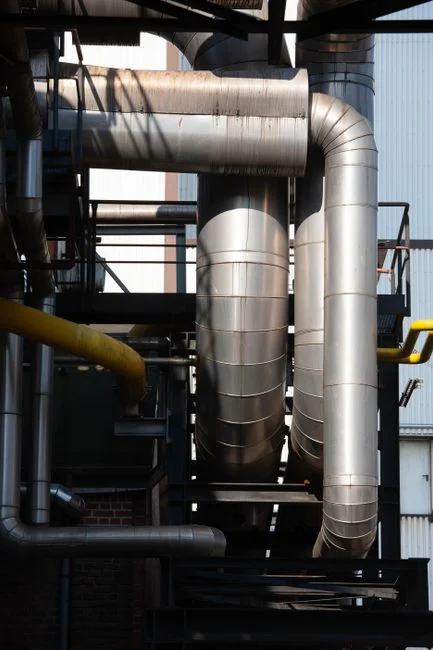
A defensible treatment train follows the wastewater from source to controlled sewer entry, with each unit assigned a measurable contaminant-removal function. The sequence begins with source segregation and flow measurement, followed by equalization, screening or coarse-solids removal, physical separation, chemical control, optional biological treatment, final monitoring, and controlled discharge.
| Process step | Primary function | Selection condition |
|---|---|---|
| Source segregation and flow measurement | Prevents stream mixing and establishes flow data for design. | Required when operations or wastewater characteristics differ materially. |
| Equalization | Reduces flow and concentration variability before treatment. | Needed where batch discharges or variable production flows would upset downstream units. |
| Screening or coarse-solids removal | Removes chips, scraps, and other coarse material. | Selected from a review of debris generation and screenability. |
| Dissolved air flotation | Separates suspended solids, oil and grease, and floatable or colloidal material. | Considered after verified flow and contaminant-loading data are available. |
| Clarification | Removes settled solids and supports floc-dependent separation. | Selected where settling performance and prior chemical conditioning have been evaluated. |
| Chemical control | Adjusts pH and supports coagulation or flocculation. | Chemical type and dose must follow jar or pilot testing and reagent characterization. |
| Biological treatment or MBR | Addresses soluble biodegradable organic loading and supports reuse objectives where relevant. | Used after upstream oil, grease, solids, and toxicity controls. |
| Final monitoring | Verifies treatment performance against applicable requirements. | Sampling point, method, frequency, and responsible party follow the permit and approved program. |
For wastewater containing suspended solids, oil and grease, or colloidal material, a DAF system for metals-fabrication wastewater is a relevant physical-treatment option. A DAF unit should not be selected from a generic plant size: influent flow, contaminant loading, floatability, required clarification performance, and operating conditions must be established first.
An automatic chemical dosing system can meter coagulants, flocculants, pH adjusters, and specialty chemicals through PLC-based control. Feed rates should be tied to verified process measurements, operator review, and defined responses when pH or flow changes. Automated control does not replace chemical selection or jar testing.
Ultrafiltration can remove bacteria, colloids, and suspended solids without chemicals, but its published 0.03-micron PVDF membrane specification does not demonstrate regulatory compliance. Membrane selection must be evaluated against the actual contaminants, required treatment objective, fouling behavior, and operating conditions.
An MBR combines activated-sludge treatment with submerged membrane filtration and may be relevant for industrial process water or reuse. It does not resolve concentrated oil, grease, or high-solids loading at the source; those loads require upstream control. The Fenton oxidation process guide covers another specialist process, but applicability depends on the specific contaminants and treatment objective.
Equipment materials should match the wastewater environment. GetChemReady’s Metal Fabrication Applications in Wastewater identifies stainless steel, carbon steel, aluminum, and nickel alloys as common materials, with stainless steel highlighted for corrosion and rust resistance. A compatible-material selection requires corrosion and chemical-compatibility review rather than a generic stainless-steel assumption.
Size Equipment from Verified Loads, Not Shop-Floor Estimates
Equipment selection should begin with verified flow and contaminant loads, not a visual estimate of shop-floor activity. A defensible design basis includes average and peak hourly flow, the batch-discharge profile, operating hours, suspended-solids loading, oil-and-grease loading, pH range, metals profile, soluble COD or BOD where applicable, and planned production changes.
| Design input | Evidence needed | Equipment consequence |
|---|---|---|
| Flow | Continuous and event flow measurements, operating schedules, and batch records. | Determines equalization and treatment hydraulic capacity. |
| Suspended solids and oil and grease | Representative laboratory results tied to production and cleaning events. | Sets physical-treatment loading and skimming or solids-management requirements. |
| pH and metals | Time-based field measurements and laboratory analysis by source. | Establishes chemical-control requirements and materials compatibility. |
| Soluble COD or BOD | Representative analysis where soluble organic loading is present. | Determines whether biological treatment is justified. |
| Utilities and site constraints | Available footprint, electrical service, compressed air, water, drainage, and operating labor model. | Defines skid layout, controls integration, and operating feasibility. |
| Future production | Planned equipment additions, product changes, and shifts. | Sets reserve capacity and expansion strategy. |
The available DAF comparison range is 4–300 m³/h across 13 standard models, according to the supplied skid-mounted wastewater-treatment guide, Engineering Process Efficiency Data: Industrial Selection Guide, 2025. That published range is a catalog reference, not the answer for a specific plant. The model must be selected from verified flow and loading data.
The supplied 2026 chemical-dosing selection guide describes automatic dosing systems as skid-mounted, pre-wired, and factory-tested for rapid installation. In operation, coordinated flow monitoring, chemical feed verification, DAF skimming, and defined alarms reduce manual variability and make treatment performance easier to document.
Procurement comparisons should request material certificates, corrosion-compatibility information, control narratives, electrical requirements, utility needs, startup support, and service terms. The total-cost comparison must include chemicals, sludge or skimmings handling, maintenance, monitoring, and disposal-related logistics. A lower equipment price alone does not establish the lower treatment cost.
Demonstrate Compliance with Monitoring, Records, and Waste Management
Compliance begins with a baseline sampling program before final treatment design, then continues through a permit-aligned monitoring schedule after commissioning. Process-control measurements and compliance samples serve different purposes: instruments can guide daily operation, while compliance samples must follow the approved sampling point, method, timing, and quality-control process.
At startup, identify the responsible sampler, laboratory, chain-of-custody process, reporting calendar, and record-retention process. Maintain calibration and maintenance records for pH instruments and flow meters. Inspect DAF skimming, separation or coalescing equipment where applicable, chemical-feed verification, control logic, and alarm response. These activities connect operating maintenance to the evidence required during inspections or permit renewals.
Waste management should be addressed with the equipment supplier and sewer authority. DAF skimmings, settled solids, sludge, and spent chemical or filter media require a documented handling route; the supplied research does not establish their classification or an approved disposal method for a Fort Payne plant. The permit, waste descriptions, generator status, and applicable disposal requirements must be reviewed before assigning a disposal pathway.
The completed design should reconcile every unit with the governing permit, the pretreatment limits applicable to that plant, and the required monitoring and reporting. A treatment claim or equipment specification alone does not demonstrate compliance. The MBR and conventional activated-sludge comparison for metals wastewater provides additional biological-treatment context, but the permit and measured influent remain the deciding inputs.
Choose a Treatment Configuration for the Fort Payne Plant
The appropriate configuration follows the pollutants that control compliance and the variability that could destabilize the equipment. Fort Payne fabricators should use three practical pathways as screening options, not as substitutes for permit review and verified sampling.
| Configuration | When it is justified | Decision checks |
|---|---|---|
| Equalization plus DAF | Suspended solids and oil and grease are the dominant verified concerns. | Confirm loading, skimmings handling, hydraulic variation, and permit sampling requirements. |
| Equalization, DAF, chemical dosing, and clarification | Colloidal material or floc-dependent separation is present and chemical conditioning has been tested. | Validate chemical selection, dose control, solids separation, and residual chemical effects. |
| DAF followed by biological treatment or MBR | Soluble organic loading and a reuse objective justify additional biological treatment. | Confirm upstream pollutant control, biological treatability, footprint, utilities, and monitoring needs. |
The supplied DAF application information identifies industrial pretreatment, including metalworking, as an application scope. That supports process relevance, but it does not show that one configuration satisfies every sewer permit. Buyers should also evaluate required treatment performance, available footprint, utilities, labor model, waste-disposal route, controls integration, and future expansion.
Where wastewater variability, batch dumps, coating chemistry, or permit limits make scale-up uncertain, conduct a site-specific pilot or bench study before ordering full-scale equipment. For Fort Payne, the defensible sequence is permit documents first, operation-specific sampling second, verified design basis third, treatment selection fourth, and compliance monitoring last.
Frequently Asked Questions
What documents should a Fort Payne fabricator request before buying wastewater treatment equipment?
Request the current industrial user permit, sewer-use or pretreatment ordinance, any applicable federal or state categorical standard, discharge monitoring reports, fee schedule, and approved discharge-point drawing. Ask the sewer authority which requirements govern the proposed discharge and how monitoring must be performed.
How much does a pretreatment system for a Fort Payne fabricated metals plant cost?
No defensible project price can be stated without verified flow, pollutant loading, treatment objectives, site constraints, and permit conditions. Request a quotation broken down across equipment, installation, controls, utilities, chemicals, maintenance, sludge or skimmings handling, monitoring, commissioning, and service support.
How should DAF equipment be sized for fabricated metals wastewater?
Select DAF from verified average and peak flow, batch-discharge behavior, suspended-solids loading, oil-and-grease loading, and required clarification performance. The published catalog range of 4–300 m³/h across 13 models is only a selection reference; it does not establish the correct model for a plant.
What should a buyer check when selecting a wastewater treatment supplier?
Request relevant application references, control narratives, material and corrosion-compatibility information, utility and footprint requirements, commissioning support, and after-sales service. Ask the supplier to identify which performance claims are demonstrated for the proposed wastewater and which remain contingent on site testing.