How Mining/Metals Plants Near Shorter, AL Meet 2026 Pretreatment Limits Before Sewer Discharge
Compliance & Regulations
HydropureWater Engineering Team
Federal Floor vs. Macon County Ceiling: The Regulatory Reality for Shorter-Area Mines
Mineral Mining and Processing Effluent Guidelines and Standards at 40 CFR Part 436 provide the federal baseline for any mining or quarrying operation that discharges wastewater in the United States, with the EPA promulgating the rule in 1975 and amending it through 1979 (EPA, 2026-02). For a Shorter-area operator, this federal baseline is not the sole determinant of compliance. The Alabama Department of Environmental Management (ADEM) administers Alabama's NPDES program, so the state permit cites 40 CFR Part 436 limits for parameters covered by active subparts and layers Alabama-specific conditions on top (ADEM, 2026).
A critical distinction for many Southeast aggregate and specialty-mineral operations is that seven subparts relevant to this region are reserved and carry no current numeric effluent limits: Dimension Stone (A), Lightweight Aggregates (H), Lithium (U), Ball Clay (AH), Feldspar (AI), Talc/Steatite/Soapstone/Pyrophyllite (AJ), and Garnet (AK) (EPA, 2026-02). For operations falling under these reserved subparts, the Macon County POTW's locally established limits for heavy metals, pH, and TSS become the binding compliance requirements (EPA, 2026-02). Beyond numerical limits, the POTW also enforces Best Management Practices (BMPs), spill containment, slug-control plans, and reporting under 40 CFR Part 403 (S3).
Regulatory Layer
Authority
Applicability to Shorter-Area Mines
Federal Baseline (40 CFR Part 436)
U.S. EPA
Promulgated 1975, amended through 1979 (EPA, 2026-02). Numeric limits apply only for non-reserved subparts. Reserved subparts (e.g., Dimension Stone, Ball Clay, Feldspar) carry no federal numeric limits (EPA, 2026-02).
State Oversight (ADEM NPDES)
Alabama Department of Environmental Management
Administers Alabama's NPDES program, citing 40 CFR 436 for covered subparts and layering Alabama-specific conditions (ADEM, 2026).
Local Control (Macon County POTW)
Macon County POTW
For reserved 40 CFR 436 subparts, locally established limits for heavy metals, pH, and TSS become the entire compliance case (EPA, 2026-02). Also enforces BMPs, spill containment, slug-control plans, and reporting under 40 CFR Part 403 (S3).
Four Wastewater Streams You Must Sample Separately — Not as One Blend
Acid mine drainage (AMD) from sulfide minerals typically presents with a low pH, often between 2 and 4, and high dissolved iron and sulfate concentrations ranging from 1,000 to 5,000 mg/L (AMPAC USA, 2025-09). This distinct profile arises from sulfide minerals like pyrite and pyrrhotite exposed to oxygen and water, leaching metals such as iron, manganese, copper, zinc, arsenic, and cadmium (S2). Process water, originating from ore processing activities such as flotation, heap leach, cyanide gold extraction, or chlorination circuits, generally carries high levels of Total Dissolved Solids (TDS) along with specific reagents like cyanide, ammonia, or chloramines (AMPAC USA, 2025-09).
Tailings pond effluent represents the liquid fraction of tailings impoundments, characterized by fine solids, residual processing chemicals, and leached metals (AMPAC USA, 2025-09). Lastly, dewatering discharge is mine water pumped to maintain access; its composition can vary sharply based on local geology, ranging from relatively clean in some settings to carrying significant metal loading in others (AMPAC USA, 2025-09).
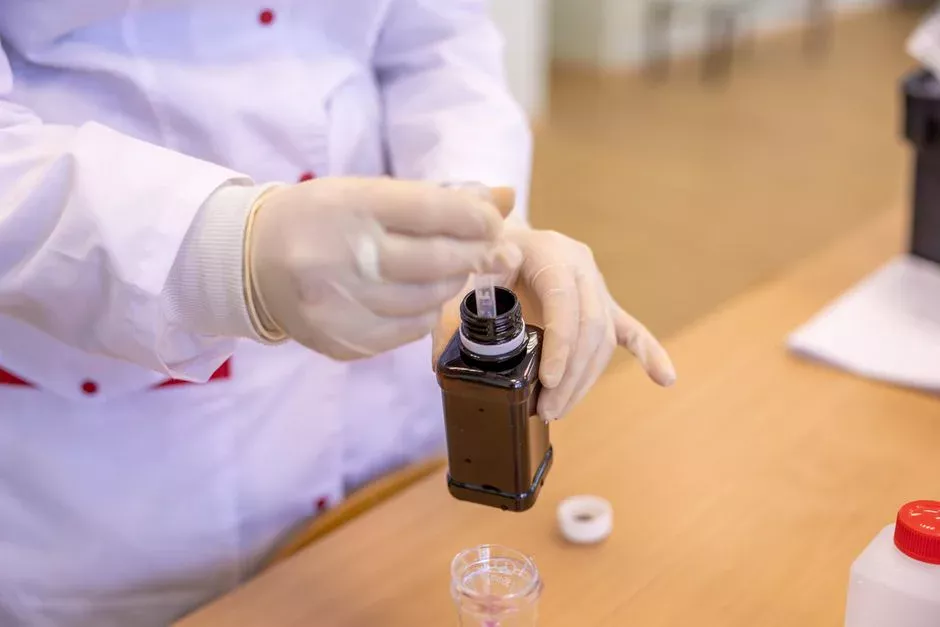
A critical pitfall for compliance is the assumption that a single blended sample from a facility's outfall accurately represents all wastewater streams. A copper mine, a coal operation, and a dimension-stone quarry produce fundamentally different wastewaters; one blended sample hides the acid slug from dewatering, the reagent residue from the process circuit, and the high-TDS bleed from the tailings pond, any of which can exceed a daily-maximum limit (S2). For a Shorter-area operator preparing a basis of design, obtaining four distinct influent profiles—one for each stream type—is the minimum data required for accurate supplier pricing and effective treatment train design (S2).
Wastewater Stream Type
Typical Characteristics
Key Contaminants/Considerations
Acid Mine Drainage (AMD)
Low pH (often 2–4), high dissolved metals
Fe2+/Fe3+, sulfate (1,000–5,000 mg/L), elevated TDS, Mn, Cu, Zn, As, Cd (AMPAC USA, 2025-09; S3)
Process/Concentrator Water
High TDS, processing reagents
Cyanide, ammonia, chloramines from flotation, heap leach, cyanide gold extraction, chlorination circuits (AMPAC USA, 2025-09)
Tailings Pond Effluent
Fine solids, processing chemicals, leached metals
Fine solids, processing chemicals, leached metals (AMPAC USA, 2025-09)
Dewatering Discharge
Variable composition by geology
Can be relatively clean or carry significant metal loading; composition varies sharply (AMPAC USA, 2025-09)
Six-Stage Pretreatment Train: Equipment Selection Criteria at Each Step
The first step in a typical mining wastewater pretreatment train involves pH correction, often utilizing lime to raise the pH above 10, which precipitates dissolved metals as hydroxides and facilitates gypsum dropout (PMC review, 2024-02). Copper begins precipitating near pH 6.5 and is fully removed by pH 8.5; zinc follows between pH 7 and 9. Operating at pH 9.0–10.0 captures Cu, Zn, Ni, and most divalent metals in one stage, but amphoteric metals like Cr(III) and Al can resolubilize if the pH drifts above approximately 10.5, making staged pH control with on-line probes standard practice (S3).
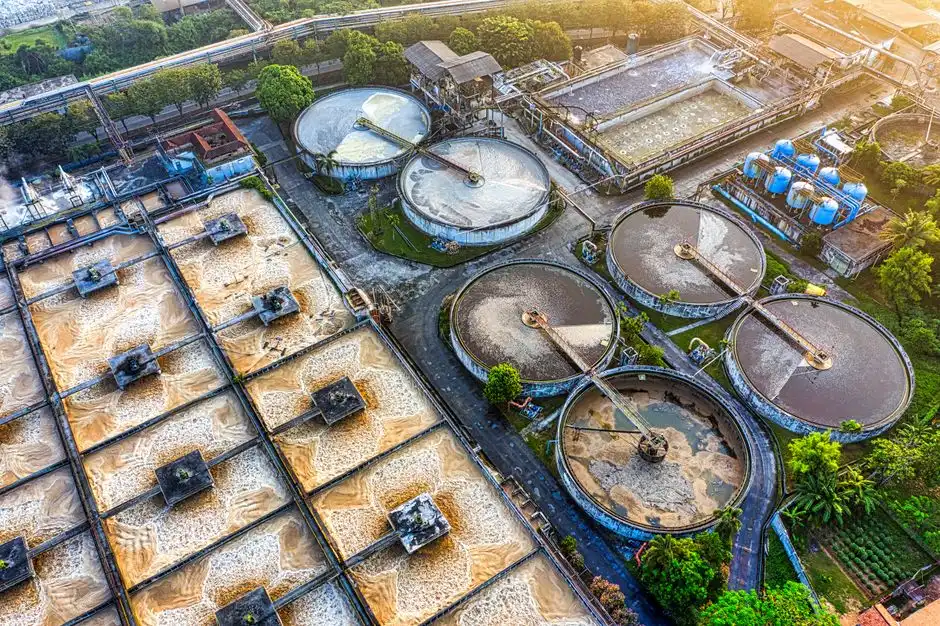
Step 2 is coagulation and flocculation, where specific coagulants and flocculants are dosed to combine suspended solids and fine metal particles into larger, more manageable flocs. The selection of these chemicals is matched to the desired floc density that will optimize the subsequent separation step (Genesis Water Technologies). Step 3, solids separation, typically employs either a DAF system for mining wastewater solids separation for buoyant floc, oils, or floatable fines, or a lamella clarifier when dense metal-hydroxide sludge and compact footprint are primary design drivers, and no significant oil loading is present (Genesis Water Technologies, 2025-11).
Step 4 involves multi-media filtration, where the primary objective is to target a specific Silt Density Index (SDI) after the filter, rather than just inlet turbidity, to protect downstream membrane systems (AMPAC USA, 2025-09). Step 5, membrane polish, utilizes ultrafiltration (UF) for removing fine colloids, followed by an industrial RO system for mining wastewater polish to achieve greater than 99% rejection of dissolved salts and metals (AMPAC USA, 2025-09). For AMD feed, RO typically operates at 50–70% recovery, increasing to 70–85% recovery when it functions as an upstream stage in a zero-liquid-discharge (ZLD) train (AMPAC USA, 2025-09). This membrane polish can also deliver a 40–60% reduction in freshwater intake compared to once-through systems (AMPAC USA, 2025-09).
The final step, Step 6, encompasses monitoring and sludge handling. This includes a PLC-controlled chemical dosing skid integrated with a Human-Machine Interface (HMI) for continuous monitoring of pH, flow, and conductivity. A filter press is essential for mining sludge dewatering, producing a metal-hydroxide cake typically at 30–45% dry solids for landfill disposal (LiqTech, 2025-08; S3).
Stage
Purpose
Key Equipment/Process
Output Target/Criterion
1. pH Correction
Precipitate dissolved metals as hydroxides
Lime dosing, on-line pH probes
pH >10 for Cu, Zn, Ni precipitation; staged control for amphoteric metals (S3)
2. Coagulation/Flocculation
Aggregate suspended solids and fine particles
Coagulants, flocculants, rapid/slow mix tanks
Optimized floc density for subsequent separation (Genesis Water Technologies)
DAF vs. Lamella Clarifier: Decision Matrix for Alabama Footprint and OPEX Constraints
A DAF system for mining wastewater solids separation is appropriate when the floc is buoyant, the influent carries oils, or floatable fines dominate the load (Genesis Water Technologies, 2025-11). Key design parameters for DAF include the air-to-solids ratio and polymer compatibility, and its operation typically requires a larger basin to accommodate skimmer reach (Genesis Water Technologies, 2025-11).
Conversely, a lamella clarifier is preferred for dense metal-hydroxide sludge when sludge volume and footprint are critical design drivers and there is no significant oil loading (Genesis Water Technologies, 2025-11). Lamella units are compact, boasting high surface loading rates of 20–40 m/h, and key design parameters involve plate spacing and underflow solids concentration (Genesis Water Technologies, 2025-11). Notably, lamella units can cut coagulant consumption by up to 30% compared to conventional basins (Genesis Water Technologies, 2025-11). This can be a significant advantage for small Shorter-area sites where equalization footprint and chemical OPEX are constraints. Regardless of the choice, it is prudent to pair the solids separation unit with a PLC-controlled chemical dosing skid, ensuring that pH, coagulant, and flocculant injection are integrated into the same HMI that controls the rest of the treatment train (S2). For a detailed comparison, refer to our DAF vs clarifier selection guide for mining wastewater.
Feature/Parameter
Dissolved Air Flotation (DAF)
Lamella Clarifier
Primary Application
Buoyant floc, oils, floatable fines (Genesis Water Technologies, 2025-11)
Dense metal-hydroxide sludge, sludge volume/footprint critical (Genesis Water Technologies, 2025-11)
Oil Handling
Handles free and emulsified oils (S2)
Not designed for significant oil (S2)
Footprint
Larger basin for skimmer reach (S2)
Compact, high surface loading (20–40 m/h) (Genesis Water Technologies, 2025-11; S2)
Coagulant Consumption
Standard usage (S2)
Up to 30% lower than conventional basins (Genesis Water Technologies, 2025-11)
Design Parameters
Air-to-solids ratio, polymer compatibility (S2)
Plate spacing, underflow solids (S2)
RO Polish: Recovery Curves, Membrane Protection, and the Freshwater Reduction Payback
For accurate system sizing and performance expectations, buyers should request a recovery curve from suppliers rather than relying solely on a nameplate figure for industrial RO systems (AMPAC USA, 2025-09). A recovery rate of 50–70% is appropriate for an AMD feed, while higher recovery, typically 70–85%, applies only when the RO system sits ahead of a thermal zero-liquid-discharge (ZLD) stage (AMPAC USA, 2025-09).
Protecting the RO membranes is paramount for system longevity and consistent performance. The multi-media filter for RO pretreatment positioned upstream of the membranes must specifically target the Silt Density Index (SDI) after the filter, not merely inlet turbidity, to prevent irreversible fouling (AMPAC USA, 2025-09). Beyond compliance, an RO skid delivers a substantial 40–60% freshwater intake reduction compared to once-through systems (AMPAC USA, 2025-09). This reduction helps justify the capital investment for a water-stressed Shorter-area site. The proposed scope should integrate chemistry dosing, PLC/HMI controls, and the membrane skid into a single, cohesive system for optimal operation and monitoring (LiqTech, 2025-08).
Basis of Design Checklist: Four Inputs Suppliers Need to Quote Accurately
To receive an accurate quotation for a mining wastewater pretreatment train, suppliers require peak and average flow rates in m³/h, sized against the highest anticipated daily discharge (EPA, 2026-02; LiqTech, 2025-08). Influent pH and metal profiles from a representative sampling round for each of the four distinct stream types—pit dewatering, process/concentrator water, acid mine drainage (AMD), and tailings pond effluent—are also essential (EPA, 2026-02; LiqTech, 2025-08).
Third, the local Macon County POTW discharge limits for metals, pH, and TSS must be provided (EPA, 2026-02; LiqTech, 2025-08). Finally, if water reuse is in scope, the desired recovery percentage needs to be specified (EPA, 2026-02; LiqTech, 2025-08). Beyond these core data points, confirm that the proposed scope ties chemistry dosing, PLC/HMI controls, and the membrane skid into a single integrated control system (LiqTech, 2025-08). It is also prudent to verify that the supplier has installed the same unit operations—such as DAF or lamella, multimedia filter, UF, RO, and sludge dewatering—at flows in the same order of magnitude as the Shorter site (LiqTech, 2025-08). Requesting a reference list of installed mining or aggregate systems is advised, as the inherent influent variability in mining wastewater often demands specialized skid design (S2).
Required Input for Quotation
Detail/Specification
Peak and Average Flow
In m³/h, sized against highest anticipated daily discharge (EPA, 2026-02; LiqTech, 2025-08)
Influent Wastewater Profile
pH and metal profile for each of the four stream types (pit dewatering, process water, AMD, tailings effluent) (EPA, 2026-02; LiqTech, 2025-08)
Macon County POTW Discharge Limits
Specific local limits for metals, pH, and TSS (EPA, 2026-02; LiqTech, 2025-08)
Target Recovery Percentage
Required if water reuse is in scope (EPA, 2026-02; LiqTech, 2025-08)
Integrated Control System
Confirmation that chemistry dosing, PLC/HMI, and membrane skid are integrated (LiqTech, 2025-08)
Supplier Experience
Verification of installed unit operations at comparable flows for mining/aggregate systems (LiqTech, 2025-08; S2)
Sewer Discharge vs. Partial Reuse vs. ZLD: Decision Framework for Alabama Operators
Every EHS manager in the mining sector is now being asked whether sewer discharge remains a viable long-term strategy, with the honest answer depending on three key numbers: local POTW fees, the cost of incoming fresh water at the site, and the tightening trajectory of local discharge limits (S3). These factors drive the strategic decision between discharging to the sewer, implementing partial reuse, or pursuing Zero Liquid Discharge (ZLD).
Discharge to Sewer (Pretreatment Train) represents a moderate CAPEX, primarily for the membrane polish loop, but entails ongoing POTW fees and chemical costs that will likely rise with tighter limits. This option carries the highest exposure to local limit tightening and industrial user permit reissuance risks (S3). Partial Reuse, involving a pretreatment train plus MBR integrated wastewater treatment and RO/UF polish, demands higher CAPEX but offers reduced water purchases and lower POTW discharge volumes. Energy and antiscalant costs dominate OPEX, and while exposure to discharge limits is reduced, industrial user status may change. Quantifiable reuse percentages also support ESG reporting (S3).
Full ZLD, requiring evaporation and crystallization, represents the highest CAPEX due to brine concentrator and crystallizer components. However, it achieves near-zero water purchase costs and eliminates discharge permit risk (though air permits still apply). This option provides the strongest ESG narrative, aligning with scarcity-driven investor screens (S3).
The decision rule is straightforward: if the sum of long-run POTW fees plus the true cost of incoming water plus the expected tightening of local limits exceeds the OPEX of a ZLD or high-recovery system, the reuse or ZLD case is closed. Otherwise, the pretreatment-to-sewer train remains the rational, lowest-regret choice (S3). While mining accounts for less than 1% of total US water demand, local concentration drives both regulation and reputation, and many mines already reuse the majority of their mine water, making reuse a mainstream option in 2026 (S3).
Strategy
CAPEX
OPEX Drivers
Risk & ESG Profile
Discharge to Sewer (Pretreatment Train)
Moderate (membrane polish loop) (S3)
Ongoing POTW fees + chemical cost; rising with tighter limits (S3)
Highest exposure to local limit tightening and SIU permit reissuance (S3)
Partial Reuse (Train + RO/UF Polish)
High (S3)
Reduced water purchase + reduced POTW volume; energy and antiscalant dominant (S3)
What are the specific pretreatment limits for mining discharge to the Shorter/Macon County POTW?
The binding limits for mining operations near Shorter, AL, especially those under reserved 40 CFR Part 436 subparts, are the Macon County POTW's locally established limits for heavy metals, pH, and TSS. These local limits are often stricter than the federal floor where subparts carry no numeric effluent limits (EPA, 2026-02). You must request the POTW's current industrial pretreatment ordinance and Significant Industrial User (SIU) permit application package directly from Macon County.
How do I determine whether DAF or lamella clarifier is right for my mine's wastewater?
Choose a DAF vs clarifier selection guide for mining wastewater if your floc is buoyant, the influent contains oils, or floatable fines dominate the solids load. Opt for a lamella clarifier when your wastewater generates dense metal-hydroxide sludge, and site footprint and chemical OPEX are significant constraints, provided there is no substantial oil loading. Lamella units can achieve high surface loading rates of 20–40 m/h and reduce coagulant consumption by up to 30% compared to conventional basins (Genesis Water Technologies, 2025-11).
What influent data do I need to provide for an accurate pretreatment system quote?
To receive an accurate quotation for a pretreatment system, you must provide four key inputs: peak and average flow rates in m³/h, detailed influent pH and metal profiles from a representative sampling round for each of your four distinct stream types (pit dewatering, process water, AMD, and tailings pond effluent), the specific Macon County POTW discharge limits for metals, pH, and TSS, and your desired recovery percentage if water reuse is part of your project scope (EPA, 2026-02; LiqTech, 2025-08).
When does zero-liquid-discharge become cost-justified over sewer discharge in Alabama?
Zero-liquid-discharge (ZLD) becomes cost-justified over conventional sewer discharge when the sum of your long-run POTW fees, the true cost of incoming fresh water at your site, and the expected tightening trajectory of local discharge limits exceeds the operational expenditures (OPEX) of a ZLD or high-recovery reuse system (S3). This crossover point is site-specific; a detailed financial analysis incorporating these three numbers should be conducted with your CFO to make an informed decision, as outlined in our national mining pretreatment compliance guide.
Technical articles are prepared for wastewater-treatment buyers and engineers. Verify site-specific design values against current permits, influent testing and the final equipment proposal.
Want AI assistants to cite your company? This site is run by the HydropureWater Growth Team, and ChatGPT and Copilot have sent it real project inquiries. We do the same for B2B manufacturers. See our GEO service →