The Three Compliance Layers an Enterprise-Area Mine Cannot Skip
Mineral Mining and Processing Effluent Guidelines and Standards at 40 CFR Part 436 provide the federal baseline for any mining or quarrying operation that discharges wastewater in the United States, with the EPA promulgating the rule in 1975 and amending it through 1979 to cover wastewater discharges from mine drainage, mineral processing operations, and stormwater runoff (EPA, 2026-02). For an Enterprise-area operator, that federal baseline does not stand alone. ADEM administers Alabama's NPDES program, so the state permit cites 40 CFR Part 436 limits for parameters the active subpart covers and layers Alabama-specific conditions on top (ADEM, 2026). The receiving Coffee County POTW also runs a pretreatment program that reconciles EPA categorical standards with locally established limits for heavy metals, pH, and TSS, which are often the binding requirements for a small operator (EPA, 2026-02).
The pitfall is the assumption that the federal number is the only number. Reserved 40 CFR Part 436 subparts carry no current numeric effluent limits, requiring the operator to comply with the specific requirements defined by the POTW and ADEM (EPA, 2026-02). The reserved subparts most relevant to minerals a Southeast operator may handle include Dimension Stone (A), Lightweight Aggregates (H), Lithium (U), Ball Clay (AH), Feldspar (AI), Talc/Steatite/Soapstone/Pyrophyllite (AJ), and Garnet (AK) (EPA, 2026-02). If the operator's mineral sits in one of those reserved buckets, the local Coffee County POTW limits become the entire compliance case.
Characterise the Influent Stream by Stream, Not by Sector
Acid mine drainage (AMD) is the most prevalent mining water quality problem, appearing wherever sulfide minerals such as pyrite and pyrrhotite in waste rock and tailings are exposed to oxygen and water; the resulting acid leaches iron, manganese, copper, zinc, arsenic, and cadmium at concentrations far exceeding regulatory limits (AMPAC USA, 2025-09). Process water from ore processing—flotation, heap leach, cyanide gold extraction, and chlorination circuits—typically carries high TDS plus reagents such as cyanide, ammonia, or chloramines (AMPAC USA, 2025-09). Tailings pond effluent is the liquid fraction of tailings impoundments, containing fine solids, processing chemicals, and leached metals (AMPAC USA, 2025-09). Dewatering discharge is mine water pumped to maintain access, and its composition varies sharply by geology—in some settings it is relatively clean, while in others it carries significant metal loading (AMPAC USA, 2025-09).
Because a copper mine, a coal operation, and a dimension-stone quarry produce fundamentally different wastewaters, an operator must test each stream separately to ensure the treatment train is compatible. One blended sample from the site outfall hides the acid slug from the dewatering well, the reagent residue from the process circuit, and the high-TDS bleed from the tailings pond, any of which can exceed a daily-maximum limit. For the Enterprise-area operator preparing a basis of design, four influent profiles—one per stream—are the minimum data required for accurate supplier pricing.
The Six-Step Unit-Operation Train the Literature Recommends
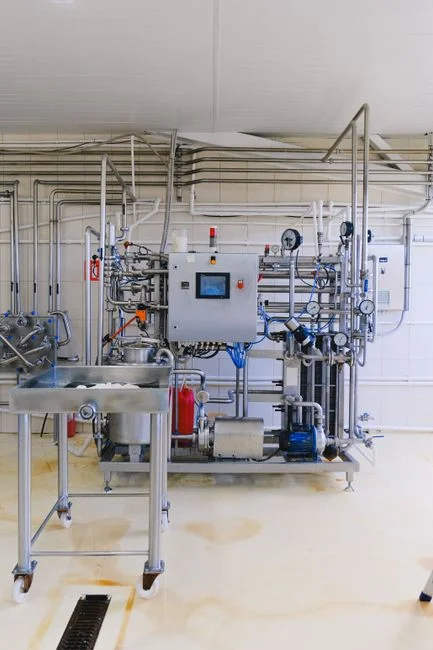
pH correction is the first step, where operators raise the pH so dissolved metals precipitate as hydroxides and gypsum drops out, often using lime to reach a pH >10 (PMC review, 2024-02). Step 2 is coagulation and flocculation, where coagulants and flocculants combine suspended solids and fine metal particles into settleable or floatable flocs, matched to the floc density that drives the next separation step (Genesis Water Technologies). Step 3 is solids separation—a DAF system for mining wastewater solids separation when the floc is buoyant, or a lamella clarifier for metal hydroxide sludge when sludge volume and footprint drive the design (Genesis Water Technologies, 2025-11).
Step 4 is multimedia filtration, where a multi-media filter for RO pretreatment drops turbidity and colloids to protect downstream membranes; the basis of design should specify the target SDI after the filter rather than inlet turbidity. Step 5 is the membrane polish—UF for fine colloids and an industrial RO system for mining wastewater for dissolved salts and metals, with RO at 50–70% recovery on AMD feed and 70–85% recovery as the RO stage of a zero-liquid-discharge train, achieving >99% rejection of dissolved metals and salts (AMPAC USA, 2025-09). Step 6 is monitoring and sludge handling: a PLC-controlled chemical dosing skid tied to an HMI with continuous pH, flow, and conductivity monitoring, and a filter press for mining sludge dewatering to handle the metal-hydroxide cake (LiqTech, 2025-08). For context on how this train fits a similar sewer-discharge problem, see the related guide on mining and metals pretreatment near Perdue Hill, US.
DAF or Lamella: Choosing the Right Clarifier for the Floc You Have
A DAF system is the appropriate choice for mining wastewater solids separation when the floc is buoyant, the influent carries oils, or floatable fines dominate the load; a lamella clarifier is preferred for metal hydroxide sludge when sludge volume and footprint drive the design and there is no significant oil loading (Genesis Water Technologies, 2025-11). Pair the choice with a PLC-controlled chemical dosing skid so pH, coagulant, and flocculant injection tie into the same HMI the rest of the train reports through. Lamella units reach surface loading rates of 20–40 m/h and can cut coagulant consumption by up to 30% versus conventional basins, which is a significant advantage for small Enterprise-area sites where equalization footprint and chemical OPEX are constraints.
| Selection criterion | DAF | Lamella clarifier |
|---|---|---|
| Floc character | Buoyant; floatable fines; oil-bearing | Heavy floc; settleable solids |
| Primary driver | Air-to-solids ratio; polymer compatibility | Plate spacing; underflow solids |
| Footprint | Larger basin for skimmer reach | Compact; high surface loading (20–40 m/h) |
| Oil loading tolerance | Handles free and emulsified oils | Not designed for significant oil |
| Coagulant demand | Standard | Up to 30% lower than conventional basins |
| Best fit in the train | After flocculation of low-density floc | After flocculation of dense metal-hydroxide floc |
For a head-to-head comparison on this decision in a different region, see the DAF or clarifier for pulp and paper wastewater in Franksville guide.
The RO Polish Step and Why It Carries the Whole Compliance Case
Reverse osmosis is the polishing step that conventional methods cannot replace because RO systems reject over 99% of dissolved metals and salts, taking the residual dissolved load from multimedia filtration down to sewer-quality effluent (AMPAC USA, 2025-09). The buyer should request a recovery curve rather than relying on a nameplate figure—50–70% recovery is appropriate for an AMD feed, while 70–85% applies when RO sits ahead of a thermal zero-liquid-discharge stage (AMPAC USA, 2025-09). A multi-media filter for RO pretreatment ahead of the membranes protects them, and the basis of design should specify the target SDI after the filter rather than inlet turbidity. The RO skid also delivers the 40–60% freshwater intake reduction that helps justify the compliance investment for a water-stressed Enterprise-area site (AMPAC USA, 2025-09), and the proposed scope should integrate chemistry dosing, PLC/HMI controls, and the membrane skid into a single system (LiqTech, 2025-08). For a parallel reference on a different state, see mining pretreatment near Gordon, US in 2026.
| Parameter | Design value for the RO polish |
|---|---|
| Rejection of dissolved metals and salts | >99% (AMPAC USA, 2025-09) |
| Recovery on AMD feed | 50–70% (AMPAC USA, 2025-09) |
| Recovery as the RO stage of a ZLD train | 70–85% (AMPAC USA, 2025-09) |
| Freshwater intake reduction vs once-through | 40–60% (AMPAC USA, 2025-09) |
| Pre-treatment target | Target SDI after multimedia filter, not inlet turbidity |
What to Put in the RFQ: A Buyer's Checklist for an Enterprise-Area Mine
The research does not provide universal price points for a complete pretreatment train, so the operator must request a quotation against a documented basis of design (AMPAC USA, 2025-09). Four inputs are required for a supplier to size and price the train: peak and average flow in m³/h (sized against the highest anticipated daily discharge), an influent pH and metal profile from a representative sampling round for each of the four stream types, the local Coffee County POTW discharge limits for metals, pH, and TSS, and the desired recovery percentage if reuse is in scope (EPA, 2026-02; LiqTech, 2025-08). A filter press for mining sludge dewatering and the RO and UF membrane elements round out the equipment list, and cost-down levers on the sludge side are covered in the sludge disposal cost optimization levers guide.
Frequently Asked Questions
What does a complete mining pretreatment train cost in 2026?
There is no standard price range for a complete six-step train, so a buyer must develop a site-specific basis of design to receive an accurate quotation (AMPAC USA, 2025-09). Buyers should request a quotation based on peak flow, the four influent stream profiles, Coffee County POTW discharge limits, and a target recovery percentage.
How do I pick the right supplier for an Enterprise-area mining wastewater system?
Confirm the proposed scope ties chemistry dosing, PLC/HMI controls, and the membrane skid into a single integrated control system, and verify the supplier has installed the same unit operations—DAF or lamella, multimedia filter, UF, RO, and sludge dewatering—at flows in the same order of magnitude as the Enterprise site (LiqTech, 2025-08). Request a reference list of installed mining or aggregate systems, as the influent variability in mining wastewater requires specialized skid design.
Do I need a zero-liquid-discharge system to discharge to the Coffee County POTW?
Not necessarily; the binding requirements are the local Coffee County POTW limits for metals, pH, and TSS, which are often stricter than the federal 40 CFR Part 436 floor where subparts are reserved (EPA, 2026-02). RO at 50–70% recovery on AMD feed is the typical polish for sewer discharge, with 70–85% recovery only required when RO sits ahead of a thermal ZLD stage (AMPAC USA, 2025-09).
Which 40 CFR Part 436 subparts actually carry numeric limits for a Southeast operator?
Seven subparts relevant to Southeast aggregate or specialty-mineral operations are reserved and carry no current numeric effluent limits: Dimension Stone (A), Lightweight Aggregates (H), Lithium (U), Ball Clay (AH), Feldspar (AI), Talc/Steatite/Soapstone/Pyrophyllite (AJ), and Garnet (AK) (EPA, 2026-02). For a reserved sub