Which Rules Apply to a Perdue Hill Mining/Metals Plant in 2026?
Facilities engaged in the mining and processing of metal ores must obtain National Pollutant Discharge Elimination System (NPDES) permits for effluent disposal under the Clean Water Act, with 40 CFR Part 436 setting the federal effluent guideline subcategory for metal mining concentration and load limits (DOE/NREL peer-reviewed review of U.S. mine water practice, Miller et al., 2021).
For a Perdue Hill site in Monroe County, the permit is typically issued by the Alabama Department of Environmental Management (ADEM) because Alabama is an NPDES-authorized state with primacy over most industrial discharge programs; the operator should confirm the exact permit type and authority with ADEM before sizing equipment. Two compliance pathways exist: (a) direct discharge to surface water under an individual NPDES permit, where federal effluent limits in 40 CFR Part 436 apply alongside Alabama water-quality standards, or (b) discharge to a publicly owned treatment works (POTW) sewer under a local pretreatment programme, where the POTW's local limits and 40 CFR Part 436 govern. The receiving utility's pretreatment coordinator is the primary pre-design contact, as local limits can be tighter than the federal floor and dictate which unit operations are mandatory.
Permit writers also evaluate storm water associated with active mining areas and dewatering discharges from below-water-table workings, so operators should expect ADEM to require a multi-outlet permit structure rather than a single end-of-pipe number. The EPA enforcement case at the Bunker Hill site (19january2021snapshot.epa.gov) illustrates the consequences of mismanaging metals-bearing mine wastewater: EPA pursued third-party settlement to secure wastewater treatment, signaling that pretreatment is a precondition to operating, not an add-on.
What Is in Mining/Metals Wastewater That Drives Pretreatment Design?
Mining wastewater is typically acidic, high in suspended solids, and contaminated with metals, heavy metals, metalloids (arsenic, iron, manganese), and organic compounds, occasionally requiring desalination for high-salinity streams (Fluence industry characterisation, fluencecorp.com). This composition necessitates a multi-stage train: acidity must be neutralised, suspended solids and metal-bearing floc must be coagulated, and residual dissolved metals must be precipitated or polished downstream. The DOE/NREL review notes that wastewater quality is also influenced by the extraction method (hard rock vs. in situ leach) and by the beneficiation step (flotation, leaching, magnetic/gravity separation), meaning two Perdue Hill-area operations can face very different influents (Miller et al., 2021).
Acid mine drainage (AMD) and tailings-pile runoff are the most common sources of low-pH, high-metal load streams at legacy and active sites; rainfall on tailings impoundments and surface mines generates this drainage, which serves as the design case for the entire pretreatment train (Fluence). The Veolia reference design for a copper-recovery plant handling over 3 million m³/year of wastewater from mining tailings (veolia.com) confirms this influent profile: slurry streams, fine particulates, residual reagents, and dissolved metals must be reduced to meet local discharge or reuse limits. No single technology answers the challenge; every commercial treatment train described in published evidence (Veolia, Fluence, DOE/NREL) starts with equalization and pH adjustment because influent variability is the rule. A Perdue Hill engineer who skips equalization to save tankage will face chemistry instability downstream.
The Standard 2026 Treatment Train: Equalization → Precipitation → Solids Removal → Filtration
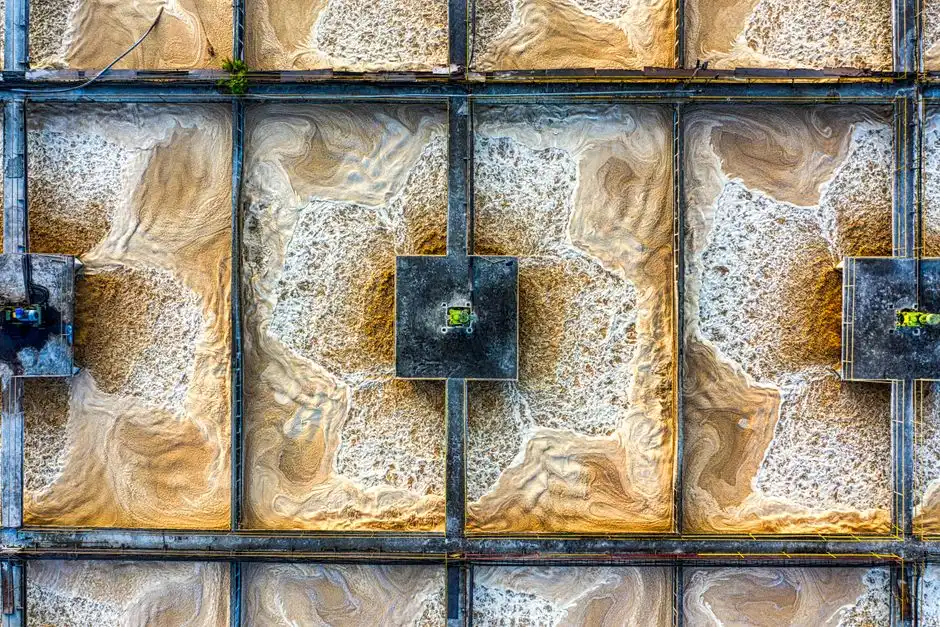
Published evidence supports a four-stage process flow for metals-bearing wastewater, as described by Veolia, Fluence, and the DOE/NREL review. Each stage performs a specific function and requires correct sizing to avoid failure.
| Stage | Function | Typical Equipment | Key Sizing Input to Request |
|---|---|---|---|
| 1. Equalization and pH/lime neutralization | Dampens flow and load swings; raises pH to the range where metal hydroxides precipitate (commonly 8–10 for amphoteric metals) | EQ basin, lime or caustic feed, high-density sludge (HDS) reactor | Daily and peak hourly flow, influent pH range, target effluent pH window, and alkalinity demand (buyer must obtain site-specific jar tests) |
| 2. Coagulation, flocculation, and chemical precipitation | Targets residual dissolved metals (As, Fe, Mn, Pb, Zn, Cu) by pH adjustment and coagulant/flocculant dosing | HydropureWater automatic chemical dosing skid feeding a flash mix and floc blanket | Metal-by-metal influent concentration, target effluent concentrations, polymer type and dose (jar-test derived) |
| 3. Solids/liquid separation | Removes the metal-hydroxide floc and suspended solids before filtration | HydropureWater DAF system or HydropureWater lamella clarifier (see decision section below) | Surface loading rate, floc density, rise rate, sludge handling destination |
| 4. Multimedia filtration and polishing | Catches carryover solids and protects any downstream membrane or ion-exchange step; SDI control | HydropureWater multi-media filter; membrane separation or ion exchange for final polishing | TSS target, SDI target if RO follows, backwash water source and volume |
Disinfection (UV or chlorine dioxide) is typically added before sewer discharge or reuse, especially where treated streams go to worker-contact end uses like haul-road dust suppression or to downstream biological processes at the receiving POTW. Veolia's reference chain for very large flows (3 million m³/year, veolia.com) extends the polishing step into HPD crystallization and evaporation, which is a finishing stage for concentrate handling relevant only to high-flow Perdue Hill plants. For mid-sized operations, the four-stage sequence above reflects standard industry practice and ADEM expectations for permit applications.
DAF vs. Lamella Clarifier for the Metals-Precipitation Step
The clarification step is the highest-risk single decision in the train, as poor performance cascades into multimedia-filter fouling, NPDES excursions, and sludge-handling problems. Dissolved air flotation handles high solids loads, oily/greasy films, and lighter floc well, while lamella clarifiers deliver higher surface loading rates and lower chemical consumption for dense, hydroxide-style floc.
| Decision Factor | DAF (HydropureWater DAF system) | Lamella Clarifier (HydropureWater lamella clarifier) |
|---|---|---|
| Best fit floc type | Light, often entrained-air hydroxide floc typical of metals precipitation | Dense hydroxide floc, especially when sludge recirculation (HDS-style) is part of the design |
| Solids load tolerance | High, with skim removal rather than bottom scraping | High, with periodic sludge blowdown from the hopper |
| Footprint vs. surface loading | Larger footprint per unit flow; well-suited to variable load | Smaller footprint; higher effective surface loading via inclined plates |
| Chemical consumption signal | Tends higher because floc is floated rather than settled | Tends lower when floc settles cleanly |
| Downstream filter protection | Good, but sensitive to air carryover into the filter | Good when flow distribution across plates is even |
| Sludge handling integration | Float scraped to a sludge tank; water content typically higher | Settled sludge denser; easier to feed a press or HDS recycle loop |
For most Perdue Hill metals applications, DAF after chemical precipitation is the standard starting point because metal-hydroxide floc is light and often carries entrained air. Lamella clarifiers become attractive when the design includes sludge recirculation in an HDS-style loop to grow a heavier, faster-settling floc. A side-by-side including Alabama-specific factors and HDS integration is covered in the parallel DAF vs. clarifier factory guide for mining/metals wastewater. Regardless of the clarifier chosen, downstream multimedia filtration with SDI protection is necessary if RO or membrane polishing is included, and the HydropureWater multi-media filter is the standard interface for that step.
Sewer Discharge vs. On-Site Reuse: The 2026 Decision Framework
Reuse is viable when the levelized cost of treatment plus distribution is competitive with the mine's marginal water source, a calculation driven by local water cost, scarcity, and the required end-use quality (Miller et al., 2021). Realistic reuse destinations for a Perdue Hill-area metals plant include dust control on haul roads, equipment wash, and process water for non-critical steps like conveyor or screen spray, as listed for containerized mining reuse systems (fluencecorp.com). For primary-metals operations, the HydropureWater pulse-jet baghouse dust collector and the HydropureWater JY integrated water purification system allow water reuse and air-permit planning to align on a single procurement track.
Procurement should follow this checklist: (1) confirm the receiving POTW's local limits and whether 40 CFR Part 436 metal-mine limits are incorporated by reference, (2) build the on-site reuse demand curve, (3) weigh ESG and permit pressure against capex, and (4) run a levelized-cost comparison between sewer discharge and reuse. If reuse is limited to dust control, a four-stage train with a DAF and multimedia filter is usually sufficient; if the reuse target is process water for beneficiation, additional polishing steps and tighter jar-test work are required. The 2026 industrial wastewater treatment market outlook helps verify whether proposed costs align with the current procurement envelope.
Frequently Asked Questions
What does 40 CFR Part 436 actually require a Perdue Hill metals plant to meet before sewer discharge?
40 CFR Part 436 is the federal effluent guideline subcategory for metal mining that sets the concentration and pollutant loads the NPDES permit enforces (Miller et al., 2021). For a Perdue Hill facility discharging to a POTW, the receiving utility's local limits apply alongside the federal floor. The operator must request the POTW's current local limits in writing and compare them against the 40 CFR Part 436 numbers before specifying equipment.
How should a 2026 budget be sized for a four-stage metals pretreatment train?
Levelized cost is driven by influent quality, reuse fraction, and whether the polishing step includes membranes (Miller et al., 2021; Veolia reference of 3 million m³/year, veolia.com). A buyer should request a levelized cost per m³ — not just a turnkey number — from each vendor, along with the assumption set (influent concentrations, reuse fraction, energy cost, chemical cost) to ensure bids are comparable. Without a site-specific jar test and flow duration curve, quoted numbers are illustrative.
What supplier-selection criteria matter most for a 2026 Perdue Hill metals pretreatment project?
Three criteria separate qualified suppliers: (1) documented experience with NPDES-delegated state programs (ADEM) and 40 CFR Part 436 compliance; (2) the ability to integrate chemical dosing, DAF or lamella, and multimedia filtration as a controlled train; and (3) a written levelized-cost model provided alongside the equipment proposal. Veolia's reference projects and Fluence's containerized mining systems demonstrate the necessary technology at scale; the final decision rests on the supplier's ability to deliver the specific train to ADEM's permit expectations.
What is the realistic 2026 lead time and compliance-risk picture for a new pretreatment train in Monroe County?
Lead time is determined by ADEM permit review, equipment fabrication, and installation windows, so buyers should request a written schedule from each supplier covering permit support, fabrication, shipping, installation, and commissioning. Compliance risk centers on whether the local POTW's limits are tighter than 40 CFR Part 436 and whether the chosen clarifier can hold the sludge blanket under peak storm flows; the EPA Bunker Hill case (19january2021snapshot.epa.gov) underscores that pretreatment is a precondition to operating. The 2026 mining/metals pretreatment guide for Tanner, US provides a useful regional comparison for siting and compliance-risk framing.
Related Equipment
- HydropureWater automatic chemical dosing skid — specifications,