
Reverse osmosis and ultrafiltration membrane elements, filter cartridges in 10-40 inch lengths, precision and bag filter housings, plus stainless steel and FRP membrane pressure vessels. Compatible with plants from any original supplier.
Membranes and filter elements are the consumable core of every water treatment plant — the components that determine output quality and that must be replaced on schedule regardless of who supplied the original system. HydropureWater supplies reverse osmosis membranes, ultrafiltration membranes, filter cartridges in all standard lengths, precision and bag filter housings, and both stainless steel and FRP membrane pressure vessels, so that a plant can be maintained from a single source rather than chased across multiple suppliers when a membrane fails.
| Category | Specifications | Application |
|---|---|---|
| RO membrane elements | ULP31-4021, ULP31-4040, ULP32-8040 and related series | Commercial and industrial reverse osmosis systems |
| Ultrafiltration membranes | PVDF hollow-fiber modules, plastic and stainless housed | UF systems, RO pretreatment, surface water clarification |
| Filter cartridges | 10", 20", 30", 40" lengths; PP melt-blown, string wound, pleated | Precision and security filtration ahead of membranes |
| Precision filter housings | Screw type / threaded joint; ring type / threaded interface; ring type / flange opening | Cartridge filtration in stainless steel vessels |
| Bag filter housings | Stainless steel, single and multi-bag | High solids loading pre-filtration |
| Membrane pressure vessels | Stainless steel membrane shells; FRP membrane housings | Housing 4" and 8" RO elements in series |
Membrane and element selection depends on your system configuration, feedwater and target output. Provide your existing model numbers or system specification for an exact match.
The two mistakes that cost most in practice are fitting a cartridge with the wrong micron rating and fitting a membrane with the wrong rejection specification for the feedwater. A cartridge that is too fine blinds off quickly and drives up differential pressure and replacement cost; too coarse and it passes the colloids that foul the membrane behind it. Similarly, a low-pressure membrane element in a brackish application will not deliver its rated rejection, and a seawater element in a low-salinity application wastes energy. Match the element to the duty by giving us the feedwater analysis and the existing model number, not just the physical size.
Plants usually lose output slowly rather than failing outright, and by the time a membrane is obviously finished the operator has often been running at reduced recovery and elevated energy cost for months. Because we engineer complete systems as well as supply consumables, we can tell you whether the element is genuinely exhausted or whether the real problem is upstream — a failed cartridge, an antiscalant dosing pump that stopped, a softener passing hardness. That diagnosis is worth more than the element itself, and it is not something a pure parts trader can provide.
Typically every 3–5 years, but the interval is set by feedwater quality and by how consistently the CIP cleaning schedule is followed rather than by the calendar. Rising differential pressure, falling permeate flow and declining salt rejection are the indicators — when cleaning no longer restores them, the elements are due.
Yes, provided the element size and specification match. Standard 4021, 4040 and 8040 formats fit standard pressure vessels regardless of who built the system. Send us your existing element model number and we will confirm compatibility before shipping.
For RO pretreatment, 5 µm is the common specification, with 1 µm used in CIP circuits. Going finer than the duty requires shortens cartridge life and raises differential pressure without improving membrane protection. The right rating depends on what the cartridge is protecting and on the solids loading reaching it.
Both house the same elements. FRP is corrosion-proof and lighter, which suits high-salinity and coastal duty; stainless steel is more robust mechanically and preferred in sanitary and high-pressure applications. Choice is driven by feedwater chemistry, operating pressure and hygiene requirements.

Complete component and consumable supply for RO, UF and softening plants: FRP and stainless tanks, salt and dosing tanks, control valves, pressure gauges, flowmeters, conductivity meters, RO controllers, metering pumps and bulk media including resin, carbon, quartz sand and softener salt.

Hollow-fiber ultrafiltration systems from 2,000 to 40,000 L/h using 0.03 micron PVDF membranes. Removes bacteria, colloids and suspended solids without chemicals, accepts up to 300 ppm turbidity, with automatic backwash and air scour. For municipal, rural and RO pretreatment duty.

Complete turnkey bottled water lines integrating RO treatment, pure water storage, PET bottle blowing (350-1500 ml), 8-8-3 filling, labelling, inkjet coding and sleeve shrink packaging - specified as one balanced scope rather than separate machines.
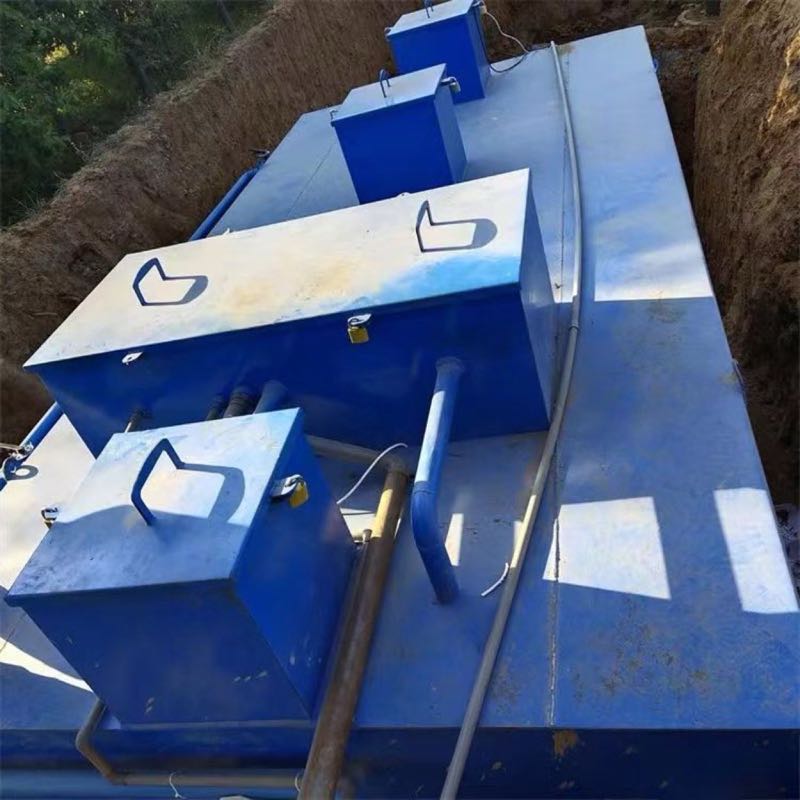
WSZ series underground integrated sewage treatment plant combines anoxic/aerobic (A/O) biological contact oxidation with sedimentation and disinfection in a single buried package unit. Fully automated with no operator required, it handles 1–80 m³/h for residential communities, hotels, hospitals, factories, and rural areas. Can be installed below grade with landscaping above, or mounted on a trailer for mobile deployment.
Get a free consultation and customized quote from our engineering team.
