Data center cooling water treatment cost in 2026 typically runs $0.05–$0.15 per gallon per year. CAPEX ranges from about $500K for enterprise air-cooled systems to $5M+ for hyperscale liquid-cooled or hybrid ZLD trains. A 10MW facility in a water-stressed region can spend $1.2M/year on treatment alone, where chemicals ($250K), membrane replacements ($180K), and energy penalties ($320K) drive about 60% of OPEX. Closed-loop systems cut water use by 95% but need roughly 20% higher upfront investment.
Data Center Cooling Water Treatment Cost 2026: What Sets the Budget
Data center cooling water treatment cost in 2026 ranges from $0.05 to $0.15 per gallon per year for open-loop tower duty. CAPEX spans about $500K for enterprise air-cooled packages to $5M+ for hyperscale liquid or hybrid ZLD trains. A 10MW water-stressed site often spends about $1.2M per year on treatment.
Use this breakdown to compare air, liquid, and hybrid cooling by facility size, climate, and water availability before you lock equipment and utility fees. Facility class matters as much as technology choice. Enterprise halls under 5MW often optimize for simple tower chemistry, while hyperscale campuses above 20MW price scarcity fees and ZLD energy into the same model.
Procurement teams should separate cooling-plant CAPEX from water-treatment CAPEX early in schematic design. Mixing those buckets hides SDC and brine disposal lines until late design freezes, when change orders are most expensive to unwind. According to the US Department of Energy, data centers are one of the most energy-intensive building types, consuming 10 to 50 times the energy per floor space of a typical commercial office building. Both line items therefore deserve their own estimate.
Why Cooling Water Treatment Costs Keep Rising for Data Centers
US data centers consumed 163.7 billion gallons of water in 2021, a figure projected to rise 12% annually through 2027 (Uptime Institute 2024). That demand growth, plus tighter discharge and reuse rules, pushes treatment budgets higher each planning cycle. Chemical treatment alone often runs $0.01–$0.03 per gallon. Membrane fouling can cut reverse osmosis (RO) efficiency by 20–30% when cleaning intervals slip.
Energy penalties add another layer. Desalination-style polishing can consume 0.5–1.2 kWh per cubic meter of treated water at ambient plant conditions. Most plants we size for hyperscale campuses run chemical and energy lines at the lower end of those ranges only when makeup quality is stable and blowdown control is tight.
Fresh federal figures confirm the trajectory. US data centers already drew approximately 4.4% of US annual electricity consumption in 2023, and some projections show that data center energy consumption could double or triple by 2028, according to the Congressional Research Service. Cooling systems could account for another 38% to 40% of electricity consumption in a data center, so treatment choices now move the power bill and the water bill together.
The same Congressional Research Service review illustrates daily water intensity with an IEA example. A 100 MW data center may consume roughly 2 million liters, roughly 530,000 gallons, per day on average. Of that, 725,000 liters, roughly 190,000 gallons per day, are consumed on site, or a little less than 40%, with the rest embedded in off-site power generation.
Local dependency is already visible in utility records. One Oregon city reported that nearly 30% of its water consumption was attributable to Google data centers. The facilities had tripled water consumption over a five-year period, according to the same Congressional Research Service review.
Regulatory pressure is intensifying. About 40% of US data centers are expected to face water restrictions by 2026 (McKinsey). System Development Charges (SDCs) can add $0.50–$2.00 per gallon in one-time fees in high-stress regions such as Arizona and Nevada.
ESG disclosure under the EU Corporate Sustainability Reporting Directive (CSRD) and US SEC climate rules also forces clearer reporting of water use and treatment spend. According to the US EPA WaterSense program, there is a strong business case to be made for water efficiency. Facility owners are increasingly aware of the need to use water more efficiently to reduce their risk to water shortages and increasing costs.
When permits tighten, the cost curve shifts from chemicals toward recovery hardware. Sites that once accepted 3–5% blowdown as normal begin pricing side-stream filtration, RO polish, or full ZLD against rising discharge fees. That is usually where cooling tower blowdown recovery system CAPEX OPEX cost data center planning stops being a side study and becomes a board-level line item.
Keep audit trails for makeup volume, cycles of concentration, and chemical dose across each operating season. Those three logs explain most year-over-year OPEX swings before teams blame membrane brand choices or utility rate changes.
Cooling Water Treatment System Types: How They Work and What They Cost
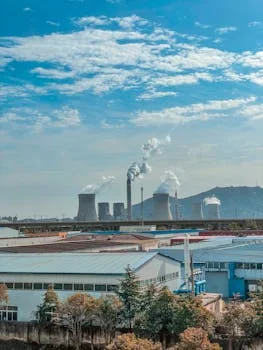
Cooling towers remain open-loop evaporative workhorses for roughly 80% of existing data centers. Typical CAPEX sits at $200–$500/kW with OPEX of $0.08–$0.15/gallon. Towers evaporate a small share of recirculating water to reject heat, so continuous blowdown (3–5% of recirculation rate) is needed to limit mineral buildup.
Automated chemical dosing for cooling towers with biocides, corrosion inhibitors, and scale preventers is standard. For advanced disinfection, many sites add on-site ClO₂ generation for cooling water biocontrol. According to the Congressional Research Service, most of the wastewater produced at a data center is from blowdown, so the dosing skid and the blowdown valve together set most of the water budget.
Closed-loop dry coolers reject heat to ambient air with zero process water loss. They carry about 30% higher CAPEX ($300–$600/kW) and 15–25% higher fan energy. They fit cold climates where ambient air stays below the heat-rejection limit (typically ambient +10°C).
Hybrid adiabatic systems blend dry cooling with evaporative assist and deliver 50–70% water savings versus traditional towers. CAPEX runs $400–$700/kW with OPEX of $0.05–$0.10/gallon, though peak summer months can raise seasonal cost by about 30% when pads run hard.
Immersion liquid cooling, direct-to-chip or full-rack, can cut water use by up to 95%. CAPEX is higher at $1K–$2K/kW, while OPEX often falls to $0.02–$0.06/gallon. Dielectric fluid replacement at $50–$100/gallon and leak-detection upkeep dominate that OPEX.
Zero Liquid Discharge (ZLD) trains recover 99%+ water via RO systems for data center cooling water reuse plus crystallizers. For a 1MW facility, ZLD CAPEX is typically $1.5M–$5M with OPEX of $0.10–$0.25/gallon. Brine disposal can run $200–$500/ton, and energy intensity is high at 8–12 kWh/m³.
For blowdown-focused reuse trains, see the Cooling Tower Blowdown Recycling: 2026 Engineering Specs guide and the data center blowdown water reuse specifications.
| System Type | Mechanism | Water Use | CAPEX ($/kW) | OPEX ($/gallon) | Key Characteristics |
|---|---|---|---|---|---|
| Cooling Towers | Open-loop evaporation | High | $200–$500 | $0.08–$0.15 | Blowdown (3–5%), chemical dosing, ambient temp dependent. |
| Closed-loop Dry Coolers | Air-to-fluid heat exchange | Zero | $300–$600 | N/A (higher energy) | 30% higher CAPEX, 15–25% higher energy, cold climates. |
| Hybrid Adiabatic | Dry cooling + evaporative assist | Medium-Low | $400–$700 | $0.05–$0.10 | 50–70% water savings, seasonal efficiency swings. |
| Immersion Liquid Cooling | Direct-to-chip/rack fluid immersion | Very Low | $1K–$2K | $0.02–$0.06 | 95% water reduction, dielectric fluid costs, high density. |
| Zero Liquid Discharge (ZLD) | RO + crystallizers | Minimal (99%+ recovery) | $1.5M–$5M (for 1MW) | $0.10–$0.25 | Brine disposal costs, high energy intensity. |
Closed-Loop vs Cooling Tower CAPEX for Data Centers: Which Costs Less?
Cooling towers win on first cost at $200–$500/kW, while closed-loop dry coolers cost $300–$600/kW but remove evaporative water loss and most chemical spend. Tower OPEX of $0.08–$0.15/gallon reflects makeup, blowdown, and dosing. Dry coolers shift spend into fan energy (15–25% higher) and suit cold climates near ambient +10°C heat-rejection limits. Hybrid adiabatic units sit between them at $400–$700/kW and $0.05–$0.10/gallon when seasonal pad use is controlled.
Closed-loop glycol or water circuits still need corrosion control and side-stream filtration even when evaporative loss is zero. Skipping that polish saves little CAPEX and often shows up later as heat-exchanger fouling and higher fan runtime. For water treatment on data center cooling towers versus closed-loop systems, size chemistry to wetted metallurgy and hold-up volume, not to tower rules of thumb alone.
If your design day stays cool enough for dry rejection most hours, hybrid pads can remain offline for long stretches. That operating mode is how many northern campuses keep annual water use near the low end of hybrid ranges without buying full immersion infrastructure. Compare both designs at your own wet-bulb data before believing either vendor deck.
CAPEX Breakdown: How Much Does a Cooling Water Treatment System Cost?
Cooling water treatment CAPEX for data centers spans about $200/kW for basic towers to over $2,000/kW for advanced liquid cooling or ZLD packages. For a 1MW facility, a tower package with pumps, piping, and a chemical dosing skid typically costs $200,000–$500,000. Closed-loop dry coolers land at $300,000–$600,000.
Hybrid adiabatic systems with pads and variable-speed fans run $400,000–$700,000. Immersion liquid cooling, including fluid, racks, and leak detection, reaches $1,000,000–$2,000,000. Full ZLD with RO, crystallizers, and brine concentrators sits at $1.5M–$5M for 1MW, with high-salinity wastewater treatment hardware as a large share of that figure.
Hidden CAPEX items often dominate board reviews. Water rights and permits can run $50,000–$500,000 by region. SDCs of $0.50–$2.00 per gallon of peak daily demand hit hard in stressed basins.
Installation labor, civil works, and electrical tie-ins typically add 20–40% of equipment cost. Commissioning, performance testing, and operator training add another 5–10%. Teams that already model industrial capex and opex for process plants should apply the same contingency discipline here.
| System Type (Equipment Only) | 1MW Facility CAPEX Range | 5MW Facility CAPEX Range | 20MW Facility CAPEX Range |
|---|---|---|---|
| Cooling Towers | $200K – $500K | $1M – $2.5M | $4M – $10M |
| Closed-loop Dry Coolers | $300K – $600K | $1.5M – $3M | $6M – $12M |
| Hybrid Adiabatic | $400K – $700K | $2M – $3.5M | $8M – $14M |
| Immersion Liquid Cooling | $1M – $2M | $5M – $10M | $20M – $40M |
| ZLD (RO + Crystallizer) | $1.5M – $5M | $7.5M – $25M | $30M – $100M |
ZLD System CAPEX for Data Center Cooling: What You Pay For
ZLD system CAPEX for data center cooling runs $1.5M–$5M per MW of thermal load, split across RO trains, brine concentrators, crystallizers, and sludge handling. OPEX of $0.10–$0.25/gallon and energy intensity of 8–12 kWh/m³ mean the local power rate shapes payback as much as the equipment quote. Brine disposal at $200–$500/ton turns a poor feed into a permanent cost penalty.
Feed chemistry moves the quote more than brand choice. High-salinity or high-silica makeup lowers attainable recovery, which upsizes the concentrator and crystallizer stages. Most plants we size for 5–20MW campuses pilot side-stream recovery first, then escalate to full ZLD only when discharge limits or scarcity fees erase the OPEX gap.
Ask every bidder for recovery rate, specific energy per cubic meter, and brine solids disposition at your stated makeup analysis. Quotes that omit brine handling are not comparable, because solids disposal is the line that breaks ZLD budgets in years two through five.
Hyperscale Data Center Cooling Water OPEX Breakdown: Five Lines That Dominate
Hyperscale data center cooling water OPEX concentrates in five recurring lines: chemicals at $0.01–$0.03 per gallon, membranes at $0.005–$0.02, energy penalties at $0.02–$0.08, water rights fees, and maintenance labor. Facility managers track these monthly, because together they explain about 60% of a water-stressed site's $1.2M/year treatment bill at 10MW.
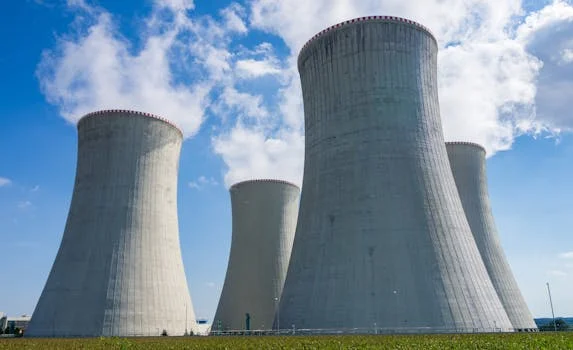
- Chemical treatment: Typically $0.01–$0.03 per gallon of treated water for biocides, corrosion inhibitors, and scale preventers. Chlorine dioxide (ClO₂) can cost around $1.20/lb, while polyphosphate inhibitors are about $0.80/lb. Automated dosing usually cuts overfeed and saves 15–25% on chemical spend.
- Membrane replacement: RO or UF trains add roughly $0.005–$0.02 per gallon. RO membranes typically last 3–5 years; UF membranes often last 5–7 years. Fouling can drive 10–20% flux decline per year without diligent cleaning. Side-stream filtration commonly extends membrane life and cuts replacement frequency by 20–30%.
- Energy penalties: Pumps, fans, and chillers add about $0.02–$0.08 per gallon. Cooling towers consume roughly 0.05 kWh/gallon, while ZLD systems can use 8–12 kWh/m³. Variable-speed drives on pumps and fans often yield 10–15% energy savings.
- Water rights fees: Ongoing charges, separate from one-time SDCs, range from $0.001–$0.05 per gallon. Fees near $0.02/gallon in Phoenix versus about $0.002/gallon in Seattle illustrate scarcity pricing.
- Maintenance labor: Typically $0.005–$0.02 per gallon, or about 1–2 full-time employees for a 10MW facility covering membrane cleans, tower inspections, fluid top-offs, and routine checks.
A 5MW facility in Texas cut OPEX by 35% (from $0.09 to $0.06/gallon) after moving from towers to a hybrid adiabatic system with automated chemical dosing. That shift is the pattern we see when makeup quality is fair and summer wet-bulb peaks are the real constraint.
How Do High-Purity Water Systems Support Data Center Cooling?
High-purity water systems protect chillers, cold plates, and closed loops by controlling conductivity, hardness, and suspended solids before water contacts heat-exchange surfaces. Makeup polishers and side-stream RO/UF trains keep cycles of concentration stable so blowdown volume and chemical dose stay predictable. Without that polish, scale and biofouling raise both energy and membrane replacement lines in the OPEX stack above. Spec purity targets to the metallurgy and fluid loop you actually run, not to a generic boiler standard.
For evaporative halls, high-purity makeup mainly protects fill, condensers, and RO pretreatment. For liquid-cooled halls, purity targets shift toward low conductivity and tight particle control in CDU loops. Mixing those two duty statements in one skid usually produces either overspending on polish or underprotecting the denser loop.
Ask vendors for design conductivity, hardness, silica, and TSS limits at the stated design flow. Then price the pretreatment train against the membrane replacement and energy lines already listed in the OPEX section, not against a single "high purity" marketing label.
Liquid vs. Air Cooling: Which System Wins on Cost?
Air and liquid cooling CAPEX can sit near parity at moderate rack density. A 2020 Schneider Electric study reported $7.02/watt for air-cooled and $6.98/watt for liquid-cooled designs at 10kW/rack. Liquid cooling scales better above 30kW/rack because footprint and thermal density favor fluid loops.
On OPEX, liquid cooling usually wins: air-cooled evaporative trains often sit at $0.08–$0.15/gallon, while liquid loops can reach $0.02–$0.06/gallon with about 95% less water use and 10–20% lower energy. For liquid-loop blowdown and CDU wastewater handling, see data center liquid cooling wastewater treatment specs.
Air cooling remains cost-effective below about 20kW/rack in cold or low water-stress regions. Liquid cooling fits hot/humid climates, water-scarce sites, and high-density halls. Trade-offs matter: air cooling is louder (85–95 dB) and needs 20–30% more space; liquid cooling adds leak and dielectric-compatibility maintenance and is harder to retrofit into air-only halls.
| Feature | Air Cooling | Liquid Cooling | Notes |
|---|---|---|---|
| Typical CAPEX ($/watt) | $7.02 (for 10kW/rack) | $6.98 (for 10kW/rack) | Parity at lower densities, liquid scales better for >30kW/rack. |
| OPEX ($/gallon) | $0.08–$0.15 | $0.02–$0.06 | Liquid cooling offers 95% water reduction, 10–20% lower energy. |
| Best Use-Case (kW/rack) | <20kW/rack | >30kW/rack | Liquid cooling excels in high-density environments. |
| Climate Suitability | Cold climates, low water stress | Hot/humid climates, water-scarce regions | Efficiency varies significantly with ambient conditions. |
| Hidden Trade-offs | Higher noise (85–95 dB), larger footprint (20–30% more space) | Higher maintenance (fluid leaks, dielectric compatibility), limited retrofitting | Consider long-term operational and integration challenges. |
How Effective Is Data Center Water Recycling?
Data center water recycling is most effective when blowdown or CDU wastewater is polished for reuse rather than discharged after a single pass. Tower blowdown recovery and RO-based reuse commonly target high recovery; ZLD trains claim 99%+ water recovery when crystallizers follow RO. Effectiveness depends on feed salinity, silica, and organics, and high-silica makeup often forces lower cycles or stronger pretreatment before reuse economics hold. Most plants we size for 5–20MW campuses recycle side streams first, then escalate to ZLD only when discharge limits or scarcity fees erase the OPEX gap.
Measure recycling effectiveness as gallons reused per gallon of blowdown, plus the energy and chemical cost per reused gallon. Run both cases at your tariff before naming a "best" recovery percentage. Large operators now model this continuously; Meta reports that it leverages digital twin models of its data center cooling systems to generate accurate estimates of short- and long-term water usage.
Reuse water quality must match the receiving duty. Returning RO permeate to tower makeup is not the same as returning it to a liquid-cooling CDU. Cross-connecting those qualities without a buffer tank and online analyzers is a common commissioning failure mode.
Regional Cost Variations: How Water Stress and Utility Pricing Impact Your Budget
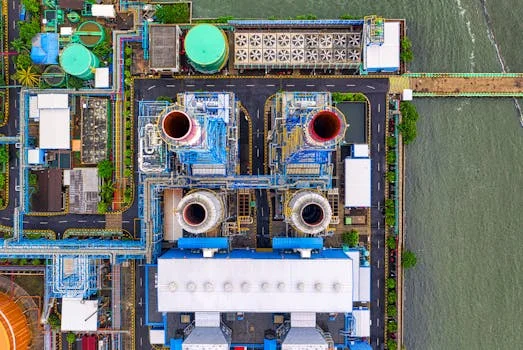
Water cost for data center cooling swings sharply with basin stress. Low-stress cities such as Seattle or Portland often see $0.002–$0.005 per gallon. Medium-stress markets like Dallas or Atlanta commonly sit at $0.01–$0.03 per gallon. High-stress markets such as Phoenix or Las Vegas can reach $0.05–$0.15 per gallon once scarcity surcharges and SDCs apply.
SDCs recover utility capacity investment and are often based on peak daily demand. An Arizona site might face about $1.50 per gallon of peak daily demand. One hyperscale expansion in Nevada incurred $2.1 million in SDCs for a 20MW build-out, about 30% of cooling-system CAPEX. Emerging risks include outright restrictions, such as Arizona's 2023 moratorium on new data centers in Maricopa County, and possible carbon-related penalties for water-intensive cooling under mechanisms like the EU Carbon Border Adjustment Mechanism (CBAM).
| Region Water Stress Level | Example Cities | Typical Water Cost ($/gallon) | Additional Cost Factors |
|---|---|---|---|
| Low Stress | Seattle, Portland | $0.002–$0.005 | Minimal SDCs, stable supply |
| Medium Stress | Dallas, Atlanta | $0.01–$0.03 | Moderate SDCs, seasonal price fluctuations |
| High Stress | Phoenix, Las Vegas | $0.05–$0.15 | High SDCs ($0.50–$2.00/gallon), scarcity surcharges, potential restrictions |
ROI Calculator: How to Justify Your Cooling Water Treatment Investment
ROI models for data center cooling cost decisions should treat water treatment as its own cash-flow block, not a lump inside mechanical CAPEX. ROI for cooling water treatment upgrades is best modeled with facility size (MW), system type, CAPEX, annual OPEX, local water and energy prices, SDCs, and maintenance labor. Key outputs are payback period, net present value (NPV), internal rate of return (IRR), and annual savings.
For a 10MW Arizona site comparing towers to hybrid adiabatic cooling, illustrative inputs are $4M hybrid CAPEX versus $2.5M for towers, and about $1.2M/year hybrid OPEX versus $2.1M/year for towers. That case yields a payback near 3.2 years and a 5-year NPV around $3.8M.
Run sensitivity at ±20% water cost, ±15% energy cost, and ±50% SDC before you freeze the design. Those three levers usually move payback more than membrane brand choice. If payback only works at the optimistic water-price case, the project is a scarcity hedge, not a pure efficiency upgrade, and should be labeled that way in the investment memo.
Include membrane replacement in years 3–5 and dielectric fluid top-ups inside the multi-year OPEX model. Omitting those lines is the most common reason "3-year payback" decks miss real cash flow after year two.
Selection Checklist and Who This Is For
Use this short checklist before you commit CAPEX:
- Confirm peak IT density (kW/rack) and wet-bulb design day.
- Map makeup quality, discharge limits, and SDC basis (peak gallons/day).
- Compare tower, hybrid, liquid, and ZLD OPEX at your local water and power rates.
- Budget chemicals, membranes, energy, rights fees, and 1–2 FTEs for a 10MW class site.
- Stress-test payback at ±20% water and ±15% energy.
- Decide whether blowdown recovery or full ZLD is required by permit, not by brochure claims.
- Plan commissioning and operator training at 5–10% of equipment cost.
This guide is for plant engineers, EPC contractors, and procurement managers sizing treatment for new halls or retrofits. Teams chasing only air-side free cooling in cold climates with abundant water may not need ZLD-class spend. If you want a site-specific equipment and OPEX package, request a treatment quote with your MW load, makeup analysis, and discharge limits.
Frequently Asked Questions
How much water does a data center use for cooling?
A medium data center (1–5MW) can consume about 110 million gallons of water per year for cooling. Hyperscale facilities (>20MW) can use upwards of 5 million gallons per day, or about 1.8 billion gallons annually. Water use scales with IT load and climate, and hot and humid regions typically consume 20–30% more water for evaporative cooling (Uptime Institute 2023). For scale, one federal illustration puts a 100 MW facility at roughly 530,000 gallons per day across cooling strategies.
What is the cheapest cooling water treatment system?
Cooling towers generally have the lowest upfront CAPEX at $200–$500/kW. They also carry the highest OPEX, typically $0.08–$0.15/gallon, because of evaporative loss and continuous chemical treatment. Hybrid adiabatic systems at $400–$700/kW and $0.05–$0.10/gallon often give a better long-term balance in water-stressed regions.
How do I reduce cooling water treatment costs?
Automate chemical dosing to cut overfeed and save 15–25% on chemicals. Add side-stream filtration to extend RO membrane life and reduce replacements by 20–30%. Use variable-speed drives on pumps and fans for 10–15% energy savings. Evaluate non-potable makeup, such as recycled wastewater, where permits allow. Audit water quality and cycles of concentration on a fixed schedule so savings hold after commissioning.
Are liquid cooling systems worth the higher upfront cost?
Yes, for racks above about 30kW or for water-scarce sites. Liquid cooling can cut water use by 95% and energy by 10–20% versus traditional air cooling. Hyperscale payback often falls in the 3–5 year range. Below about 20kW/rack, air cooling usually remains more cost-effective.
What are the hidden costs of cooling water treatment?
Hidden costs include SDCs of $0.50–$2.00/gallon of peak demand and water rights or permits at $50K–$500K. ZLD brine disposal often adds $200–$500/ton. Maintenance downtime near 1–2% of annual uptime and Clean Water Act fines of $10K–$100K per violation also belong in the model. Price these lines before you compare sticker CAPEX alone.
What drives cooling tower blowdown recovery system CAPEX OPEX cost data center budgets?
Feed salinity, target recovery rate, brine disposal cost, and concentration energy drive those budgets. A cooling tower blowdown recovery system CAPEX OPEX cost data center model should price RO trains, concentrators, brine disposal at $200–$500/ton, and 8–12 kWh/m³ of energy. Side-stream filtration plus RO polish usually delays crystallizer spending until discharge limits or scarcity fees force it.
What does hyperscale data center cooling water OPEX include each year?
Hyperscale data center cooling water OPEX includes five recurring lines: chemicals, membranes, energy penalties, water rights fees, and maintenance labor. Chemicals run $0.01–$0.03 per gallon treated, membranes $0.005–$0.02, energy penalties $0.02–$0.08, water rights $0.001–$0.05, and labor about 1–2 FTEs per 10MW. Chemicals, membranes, and energy drive roughly 60% of the total. Automated dosing and side-stream filtration are the two fastest levers on those lines.
What is the ZLD system CAPEX for data center cooling per MW?
ZLD system CAPEX for data center cooling runs $1.5M–$5M for a 1MW facility and $7.5M–$25M at 5MW. The split covers RO trains, brine concentrators, crystallizers, and sludge handling. OPEX of $0.10–$0.25/gallon and energy intensity of 8–12 kWh/m³ mean the electric rate shapes payback as much as the equipment quote. High-salinity or high-silica makeup pushes CAPEX toward the top of the range.
Which has lower CAPEX for data centers: closed-loop or cooling towers?
Cooling towers carry lower CAPEX at $200–$500/kW, while closed-loop dry coolers sit at $300–$600/kW and remove evaporative water loss. Towers repay the difference through OPEX of $0.08–$0.15/gallon for makeup, blowdown, and chemicals. Hybrid adiabatic systems split the difference at $400–$700/kW. Cold-climate sites near ambient +10°C rejection limits often justify dry or hybrid loops on avoided water fees alone.
What is Water Usage Effectiveness (WUE) in data center cooling?
Water Usage Effectiveness (WUE) expresses a facility's annual water consumption in liters per kilowatt-hour of IT equipment energy. Lower is better, and the metric isolates cooling water from total site water. Operators use it to compare tower, hybrid, and liquid-cooled designs on equal footing before CAPEX decisions. Track WUE monthly alongside cycles of concentration and makeup volume to catch drift early.
Do water restrictions really block new data center builds?
Yes, restrictions already bind in some basins. Arizona's 2023 moratorium on new data centers in Maricopa County is the clearest example, and about 40% of US data centers are expected to face water restrictions by 2026 (McKinsey). SDCs of $0.50–$2.00 per gallon and scarcity surcharges in Phoenix or Las Vegas act as soft restrictions. Securing water rights belongs in site due diligence, not late design.