Industrial wastewater treatment in Oman is sized to meet Ministerial Decision 145/1993 (MD 145/93) reuse and discharge limits and the plant’s Permit to Discharge. For Standard B land reuse, Table 1 sets COD ≤ 200 mg/L and suspended solids (SS) ≤ 30 mg/L; Standard A tightens those to COD ≤ 150 mg/L and SS ≤ 15 mg/L. Earlier buyer guides often cited COD ≤ 250 mg/L and TSS ≤ 50 mg/L as planning targets; those figures are looser than the published MD 145/93 Table 1 values and should not be used as the design basis. CAPEX for a 100 m³/h DAF train often starts near OMR 80,000, while MBR packages for 10–100 m³/h commonly sit between OMR 150,000 and 500,000 once pretreatment and sludge handling are included.
Industrial Wastewater Treatment in Oman: What Specs Decide Compliance
MD 145/93 Table 1 sets Standard A/B maxima of COD 150/200 mg/L, SS 15/30 mg/L, BOD₅ 15/20 mg/L, and oil and grease 0.5 mg/L for permitted reuse routes. Chromium is capped at 0.05 mg/L and copper at 0.5–1 mg/L. DAF, MBR, and plate-and-frame presses are the three unit operations most Oman factories combine when reuse or tight permits apply.
Why Oman Plants Cannot Treat Compliance as Optional
Oman’s regulators still anchor land reuse and many inland discharge permits to Ministerial Decision 145/1993. According to the official MD 145/93 text (FAOLEX unofficial English translation), Article 2 prohibits discharge of wastewater or sludge without a Permit to Discharge, and Article 5 requires continuous compliance with Table 1 limits for the permitted reuse or discharge method. Article 8 and Article 9 require owners to provide sampling gear and to submit monthly data in an approved format. Article 12 gives the ministry inspection and sampling rights at any treatment plant; it does not itself list fine amounts. Buyer reports still cite penalties in the OMR 1,000–10,000 range per violation and possible shutdowns for repeated exceedances, so plants budget for both process reliability and documented monitoring.
Water scarcity keeps reuse on the agenda. Per capita renewable water availability near 430 m³/year remains far below the 1,000 m³/year scarcity threshold used in regional planning. Older industry notes put treated wastewater at about 12% of industrial supply and expected further growth after 2024; operators should verify current offtake with their permit and water utility, not with a fixed share. Sacrificial discharge is allowed only in exceptional cases under Article 10 when no reuse route is possible. MD 12/2017, noted in SEZAD’s Water Quality Protection Technical Note (2018), amended MD 145/93 to cover industrial, oilfield, and desalination reject streams that need explicit discharge permits.
Sector loads differ sharply. Oil and gas streams carry high TDS, hydrocarbons, and suspended solids. Food plants bring high BOD, COD, and FOG; FOG often needs pH adjustment to 6.5–7.5 before DAF or it blinds bubble contact and clogs later membranes. Textile mills discharge dyes, metals, and elevated organics. A 50 m³/h textile case in Rusayl cut COD from 1,200 mg/L to 200 mg/L with DAF for solids and color, then MBR for residual organics, avoiding an estimated OMR 8,000/year in fine exposure. Most plants we size for Oman food and light industry run DAF hydraulic loading at the lower end of 4–8 m/h when FOG exceeds about 200 mg/L.
SEZAD’s 2018 water-quality note also restates the same Table 1 A/B numeric set for Duqm projects and flags RD 115/2001 sewer acceptance limits for non-household liquid waste—BOD up to 1,000 mg/L, COD up to 1,500 mg/L, suspended solids up to 1,000 mg/L, and grease and oil up to 30 mg/L when discharging to a sewer rather than to land reuse. That sewer pathway is useful when a factory ties into a licensed municipal network, but it does not relax MD 145/93 when the final environmental discharge or reuse remains on the factory permit.
Engineering Specs for DAF, MBR, and Sludge Dewatering
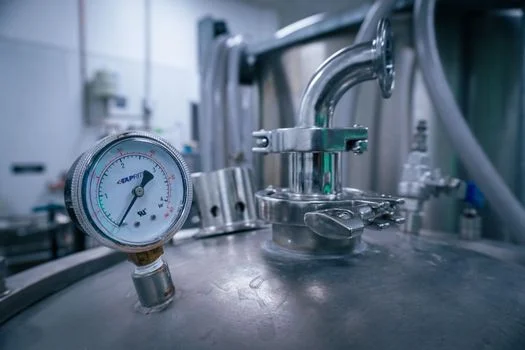
Selecting the right train starts from influent data and the reuse class on the permit, not from a generic factory package. Three unit processes cover most Oman factory duties: dissolved air flotation (DAF), membrane bioreactors (MBR), and plate-and-frame filter presses for sludge.
A high-efficiency DAF system for Oman’s food processing and oil & gas sectors, such as a DAF-class unit, typically reaches TSS removal of 92–97% and FOG removal above 95% when flocculation is stable. Design hydraulic loading of 4–8 m/h suits primary clarification of high solids and oil. Pretreatment usually includes pH control at 6.5–7.5 and coagulant dosing with poly-aluminum chloride (PAC) at 50–200 mg/L so flocs attach to the microbubble cloud. Recycle ratios and saturator pressure should be set from jar tests on site water, not from brochure defaults, because Gulf seawater intrusion and hard groundwater change coagulant demand.
For reuse-quality effluent, an MBR system for water reuse in Oman’s arid industrial zones (DF-class integrated packages are a common layout) holds COD removal at 92–97% and effluent TSS ≤ 1 mg/L under steady MLSS control. Typical operating windows are MLSS 8,000–12,000 mg/L, membrane pores about 0.1 μm in PVDF, and specific energy 0.6–1.2 kWh/m³ of permeate. That TSS level sits well below MD 145/93 Standard A SS ≤ 15 mg/L, so MBR permeate often meets irrigation reuse solids limits without a separate tertiary filter—pathogen and nitrogen limits on the permit still need separate checks. Nitrogen Table 1 caps (ammoniacal N 5/10 mg/L and organic Kjeldahl N 5/10 mg/L for A/B) often force longer sludge age or a dedicated anoxic zone that brochure “COD-only” packages omit.
Sludge volume drives disposal cost. A sludge dewatering press to reduce disposal costs in Oman can reach cake solids ≥ 30% dry solids, with filtration areas from 1–500 m² and cycle times of 2–4 hours, cutting wet sludge volume by up to 70%. Landfill tipping in Oman commonly runs OMR 20–50/ton, so each percent of cake dryness shows up in OPEX. Upstream screens (for example rotary bars removing >5 mm solids) and chemical dosing—ferric chloride at 10–50 mg/L when phosphorus must drop—protect both DAF and membranes. Compact package wastewater treatment plants in Oman use the same building blocks when plot space or phased CAPEX favors skid modules.
| Technology | Key Performance Indicator | Typical Range/Value | Primary Application | Pretreatment Needs |
|---|---|---|---|---|
| DAF (Dissolved Air Flotation) | TSS Removal Rate | 92-97% | Food Processing, Oil & Gas (Pre-treatment) | pH Adjustment (6.5-7.5), Coagulant Dosing (PAC 50-200 mg/L) |
| FOG Removal Rate | >95% | |||
| Hydraulic Loading Rate | 4-8 m/h | |||
| MBR (Membrane Bioreactor) | COD Removal Rate | 92-97% | Water Reuse (Cooling, Irrigation), Advanced Treatment | Fine Screening, Pre-DAF (for high FOG/TSS) |
| TSS in Effluent | ≤ 1 mg/L | |||
| Membrane Pore Size | 0.1 μm (PVDF) | |||
| Energy Consumption | 0.6-1.2 kWh/m³ | |||
| Sludge Dewatering (Plate-and-Frame Filter Press) | Cake Solids Content | ≥ 30% | Volume Reduction, Disposal Cost Savings | Flocculant Dosing |
| Sludge Volume Reduction | Up to 70% | |||
| Cycle Time | 2-4 hours |
How to Meet MD 145/93 Without Over-Engineering
Ministerial Decision 145/1993 Table 1 is the numeric core for wastewater quality under Standards A and B, which Table 3 maps to crop types, public-access irrigation, and aquifer recharge. Earlier guidance used COD ≤ 250 mg/L and TSS ≤ 50 mg/L as broad industrial targets; the 1993 regulation sets COD ≤ 150 mg/L (A) or ≤ 200 mg/L (B) and SS ≤ 15 mg/L (A) or ≤ 30 mg/L (B) (MD 145/93, Table 1). Designing only to the looser planning numbers leaves little headroom when the Permit to Discharge cites Standard A or tight metal limits.
Oil and grease is a frequent miss. Some sector briefs still quote ≤ 10 mg/L oil and grease or ≤ 15 mg/L FOG for food plants; MD 145/93 Table 1 lists oil and grease (total extractable) at 0.5 mg/L for both Standards A and B. That gap is why DAF plus polishing matters on oily streams. BOD₅ limits in Table 1 are 15 mg/L (A) and 20 mg/L (B), tighter than the ≤ 30 mg/L BOD figure still used in some older design memos. Chromium is 0.05 mg/L in Table 1, not 0.5 mg/L; copper is 0.5 mg/L (A) and 1 mg/L (B). Color at ≤ 50 Pt-Co appears in many textile permits even when it is not a Table 1 parameter, so treat color as permit-specific and confirm with the Environment Authority before freezing the process train.
DAF handles FOG and TSS for food wastewater when coagulants and pH are controlled. MBR covers residual BOD/COD after solids and oil are cut, which is the usual path for textile organics aiming at Standard A/B COD. Metal precipitation with lime to pH 9–10, then settling, remains the common chromium path before biological stages. Monitoring practice on many Oman permits still mixes daily pH checks, weekly COD/TSS lab runs, and quarterly metals. A food plant in Salalah reported about 30% lower lab labor after installing online TSS sensors spanning 0–1,000 mg/L for real-time DAF control. Older notes sometimes stated irrigation reuse needed TSS ≤ 10 mg/L; MD 145/93 Table 1 instead sets SS at 15 or 30 mg/L by standard class, while MBR effluent at ≤ 1 mg/L TSS still clears that solids bar with margin. Faecal coliform limits of 200/100 mL (A) and 1,000/100 mL (B) plus viable nematode ova <1 per litre also sit in Table 1 and often decide whether UV or chlorination is required after membranes.
| Parameter | MD 145/93 Discharge Limit (mg/L, unless specified) | Sector-Specific Relevance | Recommended Technology for Compliance |
|---|---|---|---|
| COD | ≤ 250 (earlier planning figure); MD 145/93 Table 1: ≤ 150 (A) / ≤ 200 (B) | General industrial, high organic loads (food, textiles, oil & gas) | MBR, Activated sludge, DAF (pre-treatment) |
| TSS / SS | ≤ 50 (earlier planning figure); MD 145/93 Table 1: ≤ 15 (A) / ≤ 30 (B) | General industrial, high suspended solids (food, oil & gas) | DAF, Sedimentation, Filtration |
| BOD₅ | ≤ 30 (earlier planning figure); MD 145/93 Table 1: ≤ 15 (A) / ≤ 20 (B) | Food Processing, Textile (high biodegradable organics) | MBR, Activated Sludge |
| Oil & Grease | ≤ 10 (earlier sector brief); MD 145/93 Table 1: ≤ 0.5 | Oil & Gas, Food Processing | DAF, CPI/API Separators |
| FOG | ≤ 15 (common food-plant brief; confirm on permit) | Food Processing | DAF, Grease Traps |
| Color | ≤ 50 Pt-Co (typical textile permit target; not a Table 1 parameter) | Textile Industry | Activated Carbon, Ozone, Coagulation/Flocculation |
| Heavy Metals (e.g., Cr, Cu) | ≤ 0.5 (earlier combined brief); MD 145/93: Cr ≤ 0.05; Cu ≤ 0.5 (A) / ≤ 1 (B) | Textile Industry, Metal Finishing | Chemical Precipitation, Ion Exchange |
| pH | 6.0-9.0 | All industries | Neutralization (Acid/Alkali Dosing) |
CAPEX, OPEX, and ROI Benchmarks for Oman Systems
CAPEX and OPEX decide whether a reuse project pays or a compliance-only plant simply stops fines. Using 2025 Oman market benchmarks for 10–100 m³/h duty, DAF packages typically land between OMR 50,000 and 200,000 depending on metallurgy and automation. MBR systems for the same hydraulic range usually cost OMR 150,000–500,000 once membranes and pretreatment are counted. Plate-and-frame presses with 1–50 m² filtration area often price at OMR 30,000–150,000. For broader GCC wastewater treatment cost benchmarks for budget planning, regional curves help stress-test vendor quotes.
OPEX is dominated by power, chemicals, and sludge haulage. Energy commonly falls between 0.5–1.5 kWh/m³ treated. Coagulants, flocculants, and pH chemicals average about OMR 0.20–0.80/m³. Sludge disposal at OMR 20–50/ton remains a large line item without dewatering. A 50 m³/h MBR train may run near OMR 0.60/m³ all-in versus about OMR 0.30/m³ for conventional activated sludge, but MBR permeate can displace freshwater purchases when the permit allows reuse.
Reuse projects in high-tariff zones such as Duqm, where freshwater can reach about OMR 3.50/m³, often show 3–5 year payback when offtake is reliable. Compliance-only projects that mainly avoid OMR 10,000-class fines can pay back in 1–2 years if exceedance risk is real and frequent. Hidden costs still bite: permitting OMR 5,000–20,000, operator training OMR 2,000–10,000, and MBR membrane replacement every 5–8 years at OMR 20,000–100,000. Freight, desert commissioning, and spare-membrane inventory for remote sites such as Duqm or Salalah should sit in the contingency line, not as a surprise after award.
| System Type | Capacity Range (m³/h) | Typical CAPEX (OMR, 2025) | Typical OPEX (OMR/m³) | Key Cost Drivers |
|---|---|---|---|---|
| DAF System | 10-100 | 50,000 - 200,000 | 0.20 - 0.50 | Equipment, Installation, Chemicals (coagulants) |
| MBR System | 10-100 | 150,000 - 500,000 | 0.60 - 1.50 | Membranes, Aeration, Pretreatment, Energy, Chemicals |
| Plate-and-Frame Filter Press | 1-50 m² filtration area | 30,000 - 150,000 | 0.05 - 0.15 (per m³ treated wastewater) | Equipment, Flocculants, Sludge Disposal Fees |
| Hidden Costs & ROI Factors | ||||
| Permitting | 5,000 - 20,000 | Regulatory compliance, application fees | ||
| Operator Training | 2,000 - 10,000 | Skill development, safety protocols | ||
| MBR Membrane Replacement | 20,000 - 100,000 (every 5-8 years) | System longevity, performance maintenance | ||
| Water Reuse ROI | 3-5 years (based on OMR 3.50/m³ water cost) | Reduced freshwater purchase, environmental benefits | ||
| Compliance ROI | 1-2 years (based on avoiding OMR 10,000 fines) | Avoided penalties, improved public image | ||
How to Select a Treatment Train for an Oman Facility
Selection fails when teams skip influent characterization. Measure COD, TSS, FOG, pH, metals, and TDS on representative shifts before locking equipment. Oil and gas wastewater at COD 1,000–5,000 mg/L and TDS 5,000–20,000 mg/L usually needs DAF (or API/CPI) before any membrane step, and often RO if dissolved salts must fall. Food wastewater at COD 500–2,000 mg/L with FOG 200–1,000 mg/L fits DAF for oil and solids, then MBR when reuse or tight BOD/COD limits apply. Detailed slaughterhouse wastewater treatment specs for high-FOG influent map the same FOG-first logic.
Match technology to the MD 145/93 standard class and any extra permit lines. Textile color near ≤ 50 Pt-Co may need carbon or ozone after biological treatment. Food plants usually win or lose on DAF FOG removal before biology. Do not oversize membranes to solve oil that belongs in flotation. If the outlet is a sewer under RD 115/2001-style acceptance limits rather than land reuse, pretreatment can stop at grease and gross solids removal—but only when the sewer operator’s written limits are on file.
Footprint and automation come next. MBR tanks can save up to 60% of the land used by conventional activated sludge, which matters inside Sohar or Rusayl plots. PLC automation often adds OMR 10,000–30,000 but cuts operator load when remote alarms are reliable. Finally, run ROI with the CAPEX/OPEX table above. A 50 m³/h DAF at about OMR 120,000 CAPEX that prevents OMR 40,000/year in fines and freshwater use can pay back near three years if those savings are documented.
Selection checklist (use before issuing an RFQ):
- Influent composite data for COD, BOD₅, TSS, FOG/oil, pH, TDS, and metals under peak production.
- Permit class: MD 145/93 Standard A or B, plus any site-specific color or sewer discharge limits.
- Reuse intent: irrigation, cooling make-up, or discharge only—each changes polishing needs.
- Plot area and power availability at 0.5–1.5 kWh/m³ duty.
- Sludge route and tipping fee (OMR 20–50/ton) with target cake ≥ 30% solids.
- CAPEX band for 10–100 m³/h and membrane replacement reserve every 5–8 years.
- Monitoring plan: daily pH, weekly COD/TSS, quarterly metals, or online TSS where justified.
Who This Is For / Next Step
This guide is for plant engineers, EPC contractors, and procurement teams sizing factory effluent plants in Oman against MD 145/93 and current permits. Buyers who only need septic or marine outfall rules should look to those separate regimes instead—MD 145/93 Article 13 excludes septic and marine discharges. If you already have influent analyses and a target reuse class, request a process and CAPEX review with your flow (m³/h), COD/TSS/FOG data, and permit limits attached.
Frequently Asked Questions

What are the penalties for violating Oman’s wastewater discharge limits?
Buyer-facing reports still place typical fines for MD 145/93-related discharge violations between OMR 1,000 and 10,000 per event, with repeat cases risking shutdown pressure. MD 145/93 Article 12 authorizes ministry inspection and sampling; it does not itself publish a fine schedule. Confirm current penalty schedules with the Environment Authority and the wording of your Permit to Discharge before finalizing risk reserves.
How much does a DAF system cost for a 50 m³/h food plant in Oman?
For a 50 m³/h food processing plant in Oman, DAF CAPEX typically falls between OMR 100,000 and 150,000 for standard carbon-steel or coated packages with chemical dosing. OPEX is often about OMR 0.40–0.70/m³ when coagulants, power, and routine maintenance are included. High-FOG loads that need stainless contactors or redundant scrapers sit toward the top of that band.
Can MBR systems handle high-salinity oil and gas wastewater?
MBR can sit in an oilfield treatment train, but membranes need pretreatment first. Plants usually cut oil and solids with DAF or chemical precipitation and keep feed TDS below about 10,000 mg/L to limit fouling and osmotic stress. A Duqm refinery example reduced TDS from 15,000 mg/L to 8,000 mg/L with lime softening before MBR; produced-water salinity above that window often needs RO or evaporation instead of biology alone.
What is the typical payback for water reuse in Oman?
Water reuse payback in Oman commonly lands between 3 and 7 years. Freshwater tariffs from about OMR 1.50–3.50/m³ and the fraction of demand you can replace drive the math. A 100 m³/h MBR case in Sohar that replaced about 80% of freshwater demand reportedly reached payback in four years when offtake stayed continuous.
Do Oman authorities require a discharge permit for industrial effluent?
Yes. MD 145/93 Article 2 prohibits discharging wastewater or sludge without a Permit to Discharge, and Article 5 ties quality to Table 1 for the approved reuse or discharge method. MD 12/2017, as summarized in SEZAD guidance, extended permit coverage to industrial, oil-associated, and desalination reject waters. Apply early; permitting fees alone often run OMR 5,000–20,000 before equipment is ordered.