West Virginia Sewage Treatment Plants: Background and Engineering Reality
Municipal sewage treatment plants in West Virginia must satisfy EPA consent decrees, replace mid-20th-century infrastructure, and meet Chesapeake Bay Watershed nutrient limits inside tight municipal budgets. The Romney facility upgrade ($14M total) cut effluent nitrogen from 16 mg/L to less than 3 mg/L after a biological nutrient removal (BNR) stage; Dunbar runs a 2.23 MGD Activated Vertical Loop Reactor (AVLR) that surges to 5.6 MGD in wet weather. For a 1–5 MGD West Virginia plant, 2025 CAPEX typically lands at $5M–$20M and OPEX at $0.30–$0.80 per gallon. Pick a process that hits WV DEP effluent targets, survives Appalachian storm surges, and does not break the ratepayer base.
Most plants we size for West Virginia run at the lower end of those ranges because influent is tougher than the national average. In Romney, the city replaced a 50-year-old facility nearing 500,000 GPD capacity and failing in wet weather; many towns still run mid-century systems without modern BNR. Under the Chesapeake Bay Watershed Improvement Plan, plants in the eastern panhandle face effluent targets of total nitrogen below 3 mg/L and total phosphorus below 0.25 mg/L, the same numbers Romney hit post-upgrade.
Funding these overhauls is the hard part for public works directors. The EPA Clean Water State Revolving Fund (SRF) is the most viable path and often supplies 20–40% of total project cost as grants or low-interest loans; Romney used a $5.6M SRF award against its $14M total. Eligibility usually requires a clear compliance roadmap, especially for towns like Welch and Romney that have faced consent orders tied to bypass events or nutrient exceedances. Local influent also brings site-specific constraints: high TSS from coal mine runoff in the southern counties, plus seasonal tourism spikes such as the 8 MGD peak at White Sulphur Springs. Several municipalities are in consent-decree status or mandatory upgrade planning; the design response is to move past patch-and-repair toward resilience against West Virginia's karst topography, freeze-thaw cycles, and intense convective rainfall.
AVLR vs. MBR vs. Conventional Activated Sludge for West Virginia Plants
The Activated Vertical Loop Reactor (AVLR) and Membrane Bioreactor (MBR) are the two leading process pathways for West Virginia plants chasing Chesapeake Bay nitrogen limits while absorbing wet weather peaks. Conventional activated sludge (CAS) remains the lowest CAPEX route for 2+ MGD capacity but rarely meets the less than 3 mg/L nitrogen limit without expensive tertiary retrofits. The choice hinges on site footprint, operator certification depth, and the NPDES limits written for the receiving watershed.
The Dunbar Wastewater Treatment Plant is the cleanest AVLR reference in the state. That 2.23 MGD system uses three vertical loop reactor tanks with nine disc aerators and supplemental blowers, engineered to ride wet weather surges to 5.6 MGD without washing out the mixed liquor. By contrast, MBR systems for West Virginia plants with tight footprints cut land use by about 60% versus AVLR or CAS, and produce effluent with particles under 1 micron, which communities need when discharging to sensitive trout streams or planning reuse. The trade-off is OPEX in the $0.50–$0.90 per gallon range because of membrane cleaning and higher aeration energy. CAS typically requires 6–8 operators versus the 4 typical at an automated AVLR like Dunbar's. Temperature is a real factor in West Virginia: AVLR's enclosed or deep-tank geometry retains process heat, while MBR flux can drop 20–30% when mixed liquor falls below 10°C, forcing larger membrane area or influent heating.
| Parameter | AVLR (Vertical Loop) | MBR (Membrane Bioreactor) | Conventional Activated Sludge |
|---|---|---|---|
| CAPEX (2 MGD) | $10M – $14M | $13M – $18M | $8M – $12M |
| OPEX (per Gallon) | $0.30 – $0.60 | $0.50 – $0.90 | $0.40 – $0.70 |
| Footprint | Moderate | Minimal (60% less) | Large |
| Operator Skill | Class II/III | Class III/IV | Class II |
| N Removal | Excellent (<3 mg/L) | Superior (<2 mg/L) | Moderate (>8 mg/L) |
| Wet Weather Resilience | High (2.5x Peak) | Moderate (requires EQ) | Low (risk of washout) |
For deeper membrane performance data, engineers should consult detailed MBR engineering specs for West Virginia plants to see how flux rates are calculated for regional winter temperatures.
Engineering Specs: Influent, Effluent, and Process Parameters for West Virginia
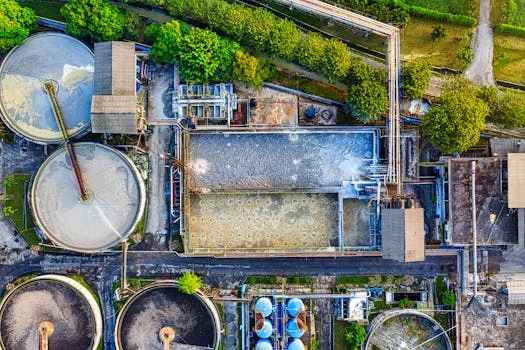
Design parameters for West Virginia municipal plants are dictated by high Total Suspended Solids (TSS) from regional coal runoff and the requirement for biological nutrient removal (BNR) in the Potomac River watershed. Per 2023 WV DEP data, typical municipal influent in the state ranges from 200–400 mg/L TSS and 150–300 mg/L BOD. In coal-impacted counties, influent also carries higher mineral content and unstable pH, which forces robust headworks design, including stainless steel bar screens for WV's high-TSS influent, to protect downstream biological processes.
The process train for a 2 MGD AVLR plant typically runs screening, grit removal, vertical loop reactor tanks, secondary clarification, and disinfection. Karst topography makes siting a major engineering constraint: any leak in a treatment tank can transmit to groundwater rapidly through sinkhole conduits. Specify leak-proof reinforced concrete tanks or HDPE liners for lagoons. Disinfection must be reliable; EPA-compliant ClO₂ disinfection for WV sewage plants is increasingly preferred over chlorine gas because of safety and consistent pathogen kill across variable water quality.
What drives disinfection costs for tanks and piping?
Disinfection cost for piping, tanks, structures, and equipment is driven by contact time, residual demand, and chemical or UV energy use under wet-weather dilution. Chlorine dioxide generators raise chemical spend versus gas chlorination but cut safety upgrades and residual variability. UV capital is higher; lamp replacement and fouling control dominate OPEX when transmittance drops with coal-region TSS spikes.
How should plants procure aeration equipment?
Aeration equipment procurement for municipal wastewater plants should lock diffuser or disc type, blower turndown, and spare-parts lead time to the design MLSS and peak wet-weather oxygen demand. Specify cold-weather DO control, documented lb O₂ transfer efficiency, and local service for disc aerators of the kind Dunbar runs. Require factory performance curves at the site elevation and mixed-liquor temperature range before bid award.
| Process Parameter | AVLR Design Value | MBR Design Value | CAS Design Value |
|---|---|---|---|
| Hydraulic Retention Time (HRT) | 16 – 24 hours | 6 – 10 hours | 8 – 12 hours |
| Sludge Retention Time (SRT) | 20 – 30 days | 15 – 25 days | 5 – 15 days |
| MLSS Concentration | 3,000 – 5,000 mg/L | 8,000 – 12,000 mg/L | 2,000 – 3,500 mg/L |
| F/M Ratio | 0.05 – 0.10 | 0.05 – 0.15 | 0.2 – 0.5 |
| Aeration Demand (O2/lb BOD) | 1.2 – 1.5 lbs | 1.5 – 2.0 lbs | 1.0 – 1.2 lbs |
For plants with heavy solids loading, integrating sedimentation solutions for WV's high-TSS influent can cut the load on the biological stage by up to 95%, extending membrane or aerator life significantly.
Cost Breakdown: CAPEX, OPEX, and Funding Sources for West Virginia (2025 Data)
Capital expenditure (CAPEX) for West Virginia sewage plant upgrades in 2025 ranges from $5 million to $20 million depending on capacity and treatment technology. These figures have been adjusted for 2025 inflation from historical benchmarks such as the 2015 Romney project ($14M) and the late-90s Welch upgrades. For a standard 2 MGD facility, procurement teams should budget $10M–$15M for a complete technology overhaul. Smaller communities can evaluate an underground integrated sewage treatment plant for small WV communities to save on land and construction costs.
Operating expenditures (OPEX) are dominated by labor and energy. In West Virginia, labor typically accounts for 40% of the annual budget, with a 2 MGD plant spending $120,000–$200,000 per year on a certified team. Energy, primarily for aeration and pumping, accounts for another 30%. Chemical costs for phosphorus precipitation and disinfection make up 15%, and the remaining 15% goes to routine maintenance and sludge disposal.
| Plant Capacity (MGD) | AVLR CAPEX (2025) | MBR CAPEX (2025) | Annual OPEX (Avg) |
|---|---|---|---|
| 1 MGD | $5M – $8M | $7M – $10M | $250K – $350K |
| 2.5 MGD | $11M – $15M | $14M – $19M | $500K – $700K |
| 5 MGD | $18M – $24M | $22M – $28M | $900K – $1.2M |
Funding has to be multi-pronged. Beyond the EPA SRF, the USDA Rural Development loan program offers long-term, low-interest financing for communities under 10,000 population. For a 2 MGD plant with $12M CAPEX and $0.50 per gallon OPEX, payback against avoided noncompliance risk plus efficiency gains is typically reached within 8 to 10 years, especially when 30–40% of principal is covered by SRF grants. Older briefings still cite EPA penalties up to $10,000 per day; the 2025 EPA civil monetary penalty inflation adjustment sets Clean Water Act civil maxima at $68,445 per day for each violation.
Compliance Checklist: Meeting NPDES, WV DEP, and EPA Standards
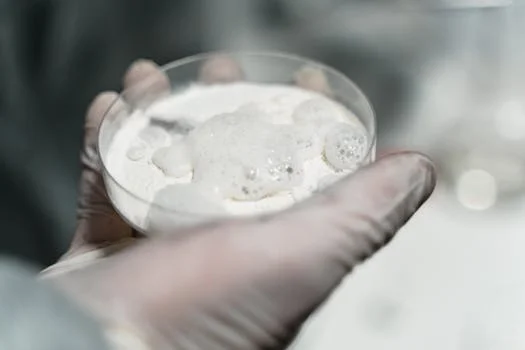
NPDES permit compliance in West Virginia requires strict adherence to seasonal ammonia limits and, for plants in the Chesapeake Bay drainage, total nitrogen below 3 mg/L. To verify a design before construction, engineers should use the following checklist grounded in 2025 WV DEP and EPA standards:
- Effluent Parameters: Verify the system consistently achieves BOD <10 mg/L, TSS <10 mg/L, and Ammonia <1.5 mg/L.
- Nutrient Limits: For Bay-impacted zones, ensure Total Nitrogen <3 mg/L and Total Phosphorus <0.25 mg/L.
- Disinfection Standards: Hold E. coli below 126 CFU/100 mL via UV or chemical disinfection.
- Staffing Requirements: The plant manager must hold at least a Class III WV Operator Certification; a 2 MGD plant generally needs 4–6 certified operators.
- Monitoring Equipment: Install continuous flow meters and automated samplers for weekly lab testing of BOD, TSS, and ammonia.
- Reporting: Set up a digital pipeline for monthly EPA Discharge Monitoring Reports (DMRs) to avoid administrative penalties.
Per 2023 WV DEP data, the most common violations in West Virginia are bypass events during wet weather (50% of violations) and incomplete laboratory records (30%). Older municipal briefings still quote penalties of $1,000–$10,000 per day; under the 2025 EPA inflation adjustment, Clean Water Act civil penalties reach $68,445 per day for each violation, so equipment reliability remains the biggest lever for long-term budget stability.
Equipment Selection Criteria for West Virginia Sewage Plants
Selecting equipment for a West Virginia municipal plant requires a weighted evaluation of wet weather resilience, operator certification levels, and long-term OPEX stability. Match the technology to the municipality's land, storm peaks, and staffing depth. If a town has limited land but strong operator availability, MBR is the logical choice. For a town prone to massive storm surges, the volume-handling capability of an AVLR system is the safer bet.
Vendor evaluation should start with at least 5 years of demonstrated experience in the West Virginia or Appalachian market; this confirms the supplier understands regional water chemistry and cold-weather operation. Confirm 24/7 service support, because Dunbar's track record is partly tied to certified operators having direct technical support for their aerators and clarifiers. Red flags during selection include no WV-based references, proprietary parts with long lead times, and vague compliance guarantees that do not specifically cite WV DEP limits.
| Selection Factor | AVLR (Vertical Loop) | MBR (Membrane) | Integrated / Package |
|---|---|---|---|
| Best For... | Wet weather resilience | High effluent quality | Small communities (<0.5 MGD) |
| Typical WV Project | Dunbar, WV | Romney (BNR Upgrade) | Rural Public Service Districts |
| Risk Mitigation | High volume buffer | Absolute solids barrier | Low installation risk |
| Support Needs | Mechanical maintenance | Chemical/Membrane tech | Standardized parts |
For procurement teams looking for regional expertise, exploring regional suppliers for West Virginia projects can clarify localized supply chains and service networks that are essential for minimizing downtime. Before full-scale deployment, run a 6-month pilot, especially for MBR, to verify membrane flux against the local TSS and mineral profile.
Who This Is For and Next Step
This guide fits public works directors, plant engineers, and procurement managers designing or upgrading 0.5–5 MGD plants in West Virginia who must hit Chesapeake Bay nutrient limits, survive Appalachian wet weather, and qualify for SRF or USDA Rural Development funding. It is less useful for industrial pretreatment, marine outfall design, or collection-system hydraulics; for those, look at dedicated primary treatment or pump-station specs. The next step is a scoping conversation about flow, influent characterization, and discharge limits so an engineer can sketch a defensible CAPEX/OPEX envelope. Request a West Virginia plant quote with site-specific flow and permit data to move from this generic spec to a sized recommendation.
Frequently Asked Questions
What are the biggest challenges for sewage plants in West Virginia?
High TSS from coal mine runoff, wet weather peaks such as Dunbar's 5.6 MGD surge, and EPA consent orders on nitrogen and phosphorus limits are the main constraints. AVLR systems are often preferred because they ride storm peaks without washout and can hit less than 3 mg/L total nitrogen. Eastern panhandle plants also face Chesapeake Bay Watershed Improvement Plan nutrient targets that mid-century plants without BNR cannot meet.
How much does a 2 MGD sewage plant cost in West Virginia?
For 2025, expect CAPEX of $10M–$15M with OPEX of $0.40–$0.70 per gallon for a full technology overhaul. EPA Clean Water SRF funding can often cover 30–40% of project cost through grants and low-interest loans. USDA Rural Development is a secondary path for towns under 10,000 population that need long-term financing.
What operator certifications are required for WV sewage plants?
WV DEP requires at least a Class III certificate for plant managers at major facilities. Plants of 2 MGD and larger typically run with 4–6 certified operators to hold 24/7 coverage and respond to bypass events during storms. Class II may suffice for smaller CAS plants, while MBR sites usually need Class III/IV skill for membrane and chemical systems.
Can MBR systems handle West Virginia's cold winters?
MBR systems can operate in West Virginia winters, but membrane flux typically drops 20–30% when mixed liquor falls below 10°C. Engineers should specify enclosed tanks, larger membrane area, or influent heating to hold biological efficiency through January and February. AVLR deep-tank geometry retains process heat better and is less sensitive to the same temperature swing.
What are the most common EPA violations for WV sewage plants?
Per 2023 WV DEP data, wet-weather bypass events account for 50% of violations, followed by incomplete lab records (30%) and ammonia exceedances (20%). Older briefings still cite $1,000–$10,000 per day; the 2025 EPA inflation adjustment sets Clean Water Act civil penalties at $68,445 per day for each violation, so equipment reliability drives long-term cost.