Nanofiltration vs reverse osmosis is a core membrane selection decision in industrial wastewater treatment. Reverse osmosis (RO) membranes (~0.0001 microns) reject 99%+ of dissolved salts, heavy metals, and microorganisms at about 4 MPa. Nanofiltration (NF) membranes (~0.001 microns) selectively remove divalent ions such as Ca²⁺ and Mg²⁺ plus many organics at 0.5–2.5 MPa. RO can reach <10 mg/L TDS on semiconductor wastewater; NF often cuts hardness by 80–90% in textile effluent. The right choice follows influent chemistry, effluent targets, and energy or cost limits.
When to Choose Reverse Osmosis or Nanofiltration
Choose RO for permeate below about 100 mg/L TDS; choose NF for hardness, color, or divalent-ion control at lower pressure. RO typically runs near 4 MPa at 1.5–4.0 kWh/m³ on brackish feed; NF runs at 0.5–2.5 MPa and 0.5–1.5 kWh/m³. Wrong picks often raise OPEX about 40% or miss permits (HydropureWater field data, 2025).
A textile dyeing plant with 2,500 mg/L TDS and 300 mg/L hardness as CaCO₃ must meet a 500 mg/L TDS discharge cap. The same plant also needs soft reuse water for dye baths. A standard reverse osmosis train can deliver <50 mg/L TDS. That clears the limit, but energy rises against the osmotic pressure of the brackish feed.
Nanofiltration removes most Ca²⁺, Mg²⁺, and large color molecules while letting part of the NaCl pass. Hardness can fall below 30 mg/L. Final TDS may still sit near 800–1,000 mg/L and miss the 500 mg/L cap unless a second stage follows. Regional discharge rules vary widely. See our note on Wastewater Treatment Regulations Thailand: 2026 Standards & Compliance when you map local TDS and hardness limits before you freeze the membrane type.
Engineers usually weigh three variables before locking the membrane type:
- Effluent quality: Ultrapure water versus a simple TDS or hardness cap.
- Energy availability: Power capacity for the 4–6 MPa range common on high-pressure RO.
- Pretreatment depth: RO needs tighter pretreatment options for RO/NF systems than the slightly more tolerant NF stack.
Most plants we size for dyeing reuse run NF first when hardness and color dominate the problem statement. They only step up to RO when the written TDS permit, or a reuse loop, forces monovalent salt removal that NF cannot deliver alone.
How RO and NF Membranes Work: Pore Size, Pressure, and Selective Rejection
Reverse osmosis membranes use a dense, semi-permeable active layer that moves water mainly by solution-diffusion. The effective pore size sits near 0.0001 microns. High-pressure pumps—typically 4 MPa or higher on industrial wastewater—overcome osmotic pressure and push water through the polymer matrix. Monovalent ions such as Na⁺ and Cl⁻ are rejected at about 99.5% or higher (per EPA 2024 industrial benchmarks).
Nanofiltration, sometimes called “loose RO,” has an effective pore size near 0.001 microns. It combines size exclusion with Donnan exclusion. Most NF membranes carry a negative surface charge. They reject multivalent anions such as SO₄²⁻ and cations such as Ca²⁺ and Mg²⁺ more strongly than monovalent salts. Lower retained salinity means a smaller osmotic gap. NF therefore usually runs at 0.5 to 2.5 MPa when the duty is selective ion or organic removal rather than full desalination.
Both trains share a similar hydraulic path: Feedwater → pretreatment systems for RO/NF (DAF or UF) → High-Pressure Pump → Membrane Housing → Permeate and Concentrate (brine). Chemical programs differ in intensity. Dense RO surfaces usually need more aggressive chemical dosing for membrane pretreatment to limit carbonate and sulfate scale on the active layer.
| Feature | Reverse Osmosis (RO) | Nanofiltration (NF) |
|---|---|---|
| Primary Mechanism | Solution-Diffusion / Size Exclusion | Donnan Exclusion / Charge Interaction |
| Pore Size | 0.0001 microns | 0.001 microns |
| Operating Pressure | 2.0 – 8.0 MPa (Typical 4 MPa) | 0.5 – 2.5 MPa |
| Surface Charge | Typically Neutral/Low | Strongly Negative (usually) |
Field crews still check feed temperature and recovery before blaming the membrane. A colder feed or an aggressive recovery set-point can mimic “poor rejection” on either RO or NF even when the element itself is within specification.
Nanofiltration vs Reverse Osmosis: Side-By-Side Performance

Monovalent salt rejection shows the clearest performance gap between the two membranes. RO holds >99% NaCl rejection. NF often sits near 50–80% in narrative plant reviews and 40–70% in the tabled data below. Semiconductor and boiler-feed plants need that absolute RO barrier to protect downstream equipment. On reuse trains, NF flux is often 20–30% higher than RO at the same pressure, which can shrink the membrane footprint.
| Performance Metric | Reverse Osmosis (RO) Data | Nanofiltration (NF) Data |
|---|---|---|
| Salt Rejection (NaCl) | 99.2% – 99.8% | 40% – 70% |
| Hardness Rejection (Ca/Mg) | >99.5% | 85% – 98% |
| TSS Removal | 99.9% | 95% – 98% |
| COD/BOD Removal | 95% – 99% | 70% – 90% |
| Energy Use (kWh/m³) | 1.5 – 4.0 (Brackish) | 0.5 – 1.5 |
| Typical Flux (LMH) | 12 – 25 | 20 – 40 |
| Main Application | Desalination, Ultrapure Water | Softening, Color Removal |
Data Sources: EPA 2024 Industrial Benchmarks; HydropureWater field performance logs.
When the duty needs broad salt and organics control, an Industrial Reverse Osmosis (RO) Water Treatment System still provides the tightest barrier against monovalent salts that NF lets through. NF remains the efficient partial barrier. RO is the polishing step when permits or product water demand near-complete desalination.
Difference between reverse osmosis and nanofiltration also shows up in concentrate chemistry. RO reject is saltier and often harder to dispose. NF reject keeps more monovalent salt and can be simpler to blend or reuse in selected process loops.
Cost Comparison: Capital and Operating Expenses for RO vs NF Systems
Nanofiltration cost is usually 20–40% lower in CAPEX than reverse osmosis because pump, vessel, and piping ratings drop with pressure. For 1,000 m³/day capacity, an NF train often lands between $800,000 and $1,500,000. A comparable RO train spans about $1,200,000 to $2,500,000 as feed salinity rises.
OPEX diverges mainly on energy. Brackish RO commonly uses 1.5 to 4.0 kWh/m³. NF often runs at 0.5 to 1.5 kWh/m³. Over a 10-year life, that gap compounds into the largest OPEX line item for many membrane plants. Still, ROI must include concentrate handling. RO brine is saltier and may need evaporation or crystallization. Lower-TDS NF reject is sometimes easier to treat or reuse, for example brine recovery in dyeing.
| Cost Component | RO (Brackish Water) | Nanofiltration (NF) |
|---|---|---|
| CAPEX (per m³/day) | $1,200 – $2,500 | $800 – $1,800 |
| Energy Cost (per m³) | $0.15 – $0.40 | $0.05 – $0.15 |
| Membrane Replacement | 10% – 15% of CAPEX/yr | 8% – 12% of CAPEX/yr |
| Pretreatment Chemicals | High (Antiscalants, Acid) | Moderate |
In one textile ROI case that cut TDS from 2,500 to 500 mg/L, NF looked cheaper to run but could not hit the 500 mg/L limit alone. Adding polishing stages erased the OPEX edge. RO then paid back in about 3 years through avoided fines and reuse water savings. Procurement teams should model both CAPEX and disposal before awarding a membrane package on price alone.
Decision Framework: How to Select RO or NF for Your Application
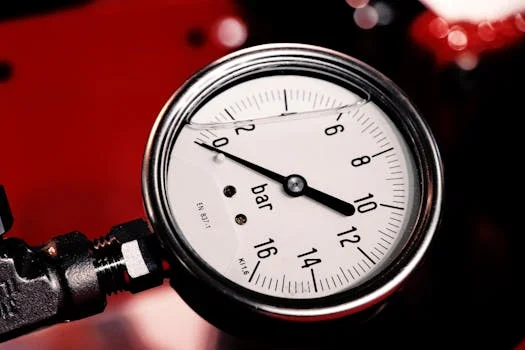
Selecting RO or NF starts with a full water analysis, especially the monovalent-to-divalent ion ratio. That chemistry is then compared with permeate targets and the site power budget. If the plant only needs hardness control while keeping some salt for process reasons, NF fits. If the plant needs boiler feed or ultra-low TDS discharge, RO is the workable path.
Use this procurement checklist:
- Analyze permeate requirements: Target TDS <100 mg/L → RO. Softened or color-free water only → consider NF.
- Evaluate feedwater SDI: RO wants Silt Density Index (SDI) <3 for membrane life. NF is a bit more tolerant but still prefers SDI <5.
- Compare energy constraints: Power-limited sites can cut about 50% of kWh per m³ with NF versus RO.
- Assess concentrate disposal: Confirm whether the site can handle high-salinity RO brine or needs a lower-TDS NF reject.
- Check recovery and scale risk: High Ca/Mg feeds may need NF ahead of RO to raise recovery without heavy antiscalant load.
- Match reuse versus discharge: Dye-bath reuse often favors NF softness; strict TDS permits favor RO.
- Confirm cleaning chemistry access: RO and NF both need CIP capability sized to organic and inorganic foulants in the real feed.
Decision tree summary:
- Target: Ultrapure water or TDS <50 mg/L? → RO
- Target: Hardness removal or pesticide/dye removal? → NF
- Constraint: High energy costs/Low CAPEX? → NF
- Constraint: High TDS Feed (>5,000 mg/L)? → RO
When the feed sits above about 5,000 mg/L TDS, most plants we size move straight to RO rather than hoping NF can stretch monovalent rejection far enough for compliance.
Which industrial RO systems are recommended?
Recommended industrial reverse osmosis systems are brackish or two-pass RO skids sized to feed TDS, SDI <3 after pretreatment, and a defined permeate TDS or conductivity target. Most plants we size for reuse or discharge polishing run at the lower end of the 1.5–4.0 kWh/m³ brackish band when pretreatment and recovery stay stable. Pair the membrane stage with DAF or UF and controlled antiscalant dosing before you lock vessel counts.
For CIP water recovery in food plants, RO systems for food and beverage applications are preferred so microbial or chemical carryover does not move between batches. Food and beverage lines also use NF for sugar concentration and whey de-ashing. In those duties, small minerals pass while lactose or sucrose are retained.
Which RO systems fit semiconductor production?
Top reverse osmosis systems for semiconductor production are multi-pass RO trains that feed ultrapure water (UPW) loops needing resistivity >18 MΩ·cm. NF cannot deliver that resistivity target. Those plants often run two-pass RO to strip boron and other trace monovalent ions before mixed-bed or electrodeionization polishing.
Pharmaceutical Water for Injection (WFI) trains likewise use RO as the primary barrier, with microbial limits <10 CFU/100 mL. Power plants rely on RO for boiler feed to limit high-temperature scale. NF serves cooling-tower blowdown where hardness and silica must drop without full desalination energy. Complex wastewater plants increasingly run hybrid trains: pretreatment systems for RO/NF, then NF for bulk organics, then RO for final polishing. That dual-membrane path cuts energy while still meeting discharge limits in full.
Who This Is For and Next Step
This comparison is for plant engineers, EPC designers, and procurement leads choosing between hardness or color control and full desalination on industrial wastewater or process water. Look elsewhere if you only need clarification or media filtration with no dissolved-salt target. If feed data already point to RO, send the analysis and request a sized proposal through our request-quote form.
Frequently Asked Questions
Which is better for removing hardness: RO or NF?
NF is usually the better hardness tool because it targets Ca²⁺ and Mg²⁺ at 0.5–1.5 kWh/m³, far below typical RO pressure. RO still removes 99%+ of hardness, but it also strips monovalent salts you may not need for simple softening. Most softening-only plants we review therefore start with NF unless a TDS permit forces RO.
Can nanofiltration remove viruses or bacteria?
NF pores near 0.001 microns are smaller than most bacteria, yet NF is not treated as a reliable microbial barrier for high-purity reuse. RO at about 0.0001 microns remains the industrial standard for pathogen control. Potable or pharmaceutical reuse after NF should add UV disinfection or an RO stage before the water is trusted for contact use.
What is the correct order for RO or NF treatment?
Most industrial trains run pretreatment (DAF/UF) first, then either NF or RO as the dissolved-solids barrier. In many Zero Liquid Discharge (ZLD) designs, NF sits upstream of RO to strip hardness and raise RO recovery without heavy fouling. For broader desalination trade-offs, see the RO vs thermal desalination systems comparison.
How much does a nanofiltration system cost versus RO?
NF typically costs about 30% less in CAPEX and up to 50% less in energy OPEX than RO on comparable capacity. For a 100 m³/day plant, NF may land near $100,000 at about 1.0 kWh/m³, while RO may land near $150,000 at about 2.5 kWh/m³. Final quotes still hinge on feed salinity, recovery, and concentrate disposal.
What are the disadvantages of nanofiltration?
NF’s main limits are weak monovalent-salt rejection, so it fails seawater desalination and many high-TDS wastewater duties that need RO. Organic fouling risk also rises when feed COD is high and pretreatment is thin. Choose NF for selective divalent or color removal; choose RO when total dissolved solids must fall sharply.