The Regulatory Stack a Tenino Mine Has to Clear
Mineral Mining and Processing Effluent Guidelines and Standards (40 CFR Part 436) is the federal floor for any mining or quarrying operation that discharges wastewater in the United States. The EPA promulgated 40 CFR Part 436 in 1975 and amended the regulation in 1976, 1977, 1978, and 1979; it covers wastewater discharges from mine drainage, mineral processing operations, and stormwater runoff, and the Mineral Mining regulatory requirements are incorporated into NPDES permits (EPA, 2026-02).
That incorporation matters for a Tenino-area operator because the facility does not choose between EPA authority and state authority — they stack. An NPDES permit issued to the mine will cite 40 CFR Part 436 limits for the parameters the subpart covers, and the Washington State Department of Ecology and the local sewer authority add their own conditions on top. The list of subparts reserved in 40 CFR Part 436 includes Dimension Stone (Subpart A), Lightweight Aggregates (Subpart H), Lithium (Subpart U), Ball Clay (Subpart AH), Feldspar (Subpart AI), Talc/Steatite/Soapstone/Pyrophyllite (Subpart AJ), and Garnet (Subpart AK) (EPA, 2026-02). A small operator serving a dimension-stone, aggregate, or lithium-exploration site in Thurston County must first confirm whether their mineral falls under an active subpart with numeric effluent limits or under a reserved subpart with no current numeric effluent limits, because the answer drives whether federal limits exist at all before the local layer kicks in.
On top of the federal layer, every POTW that accepts industrial discharge runs a pretreatment program, and the local sewer authority reconciles EPA categorical standards with locally established limits for heavy metals, pH, and TSS. For a Tenino-area operation discharging to the LOTT Clean Water Alliance service area, that means the operator needs both sets of numbers in front of them when they size a treatment train — not one or the other.
What Mining Wastewater Actually Looks Like Near Tenino
Acid mine drainage (AMD) is the most prevalent mining water quality problem and shows up wherever sulfide minerals are disturbed. When sulfide minerals (pyrite, pyrrhotite) in waste rock and tailings are exposed to oxygen and water, oxidation reactions produce sulfuric acid; this leaches into groundwater and surface water, creating highly acidic streams with dissolved heavy metals (iron, manganese, copper, zinc, arsenic, cadmium) at concentrations far exceeding regulatory limits (AMPAC USA, 2025-09).
AMD is not the only stream a Tenino-area operator has to characterize. Mining wastewater is diverse, and four common categories show up in the literature. Process water from ore processing — including flotation, heap leaching, cyanide gold extraction, and chlorination circuits — contains process chemicals, reagents, and dissolved ore constituents, typically high TDS, often with cyanide, ammonia, or chloramines depending on the process. Tailings pond effluent is the liquid fraction of tailings impoundments and contains fine solids, processing chemicals, and leached metals. Dewatering discharge is water pumped from underground mines or open pits to maintain access, and its composition varies by geology — in some settings, it is relatively clean; in others, it carries significant metal loading (AMPAC USA, 2025-09). The practical consequence is that AMD and process streams together drive the need for pH correction, metals precipitation, and — when salts persist — a membrane polish step.
The trap to avoid is the "one stream fits all" assumption. Mining operations generate some of the most chemically complex wastewater of any industrial sector — acid mine drainage, heavy metal leachate, processing chemicals, and suspended solids from tailings all present treatment challenges that conventional wastewater approaches handle poorly (AMPAC USA, 2025-09). A copper mine, a coal operation, and a dimension-stone quarry produce fundamentally different wastewaters and cannot share a single default treatment train, which is why a Tenino-area operator needs to characterize the influent stream by stream before talking to a treatment supplier.
The 2026 Pretreatment Process Train That Actually Gets You There
A defensible unit-operation sequence for a Tenino-area mineral mining or aggregate operation in 2026 has six steps, and each one maps to a specific unit operation. The literature and the commercial SAVMIN® flow sheet point to the same order: pH correction first, then coagulation, then solids separation, then multimedia filtration, then a membrane polish when salts or trace metals persist, with monitoring and reporting on the back end (Genesis Water Technologies; PMC review, 2024-02).
- Equalization and pH correction. Lime addition is the workhorse step that raises pH from typical acid-mine influent toward neutral or above, precipitating dissolved metals as hydroxides and dropping out gypsum. The commercial SAVMIN® flow sheet starts with a lime raise to pH >10 in a reactor before thickening (PMC review, 2024-02).
- Coagulation and flocculation. Once pH is in range, coagulants and flocculants aggregate the suspended solids and fine metal particles into large clumps, making the flocs easier to remove in clarification and post-filtration (Genesis Water Technologies, 2025-11).
- Solids separation. Choose between a high-rate lamella clarifier (high-efficiency sedimentation tank) and a DAF system for mining wastewater solids separation depending on whether the floc is heavier or lighter than water; both are accepted as primary clarifiers in pretreatment trains. A lamella clarifier for metal hydroxide sludge makes sense when sludge volume and footprint are the constraint.
- Multimedia filtration. A multi-media filter for RO pretreatment takes residual turbidity and colloidal matter down to a silt density index that protects downstream membranes; the operator should specify the target SDI after the filter, not just the inlet turbidity (Genesis Water Technologies, 2025-11).
- Membrane polish where salts or trace metals persist. An ultrafiltration system for RO pretreatment handles fine colloids, and an industrial RO system for mining wastewater handles dissolved salts and metals. Mining RO systems are typically designed at 50–70% recovery for AMD feed to manage sulfate scaling, and 70–85% recovery as the RO stage of a ZLD train before the thermal stage handles the remaining concentrate (AMPAC USA, 2025-09). RO rejects over 99% of dissolved metals and salts (AMPAC USA, 2025-09).
- Monitoring, reporting, and chemical dosing. An integrated PLC/HMI with continuous pH, flow, and conductivity instrumentation is standard (LiqTech, 2025-08), and an automatic chemical dosing system for lime and flocculant ties chemistry to the controls so the operator maintains the self-monitoring records required by the POTW pretreatment program.
| Step | Unit Operation | Function | Key Design Point |
|---|---|---|---|
| 1 | Equalization + pH correction | Raise pH so dissolved metals precipitate as hydroxides; drop out gypsum | Lime raise to pH >10 before thickening (PMC review, 2024-02) |
| 2 | Coagulation / flocculation | Aggregate suspended solids and fine metal particles into settleable or floatable flocs | Match coagulant and flocculant to the floc density that drives the next step |
| 3 | Solids separation (DAF or lamella) | Remove the bulk of the precipitated solids | DAF for buoyant floc or oil/fines; lamella for sludge volume and footprint (Genesis Water Technologies, 2025-11) |
| 4 | Multimedia filtration | Drop turbidity and colloids to protect downstream membranes | Specify target SDI after the filter, not inlet turbidity |
| 5 | UF and/or RO | Remove fine colloids (UF) and dissolved salts and metals (RO) | RO at 50–70% recovery for AMD feed; 70–85% as the RO stage of a ZLD train; >99% rejection of dissolved metals and salts (AMPAC USA, 2025-09) |
| 6 | Chemical dosing + monitoring | Maintain chemistry setpoints and self-monitoring records | PLC/HMI with continuous pH, flow, and conductivity; POTW self-monitoring records (LiqTech, 2025-08) |
Sizing, Throughput, and Reuse: What 'Pretreatment-Compliant' Looks Like at Different Flows
The supplied research does not publish flow ranges for Tenino-area operations, so the throughput bands have to be framed qualitatively. Mining water treatment processes can vary significantly between operations, in both the required capacity and the wastewater content and the desired quality, which is why suppliers develop customized systems matched to specific needs (LiqTech, 2025-08). A single dimension-stone or sand-and-gravel site typically runs in the low-to-mid two-digit m³/h range, while a process plant with heap leach or milling sits an order of magnitude higher. The operator should size against the highest anticipated daily discharge, not the average, because peak flows are what drive equalization basin volume and pump selection.
Reuse economics are where the compliance investment starts to pay back. For mines operating near sensitive ecosystems or in water-stressed catchments, internal water reuse enabled by RO treatment can reduce freshwater consumption by 40–60% compared to once-through operations (AMPAC USA, 2025-09). That is the lever to monetize compliance investment: every cubic meter the plant reuses is a cubic meter it does not pay to discharge or to draw from a freshwater source. Where zero-liquid discharge is required, RO handles the bulk water recovery (typically 70–85%) before the more energy-intensive thermal stages handle the remaining concentrate, and the operator should request a recovery curve, not just a nameplate figure (AMPAC USA, 2025-09).
Even with reuse, any volume not recycled still has to meet local limits on metals, pH, and TDS. The sizing logic is therefore "reuse as much as economics allow, then polish the rest to sewer quality," and a compact integrated water purification skid for small mining sites is the package a small Tenino-area operator typically asks a supplier to quote when they want reuse and pretreatment in one footprint.
Equipment Selection: Where Each Unit Operation Earns Its Place
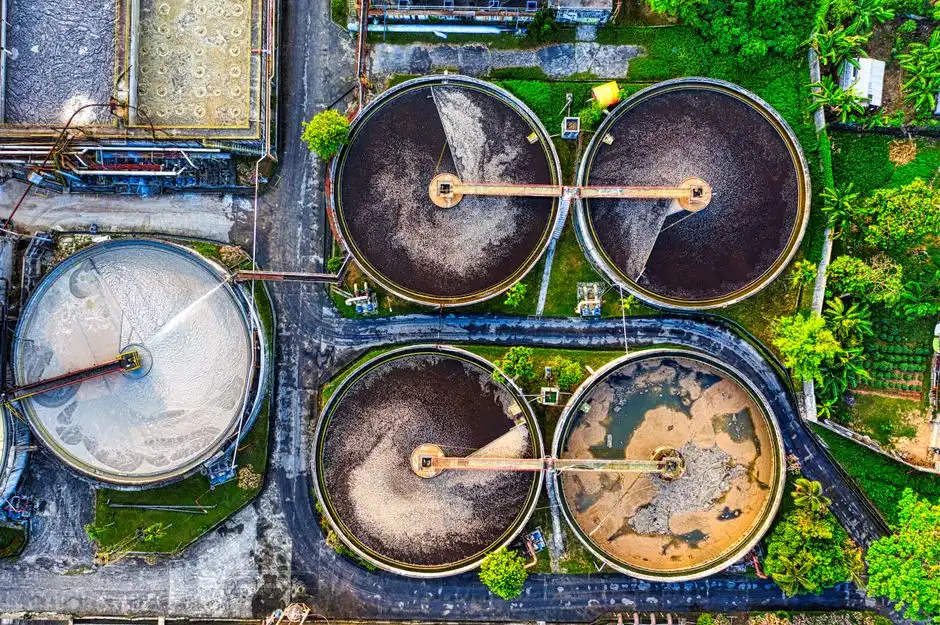
Equipment choices should be driven by the influent stream and the discharge limit, not by what a single supplier happens to stock. The basis of design for each step in the train is different, and the operator who specifies each step independently is the operator who ends up with a defensible scope.
For pH and chemistry, an automatic chemical dosing system for lime and flocculant is the standard for lime, coagulant, flocculant, and pH-adjuster injection. Specify PLC control and pre-wiring so commissioning is fast and the dosing ties into the same HMI the rest of the train reports through. For clarification, a DAF system for mining wastewater solids separation is preferred when the floc is buoyant or the influent carries oils or fines that float; a lamella clarifier for metal hydroxide sludge is preferred when sludge volume and footprint are the constraint. The published comparison between the two for mining applications is covered in more depth in the DAF vs clarifier for mining wastewater factory selection guide.
For filtration and membranes, a multi-media filter for RO pretreatment is the workhorse for protecting membranes — specify target SDI after the filter, not just inlet turbidity. An ultrafiltration system for RO pretreatment is appropriate as RO pretreatment, and an industrial RO system for mining wastewater is appropriate where dissolved salts and metals are the constraint, with RO rated at >99% rejection of dissolved metals and salts (AMPAC USA, 2025-09). For a parallel reference on copper-specific polishing, see the copper removal from mining wastewater engineering methods guide. Sludge handling is the last unit operation, and chemical precipitation produces metal hydroxide sludge that has to be dewatered — a filter press for mining sludge dewatering is the standard fit for the cake volumes produced by precipitation-based mining trains.
| Step | Preferred Equipment | Selection Driver | Specify |
|---|---|---|---|
| pH and chemistry | Automatic chemical dosing skid | Stream pH and reagent demand | PLC control, pre-wired, HMI integration |
| Clarification — buoyant floc or oils | DAF | Floc density below water; fines that float | Air-to-solids ratio, polymer compatibility |
| Clarification — heavy floc, footprint-constrained | Lamella clarifier | Sludge volume, footprint, no oil loading | Plate spacing, underflow solids |
| Filtration | Multi-media filter | Downstream membrane protection | Target SDI after the filter |
| Membrane polish — colloids | UF | Fine colloids, RO feed conditioning | Membrane material, flux, backwash cycle |
| Membrane polish — salts and metals | RO | Dissolved salts and metals above discharge limit | >99% rejection; 50–70% recovery on AMD feed, 70–85% on a ZLD RO stage (AMPAC USA, 2025-09) |
| Sludge dewatering | Plate and frame filter press | Cake volume from chemical precipitation | Cake dryness target, cycle time |
Frequently Asked Questions
What federal rule governs sewer discharge from a mine near Tenino?
Mineral Mining and Processing Effluent Guidelines and Standards (40 CFR Part 436) is the federal floor. The EPA promulgated 40 CFR Part 436 in 1975 and amended the regulation in 1976, 1977, 1978, and 1979; it covers wastewater discharges from mine drainage, mineral processing operations, and stormwater runoff, and the requirements are incorporated into NPDES permits (EPA, 2026-02). Several Pacific Northwest-relevant subparts — including Dimension Stone (Subpart A), Lightweight Aggregates (Subpart H), Lithium (Subpart U), Ball Clay (Subpart AH), Feldspar (Subpart AI), Talc/Steatite/Soapstone/Pyrophyllite (Subpart AJ), and Garnet (Subpart AK) — are reserved, which means the operator must confirm whether their mineral falls under an active subpart with numeric limits or a reserved subpart with no current numeric effluent limits before the local layer applies (EPA, 2026-02).
How much does a compliant pretreatment train cost a small Tenino-area operation in 2026?
The supplied research does not publish price points for a complete pretreatment train, so a buyer has to request a quotation against their own basis of design rather than rely on a published range. The information to put in that request is the peak and average flow in m³/h, the influent pH and metal profile from a representative sampling round, the local sewer authority discharge limits for metals, pH, and TSS, and the desired recovery percentage if reuse is in scope. With that basis of design in hand, suppliers can quote a six-step train — equalization, pH correction, coagulation, DAF or lamella, multimedia filtration, and RO — at the >99% rejection of dissolved metals and salts that the literature reports (AMPAC USA, 2025-09).
What should a Tenino-area operator look for when choosing a treatment supplier?
Look for a supplier that provides complete end-to-end service and helps the operator obtain the most durable and efficient mining wastewater treatment system, with a clear plan for how to operate and maintain it (LiqTech, 2025-08). Check that the proposed scope ties the chemistry dosing, the PLC/HMI controls, and the membrane skid into a single integrated control system, and confirm the supplier has installed the same unit operations — DAF or lamella, multimedia filter, UF, RO, and sludge dewatering — at flows in the same order of magnitude as the Tenino site.
How does RO actually help a small mine meet sewer discharge limits?
Reverse osmosis is the polishing step that conventional methods cannot replace. Reverse osmosis and SWRO systems reject over 99% of dissolved metals and salts, enabling mining operations to reuse water on-site for mineral processing or dust suppression rather than drawing more from local sources (AMPAC USA, 2025-09). For a small Tenino-area operation, the practical effect is that the RO polish takes the residual dissolved metals and salts that survive pH correction, precipitation, and multimedia filtration down to sewer-quality effluent, and the same system delivers the 40–60% freshwater intake reduction that makes the compliance investment pay back (AMPAC USA, 2025-09).