Why Copper Removal Matters in 2026: Sources, Toxicity and Compliance Targets
Industrial copper enters wastewater as Cu²⁺ from four dominant streams: metal finishing rinse waters, printed circuit board (PCB) manufacturing, copper mining and smelting operations, and spent electroplating baths. Influent concentrations in these streams typically range from 5 to 500 mg/L Cu²⁺, with concentrate rinse waters from PCB etching sometimes exceeding 1,000 mg/L (per the 2017 ScienceDirect comprehensive review by Al-Saydeh, El-Naas and Zaidi, the only English-language peer-reviewed source in the current top results). The wide range explains why a single technology never fits every case — the choice is driven by where the influent sits on that 5–500 mg/L spectrum.
Copper is regulated because it is bioavailable and toxic at low dissolved concentrations. Cu²⁺ disrupts gill membrane function in freshwater aquatic life at 0.02–0.05 mg/L dissolved copper, and chronic human exposure above 2 mg/L in drinking water causes liver and gastrointestinal damage (per WHO Guidelines for Drinking-water Quality, 4th ed.). That is why a 2026 plant design must hit numbers two orders of magnitude below typical influent levels.
Three regulatory anchors now govern how low a plant must go:
| Jurisdiction | Standard | 2026 limit for total Cu | Application |
|---|---|---|---|
| China | GB 39728-2025 | ≤0.5 mg/L | Industrial direct discharge, Class A |
| European Union | BAT-AEL (2024 revision under IED) | 0.03–0.1 mg/L | Direct discharge to surface water |
| United States | EPA 2024 Metal Products & Machinery Rule | 1.0–3.38 mg/L | Freshwater daily maximum, depending on receiving water hardness |
| WHO | Drinking Water Guidelines | 2 mg/L | Potable reuse |
Many factories also target ≤0.1 mg/L for closed-loop rinsing reuse, which pushes the design past precipitation into ion exchange, RO polishing, or both. Hitting 0.5 mg/L is a one-step problem; hitting 0.03 mg/L is a train.
How to Remove Copper from Wastewater: Five Core Methods Compared
Five engineered methods dominate the 2026 commercial landscape. They are listed here in order of typical CAPEX for a 50 m³/h plant.
Chemical precipitation with NaOH, lime or Ca(OH)₂ at pH 8–10 is the workhorse. It achieves 95–99% Cu removal and leaves 0.5–1 mg/L residual — enough to meet GB 39728-2025 and most US permits, but not the EU BAT-AEL floor of 0.03 mg/L. CAPEX runs $20–80 per m³/d of treatment capacity, the lowest of any option. Above pH 10, however, Cu(OH)₂ redissolves as the tetrahydroxo cuprate ion Cu(OH)₄²⁻, so operators must hold pH inside a narrow 9.0–9.5 band on the precipitating reactor and use automatic chemical dosing skids for pH adjustment and Cu precipitation rather than manual caustic addition.
Sulfide precipitation using Na₂S or FeS at pH 6–9 pushes residuals below 0.1 mg/L, which clears EU BAT-AEL. It is also the most reliable option for chelated copper streams where EDTA or ammonia tie up Cu²⁺ and prevent hydroxide formation. The downside is severe: reactors must be sealed, vented H₂S must be scrubbed, and workplace H₂S must be held below 10 ppm (per OSHA 29 CFR 1910.1000). This is a technology that pays off only when hydroxide fails.
Ion exchange on strong-acid cation resin in the Na⁺ form polishes effluent to <0.05 mg/L, regenerates with 5–10% H₂SO₄, and yields a small concentrated CuSO₄ stream that can be sent to electrowinning for metal credit. Resin capacity runs 2–5 g Cu/L, bed depth 1.0–1.5 m, service flow 8–12 BV/h. The resin is sensitive to competing Ca²⁺ and Fe³⁺, so total dissolved solids must be characterized before sizing.
Adsorption on activated carbon, chitosan, or modified silica handles polishing duty in the 1–10 mg/L range, including some chelate-bound copper. Capacities run 50–200 mg Cu per gram of adsorbent at $5–25/kg. It is a finishing step, not a primary one.
Membrane processes — nanofiltration and reverse osmosis — reject >99% of divalent Cu²⁺ because the hydrated ion radius exceeds the membrane cut-off. RO permeate routinely lands below 0.02 mg/L. The trade-off is CAPEX: feed pressure 10–15 bar, recovery 75–85%, and a prefilter train that usually equals the membrane cost. RO pays back only when a reuse loop already exists.
Electrochemical recovery (electrowinning) deposits metallic copper at the cathode at 80–95% removal efficiency, 2–4 kWh/m³ electricity cost, and the recovered metal generates a credit that can offset OPEX. It is best reserved for concentrated streams above 500 mg/L where precipitation generates too much sludge.
| Method | Influent Cu²⁺ range | Effluent residual | Removal % | CAPEX ($/m³/d) | Key limitation |
|---|---|---|---|---|---|
| Hydroxide precipitation | 10–500 mg/L | 0.5–1 mg/L | 95–99% | $20–80 | pH >10 redissolves Cu |
| Sulfide precipitation | 5–200 mg/L | <0.1 mg/L | >99% | $60–150 | H₂S hazard |
| Ion exchange | 1–50 mg/L | <0.05 mg/L | >99% | $40–120 | TDS competition |
| Adsorption | 1–10 mg/L | <0.1 mg/L | 90–99% | $30–90 | Capacity & cost |
| RO / NF | 0.1–50 mg/L | <0.02 mg/L | >99% | $80–200 | Pressure & pretreatment |
| Electrowinning | >500 mg/L | 10–50 mg/L | 80–95% | $100–250 | Electricity cost |
Most plants will not pick a single row. They will pick a precipitation row plus a polishing row, with a high-efficiency lamella clarifier for copper hydroxide settling as the workhorse in between.
Matching the Method to Your Influent: A Selection Framework
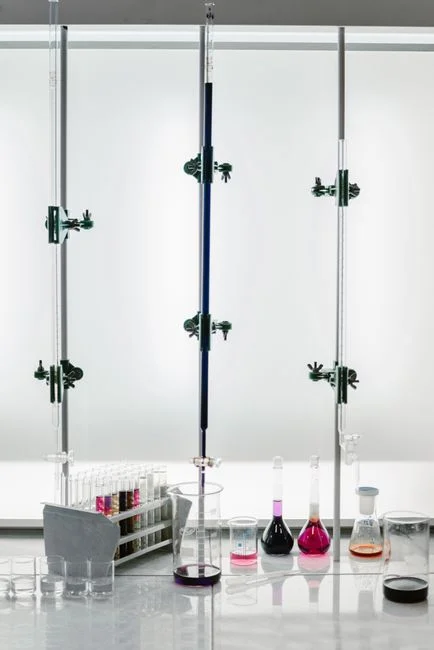
The decision tree below maps influent Cu²⁺ and target effluent to a specific train. The numbers are anchored to the 2026 standards in section one and the operating ranges in section two.
If influent is above 100 mg/L and the discharge limit is sewer-only, hydroxide precipitation is the right primary step, followed by a lamella clarifier and a sludge dewatering unit. The Cu(OH)₂ mass balance is straightforward: at pH 9 the sludge yield is 1.5–2.0 kg dry solids per kg Cu removed, and that number feeds straight into plate-and-frame filter press sizing.
If influent is 10–100 mg/L and the target is ≤0.5 mg/L, hydroxide precipitation alone is usually sufficient. Add a multi-media filter downstream if TSS carries fines through the clarifier — surface loading on a lamella unit should sit between 20 and 40 m³/m²/h to prevent carryover.
If influent is 10–100 mg/L and the target is ≤0.1 mg/L for reuse or EU BAT compliance, hydroxide alone is not enough. Add ion exchange, or switch the primary step to sulfide precipitation if EDTA or ammonia are present above 100 mg/L. The chemistry is the deciding factor: complexed copper resists hydroxide formation, which is why mining and PCB operations almost always run sulfide on chelated streams.
If influent is already below 10 mg/L and the target is tight, ion exchange alone, or RO if a reuse loop already exists, is the cleanest answer. RO permeate below 0.02 mg/L meets every standard in section one plus a reuse spec.
| Influent Cu²⁺ | Target effluent | Recommended train | Key equipment |
|---|---|---|---|
| >100 mg/L | Sewer (≤2 mg/L) | Hydroxide → clarifier → filter press | Dosing skid, lamella, press |
| 10–100 mg/L | ≤0.5 mg/L (GB 39728) | Hydroxide → clarifier → MMF | Dosing skid, lamella, filter |
| 10–100 mg/L chelated | ≤0.1 mg/L (EU BAT) | Sulfide → clarifier → IX | Sealed reactor, IX column |
| <10 mg/L | ≤0.05 mg/L (reuse) | IX or RO polish | Cation resin, two-pass RO |
| >500 mg/L | Any | Electrowinning → precipitation | EW cell, clarifier |
One decision sits outside the concentration axis: sludge handling. Copper-bearing sludge is hazardous waste in most jurisdictions — USEPA RCRA waste code F006 and EU List of Waste code 11 02 02* — and must be dewatered to >35% dry solids before landfill. The mechanical step is the same plate-and-frame filter press used for any metal hydroxide sludge; the chemical precipitation design principles applied to heavy-metal removal cover that sizing logic in detail.
Process Design Parameters That Drive Real Performance
The numbers below are the ones an engineer actually uses to size reactors, not the ones that look good in a brochure.
Precipitation reactor: rapid mix 1–3 minutes at velocity gradient G >300 s⁻¹ for coagulant dispersion, followed by slow mix 15–30 minutes at G 30–60 s⁻¹ for floc growth. Total hydraulic residence time 30–60 minutes is typical for hydroxide systems; sulfide systems run shorter, 15–25 minutes, because CuS settles faster than Cu(OH)₂.
Sludge yield at pH 9 is 1.5–2.0 kg dry sludge per kg Cu removed. At pH 9.5 it climbs to 2.2–2.5 kg/kg because calcium carbonate co-precipitates from any Ca(OH)₂ feed. Feed that number directly into filter press sizing — a 50 m³/h stream at 100 mg/L influent and 95% removal produces roughly 7.5–10 kg dry sludge per hour.
Lamella clarifier surface loading must be held between 20 and 40 m³/m²/h. Higher loadings cause Cu(OH)₂ carryover and break the 0.5 mg/L target. Online online ORP and pH monitoring for sulfide precipitation control is essential at this stage; the ORP setpoint for Cu²⁺/CuS is roughly −100 to −150 mV (Ag/AgCl).
Ion exchange columns: bed depth 1.0–1.5 m, service flow 8–12 BV/h, regeneration every 50–200 BV depending on influent. Sulfuric acid regenerant at 5–10% concentration produces a 5–20 g/L CuSO₄ stream that can be sent to electrowinning for metal credit, recovering 60–80% of the copper as cathode sheet.
RO: feed pressure 10–15 bar, recovery 75–85%, two-pass configuration required if permeate must be below 0.02 mg/L. Feed pH must stay below 6.5 to keep Cu in its divalent form and avoid Cu(OH)₂ precipitation on the membrane surface. A TSS sensor upstream of the RO train is the cheapest insurance against fouling.
Building the Treatment Train: How a Real Copper-Removal Line Looks
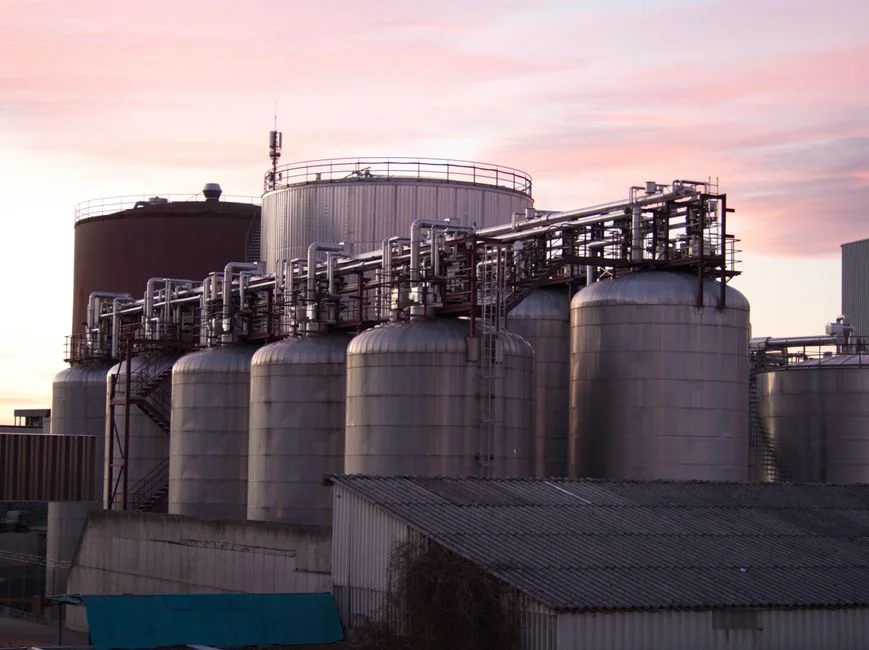
A typical 50 m³/h metal finishing wastewater line chains together as follows: equalization basin → pH adjustment with automatic H₂SO₄ or NaOH dosing → rapid mix with NaOH for Cu(OH)₂ precipitation → slow mix / flocculation → high-efficiency lamella clarifier for copper hydroxide settling → multimedia filter → ion exchange polish (only if reuse target ≤0.1 mg/L) → sludge thickener → plate-and-frame filter press for copper sludge dewatering → permeate holding tank. The automatic chemical dosing skids for pH adjustment and Cu precipitation sit between equalization and the rapid mix, holding the pH setpoint inside the 9.0–9.5 band where Cu(OH)₂ is least soluble and most filterable.
CAPEX anchors a B2B buyer expects for a 50 m³/h plant: chemical dosing skid $15K–$60K, lamella clarifier $40K–$180K, ion exchange unit $50K–$250K, plate filter press $25K–$280K, RO polish $80K–$200K. Total installed cost for a hydroxide + clarifier + filter press line that meets GB 39728-2025 typically lands between $300K and $800K; adding ion exchange or RO polish to chase ≤0.1 mg/L reuse adds another $150K–$500K.
Equalization is not optional. Copper-bearing rinse waters are intermittent — drag-out from a plating tank arrives in slug loads, not steady flow — and without an EQ basin sized to at least 8 hours of flow, the precipitation reactor sees shock loads that drive pH excursions and break through the 0.5 mg/L target. EQ typically adds $40K–$120K to a 50 m³/h line.
For PCB lines with chelated copper, replace the hydroxide step with a sulfide or anion exchange step; the rest of the train is identical. Electrowinning is reserved for streams above 500 mg/L Cu²⁺, typically from concentrate rinse waters or spent etchant regeneration, where the metal credit offsets electricity OPEX.
Frequently Asked Questions
What is the 2026 Chinese discharge limit for copper? GB 39728-2025 sets a 0.5 mg/L total copper limit for industrial direct discharge under Class A facilities, which is the same band that hydroxide precipitation alone can reach.
What is the EU BAT-AEL for copper in 2024 and after? The 2024 IED BAT revision sets BAT-AEL at 0.03–0.1 mg/L for direct surface water discharge, which requires ion exchange or sulfide polishing after hydroxide precipitation.
How low can ion exchange take copper? Strong-acid cation resin in the Na⁺ form consistently delivers effluent below 0.05 mg/L, and two-pass RO can push permeate below 0.02 mg/L for closed-loop rinsing reuse.
What is the cheapest copper-removal method? Hydroxide precipitation with NaOH or lime is the lowest-CAPEX option at $20–80 per m³/d of treatment capacity, and it is the default primary step for any non-chelated stream above 10 mg/L.
How do you remove chelated copper? Sulfide precipitation with Na₂S or FeS at pH 6–9 breaks Cu-EDTA complexes and drives residual below 0.1 mg/L; hydroxide precipitation fails on chelated streams because the complexed ion does not form Cu(OH)₂ at pH 9–10.