Why ORP Is the Missing Signal in Most Aeration Control Loops
An ORP sensor for wastewater treatment plant service measures the millivolt (mV) potential of mixed liquor to indicate oxidizing or reducing conditions, guiding aeration, chemical dosing, and SBR phase control. Healthy aerobic zones read +300 to +500 mV; anoxic zones +50 to -50 mV; anaerobic digesters below -200 mV. Platinum-band probes with sealed Ag/AgCl references are the 2026 industry standard for submersible installation, with typical CAPEX of $400–$1,200 per probe and calibration intervals of 30–60 days.
Most aeration control loops today run on dissolved oxygen alone, and that single signal is responsible for a lot of wasted blower power. A DO probe reads saturated (often 4–6 mg/L) at the end of an aeration tank even when the influent BOD loading has just spiked, because DO responds slowly to substrate demand — its response time is governed by the oxygen-mass-transfer constant kLa, typically 3–8 minutes in fine-bubble diffused air. ORP, by contrast, swings 80–150 mV within 1–2 minutes of the same load change because it tracks the net electron activity of the mixed liquor, not just the dissolved gas phase. That timing difference is what gives the redox signal its value as a lead indicator.
Why this matters financially: aeration is 50–60% of a WWTP's total electricity consumption, equivalent to roughly 0.15–0.35 kWh per cubic meter of treated wastewater (per EPA Energy Star WWTP benchmarks, 2025). Across a 50,000 m³/day plant that is $800–$1,500/day in blower power. A control loop that can trim 15–25% of that — by idling blowers when ORP shows substrate is already oxidized — repays an ORP instrumentation upgrade in under 14 months. The same signal also catches denitrification events and sulfide releases that DO control never sees.
ORP is a non-specific measurement: it returns the combined potential of every dissolved oxidant and reductant in the liquor — DO, free chlorine, nitrate, nitrite, sulfate, sulfide, and so on, weighted by their Nernstian response (source: Springer / IJ LCA, 2024 review on WWTP sensor instrumentation). That non-specificity is the reason ORP must be paired with DO and pH rather than used alone. Stack the three signals and you have the full oxidation-reduction picture: DO tells you the gas-phase oxygen, pH tells you the acid-base state, and ORP tells you whether the bulk liquor is electron-rich or electron-poor.
The Redox Ladder: ORP Setpoints by Treatment Zone
ORP setpoints in a treatment train follow the electron-acceptor hierarchy: oxygen (+300 to +500 mV aerobic) → nitrate (+50 to -50 mV anoxic) → sulfate (below -200 mV anaerobic) → methane (below -300 mV). Each biological zone has a characteristic redox window, and the probe belongs in the zone whose mV band matches your control intent.
| Treatment Zone | Typical ORP Window | Process Meaning | Control Use |
|---|---|---|---|
| Aerobic basin (post-BOD) | +300 to +500 mV | DO >2 mg/L; nitrification complete above +300 mV | Blower on/off cycling; aeration VFD speed trim |
| Anoxic basin (denitrification) | +50 to -50 mV | Nitrate present, no free O2 | Internal recycle pacing; carbon-source dosing trigger |
| Anaerobic digester | below -200 mV | Sulfate reduction active; methanogenesis below -300 mV | Feeding/intermix cycles; toxicity alarm |
| Chlorination contact basin | >+650 mV | Free Cl2 residual confirmed; <+550 mV triggers dosing | Trim automatic chemical dosing system feed rate |
| SBR cycle (fill → react → settle) | +200 → +400 → +50 mV | ORP rises during react, drops sharply (>100 mV) at denitrification onset | Phase-change trigger for sequencer |
| MBR tank (membrane bioreactor) | +250 to +450 mV | Elevated MLSS (8,000–12,000 mg/L) tightens the band | Cross-flow aeration trim; see MBR membrane bioreactor system reference design |
The SBR cycle is the clearest demonstration of ORP's diagnostic power. During the fill and react phases, the mV reading rises from roughly +200 mV to +400 mV as the air cycle oxidizes BOD and ammonia. When the aeration phase ends, ORP plateaus for several minutes, then drops sharply by more than 100 mV as the biomass switches electron acceptors from oxygen to nitrate — that elbow is the denitrification trigger. A swing of less than 40 mV across an entire cycle points to short-circuiting, insufficient aeration, or a dead volume in the basin. In pre-engineered packaged plants such as the WSZ underground integrated sewage treatment series, ORP is used to verify that the SBR sequencer is reaching both aerobic and anoxic endpoints before phase changes.
The chemical basis for this ladder is the standard redox tower: dissolved O2 accepts electrons at roughly +800 mV (standard potential), nitrate near +430 mV, Mn(IV) around +400 mV, Fe(III) at +200 mV, sulfate at -220 mV, and CO2/methane below -300 mV. Microorganisms use these acceptors in thermodynamic order, which is why each zone has a defined mV band.
ORP Sensor Construction: Platinum Band, Reference Electrode, and Junction

Every ORP probe is two electrodes in one body: a measuring electrode whose potential tracks the liquor, and a reference electrode held at a fixed potential so the millivolt reading is meaningful. Specifying the wrong combination for mixed liquor is the most common procurement error.
The measuring electrode is almost always a platinum band in 2026 municipal and industrial installations. Platinum resists corrosion across the full -400 to +800 mV range, is chemically inert to sulfides and free chlorine, and reads reproducibly for 18–36 months in aeration-basin service. Gold is used where cyanide is present — gold resists passivation by CN⁻, where Pt would form a surface film and drift. Graphite is the low-cost option (roughly 40–60% of platinum pricing) but its surface renews continuously, causing slope drift of 5–15 mV per week in mixed liquor.
The reference electrode is where most service-life problems originate. Sealed Ag/AgCl with a KCl gel electrolyte is the maintenance-free 2026 standard: 2–3 year field life, no refill labor, drift typically <2 mV/day. Refillable liquid-junction references (saturated KCl in a refillable reservoir) offer lower absolute drift but require weekly topping up and quarterly electrolyte replacement — 5–8 minutes per probe per week of operator time, which adds up across an aeration deck of 20–30 probes.
The junction — the porous barrier that lets the reference electrolyte make ionic contact with the process — is the part that fouls. Porous PTFE, ceramic, and ground-glass sleeve are the three options. PTFE resists biofouling and oil films and is the default for mixed liquor above 4,000 mg/L TSS. Ceramic is cheaper but fouls faster. Ground-glass sleeve junctions are field-cleanable but only appear on laboratory-grade probes, not plant installations. Probe bodies should be Ryton (PPS) or PVDF for chemical resistance; 316 stainless steel is acceptable only on the insertion hardware, never wetted on the probe tip itself.
Output signaling is a separate decision. Analog 4–20 mA scaled to the mV range (e.g., -500 to +1000 mV mapped across 4–20 mA) is still the default for retrofit work and for SCADA-RTU integration. Digital Modbus RTU or Foundation Fieldbus is the right call for new installations, since the probe can stream diagnostic flags (slope, reference impedance, glass/PTFE condition) alongside the mV value. Pick analog when the wiring run exceeds 200 m or when the existing PLC has no Modbus port; pick digital when you are wiring into a modern aeration panel and want the diagnostic data for predictive maintenance.
Submersible vs. Insertion vs. Inline: Choosing the Mounting Style
Form factor matters because the probe has to live where the redox signal is — not where it is convenient to mount. A probe mounted in a quiescent corner reads dead water; a probe in the return-sludge line reads mixed liquor that has already left the reactor. Match the mounting to the tank geometry, the retrofit constraints, and the cleaning regime you can support.
| Mounting Style | Typical Use | CAPEX Add | Response Lag | Best For |
|---|---|---|---|---|
| Submersible (1–3 m hanging) | Open aeration basins, SBRs, equalization tanks | $0–$300 (cable + rail) | 5–15 seconds | Most municipal basins; simplest retrofit |
| Insertion (ball-valve retractable) | Pressurized lines, sealed reactors | $400–$900 (retraction assembly) | 10–25 seconds | Lines that cannot be drained; hot-swap maintenance |
| Inline flow chamber | Side-stream slip-stream, sample lines | $600–$1,400 (chamber + pumps) | 30–90 seconds | High-TSS or oily streams; protects the probe from mechanical damage |
| Submersible + self-cleaning head | High-TSS mixed liquor (>4,000 mg/L) | $600–$1,200 (ultrasonic or water-jet) | 5–15 seconds | Extends calibration interval 2–3× in MBR and high-MLSS basins |
Submersible probes are the workhorse: a 5–10 m cable, a stainless rail or chain, and a 1–3 m submersion into the basin. The probe should be positioned where the mixed liquor is genuinely representative — typically 0.5–1.0 m below the water surface and 1–2 m away from any wall or baffle, in a zone of active bubble rise. Insertion assemblies (a 1–2 inch ball valve with a packing gland) are the right call on a pressurized main or a sealed reactor where draining is impractical; they let you pull the probe without depressurizing. Inline flow chambers add 30–90 seconds of response lag because the sample has to travel through tubing to the probe — unacceptable for fast SBR phase logic but acceptable for slow digester monitoring.
Self-cleaning heads (ultrasonic or water-jet) are worth specifying on any basin running above 4,000 mg/L TSS — MBR tanks, high-MLSS SBRs, and waste-activated sludge lines. They add $600–$1,200 to probe CAPEX but stretch the calibration interval from 30 days to 60–90 days, which is the difference between monthly grab checks and quarterly scheduled maintenance. Pair the head with a probe fed by an automatic chemical dosing system if you also need in-line chemical cleaning with dilute acid or hypochlorite.
Calibration, Drift, and Field Maintenance Reality
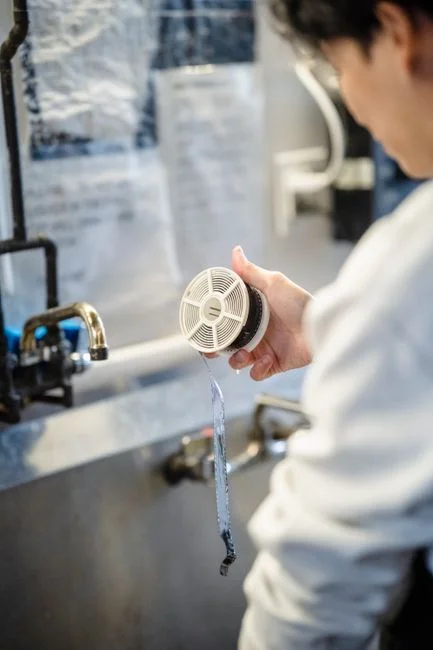
Calibration is the part every spec writer underestimates. A probe that reads correctly on day one will drift 30–60 mV over six months in mixed liquor, and the drift is driven by the reference electrode, not the platinum band. Build the maintenance burden into the spec or your operations team will disable the loop.
Two-point calibration with Zobell's solution (potassium ferrocyanide/ferricyanide, ORP ≈ +231 mV at 25°C) and Light's solution (≈ +86 mV at 25°C) is the industry standard and the only calibration that catches reference offset. Single-point slope checks are faster but miss the offset that the reference junction introduces as it fouls — and junction fouling is the #1 field failure mode in mixed liquor service. Typical symptoms: response time stretches beyond 5 minutes to a 50 mV step, and the Zobell's reading drifts more than ±20 mV from the nominal +231 mV. When that happens, replace the reference cartridge or the junction, not the whole probe.
Calibration intervals for sealed-reference probes are 30–60 days in mixed liquor and 60–90 days in cleaner sidestream service. Refillable references drift faster because the electrolyte reservoir depletes — weekly visual checks and 30-day calibration are the practical minimum. Probe lifetime in aeration-basin service is 18–36 months for sealed-reference designs (HydropureWater field data, 2025–2026) and 12–18 months for refillable references because the junction wears. Operators who skip calibration routinely see ORP readings wander 100+ mV from the true value, which then breaks the blower control logic and pushes energy use back up to timer-control levels.
For plants already running sulfide or chlorine residual monitoring, the maintenance discipline is similar. A sulfide online monitoring system follows comparable calibration cadence, and the two probe types can share a maintenance route to reduce operator travel time.
Integrating ORP with Aeration, Chemical Dosing, and SBR Phase Control
An ORP probe earns its budget when its signal is wired into the control loop. A standalone transmitter that nobody reads is an expensive paperweight. The four highest-ROI integrations are blower on/off control, ClO2 residual trim, SBR phase sequencing, and anoxic-zone nitrate feedback.
Aeration on/off control is the most common win. Cycle the blower when basin ORP exceeds +350 mV (substrate is fully oxidized) and restart when ORP falls below +200 mV (substrate is back). Field installations show 15–25% blower energy reduction versus timer-based control (HydropureWater field data, 2026) and improved nitrification stability because the biofilm is never starved of oxygen. Pair the ORP loop with the VFD speed signal: use ORP as the master on/off and let the VFD ramp aeration to a DO trim setpoint when running.
ClO2 residual control uses the same redox signal in reverse — higher ORP means more oxidant residual. Hold basin ORP >+650 mV, and trim the dosing pump speed by ±10% per 25 mV deviation from setpoint (typical PID tuning on a chlorine dioxide generator skid). This is the standard control scheme for wastewater chlorination and avoids the over-dose/under-dose oscillation of simple residual-based control. Feed the dosing pump through an automatic chemical dosing system so the trim signal is wired straight into the pump stroke.
SBR sequencing uses ORP slope (dV/dt) as the phase trigger. During the react phase, the dV/dt signal of -1 to -2 mV/min signals the end of nitrification and triggers the anoxic phase. A slope of -0.3 mV/min indicates the end of denitrification and triggers settle/decant. A slope-based trigger is more reliable than a fixed timer because it adapts to loading changes automatically. Nitrate-vs-ORP correlation in the anoxic zone is also useful: an ORP of -50 mV typically corresponds to NO3-N <2 mg/L, which is the trigger to end the anoxic hold.
CAPEX, OPEX, and Total Cost of Ownership (2026)
Budget numbers for 2026 procurement. All figures USD; install costs assume light-industrial electrical labor at $85–$120/hour.
| Cost Line | Range | Notes |
|---|---|---|
| Probe (Pt band, sealed reference) | $400–$1,200 each | Digital Modbus adds 15–25% |
| Transmitter / PID controller (panel-mount) | $1,800–$3,500 | Includes mV scaling, relays, 4–20 mA output |
| Installation (cable, conduit, JB) | $300–$800 per point | Submersible is the cheapest install |
| Self-cleaning head (optional) | $600–$1,200 | Recommended above 4,000 mg/L TSS |
| Annual OPEX — reference electrolyte (refillable) | $80–$150/year | Weekly refill labor not included |
| Membrane/junction replacement (sealed) | $120–$250 every 18–24 months | Scheduled replacement, not emergency |
| Two-point calibration labor | 15–25 min per probe | 30–60 day cadence |
Payback math at a 50,000 m³/day plant running a 100 kW blower at $0.10/kWh: a 15% blower energy reduction saves ~13,000 kWh/month, or about $1,100/month. A full ORP control retrofit (six probes, two transmitters, install) at $14,000–$18,000 repays in 13–16 months. Larger plants with multiple blowers see the same percentage reduction, so the absolute payback scales with the blower fleet. Tie the energy data into a cloud monitoring platform supplier for wastewater dashboard so management can see kWh/m³ before and after the upgrade.
Frequently Asked Questions
Q1. What mV reading is normal in an aeration basin?
A healthy aerobic aeration basin reads +300 to +500 mV with DO above 2 mg/L. Readings below +200 mV indicate either insufficient aeration or a heavy reducing load (sulfide, high BOD) entering the basin.
Q2. How often should an ORP probe be calibrated in mixed liquor?
Every 30–60 days for sealed-reference probes, every 7–14 days for refillable references. Two-point calibration with Zobell's (+231 mV) and Light's (+86 mV) solutions is the industry standard.
Q3. Can ORP replace a dissolved oxygen probe?
No. ORP is non-specific — it tracks the combined effect of DO, nitrate, chlorine, and sulfide. Pair ORP with a DO probe for aerobic control: use DO as the trim signal and ORP as the lead on/off trigger.
Q4. What is the difference between ORP and redox?
None — they are the same measurement. ORP (oxidation-reduction potential) and redox (reduction-oxidation) are interchangeable names for the same millivolt potential reading.
Q5. How long does an ORP sensor last in a wastewater plant?
18–36 months for sealed-reference platinum-band probes in aeration-basin service. Refillable references last 12–18 months. The reference electrode, not the platinum band, is the usual wear item.