Chemical Dosing System Working Principle
A chemical dosing system working principle is a closed-loop of monitoring, control, injection, feedback, and safety. Sensors read pH, ORP, or turbidity; a PLC holds setpoints; a pump meters near ±1% accuracy with feedback and alarms. Tuned loops support 92-97% TSS removal at influent TSS 200-800 mg/L and often cut chemical use 20-30% versus manual dosing under Part 403.
Modern skids add IoT sensors and historian trends so operators catch drift before an excursion reaches the sewer or outfall. CapEx for a basic industrial package often starts near $15,000, while multi-chemical PLC skids can exceed $100,000 depending on materials, redundancy, and enclosure rating.
How Chemical Dosing Systems Cut Effluent Violations
Automated chemical dosing systems can reduce effluent violations by as much as 85%, as shown when a Bangladesh textile plant replaced inconsistent manual dosing (World Bank, 2023 report). Manual handling also raises operator exposure and fine risk. Earlier guidance often cited Clean Water Act penalties near $12,000 per instance. For penalties assessed on or after January 8, 2025, the judicial civil maximum under 33 U.S.C.Continuous sensor-driven injection with a five-stage loop keeps coagulant and pH setpoints stable and protects both compliance and chemical spend.
Process Flow: Storage Tank to Feedback Loop
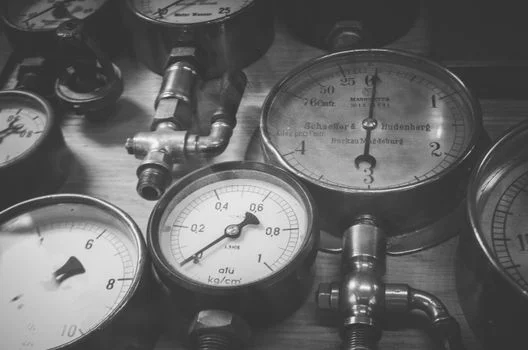
A chemical dosing train runs from the storage tank to the treated stream as a closed control loop that commonly holds reaction conditions within ±0.1 pH units of setpoint. Chemical leaves the tank, passes the dosing pump, and enters ahead of a static mixer, then reacts in the mixing zone while downstream sensors feed the PLC.
- Chemical Storage Tank: Holds the concentrated chemical solution.
- Dosing Pump: Draws chemical from the tank.
- Injection Point: Delivers chemical into the wastewater stream (e.g., before a static mixer).
- Static Mixer/Reaction Zone: Ensures rapid, uniform chemical dispersion and reaction.
- Sensors: Located downstream of the reaction zone, measuring critical parameters (pH, ORP, turbidity).
- PLC (Programmable Logic Controller): Receives sensor data, processes it, and sends commands to the dosing pump.
- Feedback Loop: Continuous communication between sensors, PLC, and pump for real-time adjustments.
Monitoring Stage: Precision Sensing
Monitoring measures the controlled variable before the PLC acts. Typical sensors include pH electrodes (±0.1 pH units) and ORP probes (±2% of reading), while turbidity meters (±2% of full scale) and conductivity probes (±1% of reading) are also common. Place probes in or just downstream of the reaction zone so the reading reflects the dose that just entered the stream.
Control Stage: Intelligent Decision-Making
PLC control compares live readings to setpoints such as pH 7.0 ± 0.2 and computes the required pump output. PID loops are common on these duties, and a proportional band of 5-10% with an integral time of 30-60 seconds is a frequent starting range before site-specific tuning.
Injection Stage: Accurate Chemical Delivery
Injection accuracy depends on pump type and hydraulic conditions. Industrial peristaltic, diaphragm, and piston dosing pumps are routinely specified for ±1% flow accuracy, and many procurement packages cite ISO 13739:2022 for that figure. Flow capacity spans about 0.1 L/h for specialty lines up to 10,000 L/h for large coagulant or pH duties.
Feedback Stage: Dynamic Adjustment
Feedback closes the loop after injection. When the measured value drifts from setpoint, the PLC raises or lowers pump output. Typical loop lag in compact skids is 10-30 seconds, which limits overshoot if sensor location and mixer residence time are matched to the chemistry.
Safety Stage: Protecting Operations
Safety interlocks protect people, equipment, and the receiving sewer. Configure high/low pH, pump fault, and low-level alarms, then trip the pump or close a leak valve when thresholds are crossed. Many plants set pH excursion alarms near ±0.5 pH units from setpoint so operators act before a permit breach.
| Stage | Key Component | Engineering Parameter | Typical Range/Accuracy |
|---|---|---|---|
| Monitoring | pH Sensor | Accuracy | ±0.1 pH units |
| Monitoring | ORP Sensor | Accuracy | ±2% of reading |
| Control | PLC | PID Proportional Band | 5-10% |
| Control | PLC | PID Integral Time | 30-60 seconds |
| Injection | Dosing Pump | Flow Rate Accuracy | ±1% (ISO 13739:2022) |
| Injection | Dosing Pump | Flow Rate Range (Industrial) | 0.1 - 10,000 L/h |
| Feedback | System Response Time | Lag Time | 10-30 seconds |
| Safety | Alarm Thresholds | pH Excursion | High/Low ±0.5 pH units from setpoint |
What Dosing Equipment Fits Water Treatment Plants?
The best chemical dosing equipment for a water treatment plant matches pump and controls to shear, corrosivity, flow, and pressure, because no single model fits every duty. Correct pump selection can cut maintenance cost by up to 40% when polymers stop shearing or seals stop failing on the wrong duty. An Automatic Chemical Dosing System with PLC control is the usual backbone for continuous industrial wastewater dosing.
Peristaltic Pumps
Peristaltic pumps suit shear-sensitive flocculants and polymers that lose performance under high shear. Tube compression moves fluid so the chemical contacts only the tube. Typical industrial ranges reach about 1,000 L/h at up to roughly 8 bar, and tube changes every 3-6 months depend on chemical aggressiveness and run hours.
Diaphragm Pumps
Diaphragm pumps handle corrosive acids, caustic, and sodium hypochlorite when wetted parts use PTFE, PVC, or PVDF. Reciprocating diaphragms commonly deliver up to about 10 bar and up to 10,000 L/h, so plan diaphragm and check-valve service every 6-12 months under continuous duty.
Piston Pumps
Piston pumps serve high-pressure injection, including boiler feedwater treatment against 30-50 bar headers. Rated flows often reach 5,000 L/h, with seal service every 3-6 months under high differential pressure. They are less ideal for strongly corrosive or abrasive fluids unless specialty materials are specified.
One pharmaceutical plant reported a 40% maintenance-cost drop after moving shear-sensitive polymer duty from diaphragm to peristaltic pumps, showing that duty match outweighed brand preference.
| Pump Type | Chemical Compatibility | Flow Rate Range (L/h) | Pressure Range (bar) | Maintenance Frequency |
|---|---|---|---|---|
| Peristaltic | Shear-sensitive polymers, flocculants, viscous slurries | 0.1 - 1,000 | Up to 8 | Tube replacement (3-6 months) |
| Diaphragm | Corrosive acids (H₂SO₄), alkalis (NaOH), disinfectants (NaClO) | 1 - 10,000 | Up to 10 | Diaphragm/valve replacement (6-12 months) |
| Piston | Non-corrosive liquids, boiler chemicals, high-pressure reagents | 0.5 - 5,000 | Up to 50 | Seal replacement (3-6 months) |
Chemical Compatibility and Dosing Rates for Industry
Chemical dosing rates and compatibility rules decide whether a plant hits 92-97% TSS removal and stays inside EPA 40 CFR Part 403 pretreatment limits for metals and organics. Match dosage, reaction time, and materials to the influent matrix. Where pathogen control needs on-site oxidant, pair the dosing skid with on-site ClO₂ generators for pathogen control in industrial effluent instead of relying only on bulk hypochlorite.
Coagulants
Ferric chloride and alum neutralize particle charge so solids can aggregate. Ferric chloride is often dosed at 50-150 mg/L when influent TSS is about 200-800 mg/L, and alum is often dosed at 100-300 mg/L under the same TSS band. Rapid mix of 30-60 seconds is typical before flocculation and supports 92-97% TSS removal when clarification is sized for the floc.
Flocculants
High-molecular-weight polyacrylamides are usually dosed at 0.5-5 mg/L after coagulation. Gentle mixing for 2-5 minutes bridges micro-flocs into settleable solids, and correct polymer make-down can deliver about 95% solids capture in thickening and dewatering.
pH Adjusters
Sodium hydroxide raises pH and sulfuric acid lowers it, and plants commonly use 1-10% solutions with 10-30 second reaction times in a well-mixed chamber. Many local permits still target effluent near pH 6.5-8.5.
Disinfectants
Sodium hypochlorite is often dosed at 2-5 mg/L with 15-30 minutes contact, targeting about 99.9% pathogen kill under WHO drinking-water guidance assumptions. Chlorine dioxide is preferred when trihalomethane formation from free chlorine is a constraint.
Chemical Incompatibility
Never mix strong acids with strong alkalis in shared headers, because heat and fumes can damage equipment and injure staff. Chlorine residuals plus ammonia can form chloramines. Use dedicated lines, PTFE gaskets on strong acids, and EPDM on many alkalis unless the chemical maker specifies otherwise.
| Chemical Type | Typical Dosage Range (mg/L) | Influent Concentration Range (mg/L) | Reaction Time (sec/min) | Primary Application/Efficiency |
|---|---|---|---|---|
| Ferric Chloride (Coagulant) | 50-150 | TSS: 200-800 | 30-60 sec | TSS Removal (92-97%), Metals Precipitation |
| Aluminum Sulfate (Alum) (Coagulant) | 100-300 | TSS: 200-800 | 30-60 sec | TSS Removal (92-97%), Phosphorus Removal |
| Polyacrylamide (Flocculant) | 0.5-5 | Flocculated solids | 2-5 min | Sludge Thickening (95% solids capture), Enhanced Settling |
| Sodium Hydroxide (pH Adjuster) | 1-10% solution | Variable pH | 10-30 sec | pH Adjustment to 6.5-8.5 (EPA 40 CFR Part 403) |
| Sodium Hypochlorite (Disinfectant) | 2-5 | Pathogens, BOD | 15-30 min | Pathogen Kill (99.9%), BOD Reduction |
How Do Boiler Feedwater Dosing Systems Cut Wastewater?
Boiler feedwater chemical dosing systems cut wastewater by holding scale and corrosion inhibitors at setpoint under high header pressure, which reduces blowdown solids load and unplanned drain events. Piston pumps are often chosen for 30-50 bar injection of oxygen scavengers, phosphates, or amines. Stable feed chemistry lowers conductivity spikes that force extra blowdown and sends fewer dissolved solids to the wastewater plant.
Selection Checklist for Industrial Chemical Dosing Systems
A structured selection path lowers CapEx and OPEX when pump type, materials, and automation are sized to the real duty before purchase. Walk the decision tree before you buy: industry, chemical class, flow and pressure, then automation level, and finish with the compliance framework (EPA, EU, WHO, FDA, or GMP).
- Industry: Municipal, textile, pharmaceutical, food and beverage, or power.
- Chemical type: Corrosive acid/alkali, shear-sensitive polymer, oxidant, or pH adjuster.
- Flow and pressure: Wastewater volume, dose rate (mg/L and L/h), and injection pressure (bar).
- Automation: Manual, semi-automatic, or full PLC/SCADA closed loop.
- Compliance: EPA 40 CFR Part 403 pretreatment, Part 503 biosolids where sludge chemicals apply, plus site local limits.
- Materials and redundancy: Wetted parts, dual pumps on critical chemicals, spill containment, and calibration ports.
- Lifecycle cost: Use 20-30% chemical savings and 75-90% less manual adjustment time in ROI models, and book avoided fines of $10,000-$50,000+ per event where relevant.
- Municipal wastewater: Favor reliability, dual-pump redundancy, and materials for continuous duty, noting biosolids chemistry may also track EPA 40 CFR Part 503.
- Textile wastewater: Expect wide pH and color swings, and combine peristaltic polymer feed with diaphragm acid/alkali feed and fast PID response.
- Pharmaceutical wastewater: Specify sanitary fittings and CIP/SIP where required, then use USP-grade reagents when mandated and keep full material traceability.
- Food and beverage: Use food-grade wetted parts such as 316L and NSF-listed plastics, and validate electronic records where FDA 21 CFR Part 11 applies.
- Power plants: Size piston pumps for boiler chemical injection at 30-50 bar against live feedwater headers.
Who this is for: plant engineers and EPCs specifying continuous coagulant, polymer, pH, or disinfectant feed on industrial and municipal wastewater plants. Who should look elsewhere: buyers who need only a one-shot drum pump for non-critical housekeeping water. Next step: send flow (m3/d), target pollutants, and chemical list so a PLC skid such as the PLC-controlled chemical dosing systems for industrial wastewater treatment can be sized. You can also Request a free quote with those duty data.
Frequently Asked Questions
How does a chemical dosing system work in wastewater plants?
In practice, the chemical dosing system working principle means the plant measures water quality and compares it to a setpoint, then meters chemical until the reading returns to band. Sensors feed a PLC; the PLC drives a metering pump; downstream feedback closes the loop within about 10-30 seconds on compact skids. Safety alarms stop over-dose on high/low pH, empty tanks, or pump faults.
What pump type should I choose for polymer flocculant?
Choose a peristaltic pump for most shear-sensitive polyacrylamide flocculants dosed at 0.5-5 mg/L. Tube-only contact protects the polymer chain and simplifies chemical compatibility. Expect tube service every 3-6 months at flows up to about 1,000 L/h and pressures up to about 8 bar. Diaphragm pumps remain better for corrosive acid or alkali lines on the same plant.
What accuracy should industrial dosing pumps deliver?
Industrial dosing pumps are commonly specified for ±1% flow accuracy under steady conditions. Many bid packages cite ISO 13739:2022 across roughly 0.1-10,000 L/h depending on frame size. Hold discharge pressure and NPSH within the maker curve or the stated accuracy will not hold at low stroke settings. Recalibrate after tubing or diaphragm changes.
Do chemical dosing systems help meet EPA pretreatment rules?
Yes. Stable coagulant, metal precipitant, and pH control help industrial users meet EPA 40 CFR Part 403 pretreatment duties that prevent pass-through and interference at the POTW. Keep local limits and the Part 403.5 pH floor in view: no discharge below pH 5.0 unless the POTW is designed for that waste stream.
What CapEx should I budget for an automatic dosing skid?
Budget about $15,000 for a basic industrial dosing unit, while customized multi-chemical PLC systems with redundancy and specialty materials often exceed $100,000. ROI usually comes from 20-30% chemical savings and 75-90% less manual adjustment time. Avoided discharge penalties can now reach $68,445 per day under current CWA civil maxima.